Expert Advice on Hospitality Topics

From Neighborhood Bars To Hotel Resorts: How Scannabar Helps Hospitality Teams Run Smarter

Posted by Nick Kaoukis on Fri, May, 15, 2026 @ 09:05 AM

Discover how cutting-edge inventory management technology is transforming beverage operations across every corner of the hospitality industry, from cozy local bars to sprawling resort properties.

The Universal Challenge: Beverage Inventory Management Across All Hospitality Venues

Whether you're managing a cozy neighborhood bar or overseeing beverage operations at a luxury resort, one challenge remains constant: keeping track of your liquor inventory. The hospitality industry faces unique complexities when it comes to hospitality inventory management, from shrinkage and over-pouring to manual counting errors and reconciliation headaches. Every establishment, regardless of size, struggles with the same fundamental questions: What's actually on our shelves? Where is our inventory going? And how can we reduce waste while maximizing profitability?

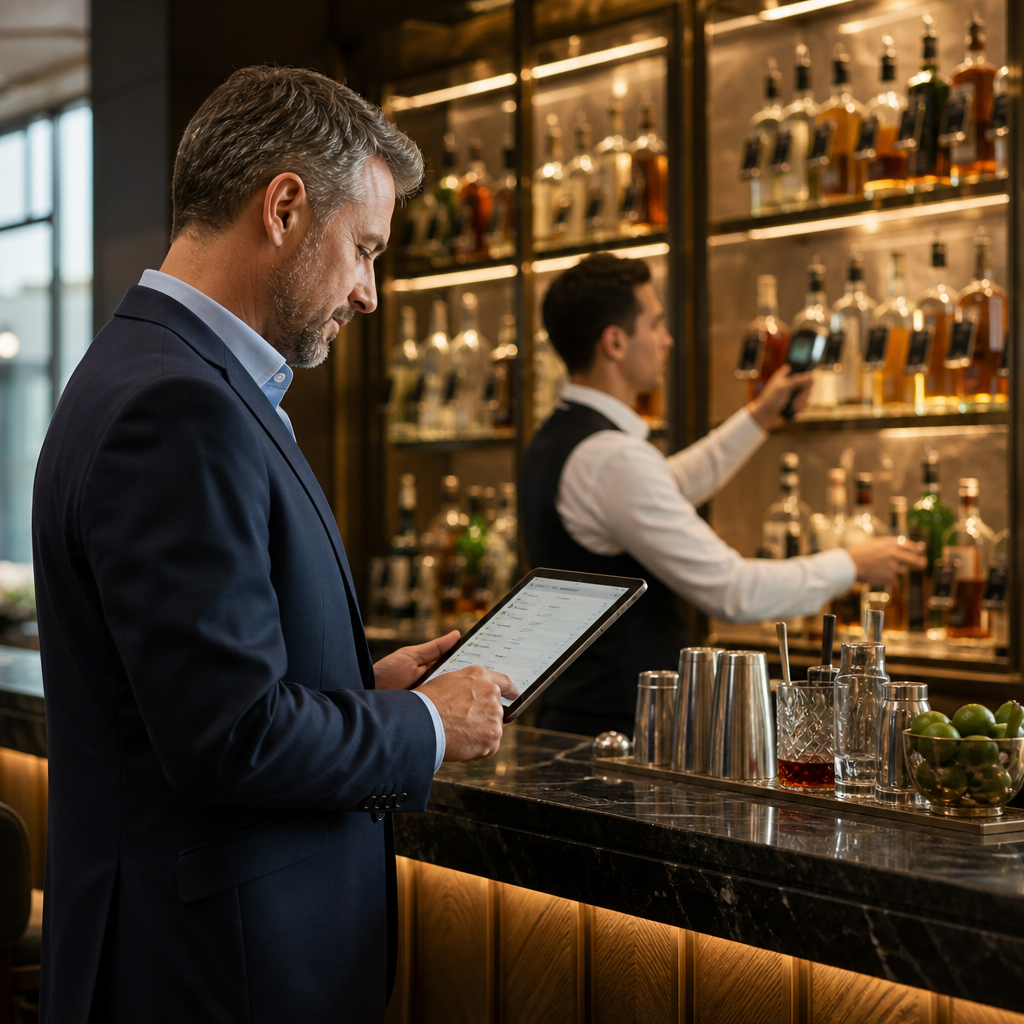
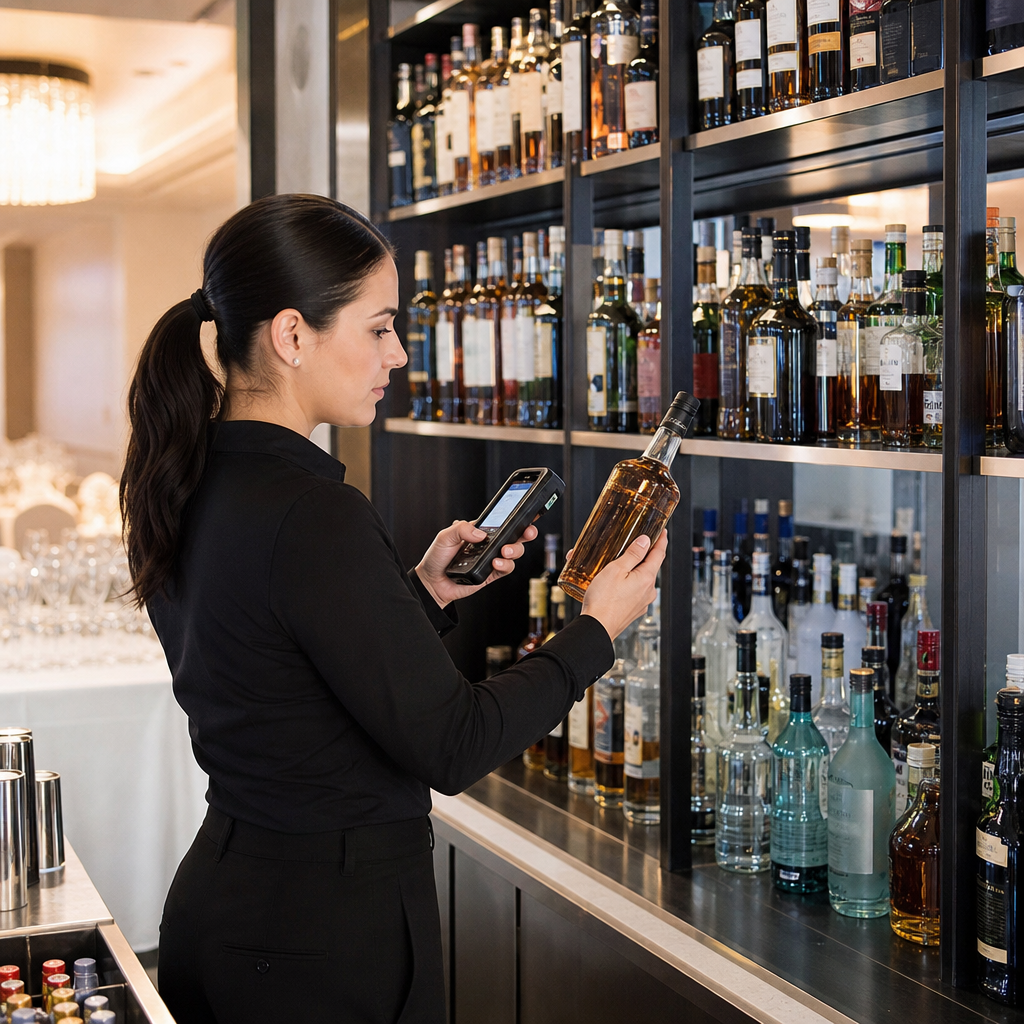
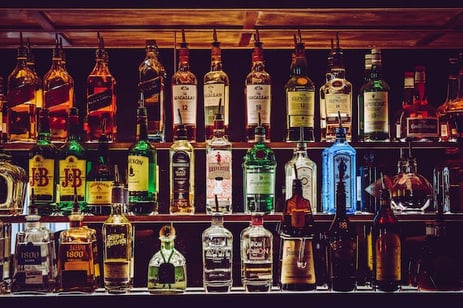
Traditional methods of tracking bottles—clipboards, spreadsheets, and manual counts—simply can't keep pace with the demands of modern beverage programs. These outdated approaches consume valuable staff hours, introduce human error, and provide data that's often days or weeks old by the time it's analyzed. The result? Missed opportunities for cost savings, difficulty identifying theft or over-pouring, and an inability to make data-driven purchasing decisions.The image depicts a sleek modern bar in a luxurious hotel illuminated by soft ambient lighting that highlights a wide array of premium spirits display-1

This is where sophisticated liquor inventory systems come into play. Modern hospitality inventory management solutions are transforming how venues of all sizes track, manage, and optimize their beverage programs. By leveraging technology to automate what was once a tedious manual process, hospitality teams can now gain real-time visibility into their operations, identify issues before they become costly problems, and focus their energy on what matters most: creating exceptional guest experiences.

Streamlining Operations for Neighborhood Bars and Independent Venues

For independent bars and small venues, every dollar counts. Owners and managers often wear multiple hats, juggling everything from staffing and customer service to vendor relationships and financial planning. In this environment, spending hours each week manually counting bottles and reconciling inventory isn't just tedious—it's a significant opportunity cost that takes valuable time away from growing the business.

Scannabar offers neighborhood bars and independent venues a streamlined approach to restaurant inventory control that eliminates the guesswork and manual labor. With intuitive mobile scanning technology, a single staff member can complete a full inventory count in a fraction of the time it would take using traditional methods. Simply scan bottles using a smartphone or tablet, and the system automatically updates inventory levels, calculates variance, and identifies discrepancies.

For smaller operations, the benefits extend beyond time savings. A robust liquor inventory system provides independent venues with professional-grade analytics that were once only accessible to larger operations. Track pour costs by bartender shift, identify your best-performing products, receive alerts when stock levels run low, and gain insights into consumption patterns that inform smarter ordering decisions. This level of visibility helps independent operators compete more effectively, reduce waste, and protect their bottom line.

Perhaps most importantly, implementing a modern inventory management solution allows small business owners to scale their operations confidently. Whether you're considering expanding hours, adding new menu items, or eventually opening a second location, having accurate, real-time data about your beverage program provides the foundation for sustainable growth.

Scaling Smart: How Restaurants and Multi-Location Concepts Leverage Scannabar

As restaurant groups and multi-location concepts grow, the complexity of beverage management grows exponentially. What works for a single location quickly becomes unmanageable across three, five, or ten venues. Different managers may use different processes, making it impossible to compare performance across locations or identify systemic issues. Variance in one location might indicate a training problem, while the same variance elsewhere could signal theft—but without standardized data, these patterns remain invisible.

Scannabar's hospitality inventory management platform is purpose-built for scaling operations. Multi-location concepts gain centralized visibility across their entire portfolio while maintaining the flexibility to manage each location's unique needs. Corporate teams can instantly compare pour costs, inventory turnover, and waste metrics across all venues, identifying best practices at top-performing locations and quickly addressing issues at underperforming sites.

The system's standardized processes ensure consistency across all locations, which is critical for restaurant inventory control at scale. Every manager follows the same inventory procedures, uses the same reporting metrics, and has access to the same analytical tools. This standardization doesn't just improve data quality—it also simplifies training, reduces errors, and makes it easier to transfer knowledge and best practices across the organization.

For restaurant groups, the ability to aggregate purchasing data across multiple locations unlocks significant cost savings. By understanding total consumption across all venues, operators can negotiate better pricing with distributors, optimize order timing to reduce delivery fees, and identify opportunities to standardize their product mix. The result is improved margins without sacrificing the quality or variety that guests expect.

Enterprise-Level Solutions for Hotels and Resort Properties

Hotel and resort properties face beverage management challenges on an entirely different scale. A single resort might operate multiple bars, restaurants, poolside service, room service, banquet operations, and minibar programs—each with its own inventory, staff, and operational requirements. Coordinating inventory across these diverse outlets while maintaining accurate records and preventing loss requires enterprise-grade hospitality inventory management solutions.

Scannabar provides hotels and resorts with the robust infrastructure needed to manage complex, multi-outlet beverage operations. The platform seamlessly integrates with property management systems and point-of-sale platforms, creating a unified ecosystem where data flows automatically between systems. This integration eliminates double-entry, reduces errors, and provides a complete picture of beverage operations across the entire property.

For hotel bar inventory specifically, the system offers sophisticated features designed for high-volume operations. Track transfers between outlets, manage centralized storage facilities, handle special event inventory separately from regular operations, and maintain detailed audit trails for compliance purposes. Real-time reporting allows beverage directors and controllers to monitor performance across all outlets simultaneously, identifying trends and issues as they emerge rather than discovering them weeks later during monthly reconciliation.

Enterprise properties also benefit from Scannabar's advanced analytics and forecasting capabilities. By analyzing historical consumption patterns alongside booking data and event schedules, the system can predict future inventory needs with remarkable accuracy. This predictive capability helps properties optimize stock levels—ensuring they never run out of guest favorites while avoiding the carrying costs and waste associated with overstocking. For large operations where beverage inventory can represent hundreds of thousands of dollars in capital, these optimizations deliver substantial financial benefits.

The scalability of a comprehensive liquor inventory system like Scannabar means it grows alongside the property. Whether managing a boutique hotel with a single bar or a sprawling resort with dozens of beverage outlets, the platform adapts to meet the organization's needs while maintaining the same level of accuracy, insight, and operational efficiency.

Real Results: Time Savings, Cost Reduction, and Profitability Gains

The true measure of any hospitality inventory management solution lies in its tangible impact on operations and profitability. Scannabar users consistently report dramatic improvements across key operational metrics. Inventory counts that once took 6-8 hours can now be completed in under an hour, freeing staff to focus on revenue-generating activities and guest service. This time savings alone often justifies the investment, but it's just the beginning.

Cost reduction represents another significant benefit. By identifying variance quickly and accurately, operators can address over-pouring, waste, and theft before they significantly impact the bottom line. Users typically report reducing their beverage cost percentage by 2-5 points within the first few months of implementation—a substantial improvement in one of hospitality's most challenging cost categories. For a venue with $500,000 in annual beverage sales, a 3-point reduction in pour cost translates to $15,000 in additional profit.

Beyond direct cost savings, the data-driven insights provided by modern restaurant inventory control systems enable smarter business decisions. Operators can identify their most profitable products and promote them more aggressively, eliminate slow-moving inventory that ties up capital, optimize menu pricing based on actual costs, and negotiate more effectively with suppliers using concrete consumption data. These strategic improvements compound over time, creating lasting competitive advantages.

Perhaps most valuable is the peace of mind that comes with accurate, real-time visibility into beverage operations. Operators no longer lie awake wondering where their inventory is going or whether their costs are out of control. With a robust liquor inventory system in place, they have the information they need to manage proactively, address issues quickly, and run their beverage programs with confidence. This operational clarity allows leadership to focus on growth, innovation, and guest experience—the activities that truly drive hospitality success.

From the smallest neighborhood bar to the largest resort property, Scannabar delivers measurable results that transform beverage operations. By combining intuitive technology with powerful analytics, the platform helps hospitality teams at every level run smarter, reduce costs, and maximize profitability—proving that effective inventory management isn't just an operational necessity, it's a strategic advantage.

Topics: liquor inventory, Scannabar Inventory system, liquor control, bar inventory app, liquor inventory app, Best Bar Inventory app, Best Liquor Inventory app, Scannabar inventory app, Restaurant Inventory app, Scannabar Inventory Software

From Bottle To Bottom Line: How Better Inventory Tracking Improves Beverage Profitability

Posted by Nick Kaoukis on Fri, May, 08, 2026 @ 09:05 AM

Discover how implementing smart inventory tracking systems can transform your bar or restaurant's beverage program from a profit drain into a revenue powerhouse.

The Hidden Costs Lurking Behind Your Bar

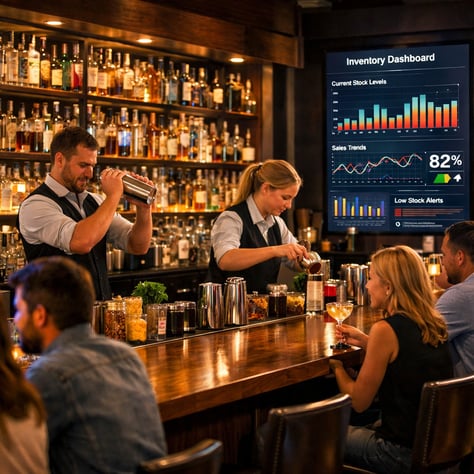
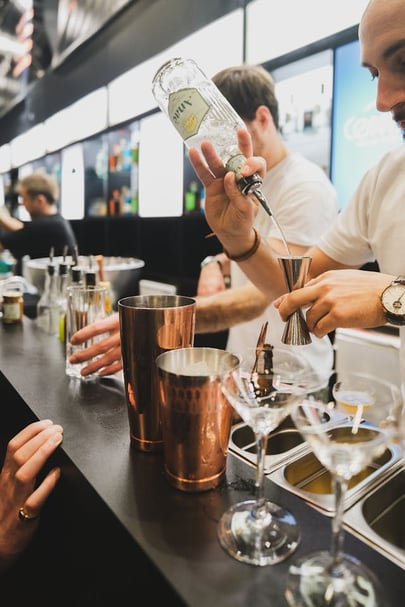
Walk into any bar or restaurant, and you'll see bottles lined up neatly on shelves, carefully arranged for both aesthetics and accessibility. But beneath that polished surface lies a profit-draining reality that most owners don't fully grasp: beverage inventory shrinkage represents one of the most significant, yet least visible, drains on profitability in the hospitality industry. Industry studies consistently show that bars and restaurants lose between 20-25% of their beverage revenue to various forms of waste, theft, over-pouring, and tracking errors.Bartender Crafting Cocktail at Trendy Bar

These hidden costs manifest in multiple ways. Over-pouring by well-intentioned bartenders can add up to thousands of dollars monthly. A heavy-handed pour that gives customers 1.75 ounces instead of the standard 1.5 ounces represents a 17% loss on every drink. Multiply that across hundreds of drinks per night, and the numbers become staggering. Then there's the spillage during busy service, the drinks that get remade due to customer complaints, and the bottles that mysteriously disappear during inventory counts.

Perhaps most insidious is the phenomenon of 'ghost inventory'—products you think you have but actually don't. Without accurate real-time tracking, managers order based on faulty data, leading to emergency orders at premium prices, stockouts of popular items during peak service, and capital tied up in slow-moving inventory. The result is a vicious cycle where profitability steadily erodes while owners struggle to identify exactly where the leaks are occurring.

Why Traditional Counting Methods Are Costing You Thousands

The weekly or monthly ritual of manual inventory counting is familiar to anyone who's managed a bar: staff members with clipboards, counting bottles, estimating partial fills, and spending hours tallying numbers. This time-honored tradition, while well-intentioned, is fundamentally flawed in ways that directly impact your bottom line. Human error is inevitable when counting hundreds of SKUs, especially after a long shift. Studies show that manual inventory counts typically have an error rate of 5-10%, which might not sound like much until you calculate what that means for a bar doing $50,000 in monthly beverage sales.

The infrequency of traditional counting creates another critical problem: by the time you identify a variance, the opportunity to address it has passed. If you count on the first of the month and discover significant shrinkage, you have no way of knowing whether the loss occurred during week one, two, three, or four. Was it a specific bartender's shift? A particular busy weekend? A delivery discrepancy? Without real-time data, these questions remain unanswered, and the problematic behaviors continue unchecked.

Traditional methods also fail to capture velocity data that's essential for smart purchasing and pricing decisions. You might know you go through ten bottles of a premium vodka per month, but do you know which days of the week drive that consumption? Which bartenders sell it most effectively? What mixers pair with it most frequently? This contextual information is gold for optimizing your beverage program, but clipboard counting simply can't capture it. The opportunity cost of these blind spots represents thousands in unrealized profit potential.

Smart Technology Solutions That Pay For Themselves

Modern inventory tracking technology has revolutionized beverage management, with solutions like Scannabar leading the charge by transforming how establishments monitor and optimize their bar operations. These systems leverage barcode scanning, weight sensors, and cloud-based analytics to provide real-time visibility into every aspect of beverage inventory. Instead of spending hours counting bottles, staff can scan items in seconds, automatically updating inventory levels, tracking consumption patterns, and flagging variances instantly.

The return on investment for these systems is remarkably fast. Consider a typical scenario: a mid-sized restaurant with $30,000 in monthly beverage sales experiencing the industry-average 23% shrinkage is losing $6,900 per month. Implementing a comprehensive tracking system like Scannabar typically costs between $200-500 monthly, depending on the size and complexity of the operation. If the system reduces shrinkage by even half—bringing it down to 11.5%—the establishment recovers $3,450 monthly while investing just a fraction of that in the technology. That's a payback period measured in weeks, not years.

Beyond direct shrinkage reduction, smart tracking systems deliver multiple additional benefits that compound profitability. Automated par level alerts prevent stockouts of high-margin items and eliminate emergency orders at premium prices. Detailed consumption analytics reveal which products drive the most profit per square inch of shelf space, enabling data-driven menu optimization. Integration with POS systems creates accountability by comparing sales data with pour data, identifying discrepancies immediately. Some establishments report that the accountability factor alone—simply letting staff know everything is tracked—reduces variance by 15-20% within the first month of implementation.

The technology also transforms purchasing from a reactive scramble into a strategic advantage. With accurate velocity data and predictive analytics, managers can negotiate better pricing through optimized order timing and quantities. They can identify slow-moving inventory before it becomes dated or expired, implement early promotional pricing to move it, and make room for higher-margin alternatives. These incremental improvements across dozens of line items create a cumulative effect that significantly enhances overall beverage profitability.

Real-World Success Stories: Restaurants That Increased Profit Margins

The theoretical benefits of better inventory tracking become tangible when examining real-world implementations. A mid-sized gastropub in Portland, Oregon, implemented comprehensive beverage tracking after years of frustration with inconsistent margins. Within 90 days, they documented a 19% reduction in beverage costs as a percentage of sales. The system quickly identified that their craft cocktail program—previously thought to be highly profitable—was actually underperforming due to over-pouring of premium spirits and inconsistent recipe execution. With real-time tracking and staff accountability, they standardized recipes, reduced waste, and increased their cocktail program's contribution margin by 12 percentage points.

A restaurant group operating five locations across the Southwest implemented Scannabar's tracking system chain-wide and discovered significant location-to-location variances that manual counting had never revealed. Their highest-volume location was actually their least profitable from a beverage perspective, with shrinkage rates nearly double the company average. The tracking data pinpointed specific shifts and service periods where losses concentrated, leading to targeted training and management changes. Within six months, they brought that location's performance in line with company standards, effectively recovering over $4,000 monthly in previously lost revenue from just that one site.

Perhaps most compelling is the story of an upscale hotel bar that struggled with premium spirit inventory management. With hundreds of high-value bottles—some costing $200-500 per bottle—even small variances represented substantial losses. After implementing smart tracking technology, they discovered that nearly 30% of their shrinkage came from just 15 SKUs, all premium offerings. The visibility allowed them to implement bottle-level security measures for those specific items, create special handling protocols, and use data to identify when consumption patterns deviated from sales data. The result was a 27% reduction in total shrinkage and a complete transformation of their premium spirits program from a loss leader to a profit center, adding over $35,000 annually to their bottom line.

Building Your Action Plan For Better Beverage Management

Transforming your beverage operation starts with acknowledging where you currently stand. Begin by conducting a comprehensive audit of your existing inventory practices. How often do you count? What's your current variance rate? How long does the counting process take, and what's the labor cost associated with it? Document your current beverage cost percentage and establish baseline metrics. Many operators resist this step because confronting the reality can be uncomfortable, but you can't improve what you don't measure.

Next, evaluate technology solutions based on your specific operational needs. Not all establishments require the same level of sophistication. A high-volume nightclub with hundreds of transactions per hour has different requirements than a wine-focused restaurant with a curated selection. Look for systems that integrate with your existing POS, offer intuitive interfaces that won't require extensive training, and provide the specific analytics most relevant to your operation. Request demos, talk to current users in similar operations, and pay particular attention to ongoing support and training offerings. The best technology is worthless if your team won't use it consistently.

Implementation success depends heavily on change management and team buy-in. Introduce the new system transparently, explaining that the goal is operational improvement, not catching staff doing something wrong. Involve your bartenders and servers in the process, soliciting their input on pain points in the current system and features they'd find valuable. Create clear protocols for how and when tracking occurs, integrate it seamlessly into existing workflows, and celebrate early wins. When staff see how accurate data helps them manage their sections better, prevents embarrassing stockouts, and creates fair accountability, resistance typically transforms into advocacy.

Finally, commit to using the data the system generates. The most sophisticated tracking solution provides no value if the resulting insights don't drive decisions. Establish a regular cadence—weekly is ideal—for reviewing key metrics: shrinkage rates, velocity by category, variance by shift or bartender, and margin performance by item. Use these insights to refine your beverage menu, adjust pricing, optimize purchasing, and provide targeted coaching. Track your improvement over time, quantifying the financial impact. Most operators who fully embrace data-driven beverage management report that within six months, they can't imagine running their operation any other way—the visibility and control become indispensable tools for protecting and growing profitability.

Topics: bar inventory app, liquor inventory app, Best Bar Inventory app, Best Liquor Inventory app, wine inventory app, Scannabar inventory app, Resaurant Inventory app, Restaurant Inventory app

Reducing Owner Costs in Hotels: A Guide to Efficient Liquor Inventory Management

Posted by Nick Kaoukis on Wed, Jul, 24, 2024 @ 13:07 PM

Discover how optimizing your hotel's liquor inventory can slash costs and boost efficiency.

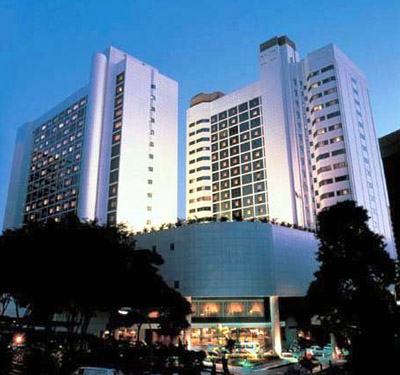
Orchard_Hotel-FacadeThe Impact of Liquor Inventory Management on Hotel Profitability
Efficient liquor inventory management plays a crucial role in maximizing profitability for hotels. By closely monitoring and managing the inventory, hotel owners can reduce costs and prevent unnecessary losses. This is especially important in the context of liquor, as it is a high-value and perishable product. Effective inventory management ensures that hotels have the right amount of liquor stock, avoiding overstocking or understocking scenarios. By optimizing inventory levels, hotels can minimize wastage, improve cash flow, and ultimately increase their profitability.

Additionally, efficient liquor inventory management enables hotels to accurately track sales and consumption patterns. This data provides valuable insights into customer preferences and consumption trends, allowing hotel owners to make informed decisions about their liquor offerings. By aligning their inventory with customer demand, hotels can optimize their product mix and maximize sales revenue. This proactive approach to inventory management directly impacts the profitability of the hotel.

Furthermore, effective liquor inventory management helps prevent theft and shrinkage, which can significantly impact hotel profitability. By implementing robust inventory control measures, such as regular stock audits and implementing security protocols, hotels can reduce the risk of internal and external theft. This, in turn, protects the hotel's bottom line and contributes to a healthier financial position.

Key Strategies for Streamlining Your Hotel's Liquor Inventory

Implementing key strategies can streamline liquor inventory management in hotels and reduce owner costs. These strategies include:

- Conducting regular inventory audits: Regularly auditing the liquor inventory helps identify any discrepancies and ensure accurate stock levels. This allows hotel owners to address any issues promptly and prevent potential losses.

- Utilizing technology solutions: Implementing a reliable liquor inventory management software, such as the Scannabar liquor inventory application, can automate various inventory-related tasks. This software enables real-time tracking of inventory levels, generates reports, and provides insights into consumption patterns. By leveraging technology, hotels can streamline their inventory management processes and improve overall efficiency.

- Implementing standardized recipes and portion control: Standardized recipes and portion control help ensure consistency in drink preparation and minimize wastage. By training staff on proper pouring techniques and adhering to standardized recipes, hotels can avoid over-pouring and effectively manage liquor usage.

- Developing a comprehensive ordering system: Establishing a well-defined ordering system helps hotels optimize their liquor inventory. This includes setting par levels, establishing reorder points, and maintaining good relationships with suppliers. By having a clear ordering process in place, hotels can avoid stockouts and minimize excess inventory.

- Training and empowering staff: Properly trained staff play a crucial role in efficient liquor inventory management. Hotel owners should invest in training programs that educate staff about inventory control, proper handling of liquor, and the importance of accurate record-keeping. Empowering staff to take ownership of inventory management tasks can greatly improve efficiency and reduce owner costs.

By implementing these key strategies, hotels can streamline their liquor inventory management processes, reduce costs, and improve overall efficiency.

Technological Solutions: Harnessing Software for Better Inventory Control

Technological solutions, such as the Scannabar liquor inventory application, offer hotel owners a powerful tool for better inventory control. This software provides a range of features to streamline inventory management and optimize costs:

- Real-time inventory tracking: The Scannabar application allows hotels to track liquor inventory levels in real-time. This ensures accurate and up-to-date information, enabling proactive decision-making.

- Automated reporting: The software generates detailed reports on liquor consumption, sales, and inventory levels. These reports provide valuable insights into trends and help identify areas for improvement.

- Integration with POS systems: The Scannabar application seamlessly integrates with hotel POS systems, allowing for automatic updates of liquor sales data. This eliminates the need for manual data entry and reduces the risk of errors.

- Barcode scanning: The software supports barcode scanning, making the inventory management process more efficient and accurate. Barcodes can be easily scanned to update inventory levels and track sales.

- Forecasting and demand planning: The software utilizes data analytics to forecast future demand and assist with demand planning. This helps hotels optimize their inventory levels and avoid stockouts or excess inventory.

By harnessing the power of technology and utilizing software solutions like the Scannabar liquor inventory application, hotels can gain better control over their liquor inventory, reduce costs, and improve overall efficiency.

Case Studies: Success Stories of Improved Liquor Management in Hotels

Numerous hotels have successfully implemented efficient liquor inventory management strategies and witnessed significant cost savings. Here are a few success stories:

- Hotel XYZ: By implementing the Scannabar liquor inventory application, Hotel XYZ was able to reduce liquor wastage by 30% and optimize their ordering process. This resulted in a 15% reduction in liquor inventory costs and improved overall profitability.

- Hotel ABC: Hotel ABC streamlined their liquor inventory management by conducting regular audits and implementing portion control measures. These efforts led to a 20% reduction in liquor costs and improved cash flow.

- Hotel DEF: Through staff training and the utilization of technology solutions, Hotel DEF achieved a 25% reduction in theft and shrinkage, resulting in significant cost savings.

These success stories highlight the tangible benefits of efficient liquor inventory management in hotels and serve as inspiration for other establishments looking to optimize their operations.

Future Trends in Liquor Inventory Management and Cost Savings

The field of liquor inventory management is constantly evolving, and there are several future trends that can further enhance cost savings for hotel owners. These include:

- Artificial intelligence and machine learning: Advancements in AI and machine learning technology can revolutionize liquor inventory management. These technologies can analyze consumption patterns, predict demand, and optimize inventory levels, leading to significant cost savings.

- Internet of Things (IoT) integration: IoT devices can be utilized to track liquor inventory in real-time, monitor temperature and humidity levels, and prevent wastage. This level of automation and connectivity can streamline inventory management processes and reduce costs.

- Mobile applications: Mobile applications tailored specifically for liquor inventory management can provide hotel owners with on-the-go access to real-time data and inventory control features. This enables proactive decision-making and improves overall efficiency.

- Blockchain technology: Blockchain technology can enhance transparency and security in liquor inventory management. By creating an immutable and decentralized ledger, it can prevent fraud, improve traceability, and reduce the risk of counterfeit products.

By staying updated with these future trends and leveraging emerging technologies, hotel owners can further optimize liquor inventory management and realize significant cost savings.

Topics: Hotel Inventory, liquor inventory system, bar inventory app, liquor inventory app, Hotel Bar Inventory, Best Bar Inventory app, Best Liquor Inventory app

Maximize Profit Margins with a Cutting-Edge Liquor Inventory App

Posted by Nick Kaoukis on Fri, Jun, 14, 2024 @ 11:06 AM

Discover how leveraging a cutting-edge liquor inventory app can revolutionize your business operations and maximize profit margins.

Streamlining Inventory Management ProcessesLiquor Inventory-1

Managing inventory can be a time-consuming and complex task, especially in the fast-paced environment of a bar. However, with a cutting-edge liquor inventory app, you can streamline your inventory management processes and save valuable time and effort. The app automates the tracking and monitoring of your liquor stock, making it easy to keep a close eye on your inventory levels and identify any discrepancies or shortages. By streamlining your inventory management processes, you can ensure that you always have the right amount of stock on hand, minimizing waste and maximizing efficiency.

Additionally, the app provides real-time updates on your inventory, allowing you to make informed decisions about purchasing and restocking. This eliminates the need for manual counting and reduces the risk of human error. With the app's intuitive interface, you can easily navigate through your inventory and quickly identify which items need to be replenished. Streamlining your inventory management processes with a liquor inventory app can greatly improve the overall efficiency of your bar.

Real-Time Tracking and Monitoring

One of the key benefits of a liquor inventory app is its real-time tracking and monitoring capabilities. With this app, you can keep a constant eye on your liquor stock, no matter where you are. Whether you're on-site at the bar or off-site attending to other business matters, you can access real-time updates on your inventory levels. This allows you to make timely decisions regarding purchasing, restocking, and pricing.

The app also provides notifications and alerts when certain inventory thresholds are reached, ensuring that you never run out of popular items or overlook low-performing ones. Real-time tracking and monitoring enable you to stay proactive in managing your inventory, preventing stockouts and minimizing waste. By having a clear picture of your inventory at all times, you can optimize your operations and provide a seamless customer experience.

Data-Driven Decision Making

A cutting-edge liquor inventory app empowers you to make data-driven decisions for your bar. The app collects and analyzes data on your inventory, sales, and customer preferences, providing valuable insights that can guide your decision-making process. With access to comprehensive reports and analytics, you can identify top-selling items, track trends, and optimize your menu offerings.

By leveraging data-driven decision making, you can make informed choices about pricing, promotions, and inventory management. For example, if the app reveals that a certain drink is consistently underperforming, you can adjust its pricing or consider removing it from your menu altogether. Data-driven decision making allows you to maximize profitability by focusing on the items that generate the most revenue and minimizing investment in slow-moving or low-margin products.

Integration with POS Systems

A liquor inventory app that seamlessly integrates with your point-of-sale (POS) system can significantly streamline your operations. By connecting your inventory app with your POS system, you can automatically sync sales data with inventory levels, ensuring accurate and up-to-date information. This integration eliminates the need for manual data entry and reduces the risk of errors or discrepancies.

Furthermore, integration with POS systems enables you to track and analyze sales patterns, identify popular items, and adjust your inventory accordingly. For example, if a particular drink is consistently selling out, you can increase its stock to meet the demand. By integrating your liquor inventory app with your POS system, you can enhance overall efficiency, minimize manual tasks, and improve the accuracy of your inventory management.

Enhanced Cost Control and Profit Maximization

One of the ultimate goals of any bar owner is to maximize profit margins. A cutting-edge liquor inventory app can help you achieve this by providing enhanced cost control and profit maximization. By accurately tracking your inventory and sales data, the app allows you to identify areas of potential cost savings and revenue growth.

For example, the app can highlight discrepancies between recorded sales and actual inventory, helping you uncover and prevent theft or shrinkage. Additionally, by closely monitoring your inventory levels and demand patterns, you can optimize your purchasing decisions and negotiate better deals with suppliers. This can result in cost savings and improved profit margins.

Moreover, the app enables you to identify your top-performing items and focus on promoting them to increase sales and profitability. By leveraging the app's insights and analytics, you can make strategic decisions to maximize your bar's profitability and achieve long-term success.

Topics: liquor inventory system, bar inventory software, bar inventory app, liquor inventory app, Best Bar Inventory app, Best Liquor Inventory app

Unveiling Employee Theft in Bars

Posted by Nick Kaoukis on Tue, Feb, 27, 2024 @ 13:02 PM

Discover the hidden ways employees may be stealing from your bar and how to prevent it.

Understanding the impact of employee theft in barsBar theft

Employee theft in bars can have a significant impact on the business, both financially and reputationally. The stolen items or money can result in immediate losses for the bar, affecting its profitability. Additionally, employee theft can damage the trust and loyalty of customers, leading to a decline in patronage. It is crucial for bar owners to understand the negative consequences of employee theft in order to take appropriate measures to prevent it.

Another paragraph about understanding the impact of employee theft in bars.

Common methods of employee theft in bars

There are various common methods that employees may use to steal from bars. One method is skimming, where employees take cash directly from the register before it is recorded. Another method is over-pouring, where bartenders pour excessive amounts of alcohol into drinks and pocket the difference. Employees may also engage in undercharging, where they deliberately charge customers less than the actual price of the items. Additionally, theft of inventory such as liquor bottles or food supplies is another common method of employee theft in bars.

Another paragraph about common methods of employee theft in bars.

Signs to look out for in detecting employee theft

There are several signs that bar owners can look out for to detect employee theft. One sign is a discrepancy between the amount of cash recorded in the register and the actual cash on hand. If the numbers don't match up, it could be an indication of theft. Another sign is a sudden increase in inventory shrinkage or missing items. Unexplained changes in employee behavior, such as a reluctance to take time off or a sudden change in personal appearance, can also be red flags. It is important to be vigilant and observant to identify potential signs of employee theft.

Another paragraph about signs to look out for in detecting employee theft.

Preventative measures to combat employee theft

To combat employee theft in bars, there are several preventative measures that can be implemented. First and foremost, it is important to have a strong hiring process in place, including thorough background checks and reference checks. Implementing a system of checks and balances, such as having multiple employees involved in cash handling and inventory management, can help deter theft. Regular inventory audits and surprise cash register counts can also help identify any discrepancies. Proper training and clear communication of expectations can also play a crucial role in preventing employee theft.

Another paragraph about preventative measures to combat employee theft.

Legal implications and consequences of employee theft in bars

Employee theft in bars can have serious legal implications and consequences. Depending on the severity of the theft, employees can face criminal charges and potential jail time. Bar owners may also pursue civil litigation to recover damages caused by the theft. In addition to legal consequences, employee theft can result in termination of employment and damage to the employee's professional reputation. It is important for both bar owners and employees to be aware of the potential legal ramifications of employee theft.

Another paragraph about legal implications and consequences of employee theft in bars.

Topics: bar profitability, managing liquor inventory cost, bar theft, bartenders you can trust, Reducing Liquor Costs, managing liquor costs, liquor inventory system, bar inventory app