Expert Advice on Hospitality Topics

How to Cut Hotel Bar Inventory Costs in 2026

Posted by Nick Kaoukis on Sun, Sep, 13, 2026 @ 13:09 PM

Most hotel operators know their beverage program should be profitable. Margins on alcoholic drinks can reach 70% to 80%, making the bar one of the highest-margin departments in any property. Yet too many hotels watch those margins erode month after month. The money is leaving. They just can't see where.

Shrinkage, slow inventory counts, weak reporting, and delayed purchasing decisions all drain revenue at the same time. Scannabar helps hotel and resort operators close those gaps with precise, bar inventory management built for hospitality.

Below, you will find where hotel beverage costs leak and how a structured inventory process puts you back in control.
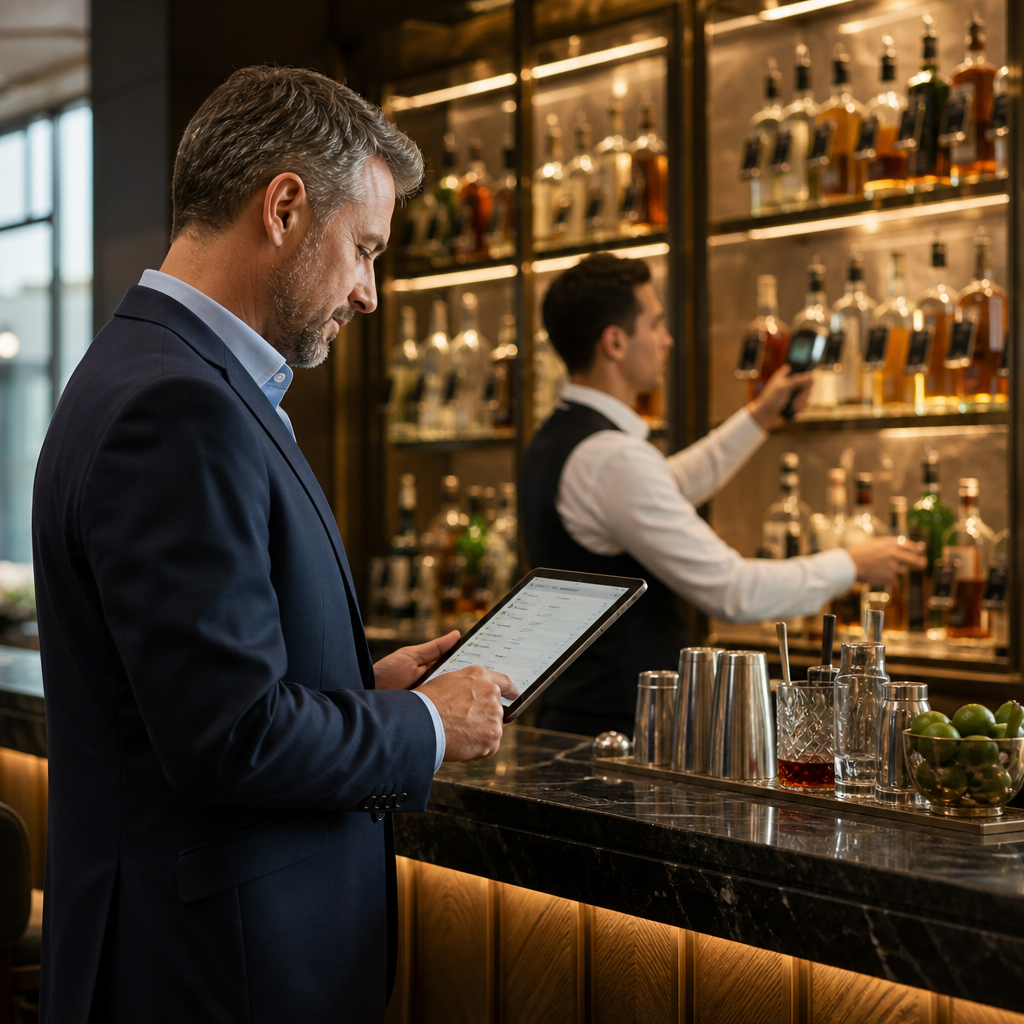
Hotel bar manager reviewing inventory on a tablet while staff scan labeled bottles in an upscale bar

Key Takeaways: Hotel Bar Inventory Cost Reduction

  • Hotel beverage margins erode through shrinkage, over-pouring, and slow inventory processes that mask real losses.
  • Delayed inventory data forces purchasing decisions based on guesswork, leading to costly overstocking or stockouts.
  • Scannabar reduces inventory counting time by up to 75%, freeing staff to focus on guest service.
  • Real-time variance reports help you spot discrepancies the same day they occur, not weeks later.
  • Hotels that tighten inventory processes can reduce losses faster when issues are identified earlier.

Why Hotel Beverage Costs Rise Faster Than Teams Expect

Hotel bars operate under conditions that amplify loss. Multiple service points, rotating staff, banquet functions, and poolside portable bars all create opportunities for product to leave the building unaccounted for. A single lobby lounge might stock 80 to 120 bottles at any time, and every one of those bottles represents money sitting on a shelf.

According to CBRE's 2025 Trends in the Hotel Industry report, F&B department profit margins for surveyed U.S. hotels reached 29.1% in the first half of 2025. At the same time, Scannabar reports that many operators struggle with shrinkage, waste, and over-pouring that steadily erode those margins.

For a hotel bar generating $500,000 in annual beverage revenue, even a modest loss rate can put tens of thousands of dollars at risk each year.

Where Beverage Margin Slips Away

Shrinkage in a hotel bar rarely comes from one source. Over-pouring is common when bartenders pour without consistent portion standards. Spillage adds up across dozens of drinks per shift. Theft is a documented industry reality. It is not a hypothetical. And it accelerates wherever there is no system tracking individual bottles.

Beyond the bar rail, losses multiply during transfers between storage and service points. A bottle moved from the main storeroom to a banquet station may never get scanned back in. Without perpetual tracking, that bottle simply disappears from your records.

The financial impact cascades from there. You over-order to compensate for phantom shortages. Your pour cost percentage climbs. Your purchasing team cannot see what is actually driving the variance. That is money walking out the door every period.

Why Delayed Inventory Data Hurts Decisions

Many hotel properties still count inventory on a weekly or monthly cycle using clipboard-and-spreadsheet methods. By the time those numbers are compiled, the information is already stale. A variance that appeared during a busy weekend does not surface until the following week, making it difficult to identify which shift or bar station needs attention.

Stale data poisons purchasing decisions. If your Food and Beverage Director places orders based on last month's consumption estimates rather than real-time usage, you end up carrying excess stock on slow-moving SKUs while running short on your highest-velocity items.

That mismatch ties up capital in dead stock, increases waste from expired product, and forces emergency orders at higher prices. None of that shows up on a single invoice. All of it hits your bottom line.

How Scannabar Improves Cost Control Across Hotel Bars
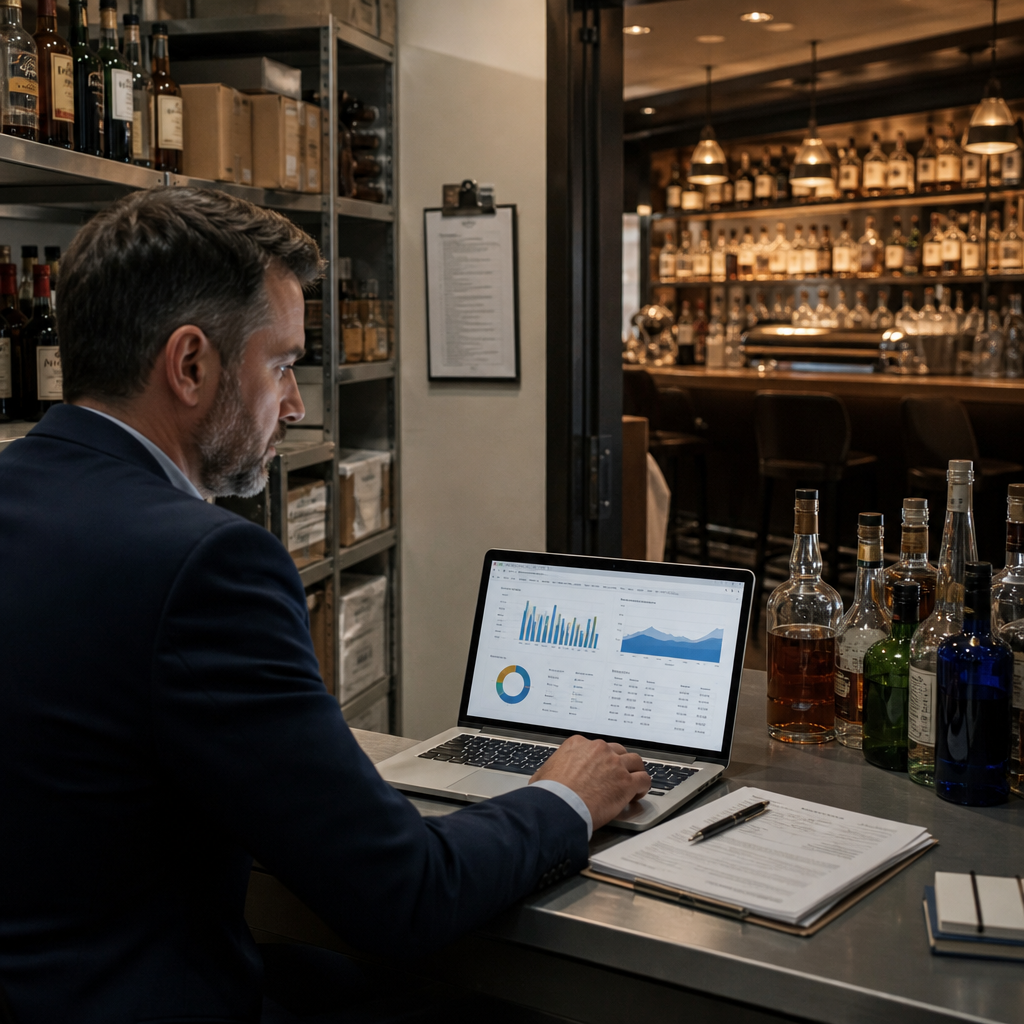
Hospitality operations leader reviewing beverage inventory analytics in a hotel bar back office

Scannabar was built to address exactly these conditions. The system uses barcode scanning technology to track every bottle from the moment it is received to the moment it is fully depleted, giving hotel operators real-time visibility that clipboard-and-spreadsheet methods cannot deliver.

Faster Counts With Better Accuracy

Scannabar measures the contents of approximately 120 bottles in roughly 15 minutes. Compare that to the hours it takes a team to weigh, estimate, and record the same number of bottles by hand.

That speed difference changes hotel operations in practical ways. You can count after every shift if needed, so variances surface immediately instead of hiding inside a monthly spreadsheet. That gives managers clearer control between counts.

Each bottle carries a unique barcode tracking label that ties it to a complete profile including brand, volume, dimensions, and cost. When a bottle goes missing from any location within your property, the Scannabar system flags it automatically.

That level of inventory accountability builds a culture of accountability across your bar team. When staff know every ounce is tracked, over-pouring and unauthorized consumption drop on their own.

Real-Time Reporting for Better Purchasing Decisions

With each scan, Scannabar updates your inventory values instantly and generates real-time reports on usage, variance, and cost. Your F&B Director no longer has to wait until the end of the week to review numbers. Trends become visible the same day they happen, which means purchasing decisions are based on actual consumption rather than estimates.

The system also integrates with your existing point-of-sale setup, creating a closed loop between what is sold and what is poured. When those two numbers do not match, you have a clear starting point for investigation.

That visibility turns your beverage program from a cost center running on gut feel into a profit center driven by real numbers.

How Better Inventory Data Supports Hotel Operations

Tighter inventory controls do more than reduce shrinkage. Purchasing managers can negotiate better supplier pricing because they have aggregated consumption data. Banquet teams can plan beverage packages for events with confidence, knowing exactly what is on hand.

Staff accountability improves as well. You are not playing inventory police. Accurate records protect staff from false accusations and give management the data they need to coach and reward performance.

For multi-property hotel groups, Scannabar provides centralized visibility across locations. A Director of Operations can compare pour costs and variance rates side by side, identifying which properties need attention without waiting for compiled reports.

What Hotel Operators Can Expect From a Stronger Inventory Process
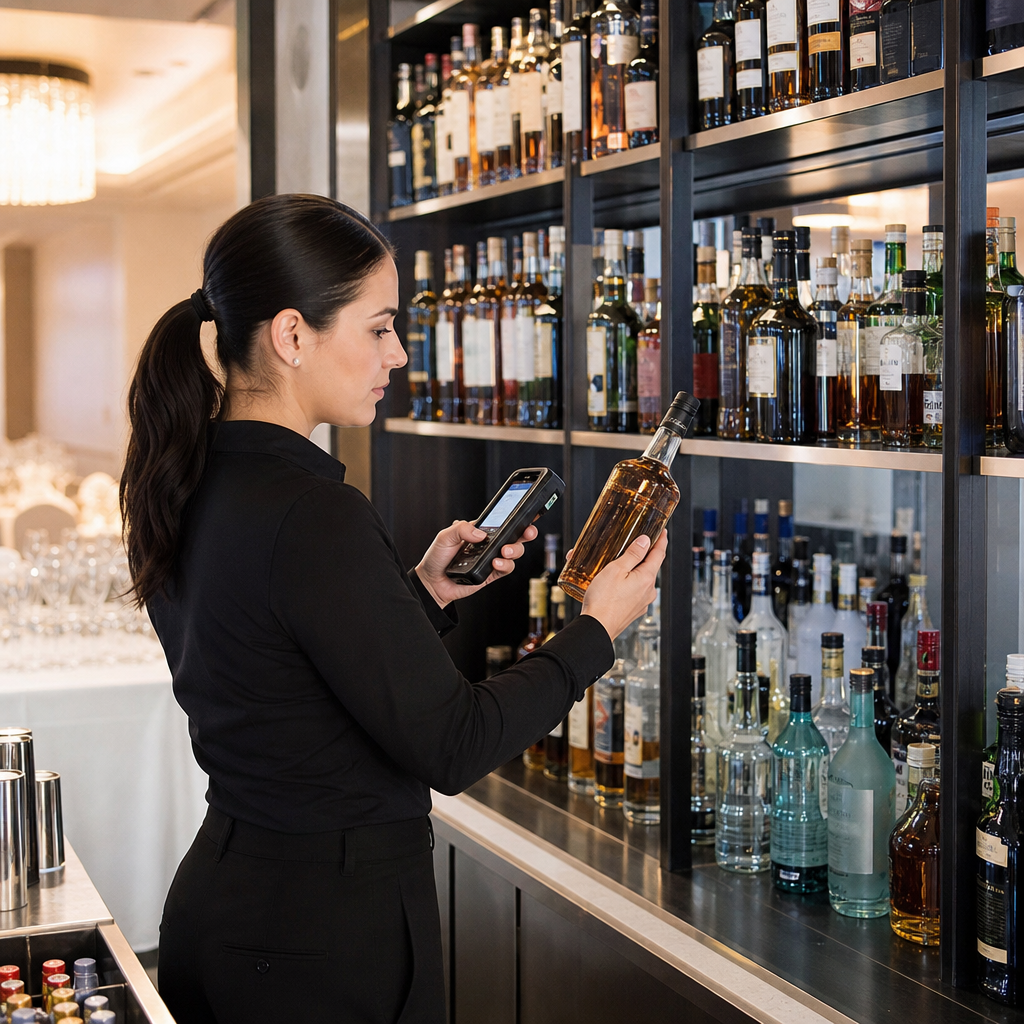
Hotel bar staff member scanning bottles with a handheld device during a fast inventory count

The financial impact can be measurable quickly. Scannabar says clients have reported reducing liquor shrinkage to 1% to 3% from much higher starting points, with beverage cost reductions reported within the first few weeks.

On Scannabar's testimonials page, one nightclub operator reported a 7% reduction in liquor cost across five venues with monthly sales above $250,000.

Beyond the numbers, you gain confidence in your own data. You order what you need, not what you think you need. You catch variances the day they happen, not the month after.

The question for any hotel operator comes down to this. You already know beverage costs are leaking. The only variable is whether you keep absorbing those losses or put a system in place that shows you exactly where every dollar goes. Schedule a live demo and see the difference for yourself.

FAQs About Hotel Bar Inventory Cost

What is a good pour cost percentage for a hotel bar?

Most profitable hotel bars target a pour cost between 18% and 24%, depending on the mix of spirits, wine, and beer they serve. If your pour cost consistently runs above that range, shrinkage, over-pouring, or purchasing inefficiencies are likely factors.

How does Scannabar track individual bottles across multiple hotel bars?

Scannabar assigns each bottle a unique barcode tracking label at the time of receipt. That label follows the bottle through every transfer and service point on your property. If a bottle goes missing from any bar or storage location, the system generates an automatic alert so you can investigate immediately.

How often should a hotel take bar inventory?

Frequency depends on your volume and risk tolerance. With Scannabar, hotel operators can move from weekly or monthly counts to daily or per-shift counts because the process takes minutes rather than hours. More frequent counts catch variances sooner and make it easier to pinpoint the source.

Can Scannabar integrate with hotel property management and POS systems?

Yes. Scannabar integrates with a wide range of point-of-sale platforms used in the hotel industry, including systems from major POS providers. This integration links sales data to inventory data, creating a closed loop that reveals discrepancies between what is sold and what is poured.

What is the fastest way to reduce hotel beverage shrinkage?

Start with accurate, frequent inventory counts and pair them with variance analysis. Scannabar gives you both by scanning your full bottle inventory in minutes and automatically flagging missing product, usage anomalies, and pour cost spikes. Faster visibility helps operators address shrinkage before it becomes routine.

Topics: Bar inventory, Liquor Inventory savings, bar inventory system, bar inventory software, bar inventory app, Best Liquor Inventory app, Cruise ship bar inventory, Country Club Liquor Inventory

How to Set Up Liquor Inventory for Your Hospitality Venture

Posted by Nick Kaoukis on Wed, Apr, 08, 2026 @ 09:04 AM

Master the art of liquor inventory management to reduce costs, prevent theft, and maximize profits in your bar, restaurant, or hotel.

Why Effective Liquor Inventory Management Makes or Breaks Your Bottom Line

In the hospitality industry, liquor inventory represents one of your most valuable and vulnerable assets. With profit margins for alcoholic beverages ranging from 70% to 80%, effective liquor inventory management directly impacts your bottom line. Poor inventory practices can lead to significant losses through over-ordering, spoilage, theft, and inaccurate pricing—all of which can turn a potentially profitable venture into a financial drain.

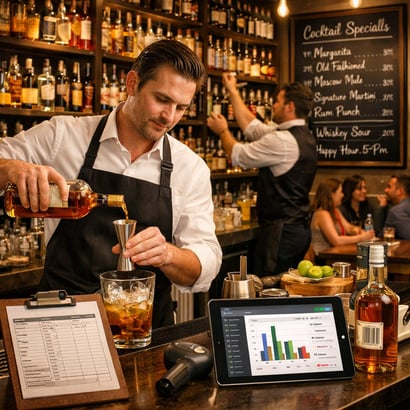
The numbers tell a compelling story: the average bar loses approximately 25% of its profits due to theft, over-pouring, and spillage. This translates to thousands of dollars annually for a small establishment and potentially hundreds of thousands for larger operations. When you consider that liquor costs typically account for 18-24% of total beverage sales, even a small percentage of waste or shrinkage can dramatically affect your profitability.Chalkboard Bar with Bartenders and Lively Patrons

Beyond preventing losses, effective liquor inventory management provides critical business intelligence. By tracking what sells and what doesn't, you can optimize your product mix, negotiate better terms with suppliers, maintain appropriate stock levels, and make data-driven decisions about pricing and promotions. A well-managed inventory system also ensures you never run out of popular items during peak service times—a situation that frustrates customers and leaves money on the table.

Essential Tools and Technology for Tracking Your Spirits

Modern liquor inventory management has evolved far beyond clipboards and spreadsheets. Today's technology solutions range from simple smartphone apps to sophisticated point-of-sale (POS) integrated systems that automate much of the tracking process. For new hospitality ventures, selecting the right tools depends on your operation's size, budget, and complexity. At minimum, you'll need a digital solution that allows you to record bottle counts, track usage patterns, and generate reports that highlight discrepancies.

Bar inventory software like BinWise, Partender, or Bevager offers specialized features designed for hospitality operations. These platforms typically include barcode scanning capabilities, recipe costing modules, and automated variance reports that compare theoretical usage (based on sales) against actual usage (based on physical counts). Many integrate seamlessly with popular POS systems like Toast, Square, or Clover, eliminating double-entry and reducing human error. For establishments with multiple locations, cloud-based solutions provide real-time visibility across your entire operation.

Don't overlook the importance of physical tools as well. Invest in quality measuring devices such as digital scales for partial bottle measurements, speed pourers with measured outputs, and color-coded bottle tags or labels for easy identification during counts. A reliable tablet or smartphone dedicated to inventory tasks keeps your process streamlined and professional. Finally, ensure you have proper storage equipment—locked liquor cages, organized shelving with clear labeling, and adequate lighting—to facilitate accurate and efficient counting.

Building Your Initial Par Levels and Reorder Points

Establishing appropriate par levels—the standard quantities you aim to keep in stock—is both an art and a science. Start by analyzing your projected sales volume, menu offerings, and storage capacity. For a new venture, you'll need to make educated estimates based on industry benchmarks and your business plan, then refine these numbers as actual sales data becomes available. A good rule of thumb is to maintain par levels that cover 1.5 to 2 weeks of expected usage for most items, with higher pars for best-sellers and lower pars for specialty items.

Different products require different approaches. Your well liquors and house wines—the high-volume, everyday selections—should have higher par levels with weekly reorder points. Premium and super-premium spirits that sell more slowly can maintain lower pars with bi-weekly or monthly reordering. Seasonal items and specialty cocktail ingredients require flexible par levels that adjust based on your current menu and promotional calendar. Create an ABC classification system: 'A' items are your top 20% of products that generate 80% of revenue, 'B' items are moderate sellers, and 'C' items are slow-movers or specialty products.

Set reorder points by calculating lead time from your suppliers and adding a safety buffer. If your distributor delivers twice weekly and you use three bottles of vodka per day, your reorder point should be set at 10-12 bottles (3-4 days' supply plus buffer). Factor in storage constraints, cash flow considerations, and any minimum order requirements from suppliers. Document your par levels and reorder points in a master inventory guide that's accessible to all relevant staff members, and schedule a quarterly review to adjust these numbers based on seasonal trends and evolving customer preferences.

Creating a Foolproof Counting and Auditing System

Consistency is the cornerstone of reliable liquor inventory management. Establish a regular counting schedule and stick to it religiously—most successful operations conduct physical inventories weekly, with some high-volume establishments counting daily or even by shift. Designate specific team members as inventory counters and provide thorough training on your methodology. Whether you count bottles by weight, visual estimation with tenths markings, or digital scanning, everyone must use the same method to ensure consistency and comparability across time periods.

Create a standardized counting route that follows the same path through your storage areas and bars every time. This might mean starting with the main bar well spirits, moving to back bar premium selections, then proceeding to the liquor storage room organized alphabetically or by spirit category. Use a systematic approach: count from left to right, top to bottom, recording each item in your inventory software as you go. For partial bottles, establish clear guidelines—some operations measure in tenths (full, 9/10, 8/10, etc.), while others use more precise measurements like ounces or milliliters captured by digital scales.

The audit process goes beyond counting—it involves variance analysis and investigation. After each inventory count, your system should generate reports showing theoretical versus actual usage for each product. Investigate any variance exceeding your predetermined threshold (typically 5-10%). Small variances might result from spillage, sampling, or comp drinks, but consistent or large discrepancies signal problems requiring immediate attention. Conduct surprise spot-checks between regular inventories, implement blind counts where one staff member counts without seeing previous numbers, and perform occasional shift-level inventories to pinpoint when discrepancies occur.

Preventing Shrinkage and Optimizing Your Liquor Costs

Shrinkage—the mysterious disappearance of inventory—is the silent profit killer in hospitality operations. Combating it requires a multi-layered approach combining technology, policy, and culture. Start with physical security: install cameras with clear views of storage areas and bars, implement lock-and-key systems with limited access, and ensure only authorized personnel can handle liquor. Use measured pour spouts or automated dispensing systems that regulate serving sizes and create an electronic record of each pour. These tools pay for themselves quickly by eliminating over-pouring, whether intentional or accidental.

Implement standard operating procedures that minimize opportunities for theft and waste. Require manager approval for all comps and discounts, with clear documentation in your POS system. Establish a bottle-for-bottle exchange policy where bartenders must turn in empty bottles before receiving replacements. Monitor your bar's liquor cost percentage weekly—calculated as cost of goods sold divided by liquor sales—and investigate immediately when this metric trends upward. Industry standards vary by establishment type, but most bars target a liquor cost percentage between 18-24%.

Build a culture of accountability where staff understands that inventory management affects everyone's success. Share relevant metrics with your team and celebrate improvements in shrinkage reduction and cost optimization. Consider implementing responsible service incentive programs that reward accuracy and efficiency. Regularly train staff on proper portioning, the financial impact of waste, and company policies regarding theft. When discrepancies occur, address them promptly and consistently according to your disciplinary procedures. Remember that most shrinkage results from poor systems and lack of oversight rather than intentional theft—fix the system first, then address individual accountability issues as needed.

Topics: Scannabar Inventory system, bar inventory system, Best Bar Inventory app, Best Liquor Inventory app, Cruise ship bar inventory, Country Club Liquor Inventory, Scannabar inventory app, Scannabar Inventory Software

Shrinkage Reduction Tools: Boosting Warehouse Efficiency

Posted by Nick Kaoukis on Thu, Oct, 30, 2025 @ 09:10 AM

Discover how innovative shrinkage reduction tools can transform warehouse operations, minimize losses, and maximize profitability in the retail sector.

Understanding Shrinkage: The Hidden Threat to Retail Warehouseswarehouse inventory

As CEO, I recognize that shrinkage—loss of inventory due to theft, administrative errors, or mismanagement—remains a persistent and costly challenge for retail warehouses. Often, these losses go unnoticed until they significantly impact the bottom line, eroding profitability and undermining operational efficiency.

Addressing shrinkage is not just about plugging leaks in inventory; it’s about gaining visibility and control over every product that moves through the warehouse. Effective shrinkage management is crucial for maintaining customer trust, ensuring product availability, and sustaining healthy margins in a highly competitive industry.

Key Shrinkage Reduction Tools Revolutionizing the Industry

The evolution of inventory management tools has empowered warehouses to proactively combat shrinkage. Solutions like the Scannabar inventory app are revolutionizing how businesses track, audit, and secure their stock. With real-time data capture, barcode scanning, and automated reporting, these tools significantly reduce manual errors and provide actionable insights into inventory movements.

By integrating advanced analytics and digital inventory logs, these tools allow us to identify patterns of loss and quickly address vulnerabilities. This industry shift toward smarter, data-driven tools marks a new era for loss prevention strategies.

Implementing Technology-Driven Solutions for Loss Prevention

Implementing technology such as the Scannabar inventory app offers a robust layer of protection against shrinkage. The app’s intuitive interface enables staff to conduct rapid and accurate inventory counts, reducing opportunities for theft and misplacement. Automated alerts and discrepancy reports ensure immediate action when anomalies are detected.

Moreover, cloud-based systems enable centralized oversight, allowing managers to monitor multiple warehouses and locations from a single platform. This connected approach not only streamlines operations but also creates a transparent audit trail that reinforces accountability across the organization.

Best Practices for Training Warehouse Staff on Shrinkage Tools

A crucial aspect of leveraging shrinkage reduction tools is ensuring staff are well-trained and comfortable with the technology. We recommend comprehensive onboarding sessions, regular refresher courses, and hands-on demonstrations to build confidence and proficiency in using inventory apps like Scannabar.

Fostering a culture of accountability and technological literacy not only enhances efficiency, but also empowers employees to actively participate in loss prevention. Clear communication of protocols and expectations ensures that everyone understands the importance of accurate inventory management.

Maximizing ROI Through Efficient Shrinkage Reduction Strategies

Investing in shrinkage reduction tools like Scannabar yields measurable returns. By minimizing losses, optimizing stock levels, and automating labor-intensive processes, businesses can realize significant cost savings and profitability gains. The real-time data provided by these tools supports data-driven decision-making, further enhancing operational agility.

Ultimately, adopting innovative shrinkage reduction strategies positions warehouses to thrive in an ever-evolving retail landscape. The combined effect of reduced losses, improved inventory accuracy, and empowered staff translates directly into maximized ROI and a stronger competitive edge.

Topics: Bar inventory, Liquor Inventory savings, bar inventory system, bar inventory software, Best Bar Inventory app, Best Liquor Inventory app, Cruise ship bar inventory, Country Club Liquor Inventory

Mastering Bar Inventory Control: Tips and Techniques

Posted by Nick Kaoukis on Thu, Jan, 18, 2024 @ 14:01 PM

Learn how to effectively manage and control your bar inventory with these expert tips and techniques.

The Importance of Bar Inventory ControlBar Inventory Control

Proper bar inventory control is essential for the success of any bar or nightclub. By accurately tracking the amount of liquor, beer, and other beverages in stock, bar owners can ensure that they are maximizing their profits and minimizing losses. Without a solid inventory control system in place, bars risk running out of popular drinks, overstocking on slow-moving products, and losing money due to theft or waste.

Implementing a standardized inventory system is the first step towards achieving effective bar inventory control. This involves creating a consistent process for counting and tracking inventory, as well as establishing clear guidelines for staff members to follow. By having a standardized system in place, bar owners can ensure that inventory counts are accurate and reliable, making it easier to identify and address any discrepancies.

In today's digital age, technology plays a crucial role in bar inventory management. By utilizing technology, such as barcode scanners or inventory management software, bar owners can streamline the inventory tracking process and reduce the chances of human error. These tools can automate inventory counts, generate reports on stock levels, and even provide real-time data on sales and consumption patterns. By leveraging technology, bar owners can gain valuable insights into their inventory and make informed decisions to optimize their operations.

Effective ordering and stocking strategies are also key components of bar inventory control. By analyzing sales data and trends, bar owners can determine which products are in high demand and which ones are not performing well. This information can help them make informed decisions when it comes to ordering new stock and adjusting their inventory levels. Additionally, bar owners should establish relationships with reliable suppliers and negotiate favorable terms to ensure timely and cost-effective deliveries.

Finally, minimizing losses and maximizing profits is a critical aspect of bar inventory control. This involves implementing measures to prevent theft, spillage, and waste. Bar owners should train their staff on proper pouring techniques and monitor drink preparation to minimize over-pouring or giving away free drinks. Regular inventory audits can help identify any discrepancies, while implementing strict control measures, such as locking up high-value products, can deter theft. By taking proactive steps to minimize losses, bar owners can maximize their profits and ensure the financial health of their business.

Topics: bar profitability, bar control, bar inventory system, liquor inventory system, liquor control, bar operations