Expert Advice on Hospitality Topics

How to Build a Hotel Bar Inventory SOP in 7 Steps (2026)

Posted by Nick Kaoukis on Wed, Sep, 23, 2026 @ 13:09 PM

When inventory handling changes from shift to shift, your hotel bar loses control of its margins. One bartender counts by weight, the next estimates by eye, and the third skips the count entirely. The result: shrinkage that nobody can explain. For a hotel doing $800,000 in annual beverage sales, even a 15% loss rate means $120,000 vanishing with no paper trail.

A written bar inventory management SOP removes that ambiguity. It defines who counts, when they count, how they record every bottle, and what happens when the numbers do not match. Scannabar standardizes hotel inventory procedures across every outlet, making the SOP enforceable rather than aspirational.

This guide walks you through seven steps to build a repeatable inventory SOP for your bars, banquet areas, and beverage outlets.

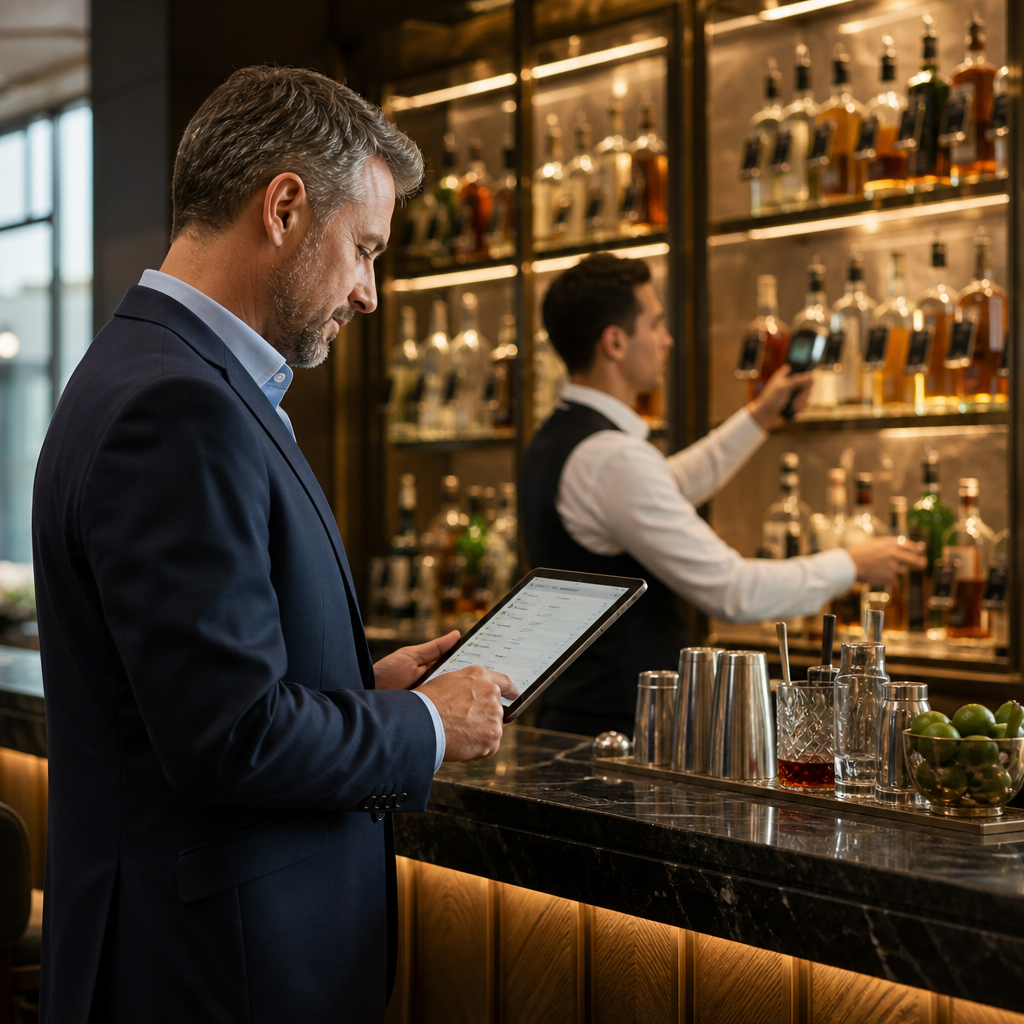
Hospitality manager and bar lead reviewing a hotel bar inventory process beside organized bottles and labels

Quick Guide: How to Build a Hotel Bar Inventory SOP in 7 Easy Steps

  1. Set the scope and count window: Define which outlets, products, and time periods each count covers.
  2. Standardize receiving and delivery checks: Verify every shipment against the purchase order before signing off.
  3. Organize storage and bottle labeling: Assign bin locations and label every bottle for fast, accurate counts.
  4. Define how full and open bottles are counted: Pick one measurement method and apply it to every open container.
  5. Document transfers, breakage, and comps: Log every bottle that moves, breaks, or leaves inventory as a comp.
  6. Reconcile counts against sales and usage: Use Scannabar to compare physical counts with POS data automatically.
  7. Assign ownership, review cadence, and follow-up: Name who runs the process and how often results are reviewed.

How to Build Your Hotel Bar Inventory SOP

1. Set the scope and count window

Your SOP starts by answering three questions: what do you count, where do you count it, and when does each count happen? In a hotel, "what" typically means all liquor, wine, beer, and high-value dry goods across every revenue-producing outlet.

"Where" means naming each location individually: lobby bar, pool bar, restaurant bar, banquet prep area, wine cellar, and any service bar. Lumping outlets together destroys accountability because nobody can trace a variance to a specific room.

Set a fixed count window. Weekly counts for your top 20 highest-value products and monthly counts for everything else is a practical starting point. For a deeper look at weekly inventory benefits, the data is clear. Lock the day and time so the count always happens at the same point in the operating cycle.

2. Standardize receiving and delivery checks

Every SOP needs a receiving protocol that catches errors at the loading dock, not at month-end. When a delivery arrives, one designated person should match every line on the invoice to the actual cases and bottles on the pallet. Short shipments, wrong brands, and damaged goods get flagged before anyone signs off. For more on building a reliable receiving process, the fundamentals apply to every hotel.

Record the receiving data immediately: product name, SKU, quantity received, supplier, and the name of the person who verified the order. If your hotel uses a property management system or an inventory platform, that data should enter the system the same day.

An unverified delivery is an uncontrolled entry point. Shrinkage starts at the loading dock, not behind the bar.

3. Organize storage and bottle labeling

A disorganized storeroom makes every count slower and less accurate. Assign a fixed bin location for each SKU. Group products by category: spirits on one shelf, wines in a designated cooler or cellar, beer and draft supplies in a separate area.

Label every bottle that enters your inventory. Barcode labels are ideal because they remove the need for handwritten tags and eliminate identification errors during counts. Scannabar uses barcode scanning to identify each bottle instantly, so a full count of 120 bottles takes about 15 minutes.

Enforce a first-in, first-out rotation rule. Bottles received first should be pulled first. This prevents dead stock, keeps product fresh, and makes it easier to spot when something goes missing.
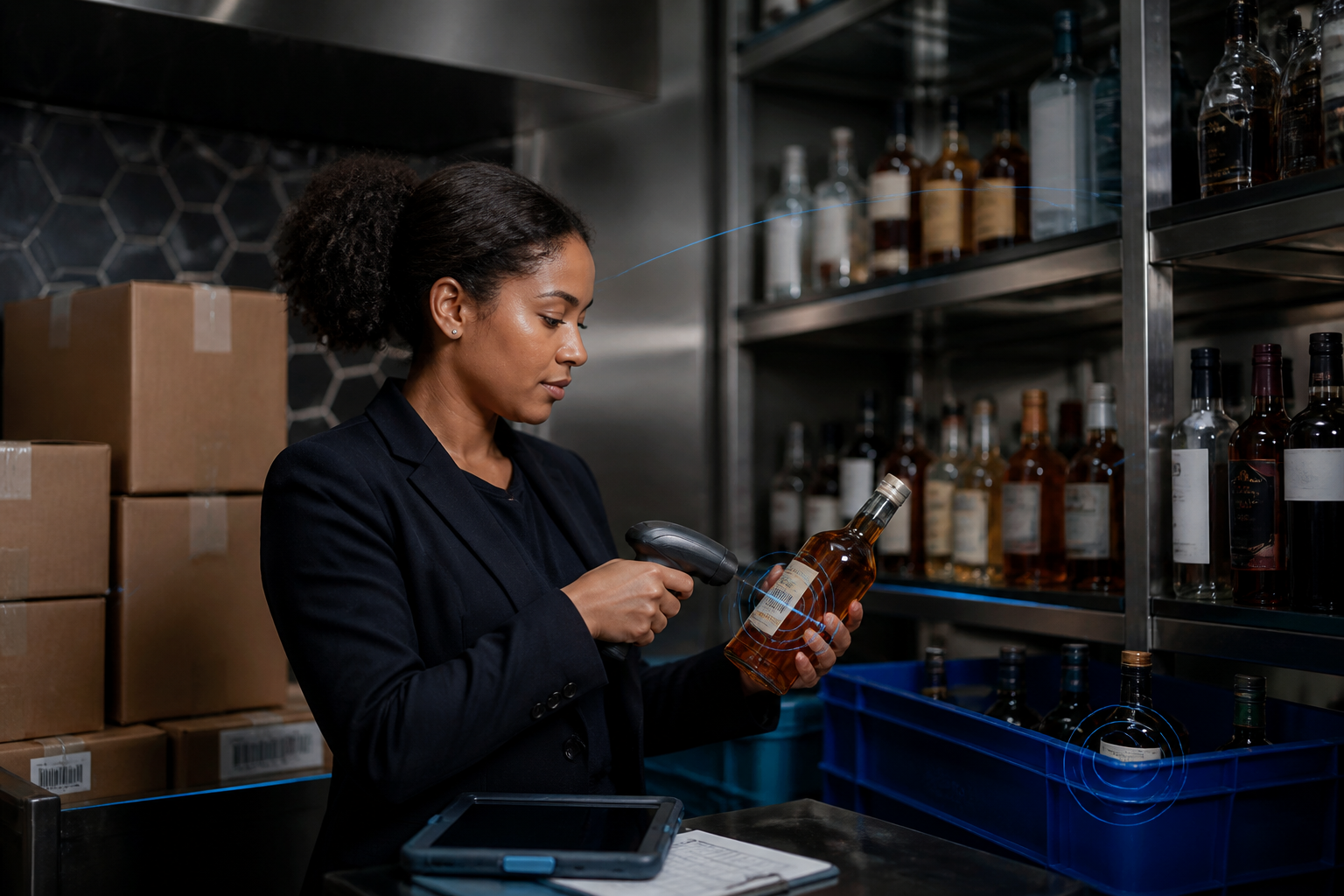
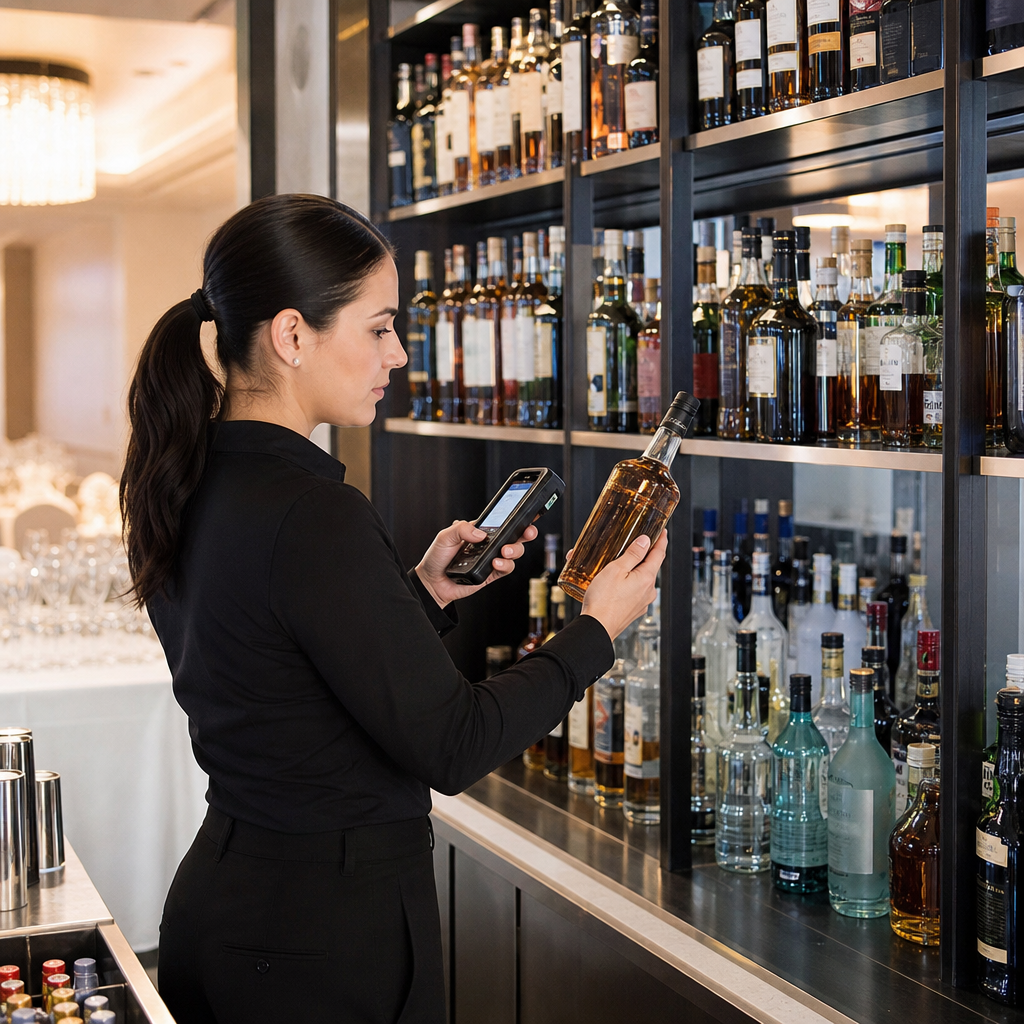
Hotel staff member scanning labeled beverage inventory in an organized bar storage area

4. Define how full and open bottles are counted

Sealed bottles are simple: count each unit. Open bottles are where most SOP breakdowns happen. If one person estimates by eye and another uses a ruler, your data will never be consistent enough to detect real variance.

Pick one method and document it in the SOP. Bottle-level measurement using a barcode-enabled scale or ruler provides the most precise data and removes human estimation from the process. Scannabar measures the exact contents of every open bottle, so your variance analysis starts from verified figures rather than rounded guesses.

Whatever method you choose, train every person who touches a count on the same technique. A consistent method with a small margin of error beats an inconsistent one with no margin at all.

5. Document transfers, breakage, and comps

In a hotel, bottles move between outlets constantly. The banquet team borrows vodka from the lobby bar. The pool bar sends leftover wine back to the cellar. Without documentation, those movements create phantom variances that make your data useless.

Build a transfer log into the SOP. Every inter-outlet movement needs a record: the product, the quantity, the origin, the destination, and the name of the person who authorized it. The same log should capture breakage, spoilage, and complimentary pours with a reason code attached.

Unrecorded comps are invisible shrinkage. A simple daily log signed by a manager keeps these losses visible and accountable.

6. Reconcile counts against sales and usage

Counting inventory is only half the process. The SOP must also define how your team compares what you counted against what the POS system says you sold. The difference between the two is your variance, and it tells you where profit is disappearing.

Scannabar automates this reconciliation by pulling sales data directly from your POS and comparing it against physical counts. The resulting variance report breaks down discrepancies by product, outlet, and time period, so your food and beverage director can identify exactly where losses originate.

Without reconciliation, a count is just a number. With it, a count becomes a diagnostic tool.

7. Assign ownership, review cadence, and follow-up

Every SOP needs a named owner. In most hotels, that is the bar manager or the F&B controller. This person is responsible for ensuring the count happens on schedule, the data gets recorded, and variances get investigated.

Set a review cadence. Weekly variance meetings for high-risk items and monthly reviews for the full inventory keep the SOP alive. A process that generates reports nobody reads is a recipe for failure within a quarter.

Define follow-up actions for variance thresholds. If any product exceeds a 3% variance, the SOP should trigger a specific response: re-count, investigate transfers, review POS data, and document findings. That follow-up loop is what turns a written SOP into an operational control system.

What Should a Hotel Bar Inventory SOP Include?

A complete hotel bar inventory SOP should cover six core elements: scope and frequency of counts, receiving and verification procedures, storage and labeling standards, counting methods for both sealed and open containers, transfer and write-off documentation, and a reconciliation and review process.

Each element needs named responsibilities. The SOP should specify who performs each task, who reviews the results, and who has authority to approve write-offs or investigate variances.

Include a training section that defines how new hires learn the process. If the SOP lives only in one manager's head, it breaks the moment that manager calls in sick or transfers to another property.

How Often Should a Hotel Update Its Inventory SOP?

Review your inventory SOP at least twice a year, and update it immediately whenever your operation changes. New outlets, new POS integrations, staff restructuring, and seasonal menu swaps all create gaps in an outdated SOP. According to FSM.How's guide to beverage control, consistent standardization of recipes, measurement, and storage is the foundation of any effective beverage control system.

The review should include a performance check: are variances trending down since the last revision? If not, the SOP itself may need tighter controls on the specific step where losses concentrate.

Assign the SOP review to the same person who owns the weekly count. That person sees the data most frequently and is in the strongest position to identify where the document no longer matches reality.

How Scannabar Helps You Enforce a Hotel Bar Inventory SOP
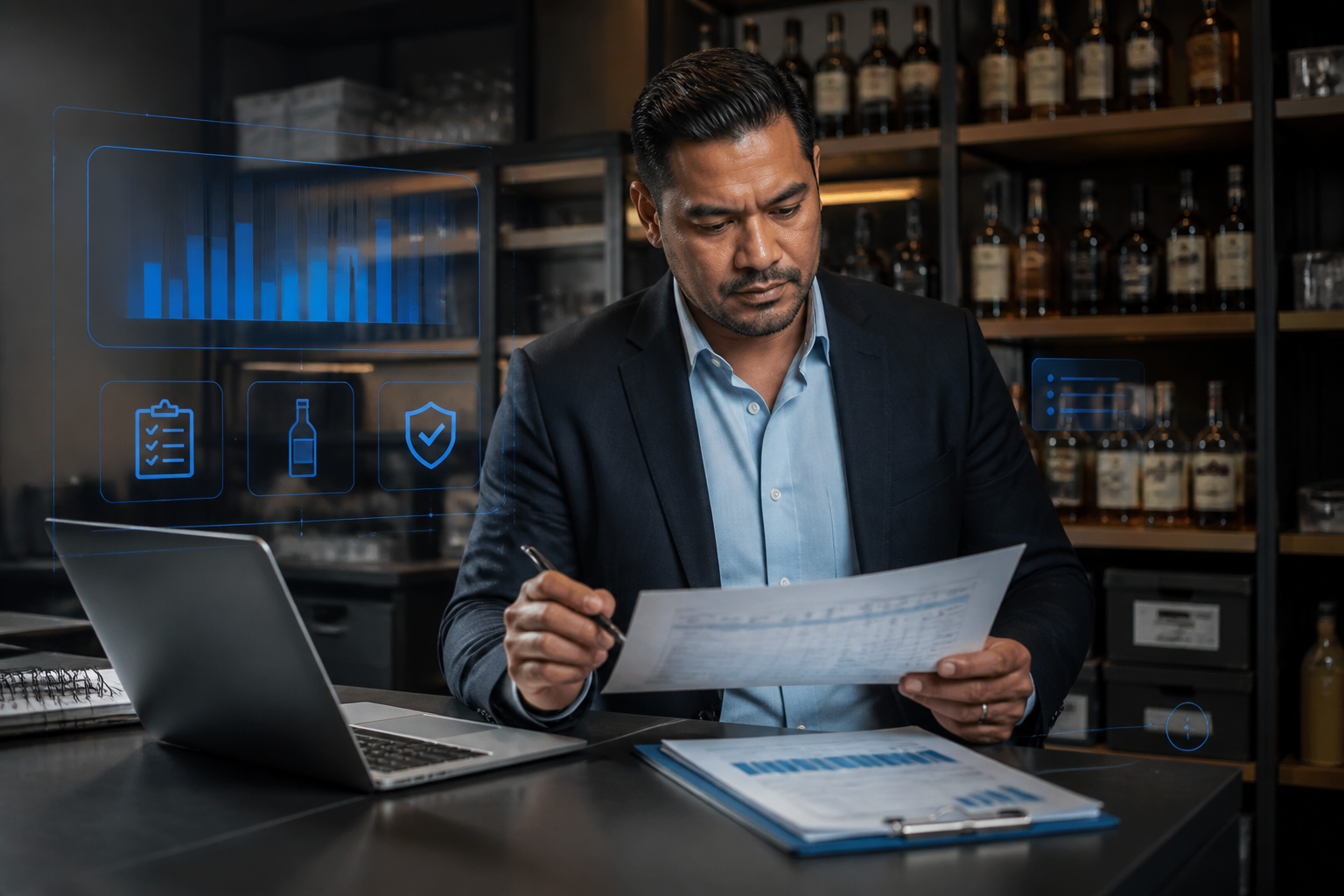
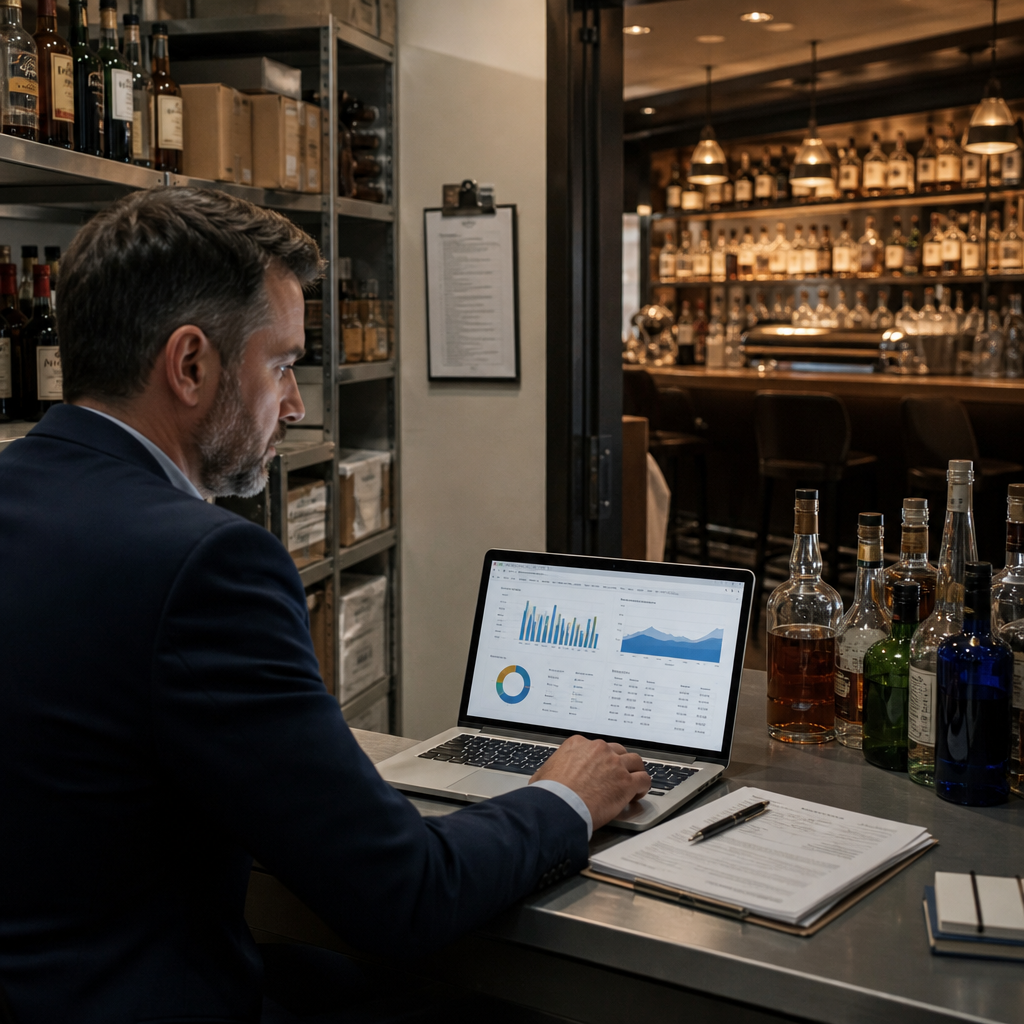
Hotel food and beverage director reviewing inventory reports and SOP performance near the back bar

Scannabar turns a written SOP into a system your team can execute in minutes rather than hours. The Scannabar Inventory Control System uses barcode scanning to measure the exact contents of every bottle, removing the estimation errors that undermine consistency across shifts and outlets.

Because Scannabar integrates with your POS and property management systems, it automatically reconciles physical counts against sales. Variance reports break down discrepancies by product, outlet, and time period, giving your F&B director the data to act on findings the same week they appear.

Hotels running Scannabar routinely operate at 1% to 3% shrinkage, down from the 20% to 25% industry average. You can read more about lowering beverage costs in hotel environments. The system handles receiving logs, transfer records, and open-bottle measurements inside one platform, so every element of your SOP feeds a single source of truth.

Ready to make your SOP enforceable? Call 1-800-939-8960 to talk to someone who has been building hotel inventory systems since 1998.

FAQs About Hotel Bar Inventory SOPs

What is a hotel bar inventory SOP?

A hotel bar inventory SOP is a written procedure that defines how your team receives, stores, counts, and reconciles beverage inventory across every outlet. It standardizes the process so results are consistent regardless of who runs the count or which shift is on duty.

Who should be responsible for the inventory SOP in a hotel?

The bar manager or F&B controller typically owns the SOP. This person ensures counts happen on schedule, reviews variance data, and initiates follow-up when numbers fall outside acceptable thresholds. Scannabar gives that owner real-time visibility into every count across the property.

How long does it take to implement a bar inventory SOP?

Most hotels can draft and deploy a working SOP within two to four weeks. The timeline depends on the number of outlets, the level of staff training required, and whether you are integrating inventory software. Scannabar reduces counting time by up to 75%, which accelerates adoption.

Can a bar inventory SOP prevent theft?

An SOP creates a culture of accountability that makes theft harder to hide. When every bottle is logged at receiving, tracked through transfers, and measured at each count, unexplained losses surface quickly. Scannabar identifies missing bottles at any location within the property, giving managers the data to investigate gaps before they grow.

How does an inventory SOP differ for hotels with banquet operations?

Hotels with banquets need an SOP that accounts for large-volume transfers between storage and event areas. The SOP should include a pre-event pull sheet, a post-event return count, and a reconciliation step that isolates banquet variance from regular bar operations. This prevents event-driven movement from distorting your day-to-day data.
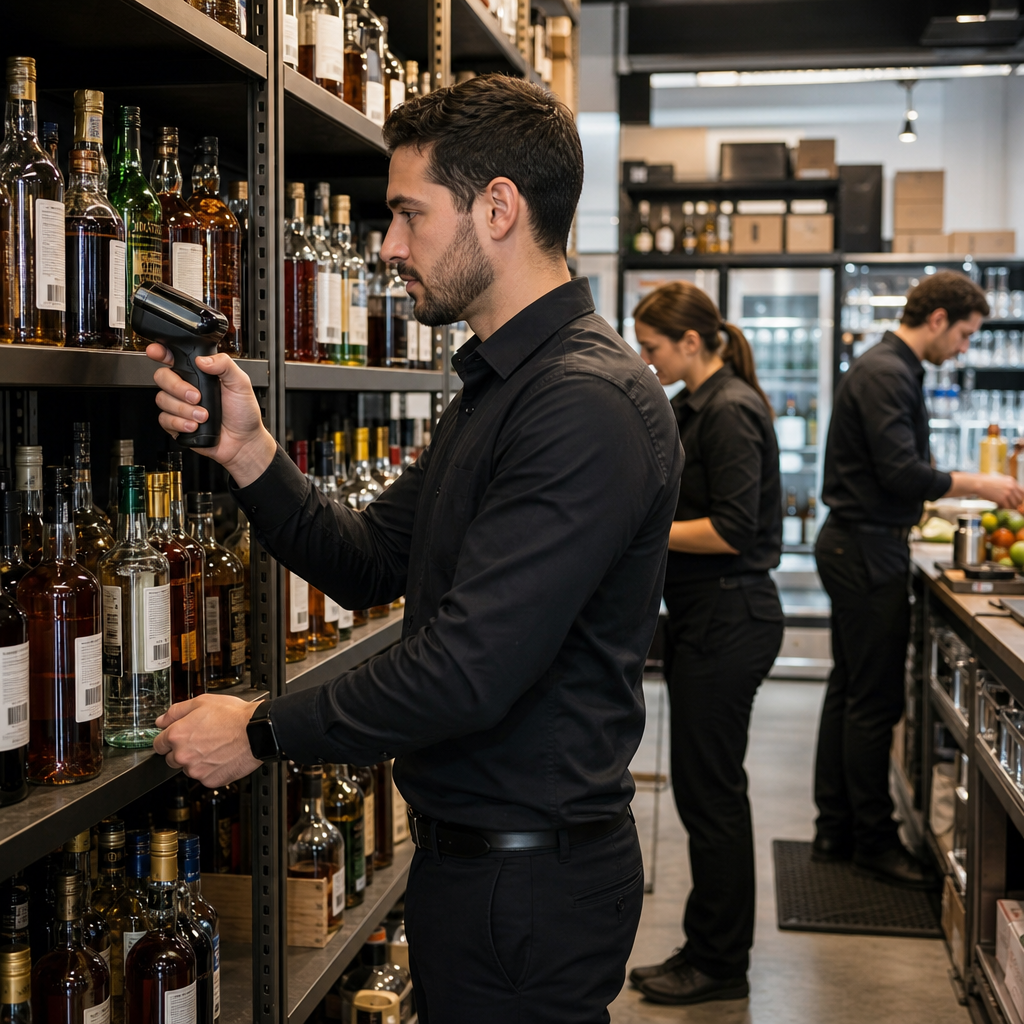
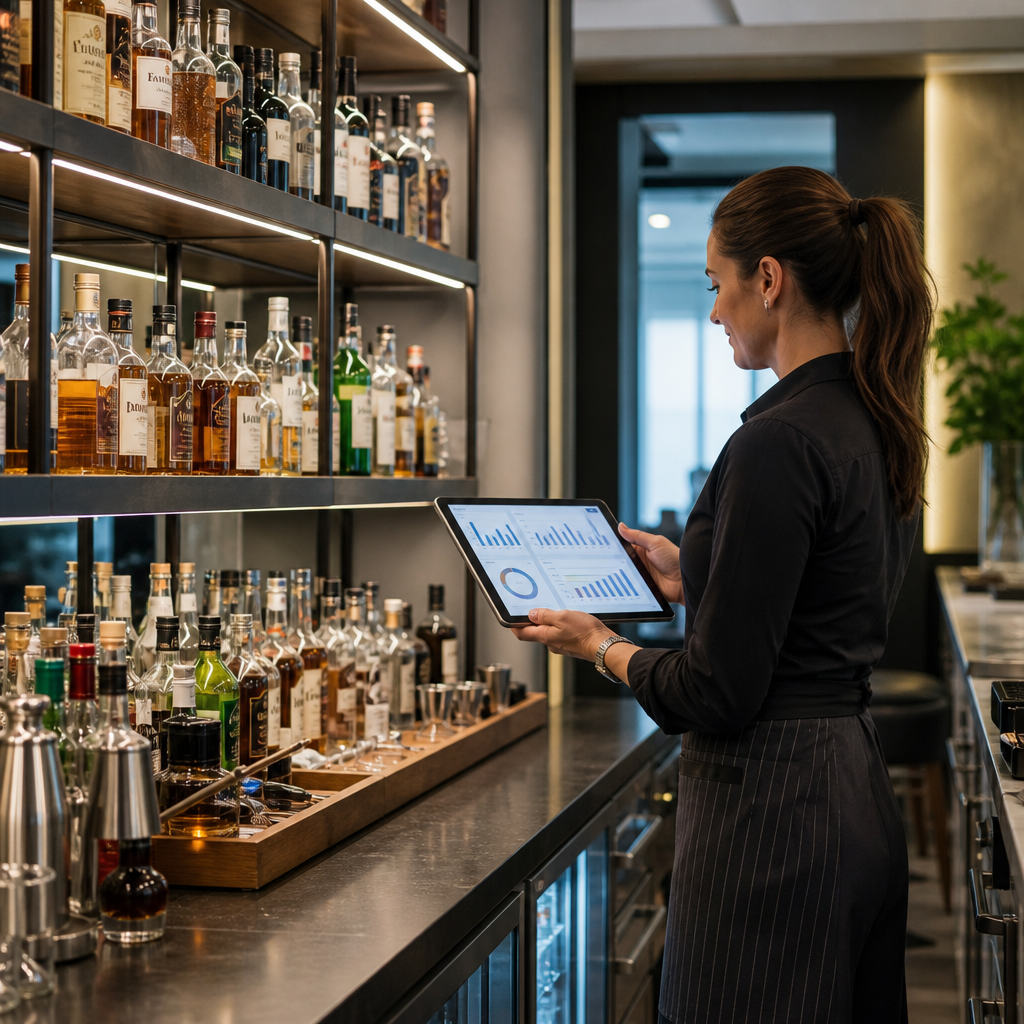
Topics: Hotel Inventory, liquor purchasing, hotel supplies, purchasing, bar inventory app, Hotel Bar Inventory, Best Liquor Inventory app, Scannabar inventory app, Restaurant Inventory app, hotel staff

Inventory Control for Lean Hospitality Teams in 2026

Posted by Nick Kaoukis on Tue, Sep, 15, 2026 @ 11:09 AM

Hospitality manager using barcode scanning to complete inventory checks with a lean team

Running a hospitality operation with fewer people on the floor changes everything about how you manage inventory. Routine counts get pushed back. Variance goes unnoticed for days. Bottles walk out the door, and nobody catches it until the P&L tells the story weeks later.

Scannabar helps bar, restaurant, and hotel operators tighten inventory control so lean teams can protect margins without adding headcount. This article breaks down why staffing shortages create inventory risk, how the right controls reduce labor drag, and why accountability does not have to mean surveillance.

Key Takeaways: Inventory Control for Lean Hospitality Teams

  • Staffing shortages weaken daily control routines, letting small inventory gaps compound into costly patterns over time.
  • Automated inventory checks reduce the labor hours spent on traditional processes, freeing staff for guest-facing tasks.
  • Standardized processes cut training time during high-turnover periods, keeping new hires productive and accurate faster.
  • Scannabar gives operators real-time variance data across bars, restaurants, and hotels from a single system.
  • Clear inventory records protect honest team members from false accusations and surface problems before they become expensive.

Why Staffing Shortages Create Inventory Risk Fast

When you lose a bartender or a shift manager, the first casualty is process. The nightly count gets skipped. The walk-in cooler check happens every other day instead of daily. Par levels stop getting updated because whoever used to do it is gone.

Those gaps look minor in week one. By week four, you are staring at variance you cannot explain. The National Restaurant Association reports that internal factors account for roughly 75% of restaurant inventory shortages. Short staffing makes that number worse because there are fewer eyes on the product and fewer hands doing the work.

For a bar generating $500,000 in annual beverage revenue, even a 3% undetected variance means $15,000 in losses. When teams are stretched thin, that money walks out the door before anyone realizes it is missing.

How Small Inventory Gaps Turn Into Expensive Patterns

A single missed count is a rounding error. A month of missed counts is a pattern your margins cannot absorb. Over-ordering follows because you are replacing bottles you think were sold but were actually lost to waste, spillage, or theft.

Beyond the direct cost, inaccurate inventory creates a cascade of operational problems. Purchasing decisions rely on bad data. Stockouts hit your best-selling items on the busiest nights. Menu profitability reports become fiction.

A BCG and NYU School of Professional Studies analysis found that 65% of North American hotels reported staffing shortages in 2025, with labor costs rising 11.2% year over year. When labor is both scarce and more expensive, the cost of flying blind on inventory compounds faster than most operators realize.

How Automated Inventory Counts Save Labor Hours

Traditional inventory checks eat hours. A bar manager walking the floor with a clipboard, weighing and tallying partial bottles, can spend three to five hours on a single full count. That is three to five hours pulled away from ordering, training, scheduling, and being present during service.

Barcode scanning technology changes the math. A portable scanner reads each bottle in seconds, captures partial contents using a calibrated ruler, and updates your software instantly. This barcode tracking approach replaces the clipboard-and-spreadsheet routine entirely. One operator reported completing inventory for two restaurants, a nightclub, and exterior bars in roughly one hour with a single Scannabar system.

That time savings compounds every count. If you are counting weekly instead of monthly because the process is fast enough to be practical, you catch variance earlier and correct it before it compounds.

Why Standardized Processes Make Training Easier During Turnover

High turnover remains a fact of life in hospitality. Every departure means onboarding someone new, and every new hire opens a window of vulnerability in your inventory process.

When your bar inventory control relies on one person's memory of where everything is and how counts are done, losing that person means starting from scratch. Standardized, system-driven processes eliminate that single point of failure. Proper staff training paired with a repeatable workflow keeps accuracy high regardless of who is on shift.

Scannabar's barcode-driven workflow means the process is the same for a tenured bar manager and a new hire finishing their first week. Scan the tracking label. Scan the UPC. Measure the contents. The software handles the math. That consistency reduces training time and protects accuracy when your roster is changing fast.

How Variance Reporting Prevents Theft Without Creating a Policing Culture

Theft in hospitality is documented and widespread. The National Restaurant Association estimates that employee theft accounts for about 75% of inventory shortages in U.S. restaurants. That is not a number operators can afford to ignore, especially when short staffing reduces oversight.

But catching theft is different from creating a culture of suspicion. The difference comes down to how you surface discrepancies. Variance reports that compare what your POS says you sold against what your shelves actually hold tell an objective story. No accusations. No gut feelings. Just numbers.

When your inventory control system generates automated variance analysis, you see where the gaps are before they grow into patterns. A bottle that does not reconcile after a Tuesday night shift is a conversation, not an investigation. That distinction matters to staff morale and retention.

Hospitality manager reviewing inventory variance data in a calm, organized bar back area

Why Clear Inventory Records Protect Honest Staff Members

Most of your team is not stealing from you. They show up, pour accurately, and handle product with care. When inventory discrepancies surface without documentation, suspicion falls on everyone, and that is corrosive to morale.

A system that tracks every bottle from delivery to depletion creates a clear chain of custody. Honest employees benefit from that transparency because their work is documented and verifiable. When a variance appears, the data points to where and when it happened, removing speculation and false accusations.

Scannabar builds this kind of accountability by assigning each bottle a unique barcode identity and tracking it through its entire lifecycle. That record protects your staff as much as it protects your profits, creating what effective operations teams call a culture of accountability rather than a blame-heavy environment. You can read more about reducing bar shrinkage with structured tracking.

How Scannabar Supports Broad Hospitality Operations

Inventory control challenges are not limited to standalone bars. Hotel bars managing multiple lounges and banquet stations face the same variance and labor pressures at a larger scale. Multi-unit restaurant groups need standardized processes across locations so that inventory data rolls up into meaningful comparisons.

Scannabar is purpose-built for this range of hospitality operations. Whether you operate one neighborhood bar or a resort with multiple beverage outlets including wine programs, the system provides centralized visibility across all locations. Managers see real-time dashboards showing stock levels, pour costs, and variance data without waiting for end-of-month reconciliation.

The system integrates with point-of-sale platforms and property management systems, creating closed-loop tracking from the moment a bottle is received through every pour of your liquor inventory until it is empty. That integration means fewer manual reconciliations and faster detection of discrepancies at any location within your operation.

What Lean Hospitality Teams Gain From Better Inventory Data

When your team is smaller, every hour and every dollar matters more. Reliable inventory data lets you make purchasing decisions based on actual usage patterns instead of estimates and assumptions. Automatic reorder alerts prevent stockouts of your best sellers without requiring someone to manually check par levels.

Velocity reports show which products are moving and which are sitting, helping you adjust your menu mix and negotiate better with suppliers using aggregated purchasing data. These are decisions that directly impact margins, and they become possible only when you trust the numbers behind them.

Scannabar reduces inventory counting time by up to 75% compared to traditional methods, giving your staff more hours to spend on the floor, behind the bar, and in front of guests.

In Conclusion: The Cost of Waiting Is Higher When Teams Are Already Stretched

Staffing shortages are not going away. Labor costs are rising. Every week you operate without reliable inventory control is a week where shrinkage, waste, and theft go undetected. For a lean team, the question is not whether you can afford to invest in inventory control. The question is whether you can afford to keep operating without it.

Scannabar gives hospitality operators the real-time data, automated counts, and variance reporting they need to run tighter operations with fewer people. When your team is already stretched, that visibility is what keeps money from walking out the door.

FAQs About Inventory Control for Lean Hospitality Teams

How does inventory control help hospitality teams with staffing shortages?

Automated inventory systems reduce the hours spent on traditional inventory checks, freeing your remaining staff for guest-facing work. Scannabar cuts counting time by up to 75%, making it practical to count more frequently even with a smaller team.

Can bar inventory control prevent theft without hurting staff morale?

Yes. Variance reports compare actual inventory against POS sales data, surfacing discrepancies objectively. Scannabar frames this as accountability, protecting honest employees while identifying where losses occur.

What types of hospitality businesses benefit from inventory control software?

Bars, restaurants, hotels, nightclubs, country clubs, and multi-unit groups all benefit. Scannabar is designed for operations ranging from a single bar to resorts with multiple beverage outlets and banquet stations.

How quickly can new staff learn to use an inventory control system?

Barcode-driven systems require minimal training. With Scannabar, staff scan a tracking label and a UPC code per bottle. The software handles measurement and reporting, so a new hire can perform accurate counts within their first shift.

What is the financial impact of not having inventory control during staffing shortages?

Bars and restaurants typically lose 20% to 25% of beverage profits to shrinkage. Without regular inventory controls, those losses accelerate during short-staffed periods. Scannabar users have reported reducing liquor shrinkage by over 60% after implementation.

Topics: Restaurant Inventory, liquor theft, Scannabar Inventory system, bar theft, Scannabar inventory app, Resaurant Inventory app, Restaurant Inventory app, Scannabar Inventory Software

How to Cut Hotel Bar Inventory Costs in 2026

Posted by Nick Kaoukis on Sun, Sep, 13, 2026 @ 13:09 PM

Most hotel operators know their beverage program should be profitable. Margins on alcoholic drinks can reach 70% to 80%, making the bar one of the highest-margin departments in any property. Yet too many hotels watch those margins erode month after month. The money is leaving. They just can't see where.

Shrinkage, slow inventory counts, weak reporting, and delayed purchasing decisions all drain revenue at the same time. Scannabar helps hotel and resort operators close those gaps with precise, bar inventory management built for hospitality.

Below, you will find where hotel beverage costs leak and how a structured inventory process puts you back in control.

Hotel bar manager reviewing inventory on a tablet while staff scan labeled bottles in an upscale bar

Key Takeaways: Hotel Bar Inventory Cost Reduction

  • Hotel beverage margins erode through shrinkage, over-pouring, and slow inventory processes that mask real losses.
  • Delayed inventory data forces purchasing decisions based on guesswork, leading to costly overstocking or stockouts.
  • Scannabar reduces inventory counting time by up to 75%, freeing staff to focus on guest service.
  • Real-time variance reports help you spot discrepancies the same day they occur, not weeks later.
  • Hotels that tighten inventory processes can reduce losses faster when issues are identified earlier.

Why Hotel Beverage Costs Rise Faster Than Teams Expect

Hotel bars operate under conditions that amplify loss. Multiple service points, rotating staff, banquet functions, and poolside portable bars all create opportunities for product to leave the building unaccounted for. A single lobby lounge might stock 80 to 120 bottles at any time, and every one of those bottles represents money sitting on a shelf.

According to CBRE's 2025 Trends in the Hotel Industry report, F&B department profit margins for surveyed U.S. hotels reached 29.1% in the first half of 2025. At the same time, Scannabar reports that many operators struggle with shrinkage, waste, and over-pouring that steadily erode those margins.

For a hotel bar generating $500,000 in annual beverage revenue, even a modest loss rate can put tens of thousands of dollars at risk each year.

Where Beverage Margin Slips Away

Shrinkage in a hotel bar rarely comes from one source. Over-pouring is common when bartenders pour without consistent portion standards. Spillage adds up across dozens of drinks per shift. Theft is a documented industry reality. It is not a hypothetical. And it accelerates wherever there is no system tracking individual bottles.

Beyond the bar rail, losses multiply during transfers between storage and service points. A bottle moved from the main storeroom to a banquet station may never get scanned back in. Without perpetual tracking, that bottle simply disappears from your records.

The financial impact cascades from there. You over-order to compensate for phantom shortages. Your pour cost percentage climbs. Your purchasing team cannot see what is actually driving the variance. That is money walking out the door every period.

Why Delayed Inventory Data Hurts Decisions

Many hotel properties still count inventory on a weekly or monthly cycle using clipboard-and-spreadsheet methods. By the time those numbers are compiled, the information is already stale. A variance that appeared during a busy weekend does not surface until the following week, making it difficult to identify which shift or bar station needs attention.

Stale data poisons purchasing decisions. If your Food and Beverage Director places orders based on last month's consumption estimates rather than real-time usage, you end up carrying excess stock on slow-moving SKUs while running short on your highest-velocity items.

That mismatch ties up capital in dead stock, increases waste from expired product, and forces emergency orders at higher prices. None of that shows up on a single invoice. All of it hits your bottom line.

How Scannabar Improves Cost Control Across Hotel Bars

Hospitality operations leader reviewing beverage inventory analytics in a hotel bar back office

Scannabar was built to address exactly these conditions. The system uses barcode scanning technology to track every bottle from the moment it is received to the moment it is fully depleted, giving hotel operators real-time visibility that clipboard-and-spreadsheet methods cannot deliver.

Faster Counts With Better Accuracy

Scannabar measures the contents of approximately 120 bottles in roughly 15 minutes. Compare that to the hours it takes a team to weigh, estimate, and record the same number of bottles by hand.

That speed difference changes hotel operations in practical ways. You can count after every shift if needed, so variances surface immediately instead of hiding inside a monthly spreadsheet. That gives managers clearer control between counts.

Each bottle carries a unique barcode tracking label that ties it to a complete profile including brand, volume, dimensions, and cost. When a bottle goes missing from any location within your property, the Scannabar system flags it automatically.

That level of inventory accountability builds a culture of accountability across your bar team. When staff know every ounce is tracked, over-pouring and unauthorized consumption drop on their own.

Real-Time Reporting for Better Purchasing Decisions

With each scan, Scannabar updates your inventory values instantly and generates real-time reports on usage, variance, and cost. Your F&B Director no longer has to wait until the end of the week to review numbers. Trends become visible the same day they happen, which means purchasing decisions are based on actual consumption rather than estimates.

The system also integrates with your existing point-of-sale setup, creating a closed loop between what is sold and what is poured. When those two numbers do not match, you have a clear starting point for investigation.

That visibility turns your beverage program from a cost center running on gut feel into a profit center driven by real numbers.

How Better Inventory Data Supports Hotel Operations

Tighter inventory controls do more than reduce shrinkage. Purchasing managers can negotiate better supplier pricing because they have aggregated consumption data. Banquet teams can plan beverage packages for events with confidence, knowing exactly what is on hand.

Staff accountability improves as well. You are not playing inventory police. Accurate records protect staff from false accusations and give management the data they need to coach and reward performance.

For multi-property hotel groups, Scannabar provides centralized visibility across locations. A Director of Operations can compare pour costs and variance rates side by side, identifying which properties need attention without waiting for compiled reports.

What Hotel Operators Can Expect From a Stronger Inventory Process

Hotel bar staff member scanning bottles with a handheld device during a fast inventory count

The financial impact can be measurable quickly. Scannabar says clients have reported reducing liquor shrinkage to 1% to 3% from much higher starting points, with beverage cost reductions reported within the first few weeks.

On Scannabar's testimonials page, one nightclub operator reported a 7% reduction in liquor cost across five venues with monthly sales above $250,000.

Beyond the numbers, you gain confidence in your own data. You order what you need, not what you think you need. You catch variances the day they happen, not the month after.

The question for any hotel operator comes down to this. You already know beverage costs are leaking. The only variable is whether you keep absorbing those losses or put a system in place that shows you exactly where every dollar goes. Schedule a live demo and see the difference for yourself.

FAQs About Hotel Bar Inventory Cost

What is a good pour cost percentage for a hotel bar?

Most profitable hotel bars target a pour cost between 18% and 24%, depending on the mix of spirits, wine, and beer they serve. If your pour cost consistently runs above that range, shrinkage, over-pouring, or purchasing inefficiencies are likely factors.

How does Scannabar track individual bottles across multiple hotel bars?

Scannabar assigns each bottle a unique barcode tracking label at the time of receipt. That label follows the bottle through every transfer and service point on your property. If a bottle goes missing from any bar or storage location, the system generates an automatic alert so you can investigate immediately.

How often should a hotel take bar inventory?

Frequency depends on your volume and risk tolerance. With Scannabar, hotel operators can move from weekly or monthly counts to daily or per-shift counts because the process takes minutes rather than hours. More frequent counts catch variances sooner and make it easier to pinpoint the source.

Can Scannabar integrate with hotel property management and POS systems?

Yes. Scannabar integrates with a wide range of point-of-sale platforms used in the hotel industry, including systems from major POS providers. This integration links sales data to inventory data, creating a closed loop that reveals discrepancies between what is sold and what is poured.

What is the fastest way to reduce hotel beverage shrinkage?

Start with accurate, frequent inventory counts and pair them with variance analysis. Scannabar gives you both by scanning your full bottle inventory in minutes and automatically flagging missing product, usage anomalies, and pour cost spikes. Faster visibility helps operators address shrinkage before it becomes routine.

Topics: Bar inventory, Liquor Inventory savings, bar inventory system, bar inventory software, bar inventory app, Best Liquor Inventory app, Cruise ship bar inventory, Country Club Liquor Inventory