
Expert Advice on Hospitality Topics

Waste Reduction Strategies to Boost Your Bar's Profit Margins

Posted by Nick Kaoukis on Mon, May, 11, 2026 @ 09:05 AM

Discover how cutting waste in your bar operation can transform spillage and spoilage into serious profits while creating a more sustainable business.

The Hidden Costs Draining Your Bar's Bottom Line

Every bar owner knows that profit margins can be razor-thin in the hospitality industry, but many don't realize just how much waste is silently eating away at their bottom line. From over-pouring and spillage to expired inventory and theft, the hidden costs of poor liquor inventory control can cost bars 20-25% of their total beverage revenue annually. These losses often go unnoticed because they happen in small increments throughout each shift, making them difficult to track without proper systems in place.

The most significant culprits include over-pouring by bartenders who eyeball measurements, spillage during busy service periods, spoilage from ingredients that expire before use, and unaccounted-for drinks that disappear through theft or unauthorized giveaways. When you consider that the average bar pours hundreds of drinks per week, even a quarter-ounce of excess per cocktail adds up to thousands of dollars in lost revenue over a year. Understanding these hidden costs is the first step toward implementing effective liquor inventory control and improving your bar profit margins.Modern Bar with TechIntegrated Cocktails and Vibrant Atmosphere
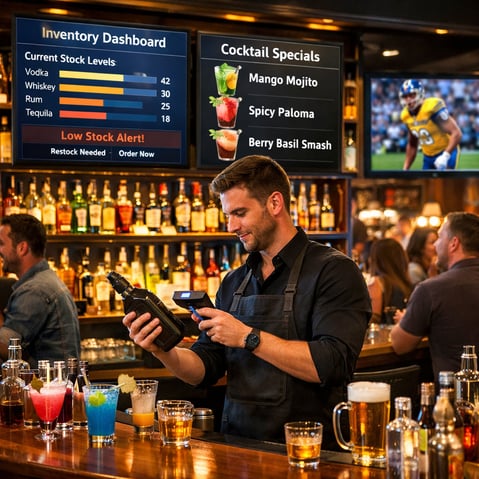
Beyond the direct financial impact, waste also affects your cost of goods sold (COGS), making it harder to accurately price your menu items and forecast purchasing needs. Many bar owners operate with beverage cost percentages that are 5-10% higher than they should be simply because they're not accounting for all the waste in their system. By identifying and quantifying these hidden costs, you can establish a baseline for improvement and set realistic targets for beverage cost reduction.

Smart Inventory Management Systems That Stop Money From Pouring Down the Drain

Implementing robust liquor inventory control through modern bar inventory software has become essential for bars serious about protecting their profit margins. These digital solutions replace outdated manual counting methods with streamlined systems that track every bottle from delivery to the last pour. Bar inventory software allows you to conduct regular inventory counts in a fraction of the time, compare actual usage against sales data, and quickly identify discrepancies that signal potential problems like theft, over-pouring, or recording errors.

The key to effective inventory management is consistency and frequency. Leading bars now conduct inventory counts at least weekly, with many high-volume establishments doing spot checks on premium bottles daily. Modern bar inventory software makes this practical by using barcode scanning or bottle weighing technology that reduces counting time by up to 75%. These systems automatically calculate variance reports, showing you exactly where your liquor is going and highlighting products with unusual depletion rates that deserve closer attention.

Beyond tracking, smart inventory systems help optimize your purchasing decisions and reduce over-ordering that leads to spoilage. By analyzing historical sales patterns and current stock levels, bar inventory software can generate suggested order lists that ensure you have enough inventory to meet demand without tying up excessive capital in bottles that sit on shelves. This targeted approach to purchasing is a powerful beverage cost reduction strategy that prevents both stockouts and waste from expired perishables.

Integration capabilities make modern inventory systems even more powerful. When your bar inventory software connects with your point-of-sale system, it creates an automatic feedback loop that tracks theoretical usage based on recipes against actual depletion. This variance analysis quickly reveals whether your staff is following standard recipes, whether theft is occurring, or whether your recipes need adjustment. The data-driven insights these systems provide transform liquor inventory control from guesswork into a precise science that directly improves bar profit margins.

Portion Control Techniques That Maintain Quality While Maximizing Profits

Consistent portion control is one of the most effective beverage cost reduction strategies available to bar owners, yet it's frequently overlooked or inconsistently applied. The difference between a 1.5-ounce pour and a 2-ounce pour might seem negligible on a single drink, but across hundreds of cocktails per week, that extra half-ounce represents significant profit loss. Implementing strict portion control measures ensures that every drink meets your cost targets while maintaining the consistency that keeps customers coming back.

Measured pourers and jiggers are the foundation of effective portion control. Free-pouring might look impressive, but even experienced bartenders can vary by 0.25 to 0.5 ounces per drink, especially during high-volume periods. Installing measured pourers on your liquor bottles guarantees that every shot is exactly the size you've designed your recipes around. For establishments that prefer the aesthetics of free-pouring, training bartenders to use jiggers consistently is essential. Regular pour tests, where managers check bartender accuracy with marked shot glasses, help maintain standards and identify team members who need additional training.

Recipe standardization goes hand-in-hand with portion control. Every cocktail on your menu should have a documented recipe with exact measurements for each ingredient. These standardized recipes become the foundation of your liquor inventory control system, allowing you to calculate theoretical usage and identify variances. When everyone follows the same recipe, you ensure consistent quality, accurate costing, and better inventory tracking. Many successful bars post laminated recipe cards at each station or use tablets with recipe apps to make it easy for bartenders to follow specifications exactly.

Portion control tools extend beyond pourers to include garnishes and mixers, which can also impact your bar profit margins. A heavy hand with expensive garnishes like fresh herbs or specialty bitters adds up quickly. Similarly, over-pouring mixers dilutes your cocktails and increases costs. By establishing clear standards for every element of your drinks and providing your team with the tools to execute consistently, you create a culture of precision that protects your margins while ensuring every guest receives the same high-quality experience.

Turning Food and Beverage Waste Into Creative Menu Opportunities

Progressive bar operators are discovering that effective liquor inventory control isn't just about preventing waste—it's also about creatively repurposing ingredients that might otherwise be discarded. This approach to beverage cost reduction transforms potential losses into profitable menu items while demonstrating environmental responsibility that resonates with modern consumers. By viewing surplus or aging inventory as an opportunity rather than a problem, you can create unique offerings that differentiate your bar from competitors.

Fruit and herb garnishes that are approaching the end of their freshness can be repurposed into house-made syrups, shrubs, and infusions that add complexity to your cocktail program. Citrus peels become oleo saccharum or dehydrated garnishes, while slightly wilted herbs can be muddled into specialty drinks or steeped into simple syrups. These value-added preparations not only reduce waste but also allow you to create signature ingredients that can't be easily replicated elsewhere, giving your bar a unique identity and justifying premium pricing.

Slow-moving spirits present another opportunity for creative menu development. Rather than watching premium bottles gather dust, feature them in limited-time cocktails or create a rotating "bartender's choice" program that highlights underutilized inventory. Many bars successfully use flight programs or tasting menus to introduce customers to slow-moving products, often discovering that certain items just need better promotion rather than being poor performers. This proactive approach to liquor inventory control prevents the write-offs that occur when bottles expire or become unsellable.

Consider implementing a zero-waste cocktail program that makes creative use of every ingredient. Juice pulp becomes ingredients in house-made sodas or is incorporated into food menu items. Coffee grounds from espresso martinis can be repurposed into coffee liqueur infusions. Even egg whites left over from yolk-forward dishes can be used in sours and fizzes. By systematically identifying waste streams and brainstorming creative applications, you engage your team in improving bar profit margins while building a reputation for innovation and sustainability that attracts environmentally conscious customers.

Training Your Team to Become Waste Reduction Champions

Even the most sophisticated bar inventory software and waste reduction systems will fail without buy-in from your team. The bartenders, barbacks, and servers who handle your inventory daily are your frontline defense against waste, and their habits directly impact your bar profit margins. Creating a culture where every team member understands the financial impact of waste and takes ownership of inventory control transforms your entire operation from reactive to proactive.

Start by making the business case transparent. Many bartenders don't realize that over-pouring a half-ounce on each drink in a busy Saturday night shift can cost the bar hundreds of dollars. Share the numbers with your team—show them how waste impacts profitability and, ultimately, their job security and tip potential. When staff understand that better liquor inventory control means a healthier business that can afford competitive wages and stay open long-term, they become invested in the outcome. Consider implementing incentive programs that reward teams for hitting variance targets or reducing beverage costs, creating positive motivation for careful inventory practices.

Comprehensive training programs should cover all aspects of beverage cost reduction, from proper pouring techniques and recipe adherence to inventory handling and storage procedures. Hands-on practice with jiggers and pourers helps bartenders develop muscle memory for accurate measurements. Role-playing scenarios where staff identify potential waste situations and discuss solutions builds problem-solving skills. Regular refresher training ensures that standards don't slip over time and gives you opportunities to introduce new techniques or address emerging issues. Documentation of all procedures creates a training resource for new hires and a reference for experienced staff.

Empowerment is the final piece of effective team training. Encourage staff to identify waste sources and suggest improvements—they often spot inefficiencies that management overlooks. Create a system where team members can easily report problems like leaking bottles, malfunctioning equipment, or recipe issues that lead to waste. Regular team meetings focused on inventory results foster accountability and allow for collaborative problem-solving. When bartenders feel like partners in the business rather than just employees, they naturally take more care with inventory and become genuine champions of waste reduction.

Tracking individual performance through your bar inventory software can also support training efforts. When you can show a bartender that their station has higher variance than others, it creates a concrete learning opportunity. Similarly, recognizing team members who consistently maintain tight inventory control reinforces positive behavior. By combining education, accountability, and recognition, you build a team culture where liquor inventory control becomes second nature, protecting your bar profit margins while elevating the professionalism of your entire operation.
Topics: Bar inventory, Hotel Inventory, wine inventory, managing liquor inventory cost, Liquor cost, Liquor Inventory savings, wine inventory app, wine inventory solution, wine inventory system, warehouse inventory

From Bottle To Bottom Line: How Better Inventory Tracking Improves Beverage Profitability

Posted by Nick Kaoukis on Fri, May, 08, 2026 @ 09:05 AM

Discover how implementing smart inventory tracking systems can transform your bar or restaurant's beverage program from a profit drain into a revenue powerhouse.

The Hidden Costs Lurking Behind Your Bar

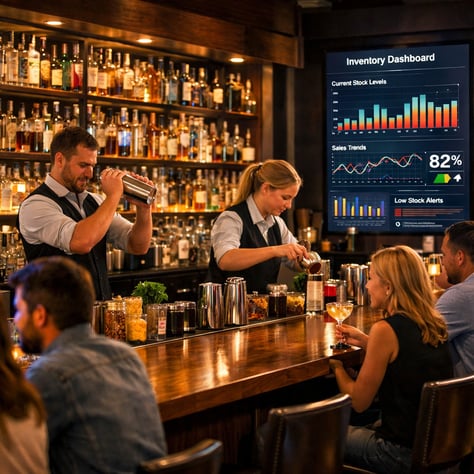
Walk into any bar or restaurant, and you'll see bottles lined up neatly on shelves, carefully arranged for both aesthetics and accessibility. But beneath that polished surface lies a profit-draining reality that most owners don't fully grasp: beverage inventory shrinkage represents one of the most significant, yet least visible, drains on profitability in the hospitality industry. Industry studies consistently show that bars and restaurants lose between 20-25% of their beverage revenue to various forms of waste, theft, over-pouring, and tracking errors.Bartender Crafting Cocktail at Trendy Bar

These hidden costs manifest in multiple ways. Over-pouring by well-intentioned bartenders can add up to thousands of dollars monthly. A heavy-handed pour that gives customers 1.75 ounces instead of the standard 1.5 ounces represents a 17% loss on every drink. Multiply that across hundreds of drinks per night, and the numbers become staggering. Then there's the spillage during busy service, the drinks that get remade due to customer complaints, and the bottles that mysteriously disappear during inventory counts.

Perhaps most insidious is the phenomenon of 'ghost inventory'—products you think you have but actually don't. Without accurate real-time tracking, managers order based on faulty data, leading to emergency orders at premium prices, stockouts of popular items during peak service, and capital tied up in slow-moving inventory. The result is a vicious cycle where profitability steadily erodes while owners struggle to identify exactly where the leaks are occurring.

Why Traditional Counting Methods Are Costing You Thousands

The weekly or monthly ritual of manual inventory counting is familiar to anyone who's managed a bar: staff members with clipboards, counting bottles, estimating partial fills, and spending hours tallying numbers. This time-honored tradition, while well-intentioned, is fundamentally flawed in ways that directly impact your bottom line. Human error is inevitable when counting hundreds of SKUs, especially after a long shift. Studies show that manual inventory counts typically have an error rate of 5-10%, which might not sound like much until you calculate what that means for a bar doing $50,000 in monthly beverage sales.

The infrequency of traditional counting creates another critical problem: by the time you identify a variance, the opportunity to address it has passed. If you count on the first of the month and discover significant shrinkage, you have no way of knowing whether the loss occurred during week one, two, three, or four. Was it a specific bartender's shift? A particular busy weekend? A delivery discrepancy? Without real-time data, these questions remain unanswered, and the problematic behaviors continue unchecked.

Traditional methods also fail to capture velocity data that's essential for smart purchasing and pricing decisions. You might know you go through ten bottles of a premium vodka per month, but do you know which days of the week drive that consumption? Which bartenders sell it most effectively? What mixers pair with it most frequently? This contextual information is gold for optimizing your beverage program, but clipboard counting simply can't capture it. The opportunity cost of these blind spots represents thousands in unrealized profit potential.

Smart Technology Solutions That Pay For Themselves

Modern inventory tracking technology has revolutionized beverage management, with solutions like Scannabar leading the charge by transforming how establishments monitor and optimize their bar operations. These systems leverage barcode scanning, weight sensors, and cloud-based analytics to provide real-time visibility into every aspect of beverage inventory. Instead of spending hours counting bottles, staff can scan items in seconds, automatically updating inventory levels, tracking consumption patterns, and flagging variances instantly.

The return on investment for these systems is remarkably fast. Consider a typical scenario: a mid-sized restaurant with $30,000 in monthly beverage sales experiencing the industry-average 23% shrinkage is losing $6,900 per month. Implementing a comprehensive tracking system like Scannabar typically costs between $200-500 monthly, depending on the size and complexity of the operation. If the system reduces shrinkage by even half—bringing it down to 11.5%—the establishment recovers $3,450 monthly while investing just a fraction of that in the technology. That's a payback period measured in weeks, not years.

Beyond direct shrinkage reduction, smart tracking systems deliver multiple additional benefits that compound profitability. Automated par level alerts prevent stockouts of high-margin items and eliminate emergency orders at premium prices. Detailed consumption analytics reveal which products drive the most profit per square inch of shelf space, enabling data-driven menu optimization. Integration with POS systems creates accountability by comparing sales data with pour data, identifying discrepancies immediately. Some establishments report that the accountability factor alone—simply letting staff know everything is tracked—reduces variance by 15-20% within the first month of implementation.

The technology also transforms purchasing from a reactive scramble into a strategic advantage. With accurate velocity data and predictive analytics, managers can negotiate better pricing through optimized order timing and quantities. They can identify slow-moving inventory before it becomes dated or expired, implement early promotional pricing to move it, and make room for higher-margin alternatives. These incremental improvements across dozens of line items create a cumulative effect that significantly enhances overall beverage profitability.

Real-World Success Stories: Restaurants That Increased Profit Margins

The theoretical benefits of better inventory tracking become tangible when examining real-world implementations. A mid-sized gastropub in Portland, Oregon, implemented comprehensive beverage tracking after years of frustration with inconsistent margins. Within 90 days, they documented a 19% reduction in beverage costs as a percentage of sales. The system quickly identified that their craft cocktail program—previously thought to be highly profitable—was actually underperforming due to over-pouring of premium spirits and inconsistent recipe execution. With real-time tracking and staff accountability, they standardized recipes, reduced waste, and increased their cocktail program's contribution margin by 12 percentage points.

A restaurant group operating five locations across the Southwest implemented Scannabar's tracking system chain-wide and discovered significant location-to-location variances that manual counting had never revealed. Their highest-volume location was actually their least profitable from a beverage perspective, with shrinkage rates nearly double the company average. The tracking data pinpointed specific shifts and service periods where losses concentrated, leading to targeted training and management changes. Within six months, they brought that location's performance in line with company standards, effectively recovering over $4,000 monthly in previously lost revenue from just that one site.

Perhaps most compelling is the story of an upscale hotel bar that struggled with premium spirit inventory management. With hundreds of high-value bottles—some costing $200-500 per bottle—even small variances represented substantial losses. After implementing smart tracking technology, they discovered that nearly 30% of their shrinkage came from just 15 SKUs, all premium offerings. The visibility allowed them to implement bottle-level security measures for those specific items, create special handling protocols, and use data to identify when consumption patterns deviated from sales data. The result was a 27% reduction in total shrinkage and a complete transformation of their premium spirits program from a loss leader to a profit center, adding over $35,000 annually to their bottom line.

Building Your Action Plan For Better Beverage Management

Transforming your beverage operation starts with acknowledging where you currently stand. Begin by conducting a comprehensive audit of your existing inventory practices. How often do you count? What's your current variance rate? How long does the counting process take, and what's the labor cost associated with it? Document your current beverage cost percentage and establish baseline metrics. Many operators resist this step because confronting the reality can be uncomfortable, but you can't improve what you don't measure.

Next, evaluate technology solutions based on your specific operational needs. Not all establishments require the same level of sophistication. A high-volume nightclub with hundreds of transactions per hour has different requirements than a wine-focused restaurant with a curated selection. Look for systems that integrate with your existing POS, offer intuitive interfaces that won't require extensive training, and provide the specific analytics most relevant to your operation. Request demos, talk to current users in similar operations, and pay particular attention to ongoing support and training offerings. The best technology is worthless if your team won't use it consistently.

Implementation success depends heavily on change management and team buy-in. Introduce the new system transparently, explaining that the goal is operational improvement, not catching staff doing something wrong. Involve your bartenders and servers in the process, soliciting their input on pain points in the current system and features they'd find valuable. Create clear protocols for how and when tracking occurs, integrate it seamlessly into existing workflows, and celebrate early wins. When staff see how accurate data helps them manage their sections better, prevents embarrassing stockouts, and creates fair accountability, resistance typically transforms into advocacy.

Finally, commit to using the data the system generates. The most sophisticated tracking solution provides no value if the resulting insights don't drive decisions. Establish a regular cadence—weekly is ideal—for reviewing key metrics: shrinkage rates, velocity by category, variance by shift or bartender, and margin performance by item. Use these insights to refine your beverage menu, adjust pricing, optimize purchasing, and provide targeted coaching. Track your improvement over time, quantifying the financial impact. Most operators who fully embrace data-driven beverage management report that within six months, they can't imagine running their operation any other way—the visibility and control become indispensable tools for protecting and growing profitability.

Topics: bar inventory app, liquor inventory app, Best Bar Inventory app, Best Liquor Inventory app, wine inventory app, Scannabar inventory app, Resaurant Inventory app, Restaurant Inventory app

Trendy Decor Ideas for Your Wine Bar

Posted by Nick Kaoukis on Mon, May, 06, 2024 @ 18:05 PM

Transform your wine bar with these trendy decor ideas that will impress your customers and enhance their overall experience.

Elevate with Statement Lightingpexels-brett-sayles-1374552

One way to create a trendy atmosphere in your wine bar is to elevate it with statement lighting. Install unique and eye-catching light fixtures that will serve as focal points in the space. Consider using chandeliers, pendant lights, or wall sconces with intricate designs or interesting materials. These lighting fixtures will not only provide adequate illumination but also add a touch of elegance and sophistication to your wine bar.

Another option is to incorporate LED lighting that can change colors. This will allow you to create different moods and ambiances depending on the time of day or the type of event you are hosting. Whether you choose bold and dramatic lighting or soft and romantic illumination, statement lighting will definitely make your wine bar stand out.

Create a Cozy Wine Nook

Make your wine bar feel warm and inviting by creating a cozy wine nook. Designate a corner or a small area in your bar where customers can relax and enjoy their drinks in a more intimate setting. Use comfortable seating options such as plush couches, armchairs, or even cozy booths. Add soft throw pillows and blankets to create a cozy and welcoming atmosphere.

To enhance the coziness factor, consider installing a fireplace or a faux fireplace. The flickering flames and the warmth it provides will create a relaxing and comforting ambiance. Additionally, you can decorate the wine nook with shelves or racks to display your wine collection, creating a focal point that adds to the overall aesthetic of the space.

Embrace Industrial Chic

Embracing an industrial chic style can give your wine bar a trendy and modern look. Incorporate elements such as exposed brick walls, metal accents, and reclaimed wood furniture. These materials not only add visual interest but also create a unique and edgy vibe.

Consider using metal bar stools or chairs with distressed finishes. These seating options not only provide a rustic charm but also add an industrial touch to the overall decor. Pair them with wooden tables or countertops to create a balanced and cohesive look.

To further enhance the industrial chic style, you can hang black and white photographs or vintage wine-related posters on the walls. These nostalgic elements will add personality to your wine bar and create a conversation starter for your customers.

Incorporate Greenery and Botanical Elements

Bring nature indoors by incorporating greenery and botanical elements into your wine bar decor. Plants not only add a refreshing touch but also create a calming and relaxing atmosphere. Choose plants that thrive indoors and require minimal maintenance, such as succulents, ferns, or snake plants.

Place potted plants on shelves, tables, or even hang them from the ceiling to add a touch of greenery throughout the space. You can also create a living wall by installing vertical planters filled with various types of plants. This will not only serve as a unique decor element but also act as a natural air purifier.

In addition to live plants, you can also incorporate botanical prints or artwork on the walls. These can be vintage botanical illustrations or modern abstract representations of plants and flowers. The combination of real plants and botanical elements will create a fresh and vibrant ambiance in your wine bar.

Personalize with Customized Decor Pieces

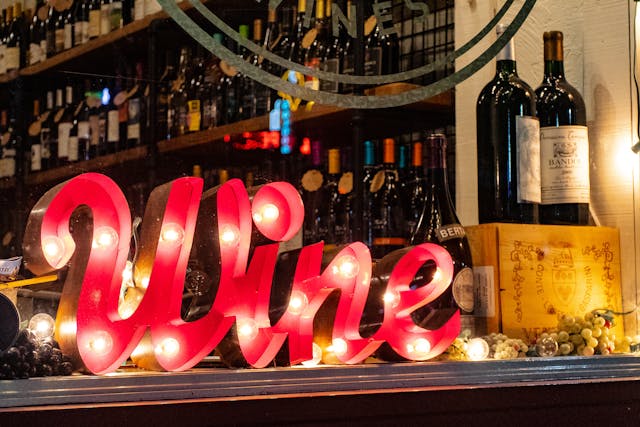
Make your wine bar truly unique by personalizing it with customized decor pieces. Consider working with local artisans or artists to create one-of-a-kind artwork or signage that reflects your wine bar's identity and style. This can be a custom-made neon sign with your bar's name or logo, or a mural that depicts wine-related imagery.

You can also personalize your wine bar with customized wine racks or shelves. These can be designed to fit your space perfectly and showcase your wine collection in an organized and visually appealing way. Additionally, you can have personalized wine glasses or coasters made with your bar's logo or a special design that represents your brand.

By incorporating customized decor pieces, you not only add a personal touch to your wine bar but also create a memorable and immersive experience for your customers.

Topics: wine inventory, Wine Control, wine inventory app, wine inventory solution, wine bar, wine inventory system