Expert Advice on Hospitality Topics

Mastering the Employee Onboarding Process for Successful Bars

Posted by Nick Kaoukis on Fri, Feb, 27, 2026 @ 09:02 AM

Transform your bar's success by implementing a strategic onboarding process that turns new hires into confident, high-performing team members from day one.

Why Employee Onboarding Makes or Breaks Your Bar's Success

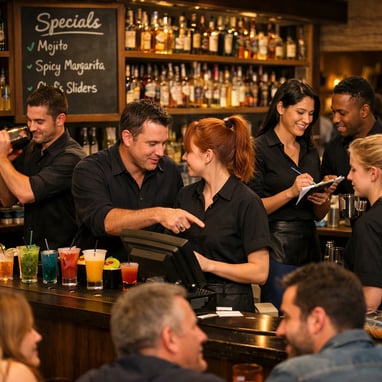
The bar industry operates on razor-thin margins where every team member's performance directly impacts your bottom line. A well-executed onboarding process is the difference between a bartender who fumbles orders during peak hours and one who confidently manages a packed Friday night shift. Research shows that effective onboarding can improve employee retention by 82% and productivity by over 70%, metrics that are particularly critical in an industry notorious for high turnover rates.The image depicts a bustling bar scene with a diverse group of bartenders and servers in action The bar is welllit showcasing a variety of colorful co-1
Your bar's reputation hinges on consistency, and consistency starts with proper training. When new employees receive structured onboarding, they quickly absorb your establishment's culture, service standards, and operational procedures. This creates a seamless customer experience regardless of who's behind the bar. Conversely, poor onboarding leads to costly mistakes, safety violations, customer complaints, and the expense of repeatedly hiring and training replacement staff.

The first impression matters just as much for employees as it does for customers. New hires who feel welcomed, prepared, and valued during their initial weeks are more likely to become engaged, long-term team members. In a competitive labor market, your onboarding process becomes a key differentiator in attracting and retaining top talent who have multiple employment options.

Building Your Bar's Onboarding Framework From the Ground Up

Start by documenting every aspect of your bar's operations before your new hire's first day. Create a comprehensive employee handbook that covers your mission statement, dress code, scheduling policies, and behavioral expectations. This foundational document serves as a reference point throughout the onboarding journey and ensures consistency across all training sessions. Include practical information like emergency procedures, break policies, and how to handle difficult situations.

Develop a structured timeline that spans at least the first 90 days of employment. Week one should focus on administrative tasks, safety training, and basic orientation to your physical space. Week two through four should introduce role-specific skills through shadowing and supervised practice. The remaining weeks should gradually increase responsibility while providing regular feedback checkpoints. This phased approach prevents overwhelming new hires while ensuring they master each competency before advancing.

Assign a dedicated mentor or buddy to each new employee. This experienced team member serves as the go-to resource for questions, demonstrates proper techniques, and helps integrate the newcomer into your bar's social dynamics. The mentor relationship reduces the learning curve and creates accountability on both sides. Choose mentors who exemplify your bar's values and possess strong communication skills, not just technical expertise.

Invest in creating training materials that new hires can reference independently. This might include laminated recipe cards for signature cocktails, video demonstrations of proper glassware handling, or digital checklists for opening and closing procedures. Multi-format materials accommodate different learning styles and allow employees to review information at their own pace, reinforcing what they learn during hands-on training sessions.

Essential Training Components Every Bar Employee Needs

Safety and compliance training must be the absolute foundation of your onboarding program. This includes responsible alcohol service certification, proper identification checking procedures, and how to recognize and handle intoxicated patrons. Train staff on food safety protocols, proper chemical handling for cleaning products, and emergency response procedures. Many of these topics have legal implications, so maintain documentation that each employee completed this training and understands the consequences of violations.

Technical skills training varies by position but should be thorough and systematic. Bartenders need comprehensive instruction on your POS system, cash handling procedures, inventory management, and the preparation of every drink on your menu. Start with your most popular items and signature cocktails, then expand to more specialized requests. Servers require training on menu knowledge, table management systems, upselling techniques, and coordination with kitchen and bar staff. Even barbacks and support staff need clear instruction on their specific responsibilities and how they fit into the overall operation.

Customer service excellence should be woven throughout your entire training program. Teach your team how to greet guests, read the room, handle complaints gracefully, and create memorable experiences that generate repeat business. Role-playing exercises help employees practice difficult scenarios in a low-stakes environment. Emphasize that everyone on your team, regardless of their position, contributes to the customer experience and has the power to turn a mediocre visit into an exceptional one.

Don't overlook the soft skills that distinguish good bars from great ones. Train employees on effective communication with coworkers during high-pressure situations, time management during rushes, and maintaining professionalism when personal conflicts arise. Teach them your bar's specific culture—whether that's high-energy and social or sophisticated and understated—and how to embody those characteristics in their interactions. These intangible qualities often determine whether a technically skilled employee becomes a true asset to your team.

Creating a Culture of Excellence Through Structured Integration

Culture isn't created through mission statements alone; it's built through intentional actions and consistent reinforcement. During onboarding, explicitly discuss your bar's values and provide concrete examples of what those values look like in daily operations. If teamwork is a core value, demonstrate how your staff supports each other during rushes. If innovation matters, show how you encourage employees to suggest new cocktails or service improvements. New hires should see your stated culture reflected in observable behaviors from day one.

Create opportunities for new employees to connect with the broader team beyond their immediate work responsibilities. This might include pre-shift meetings where everyone shares updates, team-building activities outside of work hours, or informal gatherings where newcomers can ask questions in a relaxed setting. These social connections increase job satisfaction and reduce the likelihood that new hires will leave due to feeling isolated or disconnected from their coworkers.

Establish clear pathways for growth and advancement within your organization. During onboarding, discuss how employees can develop their skills, take on additional responsibilities, and move into leadership positions. This future-focused approach helps new hires see beyond their initial role and envision a long-term career rather than just a temporary job. Regular check-ins about professional development goals keep this conversation alive throughout their tenure.

Recognize and celebrate early wins during the onboarding period. When a new bartender nails a complicated cocktail, a server receives compliments from customers, or a barback demonstrates initiative, acknowledge these achievements publicly. This positive reinforcement motivates the individual, sets standards for other team members, and signals what behaviors your bar values. Small celebrations during the vulnerable onboarding phase build confidence and commitment.

Measuring Onboarding Success and Continuous Improvement Strategies

Implement formal evaluation checkpoints at 30, 60, and 90 days to assess both the employee's progress and the effectiveness of your onboarding program. These reviews should include objective metrics like speed of service, accuracy of orders, customer feedback scores, and adherence to procedures. Equally important are subjective assessments of cultural fit, teamwork, problem-solving ability, and growth potential. Document these evaluations to identify patterns across multiple new hires and spot areas where your training may be falling short.

Gather feedback directly from new employees about their onboarding experience. Anonymous surveys allow honest input about what worked well, what was confusing, and what they wish they'd learned sooner. Exit interviews with departing employees who leave during or shortly after onboarding provide particularly valuable insights into gaps in your program. This feedback loop transforms onboarding from a static checklist into a dynamic system that evolves based on real-world results.

Track key performance indicators that reveal the quality of your onboarding process. Monitor retention rates at the 90-day, six-month, and one-year marks to see if your onboarding investments translate into long-term employment. Analyze whether properly onboarded employees generate higher sales, receive better customer reviews, or require fewer disciplinary interventions. Calculate the time it takes for new hires to reach full productivity compared to industry benchmarks. These metrics justify continued investment in onboarding and help you demonstrate ROI to stakeholders.

Commit to regular updates of your onboarding materials and procedures. As your menu changes, new technology is introduced, or regulations are updated, your training program must adapt accordingly. Schedule quarterly reviews of your onboarding framework with input from managers, experienced staff, and recent hires. Stay informed about best practices in the hospitality industry through professional associations, conferences, and peer networks. The most successful bars treat onboarding as a continuous improvement project rather than a one-time program design, ensuring they consistently attract, develop, and retain the talent that drives their success.

Topics: Bar staff, Bar trends, Bar Management, Bar products, Control, Bar Promotion, Best Bar Inventory app, Best Liquor Inventory app

How Scannabar Streamlines Automated Inventory Audits for Retail

Posted by Nick Kaoukis on Wed, Feb, 25, 2026 @ 09:02 AM

Discover how Scannabar's innovative automated inventory audit solution is transforming retail operations by eliminating manual counting errors, reducing labor costs, and providing real-time stock visibility across your entire supply chain.

The Hidden Costs of Manual Inventory Management in Retail

Manual inventory management continues to drain retail resources in ways that often go unnoticed until the damage is alreadyThe image depicts a modern retail store interior featuring neatly arranged shelves stocked with various products from clothing to shoes Each item disp-1 done. Traditional counting methods require significant labor hours, with employees spending countless hours walking aisles, scanning items, and recording data by hand. This not only diverts staff from customer-facing activities but also introduces substantial room for human error that can cascade throughout your entire operation.
The financial impact extends far beyond just labor costs. Inaccurate inventory counts lead to overstocking, which ties up valuable capital in excess inventory, or understocking, which results in lost sales and disappointed customers. Research shows that inventory accuracy in retail typically hovers around 63% with manual processes, meaning nearly 40% of your stock data could be incorrect at any given time. These discrepancies create a domino effect that impacts purchasing decisions, fulfillment capabilities, and ultimately, your bottom line.

Scannabar addresses these challenges head-on by automating the entire inventory audit process. By eliminating the need for manual counts and reducing the time spent on inventory management by up to 90%, retailers can redirect their workforce toward more strategic, revenue-generating activities while ensuring accuracy rates that exceed 99%.

Smart Barcode Technology That Works Around the Clock

Scannabar's intelligent barcode scanning technology revolutionizes how retail stores monitor their inventory by providing continuous, automated surveillance of stock levels. Unlike traditional systems that require scheduled manual scans, Scannabar's technology operates autonomously, capturing data 24/7 without interrupting normal business operations. The system utilizes advanced scanning mechanisms that can read multiple barcodes simultaneously, processing thousands of items in the time it would take an employee to count just a handful.

The technology is designed with retail environments in mind, capable of reading barcodes from various angles and even in challenging conditions such as poor lighting or partially obscured labels. This adaptability ensures that your inventory tracking remains consistent and reliable regardless of how products are positioned on shelves or in storage areas. The smart sensors can distinguish between different product variations, sizes, and SKUs, providing granular detail that manual counting simply cannot match.

What sets Scannabar apart is its ability to learn and adapt over time. The system's algorithms recognize patterns in your inventory movement, identifying fast-moving products, seasonal trends, and potential stockout situations before they become critical. This predictive capability transforms inventory management from a reactive process into a proactive strategy, allowing retailers to stay ahead of demand and optimize their stock levels continuously.

Real-Time Data Synchronization Across Multiple Locations

For retail chains operating across multiple locations, maintaining consistent and accurate inventory data has traditionally been a nightmare. Scannabar's cloud-based platform solves this challenge by providing instant synchronization of inventory data across all your retail locations. The moment an item is scanned, sold, or restocked at any location, that information is immediately updated in the central system and reflected across your entire network.

This real-time visibility transforms how multi-location retailers manage their supply chain. Store managers can instantly check inventory levels at other locations to fulfill customer requests, preventing lost sales due to local stockouts. District and regional managers gain a comprehensive bird's-eye view of inventory distribution, enabling them to identify opportunities for inventory transfers between locations to optimize stock levels and reduce waste. The centralized dashboard provides actionable insights that help decision-makers understand inventory health across the entire organization at a glance.

The synchronization capabilities extend beyond just inventory counts. Scannabar tracks inventory movement patterns, turnover rates, and location-specific trends, providing valuable data that helps retailers make informed decisions about product placement, ordering quantities, and distribution strategies. This level of coordination ensures that each location maintains optimal stock levels while minimizing the total inventory investment across the chain.

Reducing Shrinkage and Improving Stock Accuracy

Inventory shrinkage remains one of the most significant challenges facing retailers today, costing the industry billions of dollars annually through theft, damage, administrative errors, and supplier fraud. Scannabar's automated audit system creates a powerful deterrent against shrinkage by establishing a comprehensive tracking system that monitors every item from receipt to sale. The continuous monitoring capability means that discrepancies are identified immediately rather than months later during annual physical counts, allowing retailers to address issues while the trail is still warm.

The system's precision dramatically improves stock accuracy by eliminating the counting errors that plague manual inventory processes. Every scan is recorded with a timestamp, location marker, and user identification when applicable, creating an audit trail that provides complete accountability. When variances occur, managers can quickly drill down into the data to identify exactly when and where the discrepancy originated, whether it was a receiving error, a point-of-sale mistake, or potential theft.

Beyond detection, Scannabar's analytics help retailers understand shrinkage patterns and implement targeted prevention strategies. The system can identify high-risk products, times of day when discrepancies are most likely to occur, and locations that experience higher-than-average shrinkage rates. Armed with this intelligence, retailers can deploy resources more effectively, adjust security measures, improve training programs, and implement policies that address the root causes of shrinkage rather than just treating the symptoms.

Seamless Integration with Existing Retail Management Systems

One of the biggest concerns retailers have when considering new technology is the disruption it might cause to existing operations. Scannabar eliminates this worry with its flexible integration capabilities designed to work harmoniously with virtually any retail management system, POS platform, or ERP solution. The platform features pre-built connectors for major retail software providers and an open API architecture that allows custom integrations for proprietary systems.

Implementation is straightforward and minimally disruptive. Scannabar's team works closely with your IT department to map data fields, establish synchronization protocols, and test the integration thoroughly before going live. The system can be deployed in phases, starting with a pilot location to validate the process before rolling out across your entire retail network. Most retailers find that they can complete full implementation within weeks rather than months, with minimal downtime or disruption to daily operations.

Once integrated, Scannabar functions as a seamless extension of your existing retail infrastructure. Inventory data flows automatically between systems, eliminating the need for manual data entry or file transfers. The platform enhances your current systems rather than replacing them, adding a powerful automated audit layer that improves the accuracy and reliability of the data flowing through your entire retail ecosystem. Updates and maintenance are handled automatically through the cloud, ensuring that your system stays current with the latest features and security protocols without requiring IT intervention.

Topics: Scannabar Inventory system, retail inventory, clothing store inventory, clothing inventory, retail purchasing, Scannabar inventory app, Scannabar Inventory Software, shoe Inventory, warehouse inventory

Seasonal Cocktail Inspiration from the Winter Olympics

Posted by Nick Kaoukis on Fri, Feb, 13, 2026 @ 10:02 AM

Elevate your winter bar menu with Olympic-inspired cocktails that capture the spirit of competition, celebration, and global flavors from the world's most prestigious winter sporting event.

Crafting Gold Medal-Worthy Signature Drinks

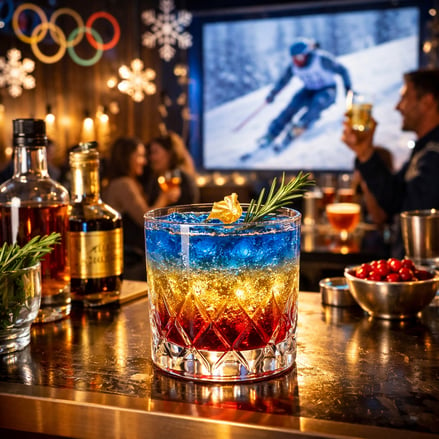
Creating Olympic-inspired signature cocktails requires the same precision and artistry that athletes bring to their performances. Start by building drinks around the iconic colors of the Olympic rings—blue, yellow, black, green, and red. A layered cocktail featuring blue curaçao, golden champagne, and red berry liqueur can visually represent the medal podium while delivering complex flavors that impress even the most discerning palates.The image showcases an elegantly designed cocktail menu inspired by the Winter Olympics At the center a striking layered cocktail the Downhill Dash fe-1

Consider naming your cocktails after famous Winter Olympic events or memorable moments. The 'Downhill Dash' could feature a bold combination of whiskey and ginger beer with a splash of citrus, representing the speed and excitement of alpine skiing. The 'Triple Axel' might incorporate three distinct spirits that blend seamlessly, just like the perfect figure skating jump. These thematic names not only spark conversation but also create a memorable experience that ties your menu to the Olympic spirit.

Quality ingredients are essential for medal-worthy cocktails. Use premium spirits as your base, incorporate fresh herbs like rosemary and thyme for winter aromatics, and don't shy away from unique elements like edible gold leaf or shimmering liqueurs. The goal is to create drinks that look spectacular and taste even better, embodying the excellence that defines Olympic competition.

International Flavors from Host Countries Past and Present

The Winter Olympics have graced numerous countries, each bringing unique culinary traditions that can inspire extraordinary cocktails. From the sake and yuzu of Japan (Nagano 1998, Sapporo 1972) to the aquavit and cloudberry of Norway (Lillehammer 1994), host countries offer a treasure trove of flavors. Create a 'Norwegian Northern Lights' using aquavit, elderflower liqueur, and a splash of blue curaçao, topped with prosecco for a shimmering effect that mimics the aurora borealis.

Italian host cities like Turin (2006) and Cortina d'Ampezzo (1956) inspire aperitivo-style cocktails. Mix up a 'Dolomite Sunset' featuring Aperol, prosecco, and blood orange juice, garnished with a sprig of fresh basil. For a nod to the French Alps (Chamonix 1924, Grenoble 1968, Albertville 1992), craft a sophisticated cocktail using Chartreuse, champagne, and a hint of lavender—a refined tribute to French elegance and alpine beauty.

Don't forget the North American hosts. Canadian venues (Calgary 1988, Vancouver 2010) inspire cocktails featuring maple syrup and Canadian whisky, while American locations (Lake Placid 1932 and 1980, Squaw Valley 1960, Salt Lake City 2002) call for bold bourbon-based drinks with apple cider and cinnamon. A 'Rocky Mountain Mule' combining bourbon, ginger beer, lime, and a maple syrup rim perfectly captures the spirit of winter sports in the American West.

Winter Warming Spirits That Score Perfect Tens

Cold-weather spirits form the foundation of any successful Winter Olympic cocktail menu. Dark spirits like bourbon, rye whiskey, aged rum, and cognac provide warmth and depth that complement winter's chill. These base spirits pair beautifully with seasonal spices like cinnamon, nutmeg, clove, and star anise. A hot toddy variation using spiced rum, honey, lemon, and a cinnamon stick makes for a perfect après-ski beverage that warms from the inside out.

Herbal liqueurs and amari add complexity and sophistication to winter cocktails. Fernet-Branca, Chartreuse, and Bénédictine bring botanical notes that evoke snowy forests and mountain meadows. Create a 'Biathlon Bracer' combining rye whiskey, yellow Chartreuse, sweet vermouth, and aromatic bitters—a complex drink that represents the dual nature of skiing and shooting in this challenging sport. The herbal qualities provide depth while the whiskey delivers the necessary warmth.

Don't overlook the power of fortified wines and liqueurs. Port, sherry, and vermouth can be featured in lower-ABV cocktails that still deliver robust flavor. A 'Curling Stone' cocktail made with tawny port, bourbon, demerara syrup, and chocolate bitters offers richness without overwhelming heat. For guests who prefer something lighter, mulled wine cocktails infused with orange, cloves, and brandy provide festive warmth while maintaining approachability. These versatile options ensure every guest finds their perfect winter warmer.

Presentation Techniques Worthy of the Podium

Visual presentation can transform a good cocktail into an unforgettable experience. Embrace the Olympic theme with gold, silver, and bronze elements. Rim glasses with edible metallic dust or sugar crystals in these colors. Use gold leaf garnishes sparingly but effectively—a single flake floating atop a clear cocktail creates an elegant, championship-worthy appearance. Serve drinks in crystal-cut glassware or vintage coupe glasses that evoke the elegance and tradition of the Olympic Games.

Ice presentation offers another opportunity to impress. Create large, crystal-clear ice spheres or cubes that melt slowly and maintain drink integrity. For a dramatic effect, freeze edible flowers, herbs, or citrus wheels inside ice blocks, then chip away to reveal the frozen treasures. Consider creating an 'ice luge' for special occasions—a nod to the luge event—where cocktails slide down a carved ice sculpture before reaching the glass. This interactive element adds entertainment value and creates Instagram-worthy moments.

Garnishes should be thoughtful and thematic. Use rosemary sprigs torched tableside to release aromatic oils while creating a visual spectacle. Citrus twists can be expressed over a flame to caramelize the oils, adding both aroma and theater. Create 'Olympic torch' garnishes using sugarcane swizzle sticks with a small piece of flammable citrus peel that can be briefly ignited. Smoke elements under cloches for a mysterious reveal, or use dry ice carefully for a frosty, mountain-mist effect. Each presentation technique should enhance the drinking experience while honoring the spectacle of Olympic competition.

Creating an Olympic-Themed Cocktail Experience for Guests

Transform your venue into an Olympic celebration by creating an immersive cocktail experience. Design a special menu that tells a story, with each cocktail representing different events, countries, or Olympic values. Organize the menu like an Olympic program, with 'Opening Ceremony' welcome drinks, 'Competition' signature cocktails, and 'Closing Ceremony' dessert drinks. Include brief descriptions that connect each cocktail to its Olympic inspiration, educating guests while entertaining them.

Consider hosting Olympic-themed cocktail events or competitions. Invite guests to vote on their favorite drinks, awarding gold, silver, and bronze medals to the top three. Create flight options where guests can sample smaller portions of multiple cocktails, similar to judging different athletic performances. Offer a 'mixology pentathlon' where guests rotate through five different cocktail styles, each paired with small bites inspired by host countries. This interactive approach engages guests and creates memorable experiences that extend beyond simply serving drinks.

Enhance the atmosphere with thoughtful details. Display Olympic memorabilia, play footage of iconic Winter Olympic moments on screens, and use a playlist featuring national anthems and music from various host countries. Train staff to share stories about the cocktails' inspirations and the Olympic events they represent. Create specialty glassware or cocktail napkins featuring Olympic rings or winter sports imagery. Consider partnering with local athletes or Olympic alumni for special appearances, adding authenticity and excitement to your Olympic cocktail celebration. These comprehensive touches create a cohesive experience that honors the Olympic spirit while showcasing exceptional cocktail craftsmanship.

Topics: Bar inventory, nightclubs, Bar drinks, Classic drinks, Bar products, restaurant trends, drink recipe, pricing drinks, Bar Promotion, mixology, craft cocktails

How Real-Time Stock Monitoring Optimizes Banquet Inventory Management

Posted by Nick Kaoukis on Mon, Feb, 09, 2026 @ 09:02 AM

Discover how real-time stock monitoring transforms banquet operations by eliminating waste, preventing stockouts, and maximizing profitability in your hospitality venue.

The Hidden Costs of Manual Inventory Tracking in Banquet Operations

Manual inventory tracking in banquet operations comes with significant hidden costs that extend far beyond the obvious time investment. Every hour your staff spends counting bottles, tallying supplies, and recording data on clipboards or spreadsheets is an hour taken away from guest service and revenue-generating activities. These labor costs compound quickly, especially in busy banquet facilities where multiple events may occur simultaneously, requiring frequent inventory checks across various storage locations.

Beyond labor inefficiencies, manual tracking introduces substantial margin for human error. Miscounts, missed items, and transcription mistakes lead to inaccurate stock levels that cascade into poor purchasing decisions. You might over-order items that are already adequately stocked, tying up capital in excess inventory, or worse, run out of critical supplies mid-event, forcing last-minute emergency purchases at premium prices. These errors also make it nearly impossible to accurately track pour costs and identify potential theft or over-pouring issues.

The lack of real-time visibility in manual systems means you're always operating with outdated information. By the time you've completed a full inventory count and entered the data, stock levels have already changed. This delay prevents proactive decision-making and leaves you constantly reacting to problems rather than preventing them. For banquet operations where timing and precision are everything, this reactive approach can seriously damage your reputation and bottom line.

What Real-Time Stock Monitoring Means for Your Banquet Business

The image depicts a modern banquet hall bustling with activity during a highprofile event Elegant round tables are adorned with pristine white tableclReal-time stock monitoring revolutionizes how banquet facilities manage their inventory by providing instant, accurate visibility into stock levels at any moment. This technology eliminates the guesswork and delays inherent in traditional inventory methods, allowing managers to access up-to-the-minute data on every item in their inventory from any device, anywhere. Whether you're on the banquet floor, in a planning meeting, or reviewing operations from home, you have complete transparency into what's in stock, what's running low, and what needs to be ordered.


The Scannabar inventory app exemplifies this modern approach to banquet inventory management. Using simple barcode scanning technology, staff can quickly update inventory levels in seconds rather than spending hours with pen and paper. The app automatically calculates stock values, tracks usage patterns, and generates detailed reports that give you actionable insights into your banquet operations. This seamless integration of technology means your inventory data is always current, always accurate, and always accessible.

Real-time monitoring also enables dynamic inventory management that adapts to your banquet schedule. You can track inventory consumption by event type, identify which items are used most frequently during specific seasons or occasions, and adjust your purchasing accordingly. This level of granular insight was simply impossible with manual tracking methods and empowers you to make data-driven decisions that optimize both service quality and profitability.

Preventing Stockouts During High-Volume Events and Peak Seasons

Stockouts during major banquet events represent one of the most damaging failures in hospitality operations. When you run out of a signature cocktail ingredient, premium wine selection, or essential food item during a wedding reception or corporate gala, you're not just losing immediate revenue—you're potentially losing future bookings and damaging your venue's reputation. Real-time stock monitoring provides the early warning system you need to prevent these catastrophic scenarios before they occur.

With live inventory data, you can set customized alerts that notify you when stock levels drop below predetermined thresholds. This proactive approach means you receive notifications well before items run out, giving you adequate time to reorder and restock. The Scannabar app takes this further by analyzing your historical usage patterns and upcoming event schedule to predict when you'll need to reorder specific items, accounting for lead times and ensuring supplies arrive exactly when needed.

Peak seasons like wedding season, holiday parties, and conference periods put extraordinary pressure on banquet inventory systems. Real-time monitoring allows you to scale your inventory management to meet these demands without over-investing in stock during slower periods. You can track consumption rates across multiple simultaneous events, identify which bars or service areas are depleting fastest, and redistribute inventory as needed to ensure no event suffers from shortages. This agility is impossible to achieve with manual systems that only provide periodic snapshots of inventory levels.

The integration of real-time data with your event calendar creates a powerful planning tool. You can review upcoming banquet bookings, assess the menu and beverage requirements for each event, and verify that you have sufficient inventory to fulfill all commitments. This forward-looking capability eliminates the panic and scrambling that often accompanies high-volume periods and allows your team to deliver consistently excellent service regardless of how busy your schedule becomes.

Reducing Food Waste and Controlling Costs with Live Inventory Data

Food and beverage waste represents one of the largest controllable expenses in banquet operations, yet many venues lack the visibility needed to effectively address it. Real-time inventory monitoring shines a spotlight on waste by tracking exactly what's being used, what's expiring, and where losses are occurring. This transparency allows you to identify patterns and implement targeted strategies to reduce waste and protect your profit margins.

Live inventory data reveals critical insights about product shelf life and turnover rates. You can identify slow-moving items before they expire and take corrective action—whether that means featuring them in special promotions, adjusting portion sizes, or simply ordering less in the future. The Scannabar app's reporting features highlight these opportunities by showing you which items have been sitting in inventory longest and calculating the financial impact of potential waste, enabling you to make informed decisions about product mix and ordering quantities.

Accurate, real-time tracking also helps you identify and address theft, over-pouring, and unauthorized consumption—all significant sources of inventory shrinkage in banquet operations. When you can compare actual usage against expected consumption based on event orders and guest counts, discrepancies become immediately apparent. This accountability naturally reduces losses and ensures that your inventory is being used efficiently and appropriately.

Cost control extends beyond waste reduction to encompass smarter purchasing decisions. With comprehensive data on usage patterns, seasonal variations, and price trends, you can optimize your ordering to take advantage of bulk discounts and favorable pricing while avoiding over-investment in slow-moving stock. Real-time monitoring also facilitates better vendor management by providing concrete data about delivery accuracy, product quality issues, and pricing consistency, strengthening your negotiating position and ensuring you're getting the best value for your inventory investment.

Implementing Smart Inventory Systems for Seamless Banquet Management

Implementing a smart inventory system like Scannabar in your banquet operation doesn't require a complete overhaul of your existing processes or extensive technical expertise. The key to successful implementation is starting with a clear understanding of your current inventory challenges and specific goals for improvement. Begin by conducting a comprehensive baseline inventory count to establish accurate starting data, then introduce the system gradually, starting with your highest-value or most frequently used items before expanding to your full inventory.

Training your staff is critical to successful adoption of any new technology. The beauty of modern inventory apps like Scannabar is their intuitive design—most staff members can learn the basic scanning and counting functions in just minutes. Focus your training on consistency and accuracy, emphasizing how the system benefits both the operation and individual employees by reducing tedious manual counting and eliminating the confusion that comes from outdated inventory information. When your team understands that the technology makes their jobs easier rather than more complicated, adoption becomes natural and enthusiastic.

Integration with your existing systems amplifies the value of real-time inventory monitoring. Connect your inventory data with your point-of-sale system, event management software, and purchasing workflows to create a seamless flow of information across your entire operation. This integration eliminates duplicate data entry, reduces errors, and provides a holistic view of your banquet business. The Scannabar app offers integration capabilities that allow it to work harmoniously with other hospitality management tools, creating a unified ecosystem that supports efficient operations.

Continuous improvement should be built into your inventory management approach. Use the detailed analytics and reports generated by your smart inventory system to regularly review performance, identify trends, and refine your processes. Schedule monthly or quarterly reviews to assess key metrics like inventory turnover, waste percentages, stockout incidents, and carrying costs. These reviews provide opportunities to celebrate successes, address persistent challenges, and adjust your inventory strategies to align with evolving business needs. The real-time data you've been collecting becomes the foundation for ongoing optimization that keeps your banquet operation competitive and profitable.

The return on investment from implementing smart inventory systems typically manifests quickly through reduced waste, improved purchasing efficiency, and decreased labor costs. Most banquet operations find that the system pays for itself within months through these tangible savings, while also delivering intangible benefits like improved staff morale, better guest experiences, and greater operational confidence. By embracing real-time stock monitoring technology, you're not just modernizing your inventory management—you're positioning your banquet business for sustained success in an increasingly competitive hospitality landscape.

Topics: Bar inventory, Hotel Inventory, Scannabar Inventory system, Liquor Inventory savings, Hotel Bar Inventory, Best Bar Inventory app, Best Liquor Inventory app, Cruise ship bar inventory, Country Club Liquor Inventory, Scannabar inventory app, Scannabar Inventory Software