Expert Advice on Hospitality Topics

Caribbean Rum Origins: Birthplace of a Global Spirit

Posted by Nick Kaoukis on Fri, Mar, 20, 2026 @ 09:03 AM

Discover how the sun-soaked Caribbean islands transformed sugarcane byproducts into the world's most beloved spirit, creating a legacy that spans centuries and continents.

From Sugarcane Fields to Liquid Gold: The Colonial Caribbean Connection

The story of Caribbean rum begins in the 17th century, when European colonizers recognized the Caribbean's perfect climate for cultivating sugarcane. Portuguese explorers had brought sugarcane from Southeast Asia to the Atlantic islands, and Spanish conquistadors subsequently introduced it to the Caribbean. By the 1640s, Barbados and other islands had become sugar production powerhouses, with vast plantations dominating the landscape and economy. The sugar industry created immense wealth for colonial powers, but it also generated a problematic byproduct: molasses.

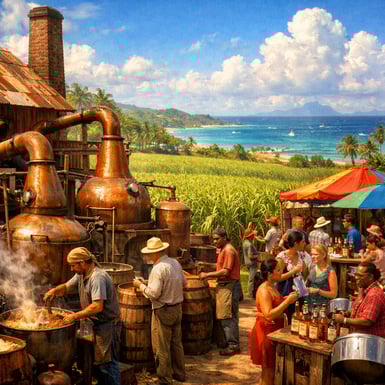
Plantation owners initially viewed molasses as waste—a sticky, dark residue left over after extracting crystallized sugar from sugarcane juice. Disposing of this substance became a logistical challenge until enslaved workers and plantation managers discovered that molasses could ferment when mixed with water. This accidental discovery would change Caribbean history forever. The fermented molasses, when distilled, produced a potent alcoholic beverage that workers called "kill-devil" or "rumbullion," terms that eventually evolved into the word "rum."A sundrenched Caribbean landscape unfolds showcasing vast sugarcane fields stretching towards the horizon their green stalks swaying gently in the war

The connection between Caribbean rum and the brutal institution of slavery cannot be ignored. Enslaved Africans who worked the sugarcane fields were often the first to experiment with fermenting and distilling molasses, drawing on traditional African brewing knowledge. Their labor not only produced the sugar that enriched colonial powers but also inadvertently created the foundation for an entirely new industry. Rum quickly became intertwined with the Triangular Trade, serving as currency, commodity, and cruel compensation in a system that trafficked human beings across the Atlantic.

The Alchemy of Molasses: How Caribbean Distillers Perfected Their Craft

Early Caribbean rum production was rudimentary and often dangerous. The first distillers used crude pot stills made from copper or even clay, heating the fermented molasses mixture over open flames. The resulting spirit was harsh, unrefined, and sometimes toxic due to improper distillation techniques that failed to separate methanol and other harmful compounds. These early rums bore little resemblance to the smooth, complex spirits we know today, often requiring immediate consumption or heavy dilution to be palatable.

As the 18th century progressed, Caribbean distillers began refining their methods through experimentation and knowledge exchange. Pot stills evolved to become more sophisticated, with better temperature control and improved condensation systems. Distillers discovered that the quality of fermentation dramatically affected the final product, leading them to cultivate specific yeast strains and control fermentation times more carefully. Some producers began adding dunder—the acidic residue from previous distillations—back into new fermentation batches, creating distinctive funky flavors that became hallmarks of traditional Jamaican rum.

The 19th century brought revolutionary changes with the introduction of the column still, invented by Irishman Aeneas Coffey in 1830. This continuous distillation apparatus allowed for more efficient production and created lighter, cleaner spirits compared to pot still rums. Caribbean distilleries quickly adopted this technology, with some islands specializing in column-distilled rums while others maintained pot still traditions. This technological divide created the foundation for different regional styles that persist today. Additionally, distillers began aging rum in oak barrels—often recycled bourbon casks from America—discovering that tropical aging accelerated maturation and added remarkable complexity, with the angel's share evaporating at rates three to four times faster than in temperate climates.

Island by Island: Regional Rum Styles That Define the Caribbean

Each Caribbean island developed distinctive rum-making traditions influenced by colonial heritage, available resources, and local preferences. Jamaica emerged as the home of heavy, funky pot still rums characterized by high ester content and intense flavors. Jamaican distillers perfected the use of dunder and long fermentation periods, sometimes lasting weeks, to create rums with bold, almost overripe fruit flavors. Brands like Appleton Estate and Hampden have become synonymous with this robust style, prized by rum connoisseurs and mixologists for their complexity and ability to shine through in cocktails.

Barbados, often called the birthplace of rum, developed a more balanced approach that combines pot and column distillation. Bajan rums like Mount Gay—which stakes a claim as the world's oldest rum brand, dating to 1703—showcase elegance and smoothness while maintaining character. The island's coral-filtered water and specific fermentation techniques contribute to a style that bridges the gap between light and heavy rums. Meanwhile, Cuba perfected the light, clean rum style before the revolution, with distillers like the Bacardí family pioneering charcoal filtration methods that removed color and congeners, creating mixable spirits ideal for cocktails like the Mojito and Daiquiri.

Trinidad, Martinique, and other islands each contributed unique variations. Trinidad's Angostura became famous not only for rum but also for aromatic bitters, while the distillery produces exceptional aged rums using a blend of column and pot still spirits. Martinique stands apart by producing rhum agricole—made from fresh sugarcane juice rather than molasses—under strict Appellation d'Origine Contrôlée regulations similar to French wine. This grassier, more vegetal style represents a different branch of rum's family tree. Puerto Rico developed a Spanish-style tradition of light, smooth rums, while the U.S. Virgin Islands and other territories added their own interpretations, creating a diverse Caribbean rum landscape where each island's spirit tells a distinct story.

Pirates, Trade Routes, and the Spirit That Sailed the Seven Seas

Rum's association with pirates and sailors is rooted in historical reality rather than mere legend. The British Royal Navy officially adopted rum as the daily ration for sailors in 1655 after capturing Jamaica from the Spanish. The practicality was undeniable: rum didn't spoil during long voyages like beer, took up less space than water barrels, and provided a morale boost to crews facing harsh conditions. The famous "tot" of rum—a half pint daily ration—became a naval tradition that lasted until 1970, when Black Tot Day marked the end of this centuries-old practice. Sailors received their rum diluted with water, a mixture called "grog" after Admiral Edward Vernon, nicknamed "Old Grog" for his grogram cloak.

Pirates and privateers who plagued Caribbean waters in the 17th and 18th centuries developed an infamous reputation for rum consumption, though historical accounts suggest the stereotype was somewhat exaggerated. Nevertheless, rum served practical purposes for these seafarers: it was valuable plunder, tradeable currency, and liquid courage before battles. Port Royal in Jamaica, once called the "wickedest city on Earth," was awash with rum taverns serving pirates, merchants, and naval officers alike until an earthquake destroyed much of the city in 1692. The romanticized image of rum-swilling pirates has persisted through literature like "Treasure Island," where Robert Louis Stevenson immortalized the connection between buccaneers and their favorite spirit.

Rum played a crucial economic role in Atlantic trade networks, particularly the infamous Triangular Trade. Ships carried rum from the Caribbean or New England distilleries to Africa, where it was traded for enslaved people. These captives were transported to the Caribbean in horrific conditions, then sold to plantation owners who produced sugar and molasses. The molasses returned to distilleries to make more rum, completing a cycle of commerce and human suffering. New England became a significant rum producer, with colonial distilleries in Massachusetts and Rhode Island processing Caribbean molasses. Rum even influenced American independence—the Molasses Act of 1733 and subsequent Sugar Act of 1764 taxed imported molasses, infuriating colonists and contributing to revolutionary sentiment.

Caribbean Rum's Lasting Impact on Global Drinking Culture and Economy

Caribbean rum fundamentally shaped global cocktail culture in ways that remain evident today. The late 19th and early 20th centuries saw rum travel beyond naval vessels and Caribbean taverns into sophisticated hotel bars and speakeasies. Cuban bartenders created iconic drinks that showcased rum's versatility: the Mojito, Daiquiri, and Cuba Libre became international sensations. During American Prohibition, thirsty Americans traveled to Havana, where rum cocktails flowed freely, establishing Cuba as a glamorous drinking destination. After World War II, tiki culture exploded in the United States, with establishments like Trader Vic's and Don the Beachcomber serving elaborate rum drinks in exotic settings, introducing Americans to aged and blended Caribbean rums.

The economic impact of rum on Caribbean nations cannot be overstated. For many islands, rum production remains a vital industry providing employment, tax revenue, and cultural identity. Major international brands like Bacardí, Captain Morgan, and Appleton Estate generate billions in annual sales, while smaller craft distilleries have proliferated in recent decades, catering to premium spirits markets. Tourism heavily incorporates rum heritage, with distillery tours, rum museums, and tasting experiences drawing visitors who contribute significantly to island economies. Events like the Caribbean Rum and Beer Festival and Barbados's Crop Over festival celebrate rum's cultural importance beyond mere commerce.

The 21st century has witnessed a rum renaissance, with connoisseurs and collectors approaching aged Caribbean rums with the same reverence previously reserved for whisky or cognac. Premium and ultra-premium rums have achieved critical acclaim, with vintage Jamaican rums, well-aged Barbadian expressions, and rare rhum agricole from Martinique commanding impressive prices at auction. The craft spirits movement has inspired Caribbean distillers to experiment with terroir, heritage cane varieties, and innovative aging techniques including finishing in wine, port, or sherry casks. Simultaneously, there's been increased attention to sustainability and the darker aspects of rum's history, with some distilleries acknowledging the enslaved people who created the industry and working toward more equitable futures. As global spirits consumption evolves, Caribbean rum remains not just a drink but a living link to history—bitter and sweet, complex and enduring, shaped by sun-drenched islands that transformed sugarcane into liquid gold that conquered the world.

Topics: spirits, free pour, drink recipe, mixology, cruise ship inventory, craft cocktails, rum, rum inventory

The Lincoln County Process: Defining Tennessee Whiskey

Posted by Nick Kaoukis on Wed, Mar, 18, 2026 @ 09:03 AM

Discover how a unique charcoal filtration method transforms bourbon into Tennessee whiskey and defines an entire regional spirit tradition.

What Makes Tennessee Whiskey Different From Bourbon

Tennessee whiskey and bourbon share many similarities, but one crucial step sets them apart: the Lincoln County Process. Both spirits must be made from at least 51% corn, aged in new charred oak barrels, and distilled to no more than 160 proof. However, Tennessee whiskey undergoes an additional filtration process that bourbon does not require, creating a distinct flavor profile that has become synonymous with the Volunteer State.

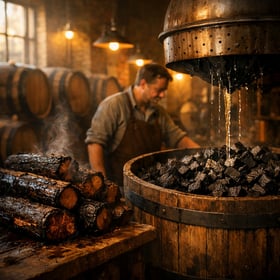
The primary distinction lies in the charcoal mellowing process that occurs before barrel aging. This extra step, known as the Lincoln County Process, involves filtering the freshly distilled spirit through sugar maple charcoal. This filtration removes impurities and harsh flavors, resulting in a smoother, mellower whiskey with subtle sweetness and complexity. While all Tennessee whiskey can technically meet the legal requirements to be called bourbon, the reverse is not true—bourbon does not undergo this signature filtration process.A rustic distillery interior showcases large wooden barrels stacked against weathered brick walls illuminated by warm golden light filtering through d

Geography also plays a role in the distinction. Tennessee whiskey must be produced in Tennessee to carry the name, similar to how champagne must come from the Champagne region of France. This regional designation, combined with the mandatory Lincoln County Process, creates a protected category that celebrates Tennessee's unique contribution to American whiskey heritage. The result is a spirit that stands proudly on its own, distinct from its Kentucky cousin while honoring shared roots in American distilling traditions.

The History Behind the Lincoln County Process

The Lincoln County Process traces its origins to the early 19th century in Tennessee, where distillers sought ways to create smoother, more refined spirits. The technique is believed to have been developed around 1825 by Alfred Eaton in Lincoln County, Tennessee, though the exact origins remain somewhat shrouded in distilling folklore. What is certain is that this innovative filtration method quickly gained popularity among Tennessee distillers who recognized its ability to produce a superior product.

The most famous practitioner of the Lincoln County Process was Nathan "Nearest" Green, an enslaved master distiller who perfected the technique and later taught it to a young Jasper Newton "Jack" Daniel. Green's expertise and mentorship were instrumental in establishing the foundation of what would become the Jack Daniel Distillery in Lynchburg, Tennessee. Despite the distillery's location in Moore County, the process retained its Lincoln County name, honoring its geographical origins. Green's contributions, long overlooked in historical accounts, have recently gained recognition as essential to the development of Tennessee whiskey.

By the late 1800s, the Lincoln County Process had become the defining characteristic of Tennessee whiskey production. Distilleries across the state adopted the method, recognizing that the charcoal mellowing process set their product apart in an increasingly competitive market. When Prohibition devastated the American whiskey industry in 1920, many distilleries closed permanently, but those that survived—most notably Jack Daniel's and George Dickel—continued the tradition when legal production resumed, ensuring that this unique Tennessee heritage would endure for future generations.

How Sugar Maple Charcoal Filtration Works

The Lincoln County Process begins with the creation of sugar maple charcoal, a meticulous undertaking that is crucial to the final product's quality. Distilleries stack sugar maple wood and burn it in carefully controlled conditions until it reduces to charcoal. This charcoal is then broken into small chunks and packed into large vats or mellowing tanks, creating a filtration bed that can be anywhere from 10 to 14 feet deep, depending on the distillery's specifications.

Once the charcoal bed is prepared, the freshly distilled whiskey—known as "white dog" or new make spirit—is slowly dripped through the charcoal. This process is not rushed; the whiskey may take anywhere from three to ten days to complete its journey through the charcoal, depending on the depth of the bed and the distillery's desired mellowing effect. Gravity pulls the clear spirit downward through the porous charcoal, which acts as both a physical and chemical filter, interacting with the alcohol at a molecular level.

The sugar maple wood is specifically chosen for its unique properties. Unlike other hardwoods, sugar maple imparts a subtle sweetness without adding overwhelming flavor. The charcoal's porous structure creates an enormous surface area for the whiskey to contact, maximizing the filtration effect. As the spirit passes through, the charcoal removes sulfur compounds, fusel oils, and other congeners that contribute to harsh flavors. At the same time, it allows desirable flavor compounds to pass through, resulting in a cleaner, smoother spirit that is then ready for barrel aging.

The Science of Mellowing: What Happens During Filtration

The Lincoln County Process is more than just physical filtration—it's a complex chemical interaction between the whiskey and the activated charcoal. When the new make spirit encounters the charcoal, a process called adsorption occurs. Unlike absorption, where substances are taken into the interior of a material, adsorption involves molecules adhering to the surface of the charcoal. The porous nature of sugar maple charcoal provides an immense surface area, estimated at hundreds of square meters per gram, allowing for extensive contact with the whiskey.

During this contact, the charcoal selectively removes certain compounds while allowing others to pass through. Heavier, more volatile compounds such as sulfur-based molecules, fusel alcohols, and fatty acids are trapped by the charcoal, while lighter alcohol molecules and desirable flavor compounds continue their journey. This selective filtration is key to understanding why Tennessee whiskey tastes different from bourbon. The process removes the sharp, biting notes that can characterize young spirits, replacing them with a rounder, more approachable character even before barrel aging begins.

The mellowing process also introduces subtle flavor changes beyond simple removal of undesirable compounds. The interaction between the spirit and the charcoal can generate new flavor molecules through chemical reactions, adding notes of vanilla, caramel, and a distinctive smoothness. Some experts believe the sugar maple charcoal imparts a faint sweetness and a hint of smokiness, though this is far more delicate than the peat smoke found in Scotch whisky. When the filtered spirit enters new charred oak barrels for aging, it does so with a cleaner, more refined base, allowing the barrel aging process to add complexity without having to overcome harsh initial flavors.

Legal Requirements and Modern Tennessee Whiskey Production

In 2013, Tennessee officially codified the definition of Tennessee whiskey into state law, establishing clear legal requirements that protect the designation. According to Tennessee law, a spirit labeled as Tennessee whiskey must be produced in Tennessee, made from at least 51% corn, distilled to no more than 160 proof, aged in new charred oak barrels, and filtered through maple charcoal before aging. The law also specifies that the whiskey must enter the barrel at no more than 125 proof and be bottled at a minimum of 80 proof, mirroring federal bourbon requirements while adding the distinctive Lincoln County Process mandate.

This legislation was not without controversy. Some smaller craft distillers argued that the law was too restrictive and favored established producers, while supporters maintained that it protected Tennessee's whiskey heritage and prevented inferior products from trading on the state's reputation. The law includes a clause allowing distillers to petition for exemptions, recognizing that innovation and tradition can coexist. Ultimately, the legislation reinforced Tennessee whiskey's identity as a distinct category within American whiskey, ensuring that the Lincoln County Process remains central to the definition.

Today, Tennessee whiskey production continues to honor traditional methods while embracing modern technology and quality control. Major producers like Jack Daniel's and George Dickel maintain their commitment to the Lincoln County Process, using sugar maple charcoal mellowing as a defining step in their production. Meanwhile, a new generation of craft distilleries has emerged across Tennessee, many of whom proudly employ the traditional charcoal filtration method while experimenting with different grain bills, barrel finishes, and aging techniques. Whether produced in large-scale operations or small craft distilleries, Tennessee whiskey remains distinguished by the patient, meticulous process that transforms good bourbon into something uniquely Tennessee—a smooth, mellow spirit that reflects the state's rich distilling heritage and its ongoing commitment to craftsmanship.

Topics: inventory, bourbon, hotel supplies, whiskey, hospitality industry show, liquor, Single malt whisky, liquor inventory app, Tennessee Whisky

Boost Hospitality Inventory Accuracy with POS and Inventory Integration

Posted by Nick Kaoukis on Mon, Mar, 16, 2026 @ 09:03 AM

The image features a modern restaurant kitchen bustling with activity In the foreground a chef in a white uniform expertly prepares dishes surroundedDiscover how integrating your POS system with inventory management can eliminate costly errors, reduce waste, and transform your hospitality business into a data-driven operation.

Why Inventory Accuracy Makes or Breaks Hospitality Businesses

In the fast-paced world of hospitality, inventory accuracy isn't just a nice-to-have—it's the foundation of profitability. Every dish served, every drink poured, and every ingredient used represents a direct impact on your bottom line. When inventory counts are off, even by small margins, the ripple effects can be devastating. Restaurants operating with inaccurate inventory data face challenges ranging from unexpected stockouts during peak service hours to overordering that leads to spoilage and waste.

The hospitality industry operates on notoriously thin profit margins, typically ranging from 3-5% for restaurants. In this environment, even minor inventory discrepancies can mean the difference between profit and loss. Consider a restaurant that experiences just 2% inventory shrinkage due to tracking errors—for a business with $1 million in annual revenue, that's $20,000 in lost profits. Multiply this across multiple locations or over several years, and the financial impact becomes staggering.

Beyond the immediate financial implications, inventory accuracy affects every aspect of your operation. It determines whether you can fulfill customer orders reliably, influences menu pricing decisions, impacts staff productivity, and shapes your reputation in the market. When your inventory data is unreliable, you're essentially flying blind, making critical business decisions based on incomplete or incorrect information. In today's competitive hospitality landscape, this disadvantage can be fatal to long-term success.

The Hidden Costs of Manual Inventory Tracking

Manual inventory tracking remains surprisingly common in the hospitality industry, but its true cost extends far beyond the obvious labor hours. When staff members spend time counting stock with clipboards and spreadsheets, they're not only investing valuable time—they're introducing countless opportunities for human error. Transcription mistakes, miscounts, forgotten items, and calculation errors accumulate quickly. Studies show that manual inventory processes can have error rates as high as 20-30%, creating a cascading effect of operational problems.

The labor costs associated with manual inventory management are substantial and often underestimated. A typical restaurant might require 5-10 hours per week for inventory counts, costing thousands of dollars annually in staff wages. But the real cost comes from the inefficiency: employees conducting manual counts aren't engaging with customers, preparing food, or performing other revenue-generating activities. During these counting periods, productivity drops across the entire operation as managers focus on tedious administrative tasks rather than strategic initiatives that drive growth.

Perhaps most damaging are the opportunity costs and decision-making delays that manual systems create. Without real-time inventory data, managers can't respond quickly to emerging trends, sudden demand shifts, or supply chain disruptions. By the time weekly or monthly inventory counts are completed and analyzed, the insights they provide are already outdated. This lag in information means missed opportunities to optimize purchasing, adjust menu offerings, or prevent costly stockouts. Additionally, manual systems make it nearly impossible to track key metrics like inventory turnover rates, COGS percentages, or variance analysis with any meaningful accuracy.

The stress and employee dissatisfaction generated by manual inventory processes shouldn't be overlooked either. Staff often view inventory counts as the worst part of their job—tedious, time-consuming, and unrewarding. This can contribute to higher turnover rates in an industry already struggling with employee retention. When team members are frustrated by outdated systems and inefficient processes, it affects morale, service quality, and ultimately, the customer experience.

How POS and Inventory Integration Creates Real-Time Visibility

Integrating your POS system with inventory management software creates a seamless flow of data that transforms how you operate. Every time a server rings up an order, the system automatically deducts the corresponding ingredients from inventory counts. When a bartender makes a cocktail, the rum, lime juice, and simple syrup are instantly tracked. This real-time synchronization means your inventory levels are continuously updated without any manual intervention, providing an accurate picture of your stock at any given moment.

The power of real-time visibility cannot be overstated. Managers can log into the system from anywhere—whether they're in the office, at home, or visiting another location—and see exactly what's in stock, what's running low, and what needs to be ordered. This eliminates the anxiety of wondering whether you'll run out of key ingredients during dinner service or whether you're sitting on excessive inventory that's tying up cash. Push notifications and automated alerts can warn you when items approach reorder points, ensuring you never face embarrassing stockouts or have to send servers to nearby stores for emergency purchases.

Integration also enables sophisticated recipe costing and menu engineering that would be impossible with manual systems. When your POS knows the exact recipe for each menu item—down to the precise quantity of every ingredient—it can automatically calculate theoretical usage and compare it against actual consumption. This variance analysis reveals potential issues like over-portioning, theft, spillage, or recipe inconsistencies. If your filet mignon sales should have used 50 pounds of beef but your inventory shows 55 pounds were depleted, you immediately know there's a 5-pound discrepancy to investigate.

The data generated by integrated systems unlocks powerful business intelligence that drives smarter decision-making. You can analyze which menu items are most profitable, not just in terms of price, but considering actual ingredient costs and inventory turnover. You can identify seasonal trends, predict future demand with greater accuracy, and optimize your purchasing strategy. Historical data helps you understand which suppliers provide the best value, which items have the longest shelf life, and how to minimize waste while maximizing freshness.

Key Features to Look for in an Integrated System

When evaluating POS and inventory integration solutions, recipe management capabilities should be at the top of your checklist. The system should allow you to build detailed recipes that break down every menu item into its component ingredients, including precise quantities and units of measure. This feature becomes the foundation for accurate inventory tracking, as each sale automatically deducts the correct amounts from stock. Look for systems that support sub-recipes (components used across multiple dishes) and can handle various units of measurement, converting between pounds, ounces, liters, and individual units seamlessly.

Automated purchasing and vendor management features can dramatically streamline your procurement process. The best integrated systems generate purchase orders automatically based on par levels, reorder points, and predicted demand. They should maintain a database of your vendors with pricing information, lead times, and ordering minimums. When it's time to place an order, the system can suggest optimal quantities, compare prices across suppliers, and even send purchase orders electronically. Upon receiving shipments, staff should be able to check in inventory quickly using mobile devices or barcode scanners, instantly updating stock levels.

Comprehensive reporting and analytics capabilities separate good systems from great ones. Look for platforms that offer customizable dashboards displaying key metrics like inventory value, turnover rates, cost of goods sold, and variance reports. The system should track inventory movement patterns, showing which items are fast-moving versus slow-moving, helping you optimize your stock mix. Waste tracking features are essential for identifying where food costs are being lost—whether through spoilage, over-portioning, or preparation errors. The ability to drill down into data by location, time period, category, or individual item provides the insights needed for continuous improvement.

Multi-location support and mobile accessibility are increasingly important features in today's hospitality environment. If you operate multiple restaurants, bars, or hotels, your integrated system should provide consolidated reporting across all locations while allowing site-specific inventory management. Cloud-based solutions with mobile apps enable managers to perform inventory counts, check stock levels, approve purchase orders, and review reports from their smartphones or tablets. This flexibility supports the reality of modern restaurant management, where decisions often need to be made outside traditional office hours and locations.

Implementing Integration for Maximum ROI and Efficiency

Successful implementation of POS and inventory integration begins with thorough preparation and planning. Start by conducting a complete audit of your current processes, identifying pain points, inefficiencies, and specific goals you want to achieve. Assemble a project team that includes representatives from management, kitchen staff, front-of-house personnel, and accounting. This cross-functional approach ensures all perspectives are considered and increases buy-in across your organization. Set clear, measurable objectives—whether that's reducing food costs by 3%, cutting inventory counting time by 75%, or achieving 98% inventory accuracy.

Data migration and initial setup require careful attention to detail. You'll need to build your complete ingredient database, entering each item with accurate names, units of measure, pack sizes, and current costs. Creating recipes for every menu item is time-intensive but critical—this is where the accuracy of your entire system is established. Many businesses underestimate the time required for this phase, so budget adequate resources. Consider starting with your highest-volume or highest-cost items first, allowing you to see ROI more quickly while spreading out the workload. Some integration providers offer setup assistance or data entry services that can accelerate this process.

Training is perhaps the most overlooked aspect of implementation, yet it's crucial for success. Every team member who interacts with the system needs proper training tailored to their role. Kitchen staff must understand how to record waste and transfers, servers need to know how their order entry affects inventory, and managers require comprehensive training on reporting and analysis tools. Don't rely solely on one-time training sessions—provide ongoing education through quick-reference guides, video tutorials, and refresher sessions. Designate system champions within each department who can help troubleshoot issues and reinforce best practices.

Once your integrated system is live, establish regular processes for monitoring, maintenance, and optimization. Schedule periodic physical inventory counts to verify system accuracy and identify any discrepancies. Review variance reports weekly to catch issues early, whether they're data entry errors, theft, or process problems. Continuously refine your recipes as you introduce menu changes or discover more accurate measurements. Hold monthly meetings to review key metrics, celebrate improvements, and identify new opportunities for efficiency gains. The integration between your POS and inventory systems isn't a one-time project—it's an ongoing journey toward operational excellence that requires commitment, but delivers substantial returns through reduced costs, improved accuracy, and data-driven decision-making.

Topics: Restaurant Inventory, Scannabar Inventory system, Best Bar Inventory app, Best Liquor Inventory app, Scannabar inventory app, Resaurant Inventory app, Restaurant Inventory app, Scannabar Inventory Software, pos interface

Maximize Margins Using Real-Time Stock Tracking in Your Bar

Posted by Nick Kaoukis on Fri, Mar, 13, 2026 @ 09:03 AM

Discover how real-time inventory management can transform your bar's profitability by eliminating waste, preventing theft, and uncovering hidden revenue opportunities.

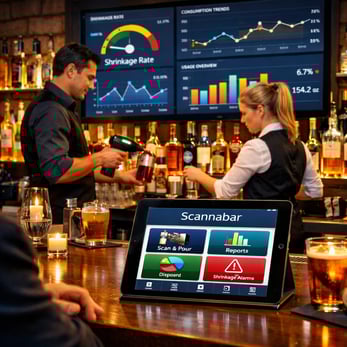
TThe image features a sleek modern interface of the Scannabar Inventory application displayed on a tablet set against a backdrop of a bustling bar environment The screen shows vibrant graphs and charts illustrating realtime inventory levels stock usag-1he Hidden Profit Leaks Draining Your Bar's Bottom Line
Every bar owner knows the feeling of watching revenue pour through the doors, only to wonder where all the profit went at the end of the month. The harsh reality is that most bars lose between 20-25% of their potential profits to what industry experts call 'shrinkage'—a polite term for the countless ways inventory mysteriously disappears. From untracked spillage and bartender error to deliberate theft and unrecorded drinks given to friends, these profit leaks compound daily, turning what should be a thriving business into one that barely breaks even.

The traditional approach of weekly or monthly inventory counts simply can't capture these losses in time to prevent them. By the time you discover that three bottles of premium vodka are missing or that your beer kegs are draining faster than sales records indicate, the damage is already done. Without visibility into what's happening behind the bar in real-time, you're essentially flying blind, making business decisions based on outdated information while profit quietly slips away with every shift.

Over-pouring represents another significant drain that most bar owners drastically underestimate. A bartender who pours just a quarter-ounce extra per cocktail might seem generous, but multiply that by hundreds of drinks per night, and you're giving away thousands of dollars in inventory annually. When you factor in drinks that aren't rung up correctly, promotional drinks that aren't tracked, and the inevitable 'one for me, one for you' mentality that develops without oversight, it becomes clear why so many bars struggle with thin margins despite strong sales numbers.

How Real-Time Stock Tracking Transforms Bar Operations

Real-time inventory tracking systems create an unprecedented level of visibility into your bar operations by connecting every pour, sale, and stock movement to a centralized dashboard. Modern pour-tracking technology uses wireless sensors or smart bottle monitoring systems that record each pour automatically, matching it against your point-of-sale data to ensure every drink served is also paid for. This shift from periodic manual counts to continuous automated monitoring fundamentally changes how you manage your business, replacing guesswork with actionable data.

The transformation extends far beyond simply knowing what's in stock. With real-time tracking, you can identify patterns and anomalies as they happen rather than discovering them weeks later during a physical count. When a bottle's depletion rate suddenly accelerates or when sales of a particular cocktail don't match the inventory usage of its ingredients, you're alerted immediately. This allows you to address issues while they're still small and manageable, rather than after they've cost you hundreds or thousands of dollars.

Perhaps most importantly, real-time systems eliminate the tedious manual counting process that eats up valuable management time. Instead of spending hours each week climbing on ladders to check bottles and recording numbers on clipboards, your inventory updates automatically throughout each shift. This frees up your time to focus on what actually drives business growth: creating memorable customer experiences, training your staff, refining your menu, and building your brand. The system works in the background, constantly monitoring and alerting you only when intervention is needed.

Catching Theft and Over-Pouring Before They Impact Your Margins

The uncomfortable truth about bar operations is that not all inventory loss is accidental. Employee theft accounts for a significant portion of shrinkage in the hospitality industry, ranging from bartenders pocketing cash from unrecorded sales to giving away free drinks to friends or over-pouring for better tips. Real-time tracking acts as both a deterrent and a detection system, making it virtually impossible for these practices to continue unnoticed. When employees know that every bottle is monitored and every pour is tracked, the opportunity and temptation for theft diminishes dramatically.

The system works by creating an expected usage baseline for each product based on sales data, then flagging any discrepancies immediately. If your POS system shows ten margaritas were sold but your tequila inventory indicates enough was poured for fifteen, you know there's a problem that needs investigation. The beauty of real-time alerts is that you can address these issues during the shift or immediately afterward, while details are fresh and corrective action is most effective. This immediate feedback loop creates accountability that simply doesn't exist with periodic counting methods.

Over-pouring detection is equally powerful for improving margins. Real-time tracking systems can be calibrated to your exact recipes, measuring the precise amount that should be used for each drink. When a bartender consistently pours more than specified, the system flags this behavior for coaching opportunities. Often, bartenders don't even realize they're over-pouring—they think they're making drinks correctly but lack the precision that comes from proper training and oversight. By identifying these patterns early, you can provide targeted training that improves consistency, reduces waste, and protects your margins without creating an adversarial relationship with your staff.

The psychological impact of having monitoring systems in place cannot be overstated. Even the most honest employees can develop bad habits when they know no one is watching. Real-time tracking creates a culture of accountability where everyone understands that accuracy matters and that the bar's success depends on everyone following procedures. This doesn't mean creating a police state atmosphere—quite the opposite. When implemented with proper training and communication, these systems are seen as tools that help everyone do their jobs better while ensuring the business thrives and can continue providing employment.

Data-Driven Menu Engineering for Maximum Profitability

Real-time inventory data unlocks powerful menu engineering opportunities that most bar owners never realize are available. By analyzing the relationship between what you sell, what it costs to make, and how much profit each item generates, you can strategically design your menu to maximize overall profitability. The data reveals which cocktails are your true profit drivers and which are actually losing you money once you account for all the ingredients, garnishes, and time required to prepare them.

This granular visibility allows you to calculate the actual pour cost for every drink on your menu with precision. You might discover that your signature cocktail, which seems popular and is priced well, actually has a pour cost of 35% because it uses premium spirits and multiple ingredients, while a simpler whiskey highball generates better margins at only 18% pour cost. Armed with this information, you can make strategic decisions about pricing adjustments, recipe modifications, or promotional focus that dramatically improve your bottom line without alienating customers.

The data also reveals dead weight on your menu—items that take up valuable back bar space but sell infrequently. That boutique gin that seemed like a good idea six months ago but has barely moved represents capital tied up in slow-moving inventory that could be invested in faster-turning products. Real-time tracking shows you exactly how long bottles sit and allows you to make evidence-based decisions about what to discontinue, what to feature more prominently, and what to add based on customer demand patterns.

Perhaps most powerfully, real-time data enables dynamic menu optimization. You can test new cocktails and immediately see their impact on profitability and sales volume. You can adjust recipes to reduce costs while maintaining quality, track whether customers notice or care, and fine-tune until you find the optimal balance. This iterative, data-driven approach to menu development is how successful restaurant groups operate, and real-time inventory systems bring this capability to bars of all sizes.

Implementing Your Real-Time Inventory System for Immediate Results

The key to successful implementation starts with choosing the right system for your bar's specific needs and scale. Options range from comprehensive platforms that integrate pour sensors on every bottle to more affordable solutions that use smart bottle tags or periodic scanning with mobile apps. For most bars, a phased approach works best—start by tracking your highest-value spirits and most popular products, then expand coverage as you see results and build confidence with the system. This allows your staff to adapt gradually while you begin capturing the majority of potential profit leaks immediately.

Staff training and buy-in are absolutely critical to implementation success. Rather than presenting the system as a 'big brother' surveillance tool, frame it as a way to protect the business and ensure everyone shares in its success. Involve your bartenders in the setup process, asking for their input on recipe specifications and standard pours. When staff members feel like partners in the process rather than suspects under surveillance, they'll embrace the system and help identify opportunities for improvement. Consider offering performance bonuses tied to improved pour costs or reduced shrinkage to align everyone's incentives.

Integration with your existing POS system is the next crucial step. The real power of inventory tracking comes from matching usage data against sales data, which requires seamless communication between systems. Most modern inventory platforms offer integrations with popular POS systems, but you'll need to ensure your product libraries match up correctly and that bartenders are trained to ring items in consistently. This might require some cleanup of your POS database and standardization of how items are entered, but this foundational work pays dividends in data accuracy.

Once your system is operational, commit to actually using the data it generates. Set aside time weekly to review reports, identify trends, and follow up on alerts. Look for patterns in shrinkage by shift, day of the week, or specific product categories. Celebrate improvements with your team and address issues promptly and professionally. The bars that see the most dramatic margin improvements aren't necessarily those with the most sophisticated systems—they're the ones whose owners actively engage with their data and make continuous small adjustments based on what they learn. Real-time inventory tracking is a tool, not a magic solution, but in the hands of an engaged operator, it's one of the most powerful profit improvement tools available in the hospitality industry.

Topics: Bar inventory, Bar trends, Scannabar Inventory system, Bar Management, Beer stock, Best Bar Inventory app, Best Liquor Inventory app, Scannabar inventory app, Scannabar Inventory Software

Best March Madness Viewing Venues for Basketball Fans

Posted by Nick Kaoukis on Wed, Mar, 11, 2026 @ 09:03 AM

Discover the ultimate destinations where sports bars, hotels, and entertainment venues transform March Madness into an unforgettable experience with premium viewing setups, exciting atmospheres, and fan-favorite amenities.

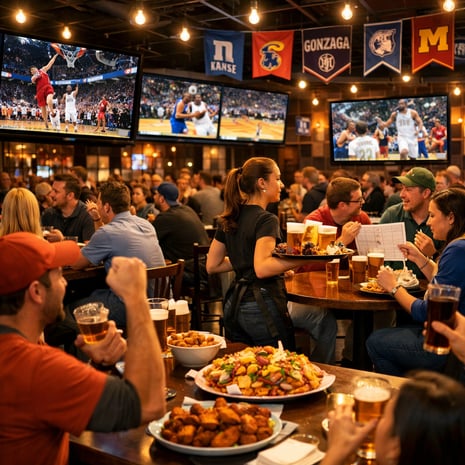
Why the Right Venue Makes All the Difference During March MadnessThe image depicts a lively sports bar bustling with excitement during March Madness Large HD screens hang from the walls showcasing multiple basketbal-1

March Madness is more than just a basketball tournament—it's a cultural phenomenon that brings together millions of fans for three weeks of non-stop excitement, buzzer-beaters, and Cinderella stories. While you could certainly watch the games from your couch, choosing the right venue elevates the entire experience from casual viewing to an unforgettable celebration of college basketball. The energy of a crowd erupting after a game-winning three-pointer, the camaraderie of fellow fans debating bracket picks, and the electric atmosphere that only comes from watching with other passionate supporters—these are the elements that transform March Madness from good to legendary.

The venue you choose sets the tone for your entire tournament experience. A great location offers more than just a screen—it provides the perfect combination of viewing quality, food and drink options, comfortable seating, and that intangible buzz that makes every possession feel more intense. Whether you're a die-hard fan who needs to watch every game or a casual viewer who just wants to catch the biggest matchups, selecting the right headquarters for your March Madness experience ensures you'll have the best seat in the house when those bracket-busting moments happen. From the opening tip-off of the First Four to the final seconds of the championship game, your venue choice can make or break your tournament memories.

Sports Bars That Deliver the Ultimate Game Day Experience

Sports bars remain the gold standard for March Madness viewing, and for good reason. The best establishments dedicate every screen to tournament action, ensuring you won't miss a single upset while you're focused on another game. Look for sports bars that offer wall-to-wall HD screens positioned strategically throughout the venue, so whether you're at the bar, in a booth, or grabbing another round of wings, you'll always have a perfect view. Many top-tier sports bars also provide individual audio controls or have designated sections for different games, allowing you to tune into the broadcast that matters most to your bracket.

The food and drink offerings at sports bars are specifically designed for marathon viewing sessions. Classic game day fare like buffalo wings, loaded nachos, sliders, and pizza provide the perfect fuel for hours of basketball action. Many bars create special March Madness menus with themed items and bucket deals that keep your group satisfied without constant trips to the counter. The beverage selection typically includes a wide variety of craft and domestic beers, creative cocktails, and non-alcoholic options, often with tournament-themed specials and happy hour deals that run during afternoon games.

What truly sets sports bars apart is the atmosphere they cultivate during March Madness. The collective roar when an underdog pulls off an upset, the groans when someone's Final Four pick goes down, and the friendly trash talk between rival fans create an energy that simply can't be replicated at home. Many sports bars host bracket challenges with prizes, organize raffles during timeouts, and create viewing communities that return year after year. The staff at dedicated sports bars understand the tournament's significance and work to enhance the experience, whether that means quickly switching audio between games or ensuring your table is ready before the prime-time matchups begin.

Hotels with Championship-Caliber Viewing Parties and Packages

Major hotels and resorts have recognized March Madness as a prime opportunity to create destination viewing experiences, particularly in cities known for their sports culture or those hosting tournament games. Upscale hotels often transform their ballrooms, poolside areas, or sports lounges into premium viewing venues complete with massive projection screens, superior sound systems, and VIP seating arrangements. These venues combine the excitement of public viewing with elevated amenities that include premium food and beverage service, comfortable lounge seating, and sometimes even dedicated concierge services to ensure your experience is seamless.

Many hotels create complete March Madness packages that bundle accommodations with viewing party access, making them ideal for groups traveling from out of town or locals who want to turn the tournament into a special getaway. These packages often include perks like complimentary breakfast, late checkout to recover from late-night overtime thrillers, welcome amenities with tournament-themed treats, and sometimes even tickets to live games if the hotel is in a host city. The convenience factor is unmatched—you can enjoy the games, indulge in the festivities, and simply take an elevator to your room without worrying about transportation.

Hotel viewing parties often attract a more diverse crowd than traditional sports bars, creating a unique social atmosphere where business travelers, tourists, and local fans mingle. The food and beverage offerings typically skew upscale, with craft cocktail programs, premium beer selections, and menus that go beyond standard bar fare to include items like gourmet flatbreads, artisanal sliders, and elevated appetizer spreads. Some hotels partner with celebrity chefs or local restaurants to provide catering that matches the championship-level experience. For fans who appreciate a more refined environment without sacrificing the excitement of communal viewing, hotel viewing parties offer the best of both worlds.

Entertainment Complexes Offering Immersive Basketball Experiences

Entertainment complexes and lifestyle centers have emerged as exciting alternatives for March Madness viewing, offering experiences that go far beyond simply watching games. These venues—which include bowling alleys with full bars and restaurant service, Dave & Buster's-style arcade bars, Top Golf locations, and large-scale entertainment destinations—allow you to actively participate in games and activities between tournament matchups. You can shoot hoops on arcade basketball games during halftime, bowl a few frames during a blowout, or challenge friends to interactive games while keeping one eye on the screens showing live tournament action.

The multi-screen setup at entertainment complexes rivals or exceeds traditional sports bars, with dozens of large-format displays ensuring the games are visible from virtually anywhere in the venue. The advantage of these locations is that they cater equally well to different engagement levels within your group. While the hardcore fans can post up near a screen to analyze every possession, others can enjoy other activities and still catch the big moments. This makes entertainment complexes particularly popular for corporate outings, large friend groups with varying interest levels, or families who want to keep younger members entertained during the slower games.

Food and drink programs at modern entertainment complexes have evolved significantly, with many offering full-service restaurants, extensive menus with creative options, and craft beverage programs that compete with standalone bars. Special March Madness promotions might include game-day food specials, drink packages, or activity bundles that provide better value for extended stays. The festive, high-energy environment these venues naturally possess amplifies during the tournament, creating a carnival-like atmosphere where the basketball games are the main event but not the only attraction. For groups looking to make March Madness viewing part of a larger entertainment experience, these complexes deliver excitement on multiple levels.

What to Look for When Choosing Your March Madness Headquarters

Selecting the perfect March Madness venue requires considering several key factors that will determine your overall experience. Screen quantity and quality should top your list—you'll want a location with enough screens showing different games simultaneously, positioned so you can track multiple matchups without constantly craning your neck. Screen size matters, but so does display quality; a crisp, properly calibrated HD or 4K display makes a significant difference when you're watching for hours. Audio capability is equally important; can they play sound from multiple games, and do they provide clear audio that cuts through the crowd noise?

Seating arrangements and overall comfort become critical considerations during a tournament that spans several weeks with games running from noon until midnight. Look for venues with a variety of seating options—bar stools for solo viewers or couples, tables for groups, and comfortable lounge areas for settling in during marathon viewing sessions. Check whether reservations are accepted, especially for prime-time games and weekends, and understand the venue's policy on table holding during busy periods. Adequate space between tables and good sightlines to screens from all seating areas prevent frustration when the venue fills up.

Menu variety, food quality, and value for money deserve careful evaluation, especially if you plan to make a venue your regular tournament headquarters. Review the menu in advance to ensure it offers options everyone in your group will enjoy, including vegetarian selections, shareable appetizers, and heartier entrées for dinner games. Drink specials and happy hour timing can significantly impact your overall spend, particularly during afternoon sessions. Consider the service model—full table service provides convenience, while counter service might mean faster access during peak times.

Location and logistics complete the venue selection process. Consider proximity to your home or office, parking availability and costs, and public transportation access if you plan to enjoy alcoholic beverages. Check the venue's March Madness-specific policies—do they offer bracket challenges, require minimums during peak games, or host special events for Final Four weekend? Read recent reviews focusing on how the venue handles major sporting events, as some locations are better equipped and staffed for tournament crowds than others. Taking time to evaluate these factors ensures you'll find the perfect March Madness headquarters that matches your priorities and enhances your tournament experience from the first tip-off to the championship celebration.

Topics: Bar trends, Bar products, Beer stock, Bar Promotion, Best Bar Inventory app, Sports Bar, NCAA Basketball, March Madness

The Ultimate Agave Spirits Guide: Tequila and Beyond

Posted by Nick Kaoukis on Wed, Mar, 04, 2026 @ 09:03 AM

Discover the rich world of agave spirits, from premium tequila to artisanal mezcal, and elevate your bar program with authentic Mexican flavors that keep guests coming back for more.

Understanding the Agave Plant: The Heart of Mexico's Spirit Heritage

The image depicts an elegant bar setting illuminated by soft warm lighting Behind the bar shelves are lined with an impressive array of bottles featur-1The agave plant stands as a symbol of Mexican culture and craftsmanship, serving as the foundation for some of the world's most beloved spirits. This succulent, often mistaken for a cactus, thrives in Mexico's diverse climates and has been cultivated for centuries. With over 200 species of agave growing throughout the region, only specific varieties are used to produce the spirits we know and love today. The blue agave (Agave tequilana Weber) is exclusively used for tequila production, while mezcal can be crafted from over 30 different agave species, each imparting unique flavor characteristics.


The lifecycle of an agave plant is a testament to patience and dedication. Most agave plants require between 7 to 10 years to reach maturity, with some varieties taking up to 25 years before they're ready for harvest. This extended growing period allows the plant to develop complex sugars in its core, or piña, which can weigh anywhere from 40 to 200 pounds when fully matured. The timing of harvest is crucial—too early and the sugars haven't fully developed, too late and the plant may begin to flower, diverting energy away from the piña.

Understanding the terroir of agave is essential for appreciating the nuances in your glass. The soil composition, elevation, rainfall, and temperature all influence the flavor profile of the final spirit. Highland agave, grown at higher elevations, tends to produce spirits with sweeter, more floral notes, while lowland agave often yields earthier, more mineral-driven flavors. This geographical diversity is what makes agave spirits so fascinating and varied, offering endless exploration opportunities for both bartenders and enthusiasts alike.

Tequila Essentials: From Blanco to Extra Añejo

Tequila must be produced in specific regions of Mexico, primarily in the state of Jalisco, and must contain at least 51% blue agave sugars (though premium tequilas are 100% agave). The classification system for tequila is based primarily on aging time, with each category offering distinct characteristics. Blanco, or silver tequila, is unaged or rested for less than two months, showcasing the pure, crisp agave flavors with notes of citrus, pepper, and herbs. This is the most versatile category for cocktails and allows you to taste the true essence of the agave plant.

Reposado tequila, meaning 'rested,' is aged in oak barrels for two months to one year, developing a golden hue and mellower flavor profile. The oak aging introduces vanilla, caramel, and light spice notes while maintaining the agave character. Añejo, or 'aged' tequila, spends one to three years in oak barrels, resulting in a darker amber color and more complex flavors reminiscent of fine cognac or whiskey. Extra Añejo, the newest official category established in 2006, requires a minimum of three years aging and produces ultra-premium expressions with deep, rich flavors of dried fruit, chocolate, and tobacco.

When selecting a premium tequila, always look for '100% Agave' on the label—this guarantees that no other sugars were used in fermentation. Premium tequilas are typically produced using traditional methods, including slow-roasting the piñas in brick ovens or autoclaves, and may employ tahona wheels (large stone wheels) for crushing. Look for bottles with NOM numbers, which identify the distillery, allowing you to trace the tequila's origins. Avoid tequilas labeled as 'mixto,' which contain only the minimum 51% agave and often have added sugars, colorings, and flavorings that result in inferior quality and harsher hangovers.

Mezcal and the Smoky Revolution in Craft Cocktails

Mezcal is tequila's older, more artisanal cousin, and while all tequila is technically mezcal, not all mezcal is tequila. The key distinction lies in production methods and regional designation. Mezcal can be produced in nine Mexican states, with Oaxaca accounting for approximately 85% of production. The defining characteristic of mezcal is its distinctive smoky flavor, which comes from roasting agave piñas in underground pit ovens lined with volcanic rocks and covered with earth. This ancient technique, passed down through generations, imparts complex smoky, earthy notes that have captivated the craft cocktail scene.

The diversity of mezcal is staggering, with each agave variety (called maguey in mezcal production) offering unique flavor profiles. Espadín is the most common variety, accounting for about 90% of mezcal production, offering a balanced flavor with notes of smoke, fruit, and herbs. More adventurous options include Tobalá, a small wild agave with delicate, floral notes; Tepeztate, which takes up to 25 years to mature and offers intense mineral and vegetal flavors; and Arroqueño, known for its rich, complex character with hints of tropical fruit and chocolate. These rare expressions command premium prices but offer unparalleled tasting experiences.

The craft cocktail revolution has embraced mezcal for its ability to add depth and complexity to classic recipes. A mezcal Negroni introduces smoky intrigue to the bitter-sweet balance, while a mezcal Old Fashioned offers an earthier alternative to whiskey-based versions. For selecting premium mezcal, look for bottles labeled 'Mezcal Artesanal' or 'Mezcal Ancestral,' which indicate traditional production methods. Check for single-village or single-maestro mezcalero bottlings, as these often represent the most authentic expressions. The ABV can vary widely, from 40% to over 50%, with higher-proof mezcals offering more concentrated flavors. Remember that cloudiness is not a defect—it indicates the presence of natural oils and fats from the agave, a sign of quality production.

Beyond the Basics: Exploring Raicilla, Sotol, and Bacanora

The agave spirits category extends far beyond tequila and mezcal, encompassing regional specialties that are finally gaining international recognition. Raicilla, produced in the mountainous regions of Jalisco, was historically made clandestinely to avoid Spanish colonial taxes. This spirit can be made from various agave species and comes in two main styles: Raicilla de la Costa (coastal) and Raicilla de la Sierra (mountain). Coastal versions tend to be lighter and more vegetal, while mountain raicillas offer more robust, mineral-forward profiles. The production methods are similar to mezcal, with roasting in underground ovens, but raicilla often exhibits less pronounced smoke and more herbal, grassy notes.

Sotol, technically not an agave spirit but often grouped with them, is made from the Desert Spoon plant (Dasylirion) found in the Chihuahuan Desert. This spirit has been produced for over 800 years in the northern states of Chihuahua, Durango, and Coahuila. Sotol plants take 15 to 20 years to mature and can only be harvested once, making sustainable production crucial. The flavor profile is distinctly different from agave spirits, offering fresh, herbaceous notes with hints of pine, citrus, and earth, along with a characteristic mineral quality that reflects its desert terroir. Sotol works beautifully in cocktails where you want a lighter, more refreshing agave-adjacent spirit.

Bacanora, hailing from the state of Sonora, received its own denomination of origin in 2000 after spending decades as an underground spirit. Made exclusively from Agave pacifica (also called Agave yaquiana), bacanora offers a unique flavor profile that bridges tequila and mezcal—it's typically lighter than mezcal but more complex than tequila, with delicate smoke, floral notes, and a distinctive minerality. Production is small-scale and artisanal, making bacanora relatively rare outside Mexico. When selecting these alternative agave spirits, seek out bottles with clear provenance information, traditional production methods, and sustainable harvesting practices. These spirits represent the cutting edge of the agave category and offer exciting opportunities to differentiate your bar program.

Curating Your Agave Spirits Menu for Maximum Guest Satisfaction

Building a comprehensive agave spirits program requires strategic selection across price points and flavor profiles. Start with a solid foundation of 100% agave tequilas covering all major categories: a crisp blanco for margaritas and fresh cocktails, a versatile reposado for sipping or mixing, and at least one añejo for guests seeking sophisticated, spirit-forward experiences. Include both highland and lowland expressions to showcase terroir differences. For mezcal, begin with a reliable espadín-based option for cocktails, then add one or two premium single-agave expressions for enthusiasts. Consider featuring a weekly or monthly rotating special mezcal to keep regulars engaged and exploring.

Education is key to driving agave spirits sales and enhancing guest experiences. Train your staff to articulate the differences between categories and guide guests through selections based on their preferences. Create tasting flights that compare blanco, reposado, and añejo tequilas, or contrast tequila with mezcal to highlight production differences. Develop signature cocktails that showcase each spirit's unique characteristics—a cucumber-jalapeño margarita with blanco tequila, a spiced añejo old fashioned, or a smoky mezcal mule. Print menu descriptions that tell the story behind each bottle, mentioning the producer, region, and production methods to create emotional connections with your offerings.

Pricing strategy should balance accessibility with premium options. Offer well-made, affordable tequilas and mezcals for cocktails and casual sipping, ensuring guests can explore the category without significant investment. Position mid-tier selections as your 'house favorites,' highlighting their quality-to-value ratio. Reserve your ultra-premium bottles for special occasions and serious enthusiasts, presenting them as experience-driven purchases rather than just drinks. Consider offering half-pours or tasting portions of expensive bottles to make them more accessible. Regularly assess your inventory turnover and guest feedback—if a particular bottle isn't moving, use it in a featured cocktail or offer it in a tasting flight. The goal is to create an agave program that educates, excites, and ultimately keeps guests returning to explore Mexico's rich spirits heritage.

Topics: Bar trends, Bar drinks, Beer stock, Tequila brands, mezcal, Tequila