
Discover how cutting waste in your bar operation can transform spillage and spoilage into serious profits while creating a more sustainable business.
The Hidden Costs Draining Your Bar's Bottom Line
Every bar owner knows that profit margins can be razor-thin in the hospitality industry, but many don't realize just how much waste is silently eating away at their bottom line. From over-pouring and spillage to expired inventory and theft, the hidden costs of poor liquor inventory control can cost bars 20-25% of their total beverage revenue annually. These losses often go unnoticed because they happen in small increments throughout each shift, making them difficult to track without proper systems in place.
The most significant culprits include over-pouring by bartenders who eyeball measurements, spillage during busy service periods, spoilage from ingredients that expire before use, and unaccounted-for drinks that disappear through theft or unauthorized giveaways. When you consider that the average bar pours hundreds of drinks per week, even a quarter-ounce of excess per cocktail adds up to thousands of dollars in lost revenue over a year. Understanding these hidden costs is the first step toward implementing effective liquor inventory control and improving your bar profit margins.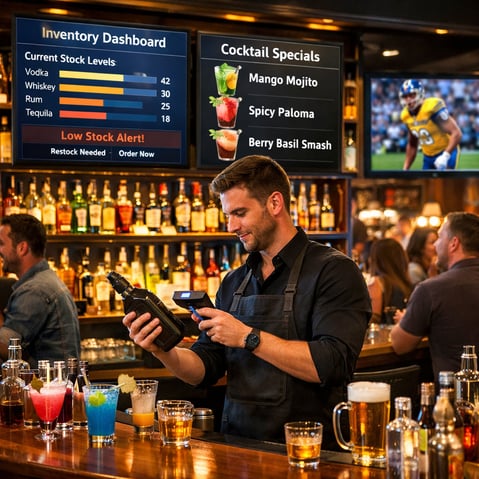
Beyond the direct financial impact, waste also affects your cost of goods sold (COGS), making it harder to accurately price your menu items and forecast purchasing needs. Many bar owners operate with beverage cost percentages that are 5-10% higher than they should be simply because they're not accounting for all the waste in their system. By identifying and quantifying these hidden costs, you can establish a baseline for improvement and set realistic targets for beverage cost reduction.
Smart Inventory Management Systems That Stop Money From Pouring Down the Drain
Implementing robust liquor inventory control through modern bar inventory software has become essential for bars serious about protecting their profit margins. These digital solutions replace outdated manual counting methods with streamlined systems that track every bottle from delivery to the last pour. Bar inventory software allows you to conduct regular inventory counts in a fraction of the time, compare actual usage against sales data, and quickly identify discrepancies that signal potential problems like theft, over-pouring, or recording errors.
The key to effective inventory management is consistency and frequency. Leading bars now conduct inventory counts at least weekly, with many high-volume establishments doing spot checks on premium bottles daily. Modern bar inventory software makes this practical by using barcode scanning or bottle weighing technology that reduces counting time by up to 75%. These systems automatically calculate variance reports, showing you exactly where your liquor is going and highlighting products with unusual depletion rates that deserve closer attention.
Beyond tracking, smart inventory systems help optimize your purchasing decisions and reduce over-ordering that leads to spoilage. By analyzing historical sales patterns and current stock levels, bar inventory software can generate suggested order lists that ensure you have enough inventory to meet demand without tying up excessive capital in bottles that sit on shelves. This targeted approach to purchasing is a powerful beverage cost reduction strategy that prevents both stockouts and waste from expired perishables.
Integration capabilities make modern inventory systems even more powerful. When your bar inventory software connects with your point-of-sale system, it creates an automatic feedback loop that tracks theoretical usage based on recipes against actual depletion. This variance analysis quickly reveals whether your staff is following standard recipes, whether theft is occurring, or whether your recipes need adjustment. The data-driven insights these systems provide transform liquor inventory control from guesswork into a precise science that directly improves bar profit margins.
Portion Control Techniques That Maintain Quality While Maximizing Profits
Consistent portion control is one of the most effective beverage cost reduction strategies available to bar owners, yet it's frequently overlooked or inconsistently applied. The difference between a 1.5-ounce pour and a 2-ounce pour might seem negligible on a single drink, but across hundreds of cocktails per week, that extra half-ounce represents significant profit loss. Implementing strict portion control measures ensures that every drink meets your cost targets while maintaining the consistency that keeps customers coming back.
Measured pourers and jiggers are the foundation of effective portion control. Free-pouring might look impressive, but even experienced bartenders can vary by 0.25 to 0.5 ounces per drink, especially during high-volume periods. Installing measured pourers on your liquor bottles guarantees that every shot is exactly the size you've designed your recipes around. For establishments that prefer the aesthetics of free-pouring, training bartenders to use jiggers consistently is essential. Regular pour tests, where managers check bartender accuracy with marked shot glasses, help maintain standards and identify team members who need additional training.
Recipe standardization goes hand-in-hand with portion control. Every cocktail on your menu should have a documented recipe with exact measurements for each ingredient. These standardized recipes become the foundation of your liquor inventory control system, allowing you to calculate theoretical usage and identify variances. When everyone follows the same recipe, you ensure consistent quality, accurate costing, and better inventory tracking. Many successful bars post laminated recipe cards at each station or use tablets with recipe apps to make it easy for bartenders to follow specifications exactly.
Portion control tools extend beyond pourers to include garnishes and mixers, which can also impact your bar profit margins. A heavy hand with expensive garnishes like fresh herbs or specialty bitters adds up quickly. Similarly, over-pouring mixers dilutes your cocktails and increases costs. By establishing clear standards for every element of your drinks and providing your team with the tools to execute consistently, you create a culture of precision that protects your margins while ensuring every guest receives the same high-quality experience.
Turning Food and Beverage Waste Into Creative Menu Opportunities
Progressive bar operators are discovering that effective liquor inventory control isn't just about preventing waste—it's also about creatively repurposing ingredients that might otherwise be discarded. This approach to beverage cost reduction transforms potential losses into profitable menu items while demonstrating environmental responsibility that resonates with modern consumers. By viewing surplus or aging inventory as an opportunity rather than a problem, you can create unique offerings that differentiate your bar from competitors.
Fruit and herb garnishes that are approaching the end of their freshness can be repurposed into house-made syrups, shrubs, and infusions that add complexity to your cocktail program. Citrus peels become oleo saccharum or dehydrated garnishes, while slightly wilted herbs can be muddled into specialty drinks or steeped into simple syrups. These value-added preparations not only reduce waste but also allow you to create signature ingredients that can't be easily replicated elsewhere, giving your bar a unique identity and justifying premium pricing.
Slow-moving spirits present another opportunity for creative menu development. Rather than watching premium bottles gather dust, feature them in limited-time cocktails or create a rotating "bartender's choice" program that highlights underutilized inventory. Many bars successfully use flight programs or tasting menus to introduce customers to slow-moving products, often discovering that certain items just need better promotion rather than being poor performers. This proactive approach to liquor inventory control prevents the write-offs that occur when bottles expire or become unsellable.
Consider implementing a zero-waste cocktail program that makes creative use of every ingredient. Juice pulp becomes ingredients in house-made sodas or is incorporated into food menu items. Coffee grounds from espresso martinis can be repurposed into coffee liqueur infusions. Even egg whites left over from yolk-forward dishes can be used in sours and fizzes. By systematically identifying waste streams and brainstorming creative applications, you engage your team in improving bar profit margins while building a reputation for innovation and sustainability that attracts environmentally conscious customers.
Training Your Team to Become Waste Reduction Champions
Even the most sophisticated bar inventory software and waste reduction systems will fail without buy-in from your team. The bartenders, barbacks, and servers who handle your inventory daily are your frontline defense against waste, and their habits directly impact your bar profit margins. Creating a culture where every team member understands the financial impact of waste and takes ownership of inventory control transforms your entire operation from reactive to proactive.
Start by making the business case transparent. Many bartenders don't realize that over-pouring a half-ounce on each drink in a busy Saturday night shift can cost the bar hundreds of dollars. Share the numbers with your team—show them how waste impacts profitability and, ultimately, their job security and tip potential. When staff understand that better liquor inventory control means a healthier business that can afford competitive wages and stay open long-term, they become invested in the outcome. Consider implementing incentive programs that reward teams for hitting variance targets or reducing beverage costs, creating positive motivation for careful inventory practices.
Comprehensive training programs should cover all aspects of beverage cost reduction, from proper pouring techniques and recipe adherence to inventory handling and storage procedures. Hands-on practice with jiggers and pourers helps bartenders develop muscle memory for accurate measurements. Role-playing scenarios where staff identify potential waste situations and discuss solutions builds problem-solving skills. Regular refresher training ensures that standards don't slip over time and gives you opportunities to introduce new techniques or address emerging issues. Documentation of all procedures creates a training resource for new hires and a reference for experienced staff.
Empowerment is the final piece of effective team training. Encourage staff to identify waste sources and suggest improvements—they often spot inefficiencies that management overlooks. Create a system where team members can easily report problems like leaking bottles, malfunctioning equipment, or recipe issues that lead to waste. Regular team meetings focused on inventory results foster accountability and allow for collaborative problem-solving. When bartenders feel like partners in the business rather than just employees, they naturally take more care with inventory and become genuine champions of waste reduction.
Tracking individual performance through your bar inventory software can also support training efforts. When you can show a bartender that their station has higher variance than others, it creates a concrete learning opportunity. Similarly, recognizing team members who consistently maintain tight inventory control reinforces positive behavior. By combining education, accountability, and recognition, you build a team culture where liquor inventory control becomes second nature, protecting your bar profit margins while elevating the professionalism of your entire operation.