Liquor Inventory Experts

How to Reduce Beverage Variance in 6 Easy Steps (2026)

Your hotel's bar program probably generates strong top-line revenue. But if you have not looked closely at beverage cost control, a significant share of that revenue is walking out the door through variance: the gap between what your records say you should have and what you actually count on the shelf.

For a hotel bar doing $1 million in annual beverage sales, a 20% variance means $200,000 disappearing every year. Scannabar gives hotel operators the tools to close that gap, tracking every bottle from receiving to final pour.

Beverage variance hides inside busy nights, transfer slips nobody reconciles, and bottles that vanish between stockrooms. Left unchecked, it compounds week after week. This guide walks you through six practical steps to measure, reduce, and manage variance across your bars, banquet operations, and service outlets.

Hospitality manager and bar lead reviewing beverage inventory analytics in an upscale hotel bar

Quick Guide: How to Reduce Beverage Variance in 6 Easy Steps

  1. Define how you will measure beverage variance: Pick one formula, apply it consistently, and make sure every outlet uses the same math.
  2. Standardize recipes and pour sizes: Lock in exact ingredient amounts so that every drink carries a predictable cost.
  3. Tighten receiving, transfers, and write-off logs: Record every bottle that enters, moves between outlets, or leaves your inventory.
  4. Count high-risk inventory every week: Focus weekly counts on spirits, premium wines, and fast-moving products where losses concentrate.
  5. Review variance by item, outlet, and shift: Break the data down so the number points you to a specific location, product, or time window.
  6. Act on the cause, not just the number: Use Scannabar's variance reports to trace each discrepancy back to a correctable root cause.

How to Reduce Beverage Variance Across Your Hotel Bar Operations

1. Define how you will measure beverage variance

You cannot fix a problem you have not defined. Beverage variance is the difference between theoretical consumption (what your POS system says you sold, plus documented waste) and actual consumption (what a physical count reveals you used). Some properties express it as a percentage of cost, others as a dollar figure per period. Pick one and make sure every outlet uses the same formula.

Start by confirming that your POS rings are mapped to specific SKUs and portion sizes. If a "vodka soda" in the lobby bar rings up at 1.5 oz but the banquet team pours 2 oz for the same drink code, your variance is baked in before anyone even miscounts a bottle.

Agree on a reporting period. Weekly reporting catches problems while the responsible shift is still on the schedule. Monthly reporting buries causes under four weeks of compounding activity. A weekly inventory rhythm keeps the data actionable.

2. Standardize recipes and pour sizes

A recipe card is not a suggestion. It is the financial blueprint for every drink leaving your bar. For a deeper look at how drink recipes affect profitability, the math is straightforward. When recipes are vague or left to bartender discretion, pour cost swings from shift to shift, and that swing shows up directly as variance.

Document every cocktail, wine-by-the-glass portion, and draft beer yield. Include the exact quantity of each ingredient in ounces or milliliters, the expected number of servings per bottle, and the target cost per drink.

Post recipe cards at every station and train new hires on them during their first shift. Consider using jiggers or measured pourers for your highest-volume spirits. A standardized 1.5 oz pour on your top-ten spirits alone can move your pour cost by two to three percentage points.

3. Tighten receiving, transfers, and write-off logs

Variance often starts at the loading dock, not behind the bar. If a delivery arrives short and nobody catches it, your opening inventory is already wrong. Every bottle entering the property needs a verified receipt: someone checks the order against the invoice, counts the cases, and signs off.

Inter-outlet transfers are the next weak link. When the banquet team pulls two cases of vodka from the main bar for a Saturday event, that movement must be logged in writing or through your inventory system. Unlogged transfers make one outlet look short and another look over-stocked, making it impossible to isolate where variance originates.

Write-offs for breakage, spoilage, and complimentary pours require the same discipline. An unrecorded comp bottle is invisible shrinkage. A simple daily log with a reason code, the product, and a manager's initials is enough to keep these losses visible.

4. Count high-risk inventory every week

Full monthly inventories have their place, but they do not catch problems fast enough. By the time you discover a variance at month-end, the staff involved may have rotated off the schedule. The trail is cold.

Identify your top 20 highest-value and fastest-moving items. These typically represent 80% of your beverage cost. Count them every week. Scannabar measures the level in every open bottle using barcode scanning technology, so a single person can count 120 bottles in roughly 15 minutes. That speed makes weekly counts practical rather than aspirational.

Rotate a full count of your remaining inventory on a monthly cycle. This layered approach catches high-impact losses weekly while still covering your entire catalog periodically.
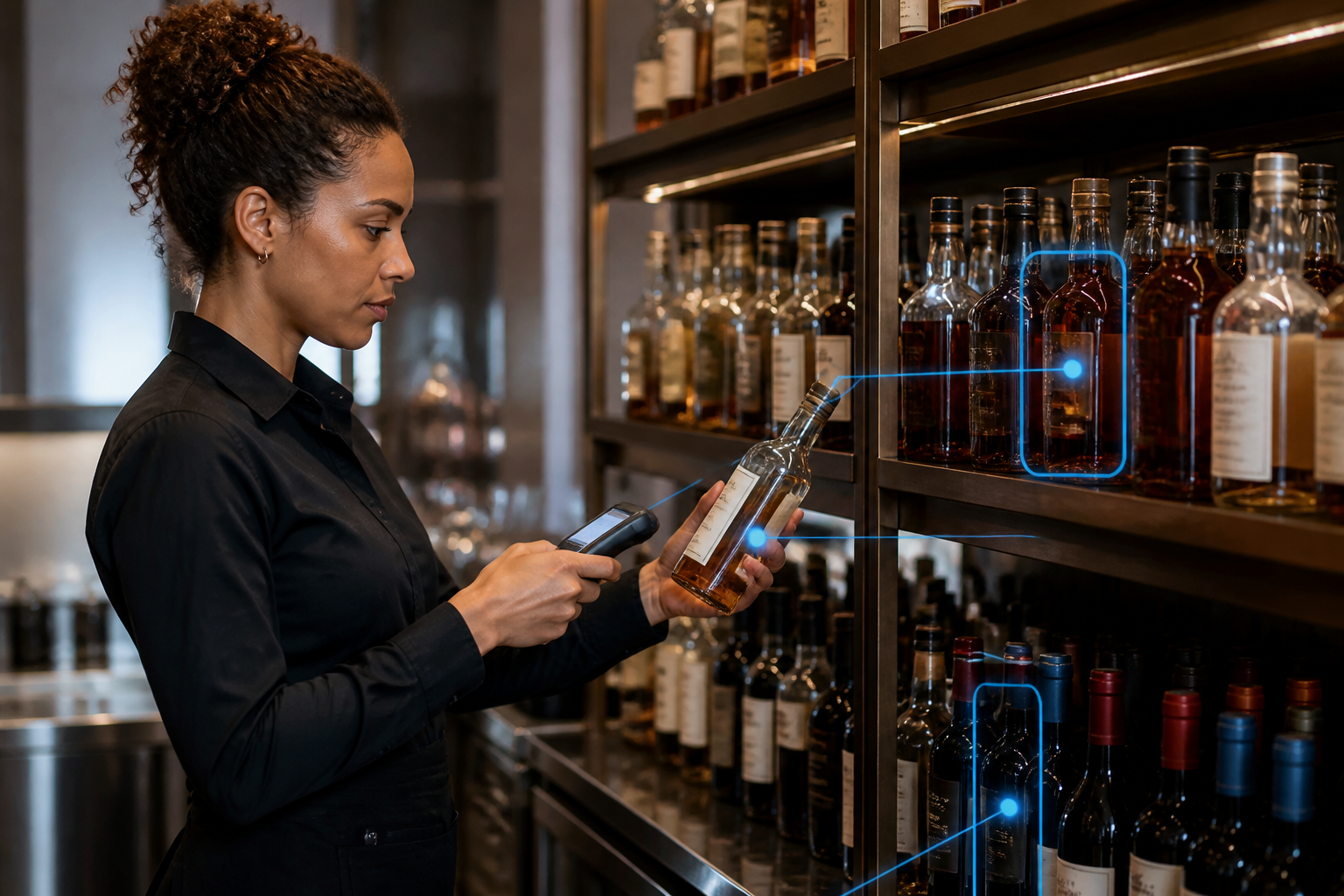
Hotel bar staff member performing automated inventory counts with a handheld scanner

5. Review variance by item, outlet, and shift

A single, property-wide variance number is almost useless. If your hotel runs a lobby bar, a pool bar, a restaurant bar, and banquet service, a blended number hides where the problem lives.

Break variance down by individual product first. Is it concentrated in premium spirits, house-brand vodka, or draft beer? Then look at it by outlet. The pool bar might run tight while the banquet prep area runs loose.

Finally, compare variance by shift or by counting period. A spike that correlates with a specific team tells you where to focus your coaching.

This layered analysis turns a vague cost problem into a specific operational finding you can act on this week, not next quarter.

6. Act on the cause, not just the number

Variance is a symptom, not a diagnosis. A 12% variance on a premium tequila could mean over-pouring, unrecorded comps, a receiving error, or theft. The number alone does not tell you which one.

Cross-reference your variance data with POS sales, transfer logs, write-off records, and shift schedules. If usage exceeds sales and there are no documented transfers or write-offs, the gap is unexplained loss. If usage aligns with sales but both exceed what the recipes predict, you likely have a portioning problem.

Frame the conversation with your bar staff around accountability, not blame. When your team knows the system tracks every ounce, the goal is to help them prove they poured correctly, not to catch them in the act.

Scannabar's approach to cost reduction is built around that principle. That distinction is the difference between a culture of accountability and a climate of suspicion.

What Causes Beverage Variance in Hotel Bars?

Beverage variance in hotel bars traces back to five primary sources: over-pouring, unrecorded transfers between outlets, receiving errors, undocumented write-offs, and theft. Hotels face additional exposure because beverages move between multiple cost centers, including bars, restaurants, banquets, room service, and minibars. Managing wine inventory and spirits under a single system reduces the blind spots that create variance.

Over-pouring is the most common source. Without measured pours, bartenders tend to pour heavy, especially during high-volume shifts. According to FSM.How's guide to beverage control, average pour costs in hotel bars range from 18% to 24%, and even small deviations from standard pour sizes erode those margins fast.

The difference between a 1.5 oz pour and a 2 oz pour costs you roughly four to five missing servings per standard 750 ml bottle. That is money walking out the door on every pour.

Unrecorded transfers are uniquely problematic in hotels. A banquet manager who borrows six bottles of wine from the restaurant bar for a last-minute event may not log the transfer. That creates a phantom shortage in one outlet and a surplus in another. Neither figure reflects reality until someone reconciles them.

How Often Should a Hotel Review Beverage Variance?

Weekly variance reviews produce the fastest operational improvements. When you review variance every week, the data connects to recent shifts, specific staff, and identifiable events. You can ask your bar manager, "What happened with the Ketel One on Wednesday?" and get a meaningful answer.

Monthly reviews are too slow for high-risk items. By week four, the context around a mid-month spike is gone. However, a monthly review cycle works well for slower-moving products like specialty liqueurs, wines stored in the cellar, and dry goods.

The best approach layers both frequencies. Count and review your top 20 items weekly. Run a complete inventory and variance analysis monthly. Use the weekly data to coach staff and adjust operations in near-real time, and use the monthly data to evaluate trends, purchasing efficiency, and overall program health.

How Scannabar Helps You Reduce Beverage Variance

Hotel food and beverage director reviewing beverage variance charts and inventory performance

Scannabar provides the most precise bottle-level tracking available, following every container in your hotel from the moment it arrives to the moment it is fully depleted. The system uses barcode scanning and bottle-level measurement to record the exact contents of each container, eliminating the estimation and rounding errors that plague manual counts.

Because Scannabar integrates with your POS and property management systems, it automatically compares what you sold against what you used. The resulting variance reports break down discrepancies by product, outlet, and time period, so your food and beverage director can pinpoint exactly where losses occur.

Hotels running Scannabar routinely operate at 1%–3% shrinkage, down from the 20%–25% industry average. You can read more about lowering beverage costs in hotel environments.

The system measures 120 bottles in about 15 minutes, making weekly counts feasible even for properties with multiple bars and banquet outlets. That frequency is what turns data into action: a variance you find this week still belongs to a shift you can address.

Ready to close the gap between what you sell and what you pour? See how Scannabar works or call 1-800-939-8960 to talk to a person who has been doing this since 1998.

FAQs About Beverage Variance

What is a good beverage variance percentage for a hotel bar?

A well-controlled hotel bar should target variance below 3%. Many properties without systematic tracking run between 20% and 25%. Scannabar helps hotels close that gap by providing bottle-level measurement and automated variance reports that highlight discrepancies before they compound.

Can beverage variance be completely eliminated?

Zero variance is not a realistic goal. Small amounts of loss from evaporation, breakage, and legitimate complimentary pours are unavoidable. The objective is to document those acceptable losses and reduce unexplained variance to a minimum. With consistent weekly counting and standardized recipes, most hotels can hold unexplained variance below 2%.

How does over-pouring affect beverage variance?

Over-pouring is the largest single contributor to variance in most hotel bars. A bartender who pours 2 oz instead of a standard 1.5 oz gives away 33% more product on every drink. Across a busy weekend, that adds up to several bottles of unrecovered cost. Scannabar tracks pour-level usage so you can spot over-pouring patterns by product and by shift.

What role do inter-outlet transfers play in hotel beverage variance?

Transfers between bars, banquet areas, and restaurants are a frequent source of unexplained variance in hotels. When a transfer is not logged, one outlet shows a shortage and another shows a surplus. Neither number is accurate. A documented transfer process, supported by your inventory system, ensures that product movement is visible across every cost center.

How does Scannabar integrate with hotel POS systems?

Scannabar connects with your POS through CSV, XML, or a direct API built to your POS vendor's published specification. This integration allows the system to match sales data against physical counts automatically. The result is a variance report that compares what you rang in with what you actually used, broken down by outlet and product.
Topics: Bar inventory, Scannabar Inventory system, Liquor Inventory savings, bar inventory system, bar inventory software, Scannabar inventory app

Cost-Saving Inventory Solutions for Bars in 2026

Discover the innovative inventory solutions set to revolutionize bar management and slash operational costs in 2026.

Emerging Technologies Transforming Bar Inventory Management

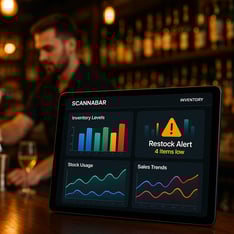
The bar industry is on the verge of a technological revolution, with cutting-edge solutions like liquor inventory apps, bar inventory apps, and specialized platforms such as the Scannabar app leading the way. In 2026, these digital tools will empower bar owners to automate and streamline inventory processes that were once manual and time-consuming.The image features a sleek modern interface of the Scannabar Inventory application displayed on a tablet set against a backdrop of a bustling bar environment The screen shows vibrant graphs and charts illustrating realtime inventory levels stock usag-1

From AI-powered bottle scanners to IoT-enabled smart shelves, emerging technologies are reducing human error and providing real-time data. Bars can now track every pour and bottle in their stock, making it easier to manage inventory levels, prevent over-ordering, and reduce product loss. These innovations are setting the stage for a new era of efficiency and cost savings.

Smart Strategies for Reducing Waste and Shrinkage

One of the top challenges for bars is minimizing waste and shrinkage, which can significantly impact profit margins. In 2026, the integration of liquor inventory apps and bar inventory apps will empower managers to closely monitor usage patterns and identify discrepancies instantly.

Automated alerts for low stock, usage outliers, or suspected theft help staff respond quickly, ensuring that every ounce is accounted for. Advanced inventory systems make it possible to set par levels, run variance reports, and even integrate with point-of-sale systems for seamless reconciliation, all contributing to lower costs and higher profitability.

Leveraging Data Analytics for Smarter Purchasing Decisions

Data-driven decision-making is becoming standard practice in leading bars. Modern inventory management tools, including the Scannabar app, harness advanced analytics to provide actionable insights into sales trends, stock turnover rates, and seasonal fluctuations.

By analyzing this data, bar owners can make smarter purchasing decisions—buying just the right amount of product, capitalizing on discounts for high-volume items, and avoiding costly overstock. This level of precision not only reduces costs but also ensures a consistently well-stocked bar that meets customer demand.

Integrating Sustainable Practices to Cut Costs

Sustainability and cost savings go hand in hand, especially as consumers grow more environmentally conscious. In 2026, more bars are adopting eco-friendly inventory practices, such as reducing single-use packaging, optimizing delivery schedules to minimize carbon footprint, and partnering with local suppliers for fresher, less wasteful inventory.

Liquor inventory apps and bar inventory apps help track sustainability metrics, such as waste reduction and resource use, allowing bars to set goals and measure progress. These green initiatives not only help the planet but also reduce operational costs by streamlining procurement and minimizing waste.

Choosing the Right Inventory Solution for Your Bar's Future

With so many options available, selecting the best inventory management system is crucial. When evaluating liquor inventory apps, bar inventory apps, or specialized solutions like the Scannabar app, consider features like real-time tracking, mobile compatibility, integration with existing POS systems, and robust reporting tools.

The right solution should align with your bar's size, volume, and unique needs, offering scalability as you grow. Investing in innovative inventory technology today will position your bar for success, ensuring you stay ahead of industry trends and consistently reduce costs well into the future.

Topics: liquor inventory, bar inventory system, liquor inventory system, liquor inventory app, Best Bar Inventory app, Best Liquor Inventory app, Cruise ship bar inventory, Country Club Liquor Inventory

Hospitality Inventory Software: Transforming Liquor Tracking in 2026

Discover how next-generation hospitality inventory software is revolutionizing liquor tracking, boosting accuracy, and maximizing profits for hotels, bars, and restaurants in 2026.

The Digital Revolution in Liquor Inventory Management

The image showcases a sleek modern bar environment filled with various bottles of liquor neatly arranged on shelves behind the counter A staff member dressed in a crisp white shirt and black apron is seen scanning a bottle with a handheld device high-1The hospitality industry has witnessed a digital transformation over the past decade, and 2026 marks a pivotal year for liquor inventory management. Traditional manual processes, which were often slow and prone to error, are being replaced by automated, data-driven solutions. Modern inventory software harnesses the power of cloud computing, Internet of Things (IoT) devices, and artificial intelligence to streamline every step of the inventory process.

These advancements not only save valuable labor hours but also provide unparalleled visibility into stock levels, consumption patterns, and shrinkage. By digitizing liquor inventory, businesses can respond to real-time data rather than relying on outdated logs or guesswork, leading to smarter purchasing and less waste.

Key Features Setting 2026 Hospitality Inventory Software Apart

Inventory software in 2026, such as Scannabar, now offers a suite of advanced features that go far beyond basic counting. Seamless mobile integration allows managers and staff to conduct inventory checks from any location using smartphones or tablets. Automated bottle scanning and RFID tagging eliminate manual entry errors, ensuring every ounce is accounted for.

Predictive analytics have become a game changer, enabling establishments to forecast demand, optimize order quantities, and prevent overstocking or shortages. Intuitive dashboards and custom reporting tools give decision-makers instant access to actionable insights, driving operational efficiency and strategic planning.

Enhancing Profitability Through Real-Time Liquor Tracking

Real-time liquor tracking is at the heart of maximizing profitability in the hospitality sector. With software like Scannabar, businesses can monitor inventory usage as it happens, instantly flagging variances or discrepancies that could indicate theft, over-pouring, or unrecorded sales. This immediate feedback loop empowers managers to take swift remedial action before small issues escalate into major losses.

By reducing inventory shrinkage and tightening controls, venues can save thousands of dollars annually. Real-time data also supports dynamic pricing and promotions, aligning stock levels with sales trends to boost revenue and minimize dead stock.

Integrating Smart Tech With Staff Workflows

One of the key advantages of modern inventory software is its ability to seamlessly integrate with existing staff workflows. Scannabar, for example, features user-friendly interfaces and step-by-step guidance, making it easy for even non-technical staff to adopt. Automated task reminders and scheduling ensure that inventory counts are completed on time, reducing bottlenecks and improving accountability.

With the burden of manual counts lifted, staff can focus on delivering better guest experiences and increasing productivity elsewhere. Training time is reduced and onboarding new team members becomes more efficient, further lowering operational costs.

Future Trends Shaping Liquor Management in Hospitality

Looking ahead, 2026 is set to see even more innovation in liquor management. AI-powered forecasting, integrated supplier ordering, and blockchain-based traceability are becoming industry standards. Voice-activated inventory controls and augmented reality overlays for training and troubleshooting are also emerging, making inventory management more interactive and intuitive.

As sustainability and regulatory compliance gain importance, inventory software will also play a key role in tracking eco-friendly practices and ensuring businesses meet industry standards. Adopting smart solutions like Scannabar positions hospitality businesses to stay competitive, compliant, and profitable in a rapidly evolving landscape.

Topics: Bar inventory, beer inventory, inventory counting, inventory control, bar inventory system, bar inventory software, Best Bar Inventory app, Best Liquor Inventory app, Cruise ship bar inventory, Country Club Liquor Inventory

Top Benefits: Implementing a Liquor Inventory App

Discover the top benefits of incorporating a liquor inventory app into your hotel bar management system.video04

Streamlined Inventory Tracking

Implementing a liquor inventory app in your hotel bar can greatly streamline your inventory tracking process. With the app, you can easily keep track of all the liquor stock in your bar and know exactly how much of each item you have at any given time. This eliminates the need for manual inventory counts and reduces the chances of errors or discrepancies.

The app can also help automate the ordering process by providing real-time updates on stock levels. This means you can easily identify when certain items are running low and place orders in a timely manner, ensuring that you never run out of popular drinks and ingredients.

Real-Time Data Insights

One of the key benefits of using a liquor inventory app is that it provides real-time data insights into your bar's inventory. You can access up-to-date information on stock levels, sales trends, and popular items at any time, allowing you to make data-driven decisions to optimize your bar's operations.

The app can also generate reports and analytics that provide valuable insights into your bar's performance. You can easily track sales, identify top-selling items, and analyze profit margins. This information can help you make informed decisions about pricing, promotions, and inventory management.

Cost Savings and Increased Efficiency

Using a liquor inventory app can lead to significant cost savings and increased efficiency in your hotel bar. By accurately tracking your inventory and monitoring sales trends, you can reduce wastage and minimize overstocking of slow-moving items.

The app can also help streamline your ordering process, ensuring that you only order what you need and avoid unnecessary expenses. By optimizing your inventory levels, you can free up capital that would otherwise be tied up in excess stock and invest it in other areas of your business.

Furthermore, the app can automate manual tasks such as inventory counts and order generation, saving your staff time and allowing them to focus on providing excellent service to your guests.

Enhanced Security Measures

A liquor inventory app can enhance the security measures in your hotel bar. With the app, you can implement access controls and permissions, ensuring that only authorized personnel have access to sensitive inventory data.

The app can also track and record every transaction, providing a detailed audit trail of all inventory movements. This can help deter theft and identify any suspicious activities in your bar.

Additionally, the app can integrate with your security cameras and alarms, allowing you to monitor your bar's inventory in real-time and receive alerts in case of any unauthorized access or unusual activities.

Improved Compliance and Accuracy

Implementing a liquor inventory app can greatly improve compliance and accuracy in your hotel bar. The app can help you ensure that you are adhering to all liquor licensing regulations by providing accurate records of your inventory and sales.

The app can also help reduce human errors in inventory management, such as incorrect counts or misplaced items. With accurate and up-to-date data, you can confidently report your inventory to regulatory authorities and avoid any penalties or fines.

Furthermore, the app can help automate compliance tasks, such as generating reports for tax purposes or tracking expiration dates of perishable items. This can save your staff time and ensure that you are always in compliance with all relevant regulations.

Topics: bar inventory system, bar inventory software, bar inventory app, liquor inventory app, Best Bar Inventory app, Best Liquor Inventory app

Sipping Success: How a Liquor Inventory App Transforms Bar Management

Sipping Success: How a Liquor Inventory App Transforms Bar Managementpexels-nadin-sh-17942037

In the fast-paced world of bars and nightclubs, effective liquor management is the key to success. That's where the power of a Liquor Inventory App and Bar Inventory App comes into play. These innovative digital solutions are revolutionizing the way bars and nightclubs control their inventory and manage their operations. Let's explore how these apps enhance liquor control and bar management for optimal results.

Streamlined Liquor Control with a Liquor Inventory App

A Liquor Inventory App brings a new level of precision to liquor control. Traditional manual inventory methods can be time-consuming, error-prone, and open to discrepancies. With a Liquor Inventory App, every drop of liquor is meticulously tracked in real time. This technology allows bar managers to maintain accurate records of stock levels, ensuring that popular spirits are always available and minimizing the chances of over-pouring or theft.

Furthermore, the app's data-driven insights reveal consumption patterns and identify high-demand items. Armed with this information, bar owners can make informed purchasing decisions, keeping their shelves stocked with the right products at the right times. The result? Reduced wastage, optimized storage space, and ultimately, enhanced profitability.

Efficient Bar Control with a Bar Inventory App

Effective bar control is the cornerstone of a well-managed establishment. A Bar Inventory App empowers bar managers to take control of their inventory processes like never before. By providing real-time updates on stock levels, the app eliminates the need for manual counts and guesswork. Bar staff can focus on what they do best—serving customers—instead of spending excessive time on inventory-related tasks.

This efficiency extends to ordering and restocking as well. With a Bar Inventory App, the days of last-minute rush orders and stockouts are minimized. Managers can set up automated alerts for low stock levels, ensuring a continuous flow of inventory without interruptions. This streamlined approach not only saves time but also reduces stress and potential lost revenue due to insufficient stock.

The Power of Liquor and Bar Control

Combining the capabilities of a Liquor Inventory App and a Bar Inventory App results in powerful liquor and bar control. Imagine knowing exactly which drinks are your top sellers and being able to adjust pricing or promotions accordingly. With comprehensive data insights, bar managers can develop strategic pricing strategies that maximize revenue while keeping customers satisfied.

Moreover, these apps foster a culture of accountability. By digitally tracking every transaction, from orders to sales, they minimize the chances of employee theft and unauthorized consumption. This creates a more secure environment and builds trust among staff members, ultimately contributing to smoother operations.

In conclusion, the integration of a Liquor Inventory App and a Bar Inventory App is a game-changer for the nightlife industry. By embracing these digital tools, bar and nightclub owners can take full control of their liquor inventory, streamline operations, optimize purchasing decisions, and bolster profitability. The result is a well-organized, efficient, and secure establishment that caters to patrons' preferences while staying ahead in a competitive market. Invest in the future of your bar management with these innovative apps, and sip on the success they bring.

Topics: Bar inventory, Scannabar Inventory system, bar supplies, Bar Management, bar inventory system, bar inventory software, bar inventory app

Building a Stellar Team

Bar inventory staffChapter 6: Building a Stellar Team

Behind every successful bar is a team of dedicated and skilled individuals who contribute to its vibrant atmosphere and exceptional service. In this chapter, we'll explore the art of building a stellar team that shares your passion for the industry and is committed to creating memorable experiences for your customers.

The first step in assembling your dream team is defining the roles and responsibilities required to run your bar smoothly. Consider positions such as bartenders, servers, hosts, barbacks, and kitchen staff, depending on the size and scope of your establishment. Each role plays a vital part in delivering top-notch service to your patrons.

When hiring, look for individuals with a genuine love for the hospitality industry and a friendly, positive attitude. Experience is valuable, but an enthusiastic and eager-to-learn mindset can often be more essential. Your team's attitude and demeanor significantly influence the atmosphere of your bar, so prioritize hiring individuals who can create a welcoming and inviting environment.

Once you've assembled your team, invest time in training and development. Provide comprehensive onboarding that covers your bar's values, culture, and service standards. Ongoing training sessions, workshops, and team-building activities can enhance skills, foster camaraderie, and boost morale.

Now, let's discuss how bar inventory and bar inventory software play a role in supporting your team. Efficient inventory management is essential for a well-functioning bar, and it directly impacts your team's ability to serve customers seamlessly. Bar inventory software simplifies this process, allowing your team to focus on delivering exceptional service rather than worrying about inventory-related tasks.

With bar inventory software, your bartenders can access real-time stock levels and ingredient availability, which helps them create drinks efficiently. The software's automated tracking and reordering capabilities ensure that your team always has the necessary supplies on hand, reducing downtime and preventing customer disappointment.

Furthermore, bar inventory software can empower your team to contribute to cost-saving efforts. With accurate data on usage and wastage, they can identify opportunities for improvement, such as portion control and mindful ingredient usage, which ultimately impacts the bar's profitability.

In conclusion, building a stellar team is a crucial aspect of running a successful bar. Hiring passionate individuals, providing comprehensive training, and fostering a positive work environment contribute to exceptional service and a welcoming atmosphere. Combined with bar inventory software for efficient inventory management, your team can focus on what they do best: creating delightful experiences for your valued customers. Cheers to a united and skilled team that takes your bar to new heights!

Topics: Bar inventory, Bar Management, Liquor Inventory savings, bar inventory system, liquor control, bar inventory app

Location, Location, Location

Bar Inventory appChapter 3: Location, Location, Location

When it comes to opening a bar, choosing the right location can make all the difference. This chapter explores the importance of finding the perfect spot for your bar and how it can contribute to your success in the competitive hospitality industry.

The first factor to consider when selecting a location for your bar is foot traffic. Look for areas with high pedestrian activity, such as bustling downtown areas, popular shopping districts, or vibrant neighborhoods. A steady flow of potential customers passing by your bar increases the chances of attracting new patrons and generating consistent business.

Competition is another crucial aspect to evaluate. While some level of competition can indicate a thriving market, it's important to find a location where you can stand out and offer something unique. Research existing bars in the area and assess their target audience, concept, and atmosphere. Identify gaps in the market that you can fill or consider differentiating yourself through a specialized theme, signature cocktails, or exceptional service.

The overall vibe of the neighborhood plays a significant role in the success of your bar. Consider the demographic of the area and whether it aligns with your target audience. For instance, a trendy, up-and-coming neighborhood might attract a younger crowd interested in craft cocktails and live music, while a more established residential area might cater to a more relaxed, family-oriented clientele. Understanding the local culture and preferences will help you create a bar that resonates with the community.

Now, let's talk about bar inventory and bar inventory software. Once you've secured a location, effective inventory management becomes crucial to your bar's profitability. Bar inventory software can simplify this process by providing real-time tracking of stock levels, helping you optimize purchasing decisions and reduce waste.

With bar inventory software, you can easily monitor the usage of ingredients, track sales trends, and generate detailed reports. This data-driven approach allows you to make informed decisions about menu offerings, pricing, and reordering. By efficiently managing your inventory, you can minimize costs and maximize profits.

In conclusion, choosing the right location is key to the success of your bar. Consider factors such as foot traffic, competition, and the neighborhood's vibe when making your decision. Additionally, implementing bar inventory software ensures efficient inventory management, leading to better cost control and profitability. By optimizing both your physical location and inventory processes, you'll set a solid foundation for a thriving bar business.

Topics: Bar inventory, bar inventory levels, bar profitability, managing liquor inventory cost, opening a bar, bar location, bar inventory system, bar inventory software, bar inventory app

Navigating Licenses and Permits

Chapter 2: Navigating Licenses and Permits

Bar inventoryWhen it comes to opening a bar, one of the most important aspects to consider is obtaining the necessary licenses and permits. This chapter will guide you through the complex world of legal requirements, ensuring that you have all the paperwork in order to operate your establishment smoothly and legally.



Obtaining licenses and permits can vary depending on your location, so it's crucial to research the specific regulations in your area. From liquor licenses to health permits, you'll need to understand the specific requirements and processes involved.

One critical aspect of running a bar is managing your inventory effectively. Keeping track of the stock levels, tracking usage, and ensuring timely restocking are vital for smooth operations. This is where bar inventory management software can be a game-changer.

Bar inventory software is designed to streamline the inventory management process, making it more efficient and accurate. With advanced features like barcode scanning, real-time updates, and comprehensive reporting, it enables you to monitor your stock levels with ease. This software also helps in identifying trends, minimizing waste, and optimizing purchasing decisions.

Implementing bar inventory software can save you time, reduce errors, and ultimately improve profitability. It provides a centralized system for inventory control, eliminating the need for manual spreadsheets or guesswork. By automating tasks such as order generation and tracking, it allows you to focus more on providing exceptional customer experiences.

When selecting bar inventory software, consider factors such as user-friendliness, compatibility with your POS system, and scalability as your business grows. It's worth exploring different options and reading customer reviews to find a solution that aligns with your specific needs.

In conclusion, obtaining the necessary licenses and permits is a crucial step in opening a bar. Additionally, implementing bar inventory software can revolutionize the way you manage your inventory, providing efficiency, accuracy, and improved profitability. By staying informed on legal requirements and embracing technology, you'll navigate through this chapter successfully, setting a strong foundation for your bar's operations.

Topics: Bar inventory, bar inventory levels, bar inventory system, liquor control, bar inventory software

Inventory Control Systems for Bars

Liquor Inventory

Inventory control systems are indispensable for bars seeking efficient management of their inventory, particularly in terms of a "bar inventory system" and "liquor inventory system." These systems enable bars to streamline processes, minimize losses, optimize stock levels, and enhance profitability. Let's explore some key features and benefits of inventory control systems for bars.

  1. Real-time Tracking: A robust bar inventory system provides real-time tracking of inventory levels. Bar managers can instantly view the quantities of liquor bottles, beer kegs, wine bottles, mixers, and other supplies. This allows for accurate decision-making and proactive management.

  2. Automated Reordering: Inventory control systems can automate the reordering process by setting par levels for each item. When stock levels reach the predefined threshold, the system generates automatic purchase orders, ensuring timely replenishment and preventing stockouts.

  3. Loss Prevention: Bar inventory systems help identify discrepancies and prevent losses due to theft, over-pouring, or unauthorized consumption. By reconciling sales data with actual inventory levels, bars can detect any anomalies and take corrective measures to minimize losses.

  4. Cost Control: Effective inventory control directly impacts cost management. By tracking consumption patterns and monitoring stock levels, bars can identify areas of excessive waste or overstocking, enabling them to optimize costs and maximize profitability.

  5. Reporting and Analytics: Inventory control systems provide comprehensive reports and analytics on inventory performance, sales trends, and consumption patterns. These insights enable bars to make data-driven decisions, forecast demand accurately, and adjust ordering strategies for improved efficiency.

  6. Integration with POS Systems: Integrating the inventory control system with the bar's point-of-sale (POS) system ensures seamless synchronization between sales and inventory data. This integration reduces manual effort, improves accuracy, and provides real-time updates on inventory levels.

  7. Vendor Management: Inventory control systems facilitate effective vendor management. Bars can track vendor performance, compare pricing, negotiate favorable terms, and maintain strong relationships with suppliers, ensuring timely deliveries and competitive pricing.

  8. Centralized Data Storage: Inventory control systems offer centralized data storage, eliminating the need for manual record-keeping and paperwork. This streamlines inventory management, minimizes errors, and allows for easy access to historical data and audit trails.

  9. Customization and Scalability: Bar inventory systems can be customized to fit the specific needs of different establishments. Whether it's a small neighborhood bar or a large-scale venue, the system can scale accordingly to accommodate growth and changing requirements.

  10. Time and Resource Savings: By automating inventory tracking, reordering, and reporting, inventory control systems save valuable time and resources for bar owners and staff. This enables them to focus on core operations, customer service, and strategic decision-making.

In conclusion, inventory control systems play a pivotal role in effective management of bar inventory systems and liquor inventory systems. With features like real-time tracking, automated reordering, loss prevention measures, cost control, and integration with POS systems, these systems streamline processes, optimize stock levels, and enhance profitability for bars. Implementing a reliable inventory control system empowers bars to stay competitive in the industry and deliver exceptional customer experiences.

Topics: liquor inventory, Bar inventory, bar inventory system, liquor inventory system