Liquor Inventory Experts

How Scannabar Revolutionizes Hospitality Stock Tracking

Discover how cutting-edge barcode scanning technology is transforming inventory management for hotels, restaurants, and bars while reducing waste and maximizing profitability.

The Hidden Costs of Manual Inventory Management in Hospitality

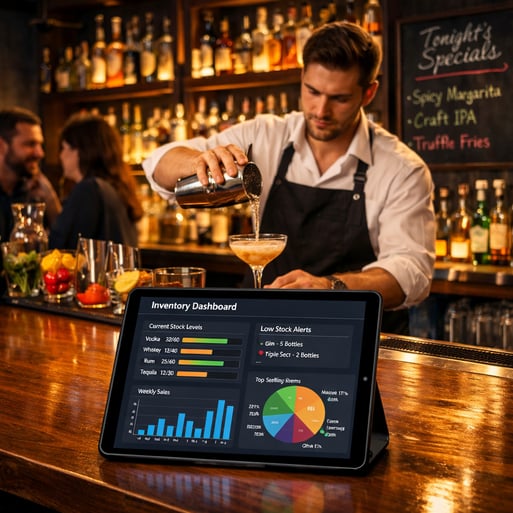
The image depicts a bustling bar environment filled with patrons enjoying their drinks amidst a warm inviting atmosphere Behind the bar a bartender skEvery hospitality business owner knows that inventory management is critical, but few realize just how much manual processes are costing them. From labor hours to human error, traditional counting methods drain resources that could be better invested elsewhere. Studies show that manual inventory tracking in restaurants and bars can consume up to 20 hours per week of staff time—time that could be spent on customer service, menu development, or strategic planning.

The financial impact extends far beyond labor costs. Manual counting leads to inconsistent data, making it nearly impossible to identify theft, over-pouring, or supplier errors until it's too late. Without accurate, real-time stock levels, businesses struggle with over-ordering (tying up precious capital in excess inventory) or under-ordering (leading to stockouts during peak service times). These inefficiencies compound over time, silently eroding profit margins and creating operational headaches that prevent growth.

Perhaps most concerning is the opportunity cost. While your team is buried in spreadsheets and clipboards, competitors using modern inventory solutions like Scannabar are making data-driven decisions in real-time. They're identifying trends, optimizing par levels, and catching discrepancies before they become significant losses. In today's competitive hospitality landscape, manual inventory management isn't just inefficient—it's a strategic disadvantage that no business can afford.

Real-Time Visibility: Taking Control of Your Stock with Smart Scanning

Scannabar transforms inventory management from a dreaded chore into a streamlined, accurate process through intelligent barcode scanning technology. With a simple scan, staff can instantly capture product information, quantities, and locations—eliminating the guesswork and transcription errors that plague manual systems. This real-time data capture means your inventory levels are always current, giving you unprecedented visibility into what's actually on your shelves, in your coolers, and behind your bar.

The power of real-time visibility cannot be overstated. Managers can access up-to-the-minute stock levels from anywhere—whether they're on the floor, at home, or managing multiple locations. This instant access enables proactive decision-making: reorder popular items before they run out, identify slow-moving stock that's tying up capital, and respond immediately to unexpected demand spikes. No more discovering you're out of a key ingredient during the dinner rush or finding expired products weeks after they should have been used.

Scannabar's smart scanning technology also creates an audit trail that manual systems simply cannot match. Every scan is timestamped and linked to a user, providing accountability and making it easy to track inventory movements throughout your operation. Whether you're investigating discrepancies, analyzing usage patterns, or preparing for financial reporting, you have concrete data at your fingertips. This level of transparency doesn't just improve accuracy—it fundamentally changes how you understand and manage your inventory investment.

From Chaos to Clarity: Streamlining Bar and Restaurant Operations

The chaos of traditional inventory management creates ripple effects throughout hospitality operations. Staff dread count days, managers spend hours reconciling data, and decision-makers lack the insights they need to optimize performance. Scannabar cuts through this complexity with an intuitive interface designed specifically for the fast-paced hospitality environment. The learning curve is minimal—most staff can master the basics in under 15 minutes—meaning you can implement the solution without disrupting service or requiring extensive training.

Integration capabilities set Scannabar apart as a true operational hub. The platform seamlessly connects with your existing POS systems, accounting software, and supplier databases, creating a unified ecosystem where data flows automatically between systems. This integration eliminates duplicate data entry, reduces errors, and ensures that every department is working from the same accurate information. When your inventory system talks to your POS, you can automatically track product usage, compare theoretical versus actual consumption, and identify variances that might indicate waste, theft, or over-pouring.

The operational efficiency gains are immediate and measurable. What once took hours can now be completed in minutes, freeing your team to focus on what really matters: delivering exceptional guest experiences. Receiving shipments becomes faster and more accurate with barcode verification, reducing disputes with suppliers. Par level management becomes automatic, with the system alerting you when items fall below thresholds. Recipe costing stays current as ingredient prices fluctuate, ensuring your menu pricing remains profitable. Scannabar doesn't just organize your inventory—it orchestrates your entire back-of-house operation with precision and ease.

Reducing Shrinkage and Maximizing Profit Margins with Data-Driven Insights

Inventory shrinkage is one of the most persistent challenges in hospitality, with the average restaurant losing 2-3% of revenue to theft, waste, and unaccounted losses. For many businesses, this represents tens of thousands of dollars annually that simply vanish without explanation. Scannabar's data-driven approach brings these losses into sharp focus, using variance reporting and analytics to identify exactly where your inventory is going and why actual usage doesn't match expected consumption.

The platform's analytical capabilities transform raw data into actionable intelligence. Detailed reports highlight products with unusual variance patterns, flagging potential issues before they become major losses. You can track performance by shift, bartender, or station—identifying whether discrepancies stem from theft, over-pouring, incorrect recipes, or supplier shortages. This granular visibility enables targeted interventions: additional training for staff who struggle with portion control, recipe standardization to reduce waste, or investigations into suspicious patterns that might indicate internal theft.

Beyond loss prevention, Scannabar's insights drive strategic profitability improvements. By analyzing sales data alongside inventory consumption, you can identify your most and least profitable items, optimize your menu mix, and negotiate better terms with suppliers based on accurate purchasing data. The platform calculates real-time costs of goods sold (COGS), helping you maintain target profit margins even as ingredient prices fluctuate. Many Scannabar users report COGS reductions of 2-5% within the first year—savings that flow directly to the bottom line and can make the difference between merely surviving and truly thriving in the competitive hospitality market.

Future-Proofing Your Hospitality Business with Automated Stock Solutions

The hospitality industry is evolving rapidly, with technology playing an increasingly central role in operational success. Businesses that cling to manual processes are falling behind, unable to compete with the efficiency, accuracy, and insights that modern inventory management provides. Scannabar positions your operation at the forefront of this transformation, providing a scalable platform that grows with your business—whether you're running a single location or expanding to multiple sites across different markets.

Automation is the key to scalability. As labor costs rise and skilled workers become harder to find, automated inventory solutions reduce your dependence on manual processes while improving accuracy. Scannabar's automated reordering capabilities can suggest or even execute purchase orders based on your predefined parameters, ensuring you maintain optimal stock levels without constant manual oversight. Automated alerts notify managers of critical situations—low stock on bestsellers, expiring products, or unusual consumption patterns—enabling proactive management rather than reactive firefighting.

Perhaps most importantly, Scannabar provides the data foundation necessary for advanced analytics and artificial intelligence applications. As the platform learns your business patterns, it can provide increasingly sophisticated forecasting, helping you anticipate demand fluctuations based on historical data, seasonal trends, and even external factors like local events or weather. This predictive capability transforms inventory management from a reactive necessity into a strategic advantage, allowing you to stay ahead of customer demand, minimize waste, and maximize profitability. In an industry where margins are tight and competition is fierce, Scannabar doesn't just help you manage inventory better—it helps you build a more resilient, profitable, and future-ready hospitality business.

Topics: Scannabar Inventory system, bar inventory app, liquor inventory app, Best Bar Inventory app, Best Liquor Inventory app, wine inventory app, Scannabar inventory app, Resaurant Inventory app, Restaurant Inventory app

Top Foodie Spring Getaways for Sun, Flavor, and Festive Vibes

Discover the most mouthwatering spring destinations where culinary excellence meets sunshine, vibrant festivals, and unforgettable seasonal flavors.

Why Spring Is the Ultimate Season for Culinary Travel Adventures

Spring awakens more than just flowers and warm weather—it signals the arrival of some of the world's most exciting culinary experiences. As winter's dormancy gives way to renewed energy, destinations across the globe burst into life with fresh produce, outdoor dining, and food festivals that celebrate the season's bounty. The mild temperatures create perfect conditions for exploring farmers markets, enjoying alfresco meals, and discovering local flavors without the sweltering heat of summer or the unpredictable chill of winter.A picturesque coastal scene unfolds showcasing a vibrant Mediterranean town where pastelcolored buildings cascade down to a sparkling azure sea Sunlig

For food lovers, spring represents a unique window when ingredients are at their peak freshness and variety. Asparagus, artichokes, peas, strawberries, and countless other seasonal delicacies make their debut on restaurant menus, giving chefs the opportunity to showcase their creativity with vibrant, flavorful dishes. Many culinary destinations also host their signature food and wine festivals during spring months, taking advantage of pleasant weather to bring communities together in celebration of regional cuisines.

Beyond the food itself, spring travel offers practical advantages that enhance any foodie getaway. Crowds are typically smaller than peak summer months, meaning shorter waits at popular restaurants and more intimate experiences at local eateries. Prices for accommodations often remain reasonable, and the combination of sunshine and comfortable temperatures makes it easy to walk off those indulgent meals while exploring charming neighborhoods and coastal promenades. Whether you're seeking Mediterranean freshness, Asian street food excitement, or New World innovation, spring creates the ideal backdrop for unforgettable culinary adventures.

Sun-Kissed Mediterranean Escapes Where Fresh Ingredients Shine

The Mediterranean region truly comes alive in spring, offering food enthusiasts an unparalleled combination of sunshine, sea breezes, and ingredient-driven cuisine. In Sicily, Italy, the almond blossoms create a stunning backdrop as local trattorias begin serving dishes featuring wild fennel, fava beans, and the season's first tomatoes. The coastal town of Taormina provides breathtaking views alongside fresh pasta with sea urchin, grilled swordfish, and cannoli filled with sweet ricotta. Spring temperatures hover in the comfortable 60s and 70s Fahrenheit, perfect for exploring ancient ruins between meals and sipping Nero d'Avola wine on sun-drenched terraces.

Greece's island destinations offer another irresistible Mediterranean option for spring travelers. Crete, with its remarkable biodiversity and centuries-old culinary traditions, showcases dishes made with just-harvested greens, local cheeses, and olive oil from the previous fall's harvest. The island's tavernas serve grilled octopus, dakos salad with ripe tomatoes and mizithra cheese, and lamb dishes perfected over generations. Meanwhile, the mainland's Peloponnese region invites visitors to discover family-run wineries, sample kalamata olives at their source, and enjoy moussaka made according to grandmother's recipes.

Spain's coastal regions provide yet another dimension to Mediterranean spring dining. The Costa Brava, stretching north from Barcelona, combines Catalan culinary excellence with pristine beaches and hidden coves. Small fishing villages serve suquet de peix (fisherman's stew), grilled calcots with romesco sauce, and paella made with seasonal vegetables and seafood caught that morning. The region's cava producers open their cellars for tastings, while markets overflow with spring peas, artichokes, and strawberries. With average temperatures in the low 70s and plenty of sunshine, it's the ideal time to explore this gastronomic paradise before summer crowds arrive.

Festival-Fueled Destinations That Celebrate Spring Through Food

New Orleans, Louisiana transforms into a food lover's paradise each spring, hosting festivals that celebrate the city's unique Creole and Cajun heritage. The New Orleans Jazz & Heritage Festival, typically held in late April and early May, features not just world-class music but also an astounding array of local specialties from cochon de lait po'boys to crawfish Monica, alligator sausage, and mango freeze. The French Quarter Festival in mid-April offers free admission and showcases more than 60 food booths serving everything from classic beignets to innovative fusion dishes. Spring weather in NOLA is ideal—warm days around 75-80°F with lower humidity than summer months—making it comfortable to stroll through the French Quarter while sampling pralines and sipping Sazeracs.

Charleston, South Carolina's spring food scene rivals any destination in the country, particularly during the Charleston Wine + Food Festival held each March. This five-day celebration brings together renowned chefs, winemakers, and food artisans for cooking demonstrations, tastings, and special dinners throughout the historic city. Beyond the festival, Charleston's restaurant scene shines with Lowcountry classics like shrimp and grits, she-crab soup, and fresh oysters from local waters. The mild spring temperatures and blooming azaleas create a romantic atmosphere for dining on historic piazzas and exploring the city's culinary heritage that spans centuries.

Across the Pacific, Tokyo's spring season centers around hanami (cherry blossom viewing), which coincides with exceptional seasonal eating experiences. Food stalls pop up in parks during cherry blossom season, serving special hanami bento boxes, sakura-flavored treats, and seasonal sake. The city's depachika (department store food halls) overflow with spring delicacies including bamboo shoots, mountain vegetables, and the prized sakura shrimp. Spring also marks the beginning of warmer weather dining at Tokyo's countless outdoor food markets and street food vendors, where you can sample everything from takoyaki to seasonal tempura. With temperatures ranging from the mid-50s to low 70s, it's the perfect time to explore Tokyo's diverse neighborhoods and their distinct culinary offerings.

Hidden Gem Coastal Towns Serving Seasonal Seafood Perfection

Essaouira, Morocco offers an enchanting blend of Atlantic breezes, vibrant culture, and some of North Africa's freshest seafood. This whitewashed coastal town, less crowded than Marrakech but equally captivating, features a working fishing port where boats arrive each morning with the day's catch. Visitors can select fish, sardines, or shellfish directly from the port's market stalls, then have them grilled on the spot with Moroccan spices, olive oil, and lemon. The town's restaurants serve incredible seafood tagines, grilled prawns with chermoula sauce, and fish couscous that showcases the region's culinary fusion of Berber, Arab, and French influences. Spring temperatures hover in the comfortable 60s to low 70s, with coastal winds keeping everything fresh and pleasant.

Polperro, Cornwall in England provides a quintessentially charming fishing village experience with outstanding seafood and traditional British hospitality. This tiny harbor town, accessible only by foot through narrow streets, has maintained its authentic character while developing a reputation for excellent restaurants serving locally caught crab, lobster, mackerel, and monkfish. Spring in Cornwall means fewer tourists, wildflowers covering the coastal paths, and comfortable temperatures for hiking the dramatic cliffs before settling into a cozy pub for fish and chips or a sophisticated seafood tasting menu. The local waters produce exceptional oysters, and many establishments pair their seafood with wines from Cornwall's emerging viticulture scene.

Comporta, Portugal remains relatively undiscovered compared to the Algarve, making it an ideal destination for travelers seeking authentic Portuguese coastal cuisine without the crowds. Located south of Lisbon, this laid-back beach town offers miles of pristine coastline, rice paddies, and pine forests, along with restaurants specializing in arroz de marisco (seafood rice), grilled sea bass, clams with garlic and coriander, and percebes (goose barnacles) harvested from nearby rocks. Spring brings perfect beach weather—warm enough for swimming but not scorching—and the chance to enjoy outdoor dining at beachfront chiringuitos while watching spectacular sunsets. The region's wines, particularly from the nearby Setúbal Peninsula, complement the seafood perfectly, making every meal a celebration of Portuguese coastal living.

Planning Your Perfect Spring Foodie Getaway Experience

Successful culinary travel requires thoughtful planning to maximize your gastronomic experiences while maintaining flexibility for spontaneous discoveries. Start by researching your destination's seasonal specialties and signature dishes—spring menus often feature limited-time ingredients that won't be available during other seasons. Make reservations at highly-rated restaurants well in advance, particularly for destinations hosting popular food festivals or events. However, leave room in your itinerary for unplanned meals at local recommendations, market discoveries, and casual eateries that capture authentic regional flavors. Consider booking accommodations in neighborhoods known for food scenes rather than tourist-heavy areas, giving you immediate access to where locals actually eat.

Timing your trip strategically can dramatically enhance your experience and value. Shoulder season travel during early spring (March-April) or late spring (May) often provides the best combination of pleasant weather, fewer crowds, and reasonable prices. Check local event calendars for food festivals, farmers markets, and culinary events that align with your travel dates. Many destinations offer food tours, cooking classes, and market visits that provide insider knowledge and hands-on experiences—these activities work especially well early in your trip, giving you context and recommendations for the rest of your stay. Don't forget to research any seasonal closures, as some restaurants in tourist areas may have limited hours during shoulder seasons.

Packing and preparation considerations for a foodie getaway differ from standard travel planning. Bring comfortable walking shoes suitable for exploring food markets and neighborhoods on foot—you'll likely walk much more than anticipated between meals and attractions. Consider packing elastic-waist clothing or looser fits to stay comfortable during multi-course meals and frequent tastings. Download translation apps, research dietary restrictions or allergies in the local language, and familiarize yourself with tipping customs and dining etiquette. Finally, embrace the mindset of culinary adventure: be willing to try unfamiliar ingredients, eat where locals eat, and understand that the best food experiences often happen in unexpected places. Your spring foodie getaway should balance planned experiences with spontaneous discoveries, creating memories that engage all your senses.

Topics: Bar trends, Bar drinks, Classic drinks, drink recipe, Bloddy Mary, banquet events, bar inventory app, Hotel Bar Inventory, Tequila brands, Spring Break

How Weekly Inventory Helps Reduce Shrinkage in Your Restaurant

Discover how implementing a weekly inventory system can save your restaurant thousands of dollars by identifying losses, preventing theft, and optimizing your food costs.

Understanding Restaurant Shrinkage and Its Hidden Costs

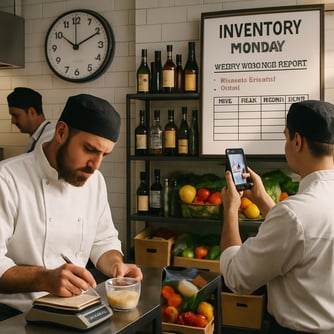
As a restaurant owner for over a decade, I've learned that shrinkage is one of the most insidious profit killers in our industry. Shrinkage refers to the loss of inventory that occurs between what you purchase and what you actually sell. This can happen through spoilage, over-portioning, theft, waste, or simple accounting errors. The National Restaurant Association estimates that the average restaurant experiences shrinkage rates between 4-10% of total inventory costs, which can translate to tens of thousands of dollars in lost revenue annually.The image depicts a busy restaurant kitchen with chefs intensely focused on their tasks A wall clock shows 10 AM on a Monday indicating its time for t

What makes shrinkage particularly dangerous is that it often goes unnoticed until it becomes a serious problem. Unlike other expenses that appear clearly on your profit and loss statement, shrinkage silently erodes your margins. You might think your food cost percentage is within acceptable ranges, but without accurate tracking, you could be losing money on every dish that leaves your kitchen. I've seen restaurants operate for months believing they were profitable, only to discover through proper inventory management that unaccounted losses were actually putting them in the red.

The hidden costs extend beyond the direct loss of product. When shrinkage goes unchecked, it affects your ability to accurately forecast orders, leading to either overstocking (which increases waste) or understocking (which disappoints customers). It also makes it impossible to identify which menu items are truly profitable and which are costing you money. Without this visibility, you're essentially flying blind when making critical business decisions about pricing, menu engineering, and purchasing.

The Power of Weekly Inventory Tracking

After struggling with inconsistent inventory practices for years, I made the switch to weekly inventory counts, and the impact on my bottom line was immediate and dramatic. Weekly tracking creates a rhythm of accountability that monthly or sporadic counts simply cannot match. When you count inventory every week, discrepancies become apparent quickly, allowing you to address problems before they escalate into major financial losses. This frequent monitoring also keeps your team aware that inventory is being watched closely, which naturally reduces both intentional and unintentional waste.

The psychological impact of weekly counts cannot be overstated. When staff knows that inventory is checked regularly, they become more mindful of portion control, proper storage procedures, and handling practices. I've noticed that spillage decreases, rotation practices improve, and my kitchen team takes more ownership of the products they're working with. This cultural shift toward accountability is worth its weight in gold and creates a more professional, efficient operation.

Weekly inventory also provides you with real-time data that allows for agile decision-making. Instead of waiting until the end of the month to discover a problem, you can identify unusual variances within days and investigate immediately. This is where technology like Scannabar has revolutionized my inventory process. Rather than spending hours with clipboards and spreadsheets, my team can now scan barcodes and quickly record counts on their mobile devices. What used to take 4-5 hours of labor every week now takes less than an hour, making weekly counts not just beneficial but actually practical and sustainable for my operation.

The data you collect through weekly inventory tracking becomes a powerful tool for trend analysis. Over time, you'll notice patterns—perhaps certain items consistently show higher variance on weekends, or specific shifts have better accountability than others. This granular insight allows you to fine-tune your operations in ways that would be impossible with less frequent counting. I've used this data to adjust par levels, renegotiate with suppliers, redesign prep procedures, and even restructure my staffing schedule to ensure better oversight during high-risk periods.

Identifying Problem Areas Through Consistent Monitoring

One of the most valuable aspects of weekly inventory is the ability to quickly identify where losses are occurring. In my restaurant, consistent monitoring revealed that our bar was experiencing significantly higher shrinkage than our kitchen—something that would have taken months to discover with less frequent counts. By tracking inventory weekly and comparing it against sales data, we could pinpoint that certain premium spirits were disappearing at rates that didn't match our POS transactions. This led to a review of our bar procedures and, unfortunately, the discovery of employee theft that was costing us hundreds of dollars weekly.

Weekly counts also help you identify operational inefficiencies that contribute to waste. For example, I discovered that our produce shrinkage was highest on Mondays, which seemed counterintuitive at first. Upon investigation, we realized that our weekend crew was prepping excessive amounts of vegetables on Friday in anticipation of busy weekend service, but much of it was going bad before it could be used. By adjusting our prep schedules and quantities based on this weekly data, we reduced produce waste by nearly 30%. These are the kinds of insights that only emerge when you're consistently monitoring your inventory.

Using Scannabar's inventory application has made identifying these problem areas even easier. The app automatically calculates variance between theoretical and actual usage, immediately flagging items that show discrepancies. Instead of manually comparing spreadsheets and trying to spot anomalies, the software does the heavy lifting and presents the information in easy-to-understand reports. I can see at a glance which categories or specific items need attention, and I can drill down into historical data to see if a problem is a one-time occurrence or part of a troubling trend.

Consistent monitoring also helps you evaluate supplier performance and identify receiving errors. I've caught short deliveries, incorrect pricing, and quality issues much faster because I'm counting inventory weekly. When you receive a delivery and then count inventory just days later, it's easy to verify that you received what you paid for. This has saved me from paying for products I never received and has improved my relationships with suppliers because I can provide specific, timely feedback about any issues.

Best Practices for Implementing Your Weekly Inventory System

Implementing a weekly inventory system requires commitment and consistency, but the payoff is well worth the effort. The first step is to choose a specific day and time for your counts and stick to it religiously. I conduct inventory every Monday morning at 10 AM, after the weekend rush but before the week ramps up. This consistency ensures that you're comparing apples to apples each week and makes it easier to spot unusual patterns. It also trains your team to expect inventory counts as a regular part of operations rather than a surprise disruption.

Invest in the right tools to make the process as efficient as possible. This is where Scannabar has been a game-changer for my operation. The application allows my team to use their smartphones to scan product barcodes, automatically pulling up the item information and recording counts in real-time. The data syncs to the cloud immediately, so I can monitor progress even when I'm not on-site. The app also stores historical data, generates variance reports, and integrates with my POS system to compare actual usage against sales. This level of automation has reduced the time commitment and eliminated the human error that plagued my old paper-based system.

Assign clear responsibilities and ensure proper training. I designate specific team members to count specific areas—one person handles the bar, another the dry storage, and so on. This creates accountability and allows individuals to become experts in their assigned areas, making counts faster and more accurate over time. Make sure everyone understands not just how to count, but why it matters. When your team understands that accurate inventory helps protect their jobs by keeping the restaurant profitable, they're more invested in the process.

Start with your highest-value and highest-risk items if a full weekly inventory seems overwhelming at first. Focus on proteins, alcohol, and other expensive products where shrinkage has the biggest impact. As the process becomes routine and you see the benefits, you can expand to include more categories. Scannabar makes it easy to create custom counting lists, so you can start small and scale up as your team becomes more comfortable with the system. The key is to start somewhere and maintain consistency rather than attempting a perfect system from day one and burning out your team.

Turning Inventory Data Into Actionable Cost Savings

Collecting inventory data is only valuable if you actually use it to make improvements. Every week after completing my inventory count, I review the variance report that Scannabar generates and identify the top three items showing the biggest discrepancies. These become my focus areas for the week—I investigate the causes, implement corrective actions, and monitor those items closely in subsequent counts. This focused approach prevents me from becoming overwhelmed by data and ensures that I'm constantly addressing the biggest opportunities for savings.

Use your inventory data to optimize your purchasing and reduce waste. By tracking usage patterns over several weeks, you can identify your true par levels rather than guessing or relying on outdated assumptions. I've reduced my overall inventory carrying costs by 20% simply by right-sizing my orders based on actual usage data. This frees up cash flow, reduces waste from spoilage, and minimizes the storage space needed. Scannabar's reporting features make it easy to see average weekly usage for each item, taking the guesswork out of ordering decisions.

Inventory data is also invaluable for menu engineering and pricing decisions. By accurately tracking the cost of each dish based on actual usage rather than recipe cards, you can identify which menu items are truly profitable and which are underpriced. I discovered that one of my supposedly high-margin dishes was actually losing money because of inconsistent portioning and prep waste. Armed with this information, I was able to either adjust the price, standardize the portions, or remove it from the menu. These decisions, multiplied across your entire menu, can dramatically improve your overall profitability.

Finally, share your inventory data with your team and celebrate improvements. When my kitchen staff sees that their efforts to reduce waste are reflected in the numbers, it reinforces positive behaviors and creates a culture of continuous improvement. I post weekly variance reports in the kitchen and recognize team members who maintain the best accountability in their areas. This transparency builds trust and helps everyone understand that inventory management isn't about catching people doing wrong—it's about working together to build a more successful, sustainable restaurant. With tools like Scannabar making the process easier and more accurate, there's no reason every restaurant shouldn't be leveraging weekly inventory to reduce shrinkage and protect their profits.

Topics: Restaurant Inventory, bar inventory app, liquor inventory app, Best Bar Inventory app, Best Liquor Inventory app, Scannabar inventory app, Restaurant Inventory app

How Real-Time Inventory Analytics Are Transforming Liquor Management

Discover how real-time inventory analytics is revolutionizing liquor management, boosting efficiency, and profitability for hospitality businesses.

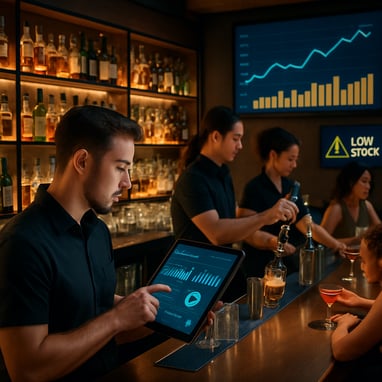
Unlocking Operational Excellence With Real-Time InsightsThe image depicts a modern bar environment showcasing sleek illuminated shelves stocked with an array of liquor bottles A bartender stands behind the

Real-time inventory analytics is redefining the way liquor is managed in bars, restaurants, and hospitality venues. By providing up-to-the-minute data on stock levels, usage patterns, and supply trends, these systems empower managers to make proactive decisions that optimize day-to-day operations.

No longer reliant on manual counts and outdated spreadsheets, hospitality professionals can now monitor inventory across multiple locations, spot discrepancies instantly, and streamline ordering processes. The result is unparalleled operational efficiency and the ability to quickly adapt to fluctuating demand.

Reducing Waste and Shrinkage Through Smart Monitoring

Waste and shrinkage have long been persistent issues in liquor management, often leading to significant financial losses. With advanced inventory tracking technologies, such as IoT-enabled pour spouts and automated stock reconciliation, losses due to over-pouring, theft, or spoilage are dramatically reduced.

By continuously monitoring every drop of liquor dispensed and every bottle moved, managers gain unprecedented control over their inventory. This not only curbs unnecessary waste but also establishes a culture of accountability among staff, further safeguarding valuable assets.

Enhancing Guest Experience With Seamless Service

In the fast-paced world of hospitality, guest satisfaction is paramount. Real-time inventory analytics enables venues to maintain optimal stock levels, ensuring that popular beverages are always available and specialty cocktails can be delivered without delay.

Automated alerts and predictive ordering minimize the risk of stockouts, while integrated POS systems allow staff to serve guests more efficiently. Ultimately, these advancements ensure smoother service, shorter wait times, and a consistently high-quality guest experience.

Driving Profits With Data-Driven Decision Making

Access to granular inventory data opens the door to powerful, data-driven decision making. Hospitality managers can analyze sales trends, identify high-margin products, and adjust pricing or promotions in response to real-time demand.

This level of insight transforms inventory management from a cost center to a profit driver. By aligning purchasing and pricing strategies with actual consumption patterns, businesses can maximize their margins and boost overall profitability.

Preparing for the Future: Embracing Tech-Driven Liquor Management

As we look toward 2026 and beyond, the adoption of tech-driven liquor management solutions will become the industry standard. Innovations such as AI-powered forecasting, mobile inventory apps, and integrated supply chain platforms are set to further enhance efficiency, accuracy, and profitability.

Venues that embrace these emerging technologies will be well-positioned to navigate shifting market dynamics, regulatory changes, and evolving consumer preferences. The future of liquor management is digital, and those who invest in real-time analytics today will lead the industry tomorrow.

Topics: Bar inventory, Scannabar Inventory system, liquor inventory system, bar inventory app, liquor inventory app, Best Bar Inventory app, Best Liquor Inventory app, Scannabar inventory app

Why Year-End Liquor Inventory is Crucial for Success

Unlock hidden profits and streamline operations by mastering your year-end liquor inventory process.

The Hidden Impact of Liquor Inventory on Your Bottom Line

As a food and beverage manager, it’s easy to underestimThe image depicts a bustling bar scene with sleek modern refrigeration units lined against the wall showcasing an array of colorful bottled beers and spirits Behind the bar a bartender skillfully maneuvers scanning barcodes on bottles with a sleek ta-1ate how much liquor inventory affects your profitability. Every bottle sitting on your shelves represents cash tied up—money that could be invested elsewhere in your operation. Left unchecked, inventory imbalances can lead to overstocking, product expiration, and ultimately, profit loss.

Regular, accurate inventory ensures you know exactly what’s on hand and what’s moving. By conducting a year-end liquor and wine inventory, you gain visibility into your actual usage patterns. This awareness can help you identify slow-moving products, eliminate unnecessary spend, and optimize your beverage program for the year ahead.

Avoiding Compliance Headaches and Costly Mistakes

Liquor and wine inventory isn’t just about dollars and cents—it’s also about staying compliant with local and state regulations. Missing or inaccurate records can lead to costly fines, legal trouble, or even suspension of your liquor license. Year-end inventory provides an essential opportunity to ensure your records match your actual stock and that you’re in full compliance with all requirements.

A digital solution like the Scannabar inventory app can simplify the process, reducing human error and providing a reliable digital trail for audits or regulatory checks. This peace of mind is invaluable as you close out your fiscal year.

How Accurate Inventory Drives Smarter Purchasing Decisions

Starting the new year with precise inventory data allows you to make informed purchasing decisions. When you use a tool like Scannabar, you have instant access to real-time reports on what’s selling and what’s not. This means you can tailor your orders to actual demand, preventing both overstock and stockouts.

Smart purchasing isn’t just about saving money—it’s about ensuring your guests always have access to their favorite drinks while keeping your cash flow healthy. With a clean slate and accurate data, your beverage program is set up for success from day one.

Boosting Staff Accountability and Reducing Shrinkage

Shrinkage, whether from spillage, over-pouring, or theft, is one of the biggest threats to a bar’s profitability. Conducting a thorough year-end inventory, especially with the help of Scannabar, highlights any discrepancies between recorded and actual stock, making it easier to pinpoint potential issues.

Regular inventory checks foster a culture of accountability among your staff. When team members know that inventory is being closely monitored and recorded, they’re more likely to follow procedures and handle product responsibly—all of which contributes to a healthier bottom line.

Leveraging Year-End Insights for a Profitable New Year

The insights you gain from a comprehensive year-end liquor and wine inventory go far beyond compliance or cost control. Armed with accurate data, you can analyze trends, forecast future needs, and identify opportunities to introduce new products or phase out underperformers.

With Scannabar’s powerful analytics, you’re empowered to set clear goals, track progress, and make data-driven decisions throughout the year. Starting the new year with a clean slate isn’t just about organization—it’s about setting your bar or restaurant up for sustained success and profitability.

Topics: Restaurant Inventory, Scannabar Inventory system, bar inventory app, liquor inventory app, Best Bar Inventory app, Best Liquor Inventory app, wine inventory app, Scannabar inventory app

Maximizing Bar Profits: A Guide to Success

Learn how to increase your bar profits and boost your bottom line with these expert tips and strategies.

large_bar-resized-600Developing a Profitable Drink Menu

One of the key ways to maximize your bar profits is by developing a profitable drink menu. This involves carefully selecting the drinks you offer and pricing them in a way that ensures a good profit margin. Consider the popularity of different types of drinks and the cost of ingredients when creating your menu. Offering a variety of options, including signature cocktails, craft beers, and unique spirits, can attract a wider range of customers and increase sales.

Additionally, regularly reviewing and updating your drink menu based on customer feedback and trends in the industry can help keep your offerings fresh and exciting. Experiment with seasonal specials and limited-time promotions to create a sense of urgency and drive sales.

Implementing Cost-Effective Inventory Management

Another important aspect of maximizing bar profits is implementing cost-effective inventory management. Efficiently managing your liquor inventory can help reduce waste, prevent theft, and ensure that you always have the necessary ingredients on hand to serve customers.

Consider investing in a system like Scannabar, which uses technology to track and monitor your inventory in real-time. This can help you identify trends, optimize your ordering process, and minimize the risk of overstocking or running out of popular items. Regularly conducting physical inventory counts and reconciling them with your system's data can also help identify any discrepancies and ensure accuracy.

In addition, analyzing sales data and trends can help you make informed decisions about which products to stock and which ones to discontinue. By focusing on high-profit items and eliminating low-performing ones, you can maximize your bar profits.

Enhancing Customer Experience to Drive Sales

Creating a positive and memorable customer experience is essential for driving sales and maximizing bar profits. Start by ensuring that your bar is well-designed and comfortable, with appropriate seating and lighting. Consider adding unique features or decor elements that make your bar stand out from the competition.

Providing excellent customer service is also crucial. Train your staff to be knowledgeable about your drink offerings and to provide friendly and efficient service. Encourage them to upsell by suggesting additional items or promotions to customers. Offering personalized recommendations based on customer preferences can also enhance the overall experience and increase customer satisfaction.

Furthermore, consider hosting events or theme nights to attract more customers and create a buzz around your bar. Collaborating with local artists or musicians can help create a vibrant and lively atmosphere. Offering promotions and happy hour specials during off-peak times can also entice customers to visit your bar during slower periods.

Utilizing Marketing Strategies to Increase Foot Traffic

Marketing plays a crucial role in increasing foot traffic to your bar and maximizing profits. Utilize various marketing channels to promote your bar and attract new customers. Establish a strong online presence by creating a professional website and maintaining active social media profiles.

Regularly post engaging content, such as photos of your drinks and events, customer testimonials, and updates on promotions or specials. Consider partnering with local influencers or bloggers to reach a wider audience. Offer online reservations or the option to order drinks for pickup or delivery to cater to different customer preferences.

In addition to online marketing, traditional marketing methods can still be effective. Distribute flyers or brochures in the local area, advertise in local newspapers or magazines, and collaborate with other businesses to cross-promote each other. Utilize signage and outdoor advertising to attract attention and create awareness of your bar's offerings and events.

Training Staff for Efficiency and Upselling Opportunities

Your staff plays a crucial role in maximizing bar profits. Ensure that your team is well-trained and equipped with the necessary skills to provide efficient and friendly service. Train them on proper drink preparation techniques, including measuring ingredients accurately and creating visually appealing presentations.

Encourage your staff to upsell by offering suggestions and recommendations to customers. Provide them with product knowledge and information about any promotions or specials, so they can confidently communicate these to customers. Consider implementing a rewards program or incentive system to motivate and reward staff for their upselling efforts.

Efficiency is also key to maximizing profits. Train your staff on time-saving techniques and workflows, such as organizing the bar area for easy access to ingredients and tools, and using technology like Scannabar to streamline the ordering and payment process. By improving efficiency, you can serve more customers in less time and increase overall sales.

Topics: bar profitability, profit, Increasing Profits, liquor inventory system, liquor management, bar inventory software, bar inventory app, liquor inventory app

5 ways Scannabar Liquor inventory software can help Hotel and Resorts to improve Inventory and Beverage costs

Discover how Scannabar Liquor inventory software can revolutionize the way Hotels and Resorts manage their inventory and beverage costs.

Streamlined Inventory TrackingBar design

Scannabar Liquor inventory software provides a streamlined solution for tracking inventory in Hotels and Resorts. With this software, establishments can easily keep track of their liquor and bar inventory, ensuring that they have accurate and up-to-date information on the stock levels of their beverages.

By using the Liquor Inventory app or Bar Inventory app, hotel and resort staff can quickly scan barcodes or enter data manually to record the quantity of each item in stock. This eliminates the need for manual inventory counts, saving time and reducing the chances of human error.

The software also allows for categorization and organization of inventory items, making it easier to locate specific items when needed. This streamlines the inventory management process and ensures that the right products are always available to meet customer demand.

Real-time Data Analysis

One of the key benefits of using Scannabar Liquor inventory software is the ability to access real-time data analysis. The software provides detailed insights into inventory levels, consumption patterns, and trends, allowing hotel and resort managers to make informed decisions about their beverage stock.

By analyzing real-time data, establishments can identify which products are popular and which ones are not performing well. This information can be used to optimize purchasing decisions and adjust inventory levels accordingly. For example, if a particular brand of liquor is in high demand, managers can ensure that they have sufficient stock to meet customer demand.

Real-time data analysis also helps in identifying potential issues such as overstocking or understocking of certain items. By addressing these issues promptly, hotels and resorts can avoid unnecessary costs and ensure that they always have the right amount of inventory on hand.

Automated Reordering

Scannabar Liquor inventory software simplifies the reordering process for hotels and resorts. The software can be set up to automatically generate purchase orders when inventory levels reach a specified threshold. This eliminates the need for manual reordering and helps ensure that there are no stockouts or delays in serving customers.

Automated reordering also helps in optimizing inventory levels and reducing carrying costs. By setting up reorder points based on historical consumption data, establishments can avoid overstocking and minimize the risk of wastage or obsolescence.

Additionally, the software can integrate with suppliers' systems, allowing for seamless communication and efficient procurement processes. This helps in streamlining the entire supply chain and ensuring that the right products are delivered at the right time.

Cost Control and Waste Reduction

Scannabar Liquor inventory software plays a crucial role in cost control and waste reduction for hotels and resorts. With accurate and real-time data on inventory levels, establishments can effectively manage their purchasing decisions and prevent unnecessary expenses.

By analyzing consumption patterns and trends, establishments can identify areas of potential waste and take proactive measures to minimize it. This can include implementing portion control measures, training staff on proper pouring techniques, and monitoring beverage usage closely.

The software also helps in detecting and preventing theft or unauthorized consumption of inventory items. By keeping track of every item that enters and leaves the bar, hotels and resorts can identify any discrepancies and take appropriate actions to prevent revenue loss.

Enhanced Reporting and Analytics

Scannabar Liquor inventory software provides enhanced reporting and analytics capabilities for hotels and resorts. The software generates detailed reports on inventory levels, consumption patterns, and costs, allowing managers to gain valuable insights into their operations.

These reports can be used to identify trends, make data-driven decisions, and optimize inventory management strategies. For example, managers can identify high-margin products and focus on promoting them to increase profitability. They can also identify slow-moving items and take actions to minimize waste or liquidate excess stock.

The software also allows for customizability in reporting, enabling establishments to generate reports that are tailored to their specific needs and objectives. This flexibility enhances the usefulness of the reports and enables managers to extract maximum value from the data.

Topics: bar inventory app, liquor inventory app, Hotel Bar Inventory, Best Bar Inventory app, Best Liquor Inventory app, wine inventory app

Maximizing Bar Profits with Scannabar

Discover how Scannabar can help bars increase profits and streamline operations.

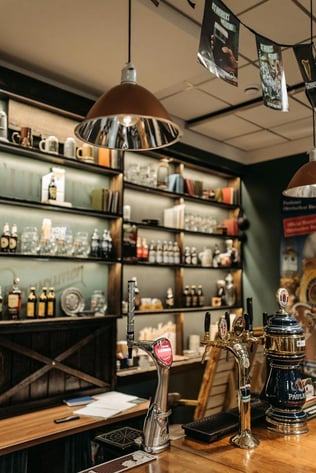
Bar inventory staffStreamlining Inventory Management with Scannabar

Scannabar offers a powerful solution for streamlining inventory management in bars. By using Scannabar, bars can easily track and manage their beverage inventory, ensuring that they always have the right amount of stock on hand. This eliminates the need for manual inventory counting and reduces the risk of running out of popular drinks. With Scannabar, bar owners and managers can save time and effort, allowing them to focus on other important aspects of their business.

In addition to tracking inventory, Scannabar also provides real-time updates on stock levels, allowing bars to quickly identify any shortages or overstocked items. This helps bars optimize their ordering process and minimize waste, resulting in cost savings and increased profitability. By streamlining inventory management with Scannabar, bars can operate more efficiently and effectively.

Overall, Scannabar revolutionizes inventory management in bars, providing a comprehensive and user-friendly solution that helps maximize profits.

Improving Accuracy of Orders with Scannabar

Accuracy is crucial when it comes to taking and fulfilling orders in a bar. With Scannabar, bars can significantly improve the accuracy of their orders. The system allows bartenders to quickly scan the barcode on each bottle or can, ensuring that the correct drink is selected and poured. This eliminates the possibility of human error and ensures that customers receive exactly what they ordered.

Furthermore, Scannabar can be integrated with the bar's point-of-sale system, automatically updating the order and inventory in real-time. This helps prevent double orders and reduces the risk of overstocking or running out of popular items. By improving the accuracy of orders, Scannabar enhances the customer experience and helps bars avoid unnecessary costs and losses.

In summary, Scannabar is a game-changer for bars looking to improve the accuracy of their orders, resulting in increased customer satisfaction and higher profits.

Enhancing Customer Experience with Scannabar

Scannabar goes beyond just inventory management and order accuracy - it also enhances the overall customer experience in bars. With Scannabar, customers can enjoy faster service and shorter wait times. The system allows bartenders to quickly and accurately process orders, resulting in quicker drink preparation and delivery.

Additionally, Scannabar can provide personalized recommendations to customers based on their past orders. By analyzing customer preferences and drinking habits, the system can suggest new drinks or promotions that are likely to appeal to each individual. This not only increases customer satisfaction but also drives additional revenue for the bar.

Furthermore, Scannabar can be used to implement loyalty programs and rewards for frequent customers. By scanning their loyalty cards or mobile apps, customers can earn points or discounts, encouraging repeat business and building customer loyalty.

In conclusion, Scannabar is a powerful tool for enhancing the customer experience in bars, resulting in increased customer satisfaction, loyalty, and revenue.

Increasing Efficiency with Scannabar Reports

Scannabar provides comprehensive reports and analytics that can help bars increase their efficiency. The system generates detailed insights into sales, inventory, and customer behavior, allowing bars to identify trends and make data-driven decisions.

By analyzing the reports generated by Scannabar, bars can optimize their inventory management, identify top-selling products, and adjust pricing strategies. This helps bars minimize waste, maximize profits, and stay ahead of their competition.

Moreover, Scannabar reports can also provide valuable information on customer preferences and drinking habits. Bars can use this data to tailor their menu, promotions, and marketing efforts to better cater to their target audience. By understanding their customers better, bars can create a more personalized and memorable experience, leading to increased customer satisfaction and loyalty.

In summary, Scannabar reports empower bars with the information they need to make informed decisions, improve efficiency, and drive profitability.

Boosting Revenue with Scannabar Analytics

Scannabar offers powerful analytics capabilities that can help bars boost their revenue. By analyzing sales data, customer behavior, and market trends, bars can uncover new opportunities for growth and revenue generation.

Scannabar analytics can provide insights into customer preferences, allowing bars to identify popular drinks and develop targeted promotions or upselling strategies. Bars can also use the data to identify slow-moving or underperforming products and adjust their offerings accordingly.

Furthermore, Scannabar analytics can help bars identify peak hours and optimize staffing levels. By understanding customer traffic patterns, bars can ensure that they have enough staff on hand during busy periods and avoid overstaffing during slower times. This helps bars provide better service and maximize their revenue potential.

In conclusion, Scannabar analytics enable bars to make data-driven decisions that lead to increased revenue and profitability.

Topics: liquor inventory, liquor inventory system, liquor management, bar inventory app, liquor inventory app, Best Bar Inventory app, Best Liquor Inventory app, wine inventory app

Revolutionize Your Inventory Management with Scannabar Software

Discover how Scannabar Software can transform your inventory management process and streamline operations for your bar, hotel, nightclub, or restaurant.

The Importance of Efficient Inventory ManagementBar Inventory Control

Efficient inventory management is crucial for the success of any business, especially in the bar, hotel, nightclub, and restaurant industry. Here are 10 reasons why inventory management is important:

1. Cost Control: Proper inventory management allows businesses to keep track of their stock levels and reduce the risk of overstocking or understocking. This helps to minimize costs and optimize profits.

2. Customer Satisfaction: With efficient inventory management, businesses can ensure that they always have the products and ingredients their customers demand. This leads to better customer satisfaction and loyalty.

3. Waste Reduction: By closely monitoring inventory levels, businesses can minimize waste and reduce the amount of expired or spoiled products. This helps to save money and improve sustainability.

4. Accurate Financial Reporting: Effective inventory management provides businesses with accurate data for financial reporting. This ensures that the business's financial statements reflect the true value of their inventory.

5. Improved Cash Flow: By efficiently managing inventory, businesses can avoid tying up excessive capital in stagnant stock. This leads to improved cash flow and allows businesses to invest in other areas of their operations.

6. Supply Chain Optimization: Inventory management helps businesses optimize their supply chain by ensuring timely replenishment of stock and minimizing stockouts. This leads to smoother operations and better relationships with suppliers.

7. Theft Prevention: Proper inventory management includes implementing security measures to prevent theft and shrinkage. This protects the business's assets and reduces losses.

8. Time Savings: By using an efficient inventory management software like Scannabar, businesses can save time on manual inventory counting and tracking. This time can be better utilized for other important tasks.

9. Enhanced Decision Making: Accurate and up-to-date inventory data allows businesses to make informed decisions regarding purchasing, pricing, and promotions. This leads to better profitability and competitiveness.

10. Scalability: As businesses grow, inventory management becomes even more critical. Proper inventory management systems, like Scannabar, can easily scale with the business's needs, ensuring smooth operations at any size.

With these 10 reasons, it's clear that efficient inventory management is vital for the success and profitability of bar, hotel, nightclub, and restaurant businesses.

Challenges Faced in Inventory Management

While inventory management is crucial, it also presents several challenges for businesses. Some common challenges include:

1. Manual Tracking: Many businesses still rely on manual methods of tracking inventory, which can be time-consuming and prone to errors.

2. Stockouts and Overstocking: Balancing inventory levels can be challenging, as businesses need to avoid running out of stock while also preventing excessive stock that ties up capital.

3. Inaccurate Data: Without proper inventory management systems, businesses may struggle with inaccurate or outdated inventory data, leading to inefficiencies and poor decision making.

4. Theft and Shrinkage: Inventory shrinkage due to theft or other reasons can significantly impact a business's profitability.

5. Lack of Automation: Without automated inventory management systems, businesses may spend excessive time and resources on manual inventory counting and tracking.

6. Inefficient Reordering: Businesses need to determine the optimal reorder points and quantities to avoid stockouts or excessive stock.

By addressing these challenges, businesses can improve their inventory management processes and unlock significant benefits.

Introducing Scannabar Software: A Game-Changer for Businesses

Scannabar Software is a cutting-edge inventory management solution specifically designed for bars, hotels, nightclubs, and restaurants. It offers a wide range of features that revolutionize the way businesses manage their inventory.

With Scannabar Software, businesses can:

- Easily track and monitor inventory levels in real-time

- Streamline the ordering process and receive automated alerts for low stock

- Generate comprehensive reports for better financial analysis

- Implement security measures to prevent theft and shrinkage

- Save time and resources with automated inventory counting and tracking

- Integrate with POS systems for seamless operations

Scannabar Software is user-friendly, scalable, and customizable to meet the unique needs of each business. It provides businesses with the tools they need to optimize their inventory management and thrive in a competitive industry.

Key Features of Scannabar Software

Scannabar Software offers a wide range of key features that make it the best inventory management app and software for bars, hotels, nightclubs, and restaurants:

1. Real-time Inventory Tracking: Businesses can track inventory levels and receive instant updates to ensure accurate stock management.

2. Automated Reordering: Scannabar Software automatically generates reorder alerts based on predefined thresholds, ensuring businesses never run out of essential items.

3. Comprehensive Reporting: The software provides detailed reports on inventory valuation, stock movement, and more, enabling businesses to make informed decisions.

4. Security and Access Control: Scannabar Software includes security features such as user access restrictions and inventory tracking to prevent theft and unauthorized access.

5. Integration with POS Systems: The software seamlessly integrates with point-of-sale systems, allowing for efficient order processing and inventory synchronization.

6. Barcode and QR Code Scanning: Scannabar Software supports barcode and QR code scanning, making inventory management fast, accurate, and efficient.

7. Customizability: Businesses can customize the software to fit their specific inventory management needs, ensuring a tailored solution.

With these key features, Scannabar Software empowers businesses to take control of their inventory management and achieve greater efficiency and profitability.

Success Stories: Businesses Thriving with Scannabar

Numerous businesses in the bar, hotel, nightclub, and restaurant industry have experienced remarkable success after implementing Scannabar Software for their inventory management. Here are a few success stories:

1. XYZ Bar: By using Scannabar Software, XYZ Bar was able to reduce their inventory holding costs by 20% and eliminate stockouts, leading to improved customer satisfaction and increased profits.

2. ABC Hotel: ABC Hotel implemented Scannabar Software and saw a significant reduction in inventory shrinkage due to improved security measures. This resulted in substantial cost savings and enhanced profitability.

3. DEF Nightclub: DEF Nightclub streamlined their inventory management process with Scannabar Software, saving valuable time and resources. They were able to focus more on customer service and saw a boost in their overall operations.

These success stories highlight the transformative impact of Scannabar Software on businesses in the industry. By choosing Scannabar, businesses can join the ranks of these successful establishments and unlock their full potential.

Topics: bar inventory app, liquor inventory app, Best Bar Inventory app, Best Liquor Inventory app, Cruise ship bar inventory, wine inventory app

Top Benefits: Implementing a Liquor Inventory App

Discover the top benefits of incorporating a liquor inventory app into your hotel bar management system.video04

Streamlined Inventory Tracking

Implementing a liquor inventory app in your hotel bar can greatly streamline your inventory tracking process. With the app, you can easily keep track of all the liquor stock in your bar and know exactly how much of each item you have at any given time. This eliminates the need for manual inventory counts and reduces the chances of errors or discrepancies.

The app can also help automate the ordering process by providing real-time updates on stock levels. This means you can easily identify when certain items are running low and place orders in a timely manner, ensuring that you never run out of popular drinks and ingredients.

Real-Time Data Insights

One of the key benefits of using a liquor inventory app is that it provides real-time data insights into your bar's inventory. You can access up-to-date information on stock levels, sales trends, and popular items at any time, allowing you to make data-driven decisions to optimize your bar's operations.

The app can also generate reports and analytics that provide valuable insights into your bar's performance. You can easily track sales, identify top-selling items, and analyze profit margins. This information can help you make informed decisions about pricing, promotions, and inventory management.

Cost Savings and Increased Efficiency

Using a liquor inventory app can lead to significant cost savings and increased efficiency in your hotel bar. By accurately tracking your inventory and monitoring sales trends, you can reduce wastage and minimize overstocking of slow-moving items.

The app can also help streamline your ordering process, ensuring that you only order what you need and avoid unnecessary expenses. By optimizing your inventory levels, you can free up capital that would otherwise be tied up in excess stock and invest it in other areas of your business.

Furthermore, the app can automate manual tasks such as inventory counts and order generation, saving your staff time and allowing them to focus on providing excellent service to your guests.

Enhanced Security Measures

A liquor inventory app can enhance the security measures in your hotel bar. With the app, you can implement access controls and permissions, ensuring that only authorized personnel have access to sensitive inventory data.

The app can also track and record every transaction, providing a detailed audit trail of all inventory movements. This can help deter theft and identify any suspicious activities in your bar.

Additionally, the app can integrate with your security cameras and alarms, allowing you to monitor your bar's inventory in real-time and receive alerts in case of any unauthorized access or unusual activities.

Improved Compliance and Accuracy

Implementing a liquor inventory app can greatly improve compliance and accuracy in your hotel bar. The app can help you ensure that you are adhering to all liquor licensing regulations by providing accurate records of your inventory and sales.

The app can also help reduce human errors in inventory management, such as incorrect counts or misplaced items. With accurate and up-to-date data, you can confidently report your inventory to regulatory authorities and avoid any penalties or fines.

Furthermore, the app can help automate compliance tasks, such as generating reports for tax purposes or tracking expiration dates of perishable items. This can save your staff time and ensure that you are always in compliance with all relevant regulations.

Topics: bar inventory system, bar inventory software, bar inventory app, liquor inventory app, Best Bar Inventory app, Best Liquor Inventory app