Liquor Inventory Experts

Over-Pouring Solutions Every Bar Should Know

Discover proven strategies to eliminate costly over-pouring and protect your bar's profit margins while maintaining exceptional guest experiences.

Why Over-Pouring Is Draining Your Bottom Line

Over-pouring represents one of the most significant yet overlooked contributors to bar shrinkage, quietly eroding profit margins with every generous pour. Industry studies reveal that bars typically lose between 20-25% of their liquor inventory to bar shrinkage, with over-pouring accounting for a substantial portion of these losses. When bartenders consistently pour even a quarter-ounce more than the standard serving size, the financial impact compounds rapidly across hundreds of drinks each week.Vibrant Bar Scene with Lively Patrons and Chalkboard Menu-1
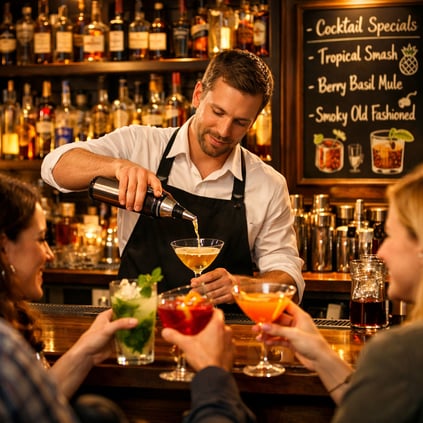
The mathematics of over-pouring are sobering. A single bartender pouring just one extra ounce per drink across 100 cocktails per shift translates to more than 12 bottles of premium spirits given away each month. For a busy establishment, this can represent thousands of dollars in lost revenue annually. Unlike liquor theft, which is intentional, over-pouring often stems from good intentions—bartenders wanting to impress customers or lacking proper training on standard pour sizes.

Beyond the direct cost of wasted inventory, over-pouring creates pricing inconsistencies that damage your business model. When customers receive varying drink strengths across visits or bartenders, it undermines your brand consistency and makes it impossible to accurately forecast costs. These inventory blind spots prevent managers from identifying true problem areas, as the data becomes unreliable. Understanding the full scope of over-pouring's impact is the essential first step toward implementing effective solutions.

Precision Pour Spouts and Measurement Tools That Work

Precision pour spouts have evolved into sophisticated tools that eliminate guesswork while maintaining the speed bartenders need during peak service. Modern measured pour spouts automatically dispense exact quantities—typically 1 ounce, 1.5 ounces, or custom amounts—with a simple inverted pour motion. Unlike free-pouring, which relies on counting or timing, these devices ensure consistency across every drink regardless of experience level or rush-hour pressure.

Jiggers remain the gold standard for accuracy in craft cocktail programs where precision directly impacts flavor profiles. Double-sided jiggers with clearly marked measurements allow bartenders to portion multiple ingredients quickly while maintaining recipe integrity. For establishments prioritizing both speed and accuracy, ball-bearing measured pourers offer a middle ground, using gravity-controlled mechanisms that dispense precise amounts without electronic components that require maintenance or battery changes.

Smart pour spouts with RFID technology represent the cutting edge of portion control, integrating directly with inventory management systems to track every ounce dispensed. These devices record which bottle was used, how much was poured, and can even be linked to POS systems to verify that pours match sales. While the initial investment is higher, the data generated helps identify patterns of over-pouring and provides accountability that quickly pays for itself through reduced bar shrinkage.

Implementation requires selecting tools that match your establishment's service style and volume. High-volume nightclubs benefit from speed pourers that maintain consistency during rapid-fire service, while upscale cocktail bars may prefer the precision and presentation of quality jiggers. The key is choosing measurement tools your staff will actually use consistently, making portion control a natural part of their workflow rather than an obstacle.

Training Techniques That Create Consistent Bartenders

Comprehensive training programs form the foundation of preventing over-pouring, transforming portion control from a policy into a practiced skill. New bartenders should complete hands-on exercises pouring water into measured containers, repeating the process until they can consistently hit target volumes within a quarter-ounce. This muscle memory training helps staff understand what proper portions look and feel like, creating an internal calibration they can rely on during busy shifts.

Recipe standardization workshops ensure every team member prepares drinks identically, eliminating the personal interpretation that leads to inconsistent pours. Create laminated recipe cards with exact measurements for house cocktails, including the specific glassware, ice, and garnishes required. Conduct regular taste-testing sessions where bartenders sample their own creations alongside properly measured versions, helping them recognize when drinks are over or under-poured by flavor alone.

Ongoing education about the business impact of over-pouring helps bartenders understand that portion control protects jobs and enables competitive wages. Share concrete examples: 'When we reduce bar shrinkage by 5%, we can invest that money in staff bonuses and updated equipment.' This shifts the narrative from management restricting generosity to the team collectively protecting the business that supports them. Bartenders who understand the economics become partners in loss prevention rather than feeling policed.

Positive reinforcement programs reward consistency and accuracy, creating motivation beyond simple compliance. Implement friendly competitions where bartenders test their free-pour accuracy, with prizes for those who come closest to standard measurements. Recognize staff members who maintain excellent pour costs in team meetings, celebrating their skill rather than only addressing problems. This approach builds a culture where precision is a source of professional pride.

Technology Solutions for Real-Time Inventory Tracking

Modern inventory management systems have transformed how bars identify and address bar shrinkage by providing unprecedented visibility into consumption patterns. Cloud-based platforms integrate with smart pour spouts, POS systems, and regular inventory counts to create a complete picture of every ounce flowing through your establishment. These systems automatically flag discrepancies when poured amounts don't match sales data, highlighting potential over-pouring or liquor theft before losses accumulate.

Real-time tracking dashboards give managers instant access to pour cost percentages, variance reports, and trending data across shifts and individual bartenders. Rather than waiting for monthly inventory to reveal problems, operators can identify concerning patterns within days and intervene immediately. The system might reveal that Wednesday night shifts consistently show higher shrinkage, prompting a review of staffing or training needs for that specific time period.

Automated alerts notify management when bottles are opened, when usage exceeds projected amounts based on sales, or when inventory falls below par levels. This eliminates the inventory blind spots that allow consistent over-pouring to go unnoticed for months. Advanced systems use artificial intelligence to establish baseline consumption patterns for each product, then flag anomalies that deserve investigation—such as premium vodka usage spiking without corresponding sales increases.

Integration capabilities connect inventory platforms with accounting software, purchasing systems, and labor management tools to provide holistic operational insights. Managers can analyze the relationship between staffing levels, sales volume, and shrinkage rates to optimize scheduling. The data generated becomes invaluable for forecasting, allowing more accurate ordering that reduces both overstock waste and emergency shortages that disrupt service.

Creating an Accountability Culture Without Sacrificing Hospitality

Building accountability around portion control requires balancing oversight with the trust and autonomy that hospitality professionals need to deliver exceptional service. The goal is creating transparency where bartenders understand they're being evaluated on consistency, not micromanaged on every pour. Clearly communicate that monitoring systems exist to identify training opportunities and systemic issues, not to catch individuals in mistakes that warrant punishment.

Establish clear standards with documented policies that define exact pour sizes for each drink category, explaining the reasoning behind these specifications. When bartenders understand that standard pours are calculated to deliver optimal flavor profiles while maintaining profitability, compliance feels less arbitrary. Include these standards in employee handbooks, training materials, and laminated quick-reference guides at each station so expectations are always accessible.

Regular performance reviews should include pour cost metrics alongside customer service evaluations, normalizing discussions about inventory management as part of professional excellence. Present the data constructively: 'Your customer ratings are excellent, and I notice your pour costs are running slightly high. Let's review a few techniques that might help.' This approach frames consistency as a skill to develop rather than a rule being broken, maintaining dignity while driving improvement.

Empower bartenders with decision-making authority for genuinely exceptional circumstances while maintaining overall accountability. Create clear guidelines for when complimentary drinks are appropriate—such as service recovery situations—with a simple documentation system. This allows staff to exercise hospitality judgment while ensuring that intentional generosity is tracked separately from over-pouring. The result is a culture where bartenders feel trusted to take care of guests while understanding that standard operations require precision that protects everyone's livelihood.
Topics: liquor inventory, liquor theft, Lineup control, Liquor Inventory savings, Loss prevention, liquor inventory system, liquor control, liquor management, liquor inventory app, over pour

Liquor Shrinkage Solutions Every Bar Owner Should Know

Discover proven strategies to reduce liquor loss and protect your bar's profits from the hidden threat that costs the industry billions annually.

Understanding the True Cost of Liquor Shrinkage in Your Bar

Liquor shrinkage represents one of the most insidious profit killers in the hospitality industry, costing bars and restaurants an estimated 20-25% of their total liquor inventory annually. This translates to billions of dollars in lost revenue across the industry, with individual establishments losing anywhere from $15,000 to over $100,000 per year depending on their size and volume. What makes this problem particularly dangerous is its invisibility—most bar owners don't realize the extent of their losses until they conduct a thorough audit or implement precise tracking systems.

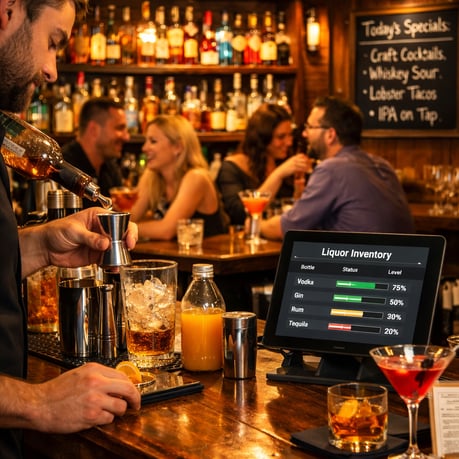
The true cost extends far beyond the immediate value of lost inventory. When liquor disappears from your shelves through over-pouring, theft, or administrative errors, you're not just losing the wholesale cost of that bottle. You're losing the potential profit margin, which typically ranges from 200-400% in the bar industry. A $30 bottle of premium vodka that goes missing represents approximately $120-150 in lost revenue when you factor in the retail value of the drinks that could have been poured. Multiply this across dozens or hundreds of bottles annually, and the impact on your bottom line becomes staggering.Bartender Mixing Cocktail at Bustling Bar-1

Perhaps even more concerning is how liquor shrinkage masks other operational inefficiencies and creates a culture of accountability gaps. When losses are normalized or accepted as 'just part of the business,' it signals to staff that precision and responsibility aren't priorities. This mindset can permeate other areas of operations, affecting everything from food costs to labor efficiency. Understanding the full scope of liquor shrinkage—both financial and cultural—is the first step toward implementing effective solutions that protect your profitability and create a more disciplined operational environment.

Smart Inventory Management Systems That Stop Loss Before It Happens

Traditional inventory methods—clipboard counts conducted weekly or monthly—create massive blind spots where shrinkage can thrive undetected. By the time you discover discrepancies, the trail has gone cold, making it nearly impossible to identify when, how, or by whom the loss occurred. Modern inventory management systems flip this reactive approach on its head by implementing bottle-level tracking that monitors every pour in real-time. These systems use weight sensors, pour spouts with flow meters, or RFID technology to track precisely how much product leaves each bottle, comparing actual pours against POS transactions to instantly flag discrepancies.

The power of precise bottle-level tracking lies in its ability to create an unbroken chain of accountability. When every ounce is monitored, several common loss scenarios become immediately visible: over-pouring that exceeds recipe specifications, drinks poured without corresponding sales transactions, inventory that disappears during non-business hours, and systematic patterns that suggest targeted theft. This granular visibility transforms inventory management from a periodic audit into a continuous monitoring system that catches problems within hours rather than weeks. Bar owners using these systems report catching issues they never knew existed, from bartenders consistently pouring heavy handed drinks to after-hours access that was quietly draining high-value bottles.

Beyond detection, smart inventory systems provide predictive analytics that help prevent losses before they occur. By establishing baseline pour patterns and usage rates for each product, these systems can alert managers to anomalies that warrant investigation—a sudden spike in premium whiskey usage during a slow Tuesday shift, for example, or consumption rates that deviate from historical norms. This proactive approach allows you to address potential issues immediately rather than discovering them during your end-of-month inventory count when the damage has already been done. The most sophisticated systems even integrate with your POS and scheduling software to cross-reference sales data with staff schedules, pinpointing exactly which shifts and which employees correlate with loss patterns.

Staff Training and Accountability Measures That Actually Work

Technology alone cannot solve liquor shrinkage—the human element requires equal attention through comprehensive training and clear accountability structures. The foundation starts with proper bartender training on standardized recipes and pour techniques. Many bartenders develop their pouring style through trial and error or by mimicking other bartenders, leading to inconsistent measurements that can easily result in 25-30% over-pouring on every drink. Implementing mandatory training with jiggers or measured pour spouts, followed by regular testing to ensure accuracy, eliminates the excuse of unintentional over-pouring. When bartenders understand that a standard pour is exactly 1.5 ounces—not 'about' 1.5 ounces—and have the tools and practice to execute it consistently, one of the largest sources of shrinkage dramatically decreases.

Accountability measures must be both transparent and consistently enforced to be effective. Start by clearly communicating your shrinkage standards and expectations during onboarding, making it explicit that inventory accuracy is a core job responsibility. Implement individual bartender accountability by assigning specific stations or bottles and reconciling their inventory against their sales at the end of each shift. This real-time accountability, rather than collective responsibility for the entire bar's inventory, makes it impossible for losses to hide in the crowd. Display performance metrics visibly—some bars post pour accuracy percentages in the back of house, celebrating those who maintain precision while addressing those who consistently fall short. This transparency creates healthy peer pressure and makes inventory management a shared priority rather than solely a management concern.

The most successful accountability programs pair monitoring with positive reinforcement rather than relying solely on punitive measures. Consider implementing incentive programs that reward bartenders who maintain pour accuracy above 95% or shifts that end with zero discrepancies between inventory and sales. This carrot approach, combined with the stick of progressive discipline for repeated violations, creates motivation to maintain standards without fostering a hostile work environment. Regular refresher training sessions, particularly after any inventory discrepancies are discovered, demonstrate your commitment to education and improvement rather than mere punishment. When staff understand that accountability measures exist to protect the business that employs them—and that precision is both expected and rewarded—they become partners in shrinkage prevention rather than adversaries to be monitored.

Technology Solutions for Real-Time Pour Control and Monitoring

The technological revolution in pour control has introduced solutions that range from simple to sophisticated, allowing bars of any size to find systems that match their needs and budget. At the entry level, measured pour spouts replace standard spouts and physically limit each pour to a predetermined amount—typically 1 or 1.5 ounces—making over-pouring mechanically impossible. These inexpensive devices provide immediate shrinkage reduction, though they lack data collection capabilities and can't detect theft or drinks poured without sales. Mid-tier solutions include wireless pour spouts that communicate with software to track every pour's volume, timestamp, and the bottle it came from, creating a comprehensive data trail without requiring bartenders to change their workflow significantly.

Advanced systems integrate multiple technologies to create comprehensive monitoring ecosystems. Smart bottle systems use weight sensors on shelves that continuously monitor each bottle's weight, automatically detecting when product leaves the bottle and calculating the exact amount poured. These systems integrate directly with POS terminals to match each pour against corresponding sales transactions in real-time, triggering immediate alerts when discrepancies occur. Some platforms incorporate video surveillance that automatically records footage whenever a bottle is accessed, providing visual evidence that can be reviewed if irregularities are detected. The most cutting-edge solutions employ artificial intelligence to analyze patterns, learning what normal usage looks like for your specific establishment and flagging anomalies that human managers might miss in the flood of data.

The key to successful technology implementation lies in choosing systems that match your operational reality and ensuring proper integration with your existing infrastructure. A high-volume nightclub with twenty bartenders serving thousands of customers needs different solutions than an intimate cocktail bar with three staff members focusing on craft beverages. Consider factors like ease of use—systems that slow down service or require complex procedures won't be consistently used by staff—and the quality of reporting and analytics provided. The best technology translates raw data into actionable insights, highlighting which products have the highest loss rates, which shifts show anomalies, and providing trend analysis that helps you understand whether your shrinkage is improving or worsening over time. Implementation should include thorough staff training and a rollout period where you focus on education rather than enforcement, giving your team time to adapt to new workflows while you refine your systems and processes.

Creating a Culture of Transparency and Profit Protection

Sustainable shrinkage reduction requires more than systems and procedures—it demands a fundamental shift in your bar's culture toward transparency and shared responsibility for profitability. This cultural transformation starts at the top, with ownership and management openly discussing the reality of liquor loss, its impact on the business, and why addressing it matters for everyone's job security and earning potential. When staff understand that shrinkage directly affects whether the business can provide raises, invest in improvements, or even remain open, they're more likely to view prevention measures as protective rather than punitive. Share aggregate data about shrinkage rates and celebrate improvements collectively, making profit protection a team goal rather than a management obsession.

Transparency extends to your policies, procedures, and enforcement. Clearly document your expectations regarding pour accuracy, inventory procedures, and consequences for violations, making sure every staff member receives and acknowledges this information. Conduct regular audits and share results openly, explaining not just what was found but why it matters and what steps will be taken to address issues. When problems are discovered, address them promptly and consistently—selective enforcement breeds resentment and signals that rules don't actually matter. This consistency builds trust that the systems exist for legitimate business reasons rather than as tools for arbitrary discipline, encouraging staff cooperation rather than creative circumvention.

The ultimate goal is fostering a culture where everyone acts as a stakeholder in the business's financial health. This happens when bartenders take pride in their precision, when staff members feel comfortable reporting concerns about potential theft or policy violations, and when the entire team understands how their individual actions aggregate into collective success or failure. Consider implementing profit-sharing or bonus structures tied partially to shrinkage rates, giving staff direct financial incentive to maintain accuracy and prevent losses. Create regular forums where staff can provide feedback on inventory systems and suggest improvements, demonstrating that their input matters and that management is open to refinement. When your bar's culture evolves to treat every ounce of liquor as valuable and worth protecting, technology and procedures become enablers of existing values rather than external impositions fighting against the current. This cultural foundation makes all other shrinkage prevention measures exponentially more effective and sustainable over the long term.

Topics: Bar inventory, Hotel Inventory, Food Costs, Bar products, Increasing Profits, Loss prevention, Food Storage, Hotel Bar Inventory, Best Bar Inventory app, Cruise ship bar inventory, Country Club Liquor Inventory

Liquor Inventory Automation: Streamline Your Bar Operations

Revolutionize your bar's efficiency and profitability by embracing liquor inventory automation to eliminate manual errors and streamline operations.

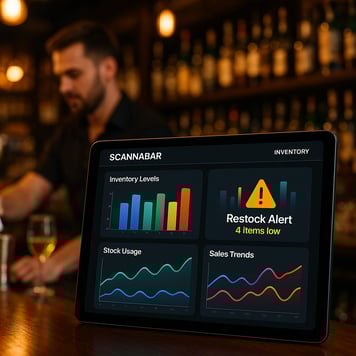
Unlocking the Potential of Automated Liquor Inventory SystemsThe image features a sleek modern interface of the Scannabar Inventory application displayed on a tablet set against a backdrop of a bustling bar environment The screen shows vibrant graphs and charts illustrating realtime inventory levels stock usag-1

As a bar operator, one of the most time-consuming and error-prone tasks is managing liquor inventory. Automated liquor inventory systems like Scannabar unlock new levels of control and insight by digitizing the entire process. By eliminating manual counting and spreadsheets, these systems provide a real-time, accurate view of your stock, reducing human error and saving valuable labor hours.

The true potential of these systems lies in their ability to centralize your inventory data, making it accessible from anywhere and at any time. This means you can make informed decisions on-the-fly and avoid costly mistakes such as over-ordering or running out of popular products during peak hours.

How Automation Transforms Bar Efficiency and Staff Productivity

Automation takes the guesswork and tedium out of liquor inventory management. With solutions like Scannabar, scanning bottles and inputting data becomes a quick, streamlined task for bartenders and managers. This frees up staff to focus on delivering exceptional customer service rather than getting bogged down in back-of-house processes.

By reducing the workload and stress associated with inventory checks, staff morale improves, and turnover decreases. Automated reminders and scheduled counts ensure that inventory tasks are completed on time, further boosting productivity and ensuring operational consistency.

Reducing Losses and Boosting Profits with Real-Time Tracking

Shrinkage, spillage, and theft can significantly eat into bar profits, but real-time tracking provided by automated systems helps operators identify discrepancies instantly. With features like instant variance reports and consumption analytics, you can quickly spot trends or issues before they become major losses.

By keeping a closer eye on inventory in real time, bars can better control costs, ensure correct pours, and improve accountability among staff. Ultimately, this translates to higher profit margins and a healthier bottom line.

Integrating Technology Seamlessly into Your Bar Workflow

One of the concerns many operators have is how new technology will fit into their existing workflow. Modern inventory applications like Scannabar are designed for seamless integration, with intuitive interfaces and compatibility with point-of-sale systems. This means minimal disruption and a gentle learning curve for your team.

Proper training and user-friendly design ensure that staff can start using the system effectively from day one. The result is a smooth transition to automated processes that complement your bar’s unique operational style.

Choosing the Right Liquor Inventory Automation Solution for Your Business

Selecting the right inventory automation tool is crucial to realizing all the benefits automation has to offer. Operators should consider factors such as ease of use, integration capabilities, support, and scalability when evaluating options like Scannabar.

Look for a solution that not only fits your current needs but can also grow with your business. Reliable customer support and comprehensive training resources are essential to ensure long-term success with your chosen system.

Topics: Bar inventory, Lineup control, Bar Management, Loss prevention, Hotel Bar Inventory, Best Bar Inventory app, Best Liquor Inventory app, Cruise ship bar inventory, Country Club Liquor Inventory

Lowering Beverage Costs with Scannabar in Hotels

Discover how Scannabar is revolutionizing beverage management in hotels, empowering hospitality leaders to cut costs without sacrificing quality or guest satisfaction.

Unveiling the Beverage Cost Challenge in Hotels

Managing beverage costs is a persistent challenge for hotels, especially those operating high-volume bars, restaurants, and event venues. Shrinkage, over-pouring, and inaccurate inventory records often erode profit margins, making it difficult for Food and Beverage managers to maintain financial targets without impacting guest experience.Hotel Bar Invetory

Traditional inventory methods are time-consuming, prone to human error, and often fail to provide real-time insights. This lack of accurate, actionable data can lead to unnecessary waste, stockouts, and missed opportunities to optimize purchasing and pricing.

How Scannabar Transforms Hotel Beverage Management

Scannabar has completely transformed our approach to beverage management by automating and streamlining the entire inventory process. With its advanced barcode scanning and real-time data capture, we can now track every bottle, keg, and case from delivery to pour, ensuring precise control and accountability at every step.

This level of oversight not only improves accuracy but also frees up our staff to focus on delivering exceptional guest experiences, rather than being bogged down by manual counts and reconciliations.

Key Features of Scannabar That Drive Cost Savings

Scannabar's intuitive interface and mobile compatibility make it easy for our team to conduct inventory quickly and accurately, reducing labor hours and minimizing errors. Automated variance reports highlight discrepancies between actual usage and sales, allowing us to pinpoint losses and address them immediately.

Integration with our POS and procurement systems enables seamless reordering, prevents overstocking, and helps us negotiate better pricing with suppliers. These features collectively drive significant cost savings while maintaining quality and consistency in our beverage service.

Real Success Stories: Hotels Benefiting from Scannabar

Since implementing Scannabar, we have seen a measurable reduction in beverage cost percentages, with some of our properties reporting savings of up to 15%. The application has helped us identify sources of shrinkage and inefficiency that were previously hidden, leading to actionable improvements in operations.

Our team members appreciate the ease of use and the ability to generate instant, detailed reports for management review. This transparency has fostered greater accountability and teamwork across departments, further enhancing our bottom line.

Best Practices for Integrating Scannabar into Your Hotel Operations

To maximize the benefits of Scannabar, we recommend providing comprehensive training for all relevant staff and setting clear protocols for inventory procedures. Regular audits and variance analysis should be scheduled to ensure ongoing accuracy and to quickly address any issues that arise.

Collaborating closely with IT and procurement departments during the integration process ensures smooth data flow and optimal use of Scannabar’s features. By making inventory management a shared responsibility, hotels can maintain tighter control over costs without compromising the guest experience.

Topics: Bar inventory, Hotel Inventory, Scannabar Inventory system, Liquor Inventory savings, Loss prevention, Hotel Bar Inventory, Best Bar Inventory app, Scannabar inventory app

All the Benefits the Scannabar Inventory Application Can Bring to Your Hospitality Business

Unlock unparalleled efficiency and profitability in your hospitality business with the Scannabar Inventory application.

Boost Operational Efficiency with Real-Time Inventory Tracking

In the fast-paced world of hospitality, operational efficiency is paramount. The Scannabar Inventory application offers real-time inventory tracking, allowing you to monitor stock levels instantaneously. This means you can make informed decisions on the fly, reducing downtime and ensuring your business runs smoothly.pexels-brett-sayles-1374552

With Scannabar, you will never have to worry about manual counts and the human errors that can come with them. The application provides an automated solution that saves time and effort, allowing staff to focus on other critical tasks that enhance customer experience.

Minimize Waste and Maximize Profits Through Accurate Data

One of the significant challenges in the hospitality industry is waste management. Scannabar's precise inventory tracking helps you minimize waste by providing accurate data on stock usage and shelf life. By keeping track of what's being used and what isn't, you can make adjustments to your purchasing processes and reduce unnecessary waste.

Maximizing profits becomes easier when you have a clear picture of your inventory. Scannabar enables you to identify high-performing products and those that are underperforming, allowing you to optimize your stock for better profitability.

Streamline Ordering and Restocking Processes

Keeping your shelves stocked without over-ordering can be a delicate balance. Scannabar simplifies this process by providing automated restocking alerts and order recommendations based on real-time data. This ensures you always have the right amount of stock on hand, reducing the risk of shortages or excess inventory.

The application also integrates seamlessly with your existing systems, allowing for a streamlined ordering process that saves time and reduces errors. By automating these tasks, you can free up valuable time for your staff to focus on delivering excellent service.

Enhance Customer Satisfaction with Consistent Stock Availability

Nothing frustrates a customer more than finding their favorite item out of stock. Scannabar helps ensure consistent stock availability, enhancing customer satisfaction and loyalty. By maintaining optimal stock levels, you can offer a reliable and enjoyable experience for your guests.

Consistent stock availability also means you can run promotions and special events without the fear of running out of key items. This reliability can set your business apart in a competitive market, making you the go-to choice for customers.

Gain Valuable Insights with Comprehensive Reporting and Analytics

Data-driven decision-making is crucial in today’s competitive hospitality industry. Scannabar provides comprehensive reporting and analytics, offering valuable insights into your inventory performance. From sales trends to inventory turnover rates, you can access detailed reports that help you make more informed business decisions.

These insights can be used to fine-tune your operations, identify opportunities for improvement, and drive strategic initiatives. By leveraging Scannabar's analytics, you can stay ahead of the competition and ensure your business is always moving in the right direction.

Topics: Scannabar Inventory system, Liquor Inventory savings, Reducing Costs, Loss prevention, Hotel Bar Inventory, Best Bar Inventory app, Best Liquor Inventory app, Scannabar inventory app

From Dream to Cheers: Comprehensive Guide to Opening a Successful Bar

IOpenng a barntroduction: A 10 Part Tutorial.

Welcome to the world of opening a bar, where dreams of creating a vibrant social hub come to life. In the following chapters, we will embark on a journey through the various aspects of turning your vision into reality. From the initial spark of inspiration to the finer details of managing operations, we'll explore the key elements that contribute to a successful bar.

Chapter by chapter, we'll guide you through the exciting and sometimes challenging process of opening up a bar. You'll gain insights into the legalities of licenses and permits, learn the art of selecting the perfect location, and discover the secrets of crafting a menu that entices your customers.

We'll dive into the importance of designing an inviting atmosphere and building a stellar team that brings your vision to life. You'll delve into the world of mixology and explore marketing strategies to attract patrons to your establishment. We'll also delve into financial management and customer relationship building, emphasizing the significance of nurturing connections with your guests.

Whether you're a seasoned entrepreneur or a passionate enthusiast, this guide will provide you with valuable knowledge and practical advice to set you on the path to a thriving bar. So, let's raise a glass and begin this exciting journey together!

Chat

Topics: Bar inventory, Bar trends, Classic drinks, Bar Management, Increasing Profits, Loss prevention, Hospitality, Drink Recipes, Bar Promotion