Liquor Inventory Experts

Liquor Inventory Methods Compared: Manual Counts Vs. Pour Systems Vs. Barcode Tracking

Discover which liquor inventory method will save your bar thousands in lost revenue while cutting inventory time by up to 75%.

Why Your Liquor Inventory Method Can Make or Break Your Bottom Line

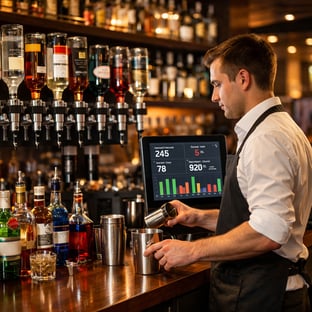
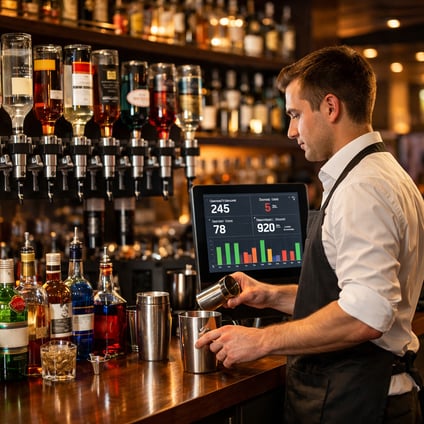
In the hospitality industry, liquor represents one of the highest-margin product categories—but also one of the most vulnerable to shrinkage, theft, and waste. Studies consistently show that bars and restaurants lose between 20-25% of their liquor inventory to over-pouring, spillage, theft, and untracked consumption. For a mid-sized establishment with $500,000 in annual liquor sales, that translates to $100,000 or more in lost revenue every single year.Modern Bar with Automated Pour System and Colorful Liquor Display-1

The inventory method you choose directly impacts your ability to identify and prevent these losses. A robust tracking system provides visibility into consumption patterns, helps you catch discrepancies before they become major problems, and ensures accurate pricing and ordering. On the other hand, an inadequate or inconsistent approach leaves you flying blind, unable to pinpoint where your profits are disappearing.

Beyond loss prevention, your inventory method affects labor costs, operational efficiency, and data accuracy. Manual counting might take your staff 4-6 hours per week, while automated systems can reduce that time to under an hour. The question isn't whether you can afford to invest in better inventory management—it's whether you can afford not to. With margins tightening across the hospitality sector, the right inventory method has become a competitive necessity rather than a luxury.

Manual Counting: The Traditional Approach That Still Has Its Place

Manual inventory counting remains the most common method in small bars and restaurants, and for good reason: it requires minimal upfront investment and works with any existing point-of-sale system. The process involves physically weighing or measuring each bottle, recording the quantities on paper or in a spreadsheet, and calculating usage based on the difference between counts. For establishments with limited budgets or relatively small liquor selections (under 50 SKUs), this approach can be sufficient to maintain basic control.

The advantages of manual counting extend beyond cost savings. It requires no specialized equipment, can be performed by any trained staff member, and provides hands-on familiarity with inventory levels. Many experienced bar managers argue that the physical act of handling each bottle gives them intuitive insights into consumption patterns and potential issues that automated systems might miss. There's also complete flexibility—you can count as frequently or infrequently as your operation demands, without being locked into a particular technology platform.

However, the drawbacks are significant and become more pronounced as your operation scales. Manual counting is time-intensive, typically requiring 3-6 hours for a full inventory depending on selection size. Human error is inevitable—studies show accuracy rates for manual counts rarely exceed 85%, with mistakes occurring in measurement, recording, or calculation. There's no real-time visibility, meaning you only discover shrinkage days or weeks after it occurs, making it nearly impossible to trace problems to specific shifts or employees.

Manual methods also create data management challenges. Spreadsheets become unwieldy with hundreds of entries, historical analysis is difficult, and generating actionable reports requires additional manual work. For bars doing less than $200,000 in annual liquor sales with stable, experienced staff, manual counting may suffice. But as volume increases or turnover rises, the limitations quickly outweigh the cost savings.

Automated Pour Systems: Real-Time Precision for High-Volume Operations

Automated pour systems represent the most technologically advanced inventory solution available to bars and nightclubs. These systems use spouts fitted with sensors that attach to each liquor bottle, automatically measuring and recording every ounce poured in real-time. The data syncs wirelessly to management software, providing instant visibility into consumption, variance, and potential theft. Premium systems can even integrate with POS terminals to verify that every pour corresponds to a sale.

The precision offered by pour systems is unmatched. They eliminate human measurement error entirely, tracking consumption down to the tenth of an ounce. This granular data reveals patterns invisible to other methods: which bartenders consistently over-pour, which drinks have the highest spillage rates, and exactly when discrepancies occur during service. High-volume nightclubs and hotel bars often see ROI within 6-12 months simply from reducing over-pouring, which these systems typically cut by 15-20%.

Real-time alerts are another powerful feature. If a bartender pours three shots without corresponding POS entries, managers receive immediate notifications, allowing them to address issues during the shift rather than discovering problems days later. This accountability dramatically reduces theft—simply having pour spouts visible acts as a deterrent. The systems also streamline inventory processes, automatically calculating quantities and generating orders based on par levels, reducing the time staff spend on inventory from hours to minutes.

Despite these advantages, pour systems come with substantial drawbacks. Initial costs range from $10,000 to $50,000+ depending on the number of bottles and feature set, plus ongoing subscription fees of $200-500 monthly. Installation and training require significant time investment, and some staff resist the technology, viewing it as surveillance rather than a management tool. The spouts can malfunction, require regular cleaning, and occasionally affect pour speed during busy periods, frustrating bartenders.

Perhaps most importantly, pour systems only work for bottles fitted with spouts. Beer, wine, and bottled products remain untracked, requiring a separate inventory method anyway. They're best suited for high-volume nightclubs, hotel bars, or establishments with serious theft problems where the 15-20% reduction in liquor costs justifies the substantial investment. For smaller operations or those with broader product mixes, the cost-benefit equation often doesn't add up.

Barcode Tracking: The Sweet Spot Between Control and Efficiency

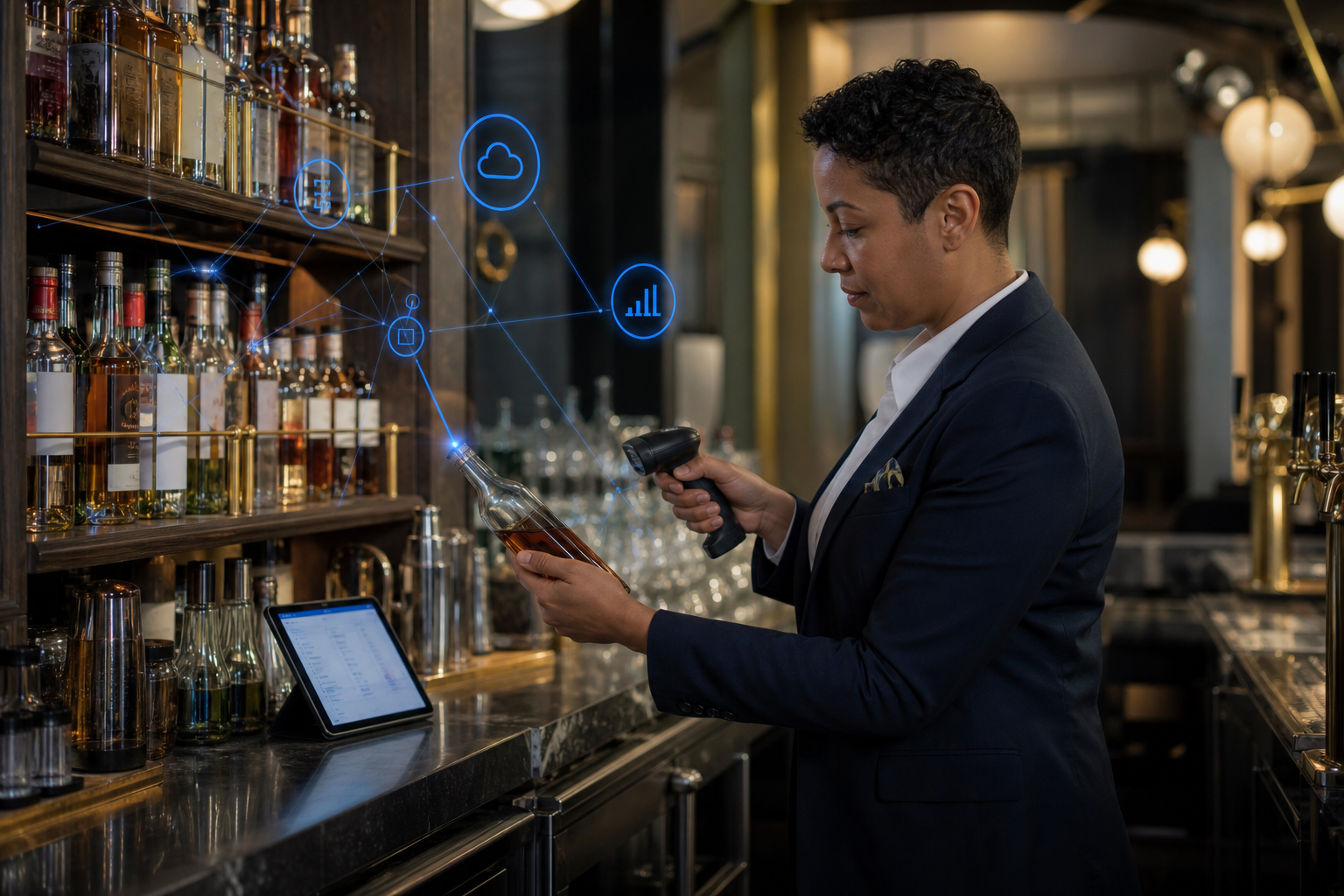
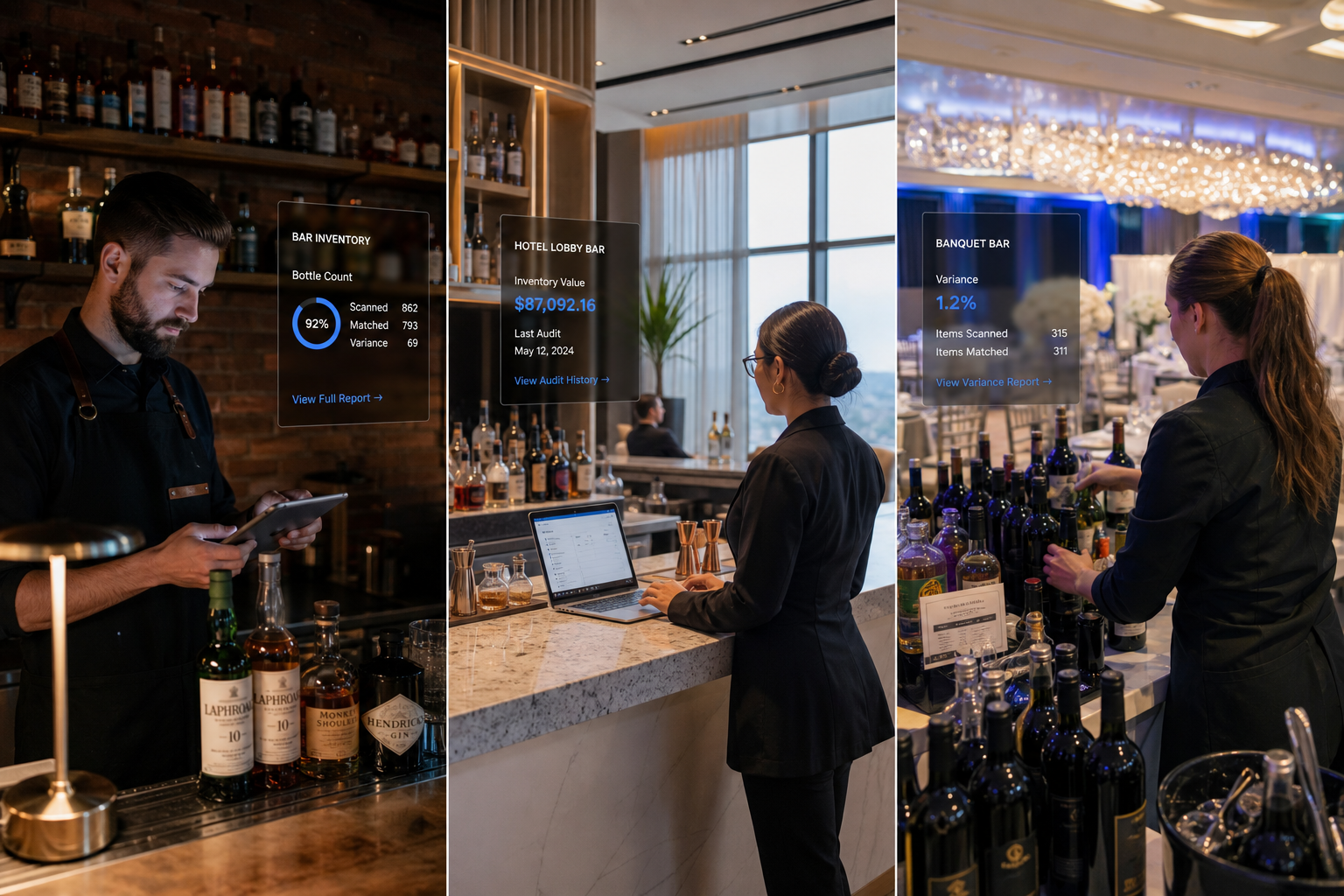
Barcode tracking systems have emerged as the preferred inventory solution for many mid-sized bars and restaurants because they balance accuracy, efficiency, and affordability. Using handheld scanners or smartphone apps, staff scan bottle barcodes and enter remaining quantities, with the software automatically calculating usage, costs, and variance. Modern systems integrate seamlessly with POS platforms, comparing actual consumption against sales to identify discrepancies quickly.

The efficiency gains over manual counting are substantial. Scanning a barcode and entering a quantity takes seconds compared to the manual process of finding the item in a spreadsheet, recording the amount, and calculating differences. Most establishments report reducing inventory time by 50-75%, turning a 5-hour process into 90 minutes or less. This time savings becomes increasingly valuable as you scale—adding 50 more SKUs to a barcode system adds minimal time, while manual counting grows proportionally more burdensome.

Accuracy improvements are equally impressive. By eliminating transcription errors and automating calculations, barcode systems typically achieve 95%+ accuracy rates. The software flags unusual variances automatically, drawing attention to potential problems rather than burying them in spreadsheets. Historical data tracking enables trend analysis, helping you identify slow-moving inventory, optimize par levels, and make data-driven purchasing decisions that manual methods simply can't support.

Barcode tracking also offers flexibility that automated pour systems lack. It works for your entire inventory—liquor, beer, wine, mixers, garnishes—providing comprehensive visibility across all product categories. You can conduct partial counts of high-value items between full inventories, and the mobile nature of scanners allows staff to count efficiently throughout the bar rather than transporting bottles to a central scale.

Implementation costs are moderate, typically ranging from $1,000-5,000 for hardware and software, with monthly subscription fees of $50-200. Most systems are cloud-based, requiring no specialized IT infrastructure, and staff can be trained in under an hour. The main limitation is that barcode tracking still requires manual data entry for quantities—you're scanning bottles and inputting levels, not achieving the complete automation of pour systems. There's also a slight delay in identifying problems since you only discover variances during periodic counts rather than in real-time.

For the majority of bars and restaurants—particularly those doing $200,000-$2 million in annual liquor sales—barcode tracking offers the best combination of control, efficiency, and cost-effectiveness. It provides 80% of the benefit of fully automated systems at 20% of the cost, making it the pragmatic choice for operations that have outgrown manual methods but can't justify the investment in pour systems.

Choosing the Right Inventory Method for Your Hospitality Business

Selecting the optimal inventory method requires honest assessment of your operation's specific needs, constraints, and goals. Start by evaluating your annual liquor sales volume. Operations under $200,000 annually can often manage effectively with manual counting, particularly if they have experienced staff and limited SKU counts. Between $200,000 and $2 million, barcode tracking typically delivers the best ROI, providing substantial efficiency and accuracy improvements without breaking the bank. Above $2 million, particularly in high-volume nightclub or hotel settings, automated pour systems warrant serious consideration despite their higher costs.

Consider your existing pain points carefully. If you're experiencing significant theft or your variance consistently exceeds 5%, you need stronger controls than manual counting provides. If inventory is consuming excessive staff time—more than 2 hours weekly per $100,000 in liquor sales—upgrading to barcode or automated systems will pay for itself quickly in labor savings alone. If you lack visibility into which products are moving and which are gathering dust, you need the reporting capabilities that software-based systems deliver.

Operational complexity matters too. A craft cocktail bar with 300+ SKUs including rare spirits, house-made infusions, and extensive wine and beer lists needs the flexibility of barcode tracking to manage that diversity efficiently. A high-volume nightclub pouring primarily from a core selection of 75-100 bottles might benefit more from the precision and real-time monitoring of pour systems. Consider your product mix, service style, and whether you need to track just liquor or your entire inventory.

Staff considerations shouldn't be overlooked. Do you have high turnover, or a stable, experienced team? Automated systems provide tighter controls when staff changes frequently, while experienced teams with manual methods may already have effective informal tracking. What's your staff's comfort level with technology? A barcode system with intuitive smartphone apps typically faces less resistance than installing pour spouts that bartenders may view as surveillance.

Budget realities will ultimately constrain your options, but frame the decision as an investment rather than an expense. Calculate your current shrinkage percentage—if you don't know it, you're probably experiencing 15-25% losses. A $3,000 barcode system that reduces shrinkage by just 5% will pay for itself in months for most operations. Run the numbers specifically for your business: time savings × labor costs + shrinkage reduction × liquor costs = total annual benefit. Compare this against implementation and ongoing costs to determine your breakeven period.

Many successful operators adopt a hybrid approach, combining methods based on product categories. They might use pour systems for their top 30 highest-value spirits, barcode tracking for the broader liquor selection, and manual counts for beer and wine. This tiered strategy focuses technology investment where it delivers maximum impact while keeping costs reasonable. Whatever method you choose, consistency matters more than perfection—even manual counting performed reliably every week will outperform sporadic use of sophisticated systems. Start with your current resources, commit to regular execution, and upgrade as your operation grows and ROI becomes clear.

Topics: liquor inventory, Bar inventory, Restaurant Inventory, Scannabar Inventory system, liquor inventory system, liquor inventory app, Cruise ship bar inventory, Country Club Liquor Inventory, Scannabar inventory app, Resaurant Inventory app, Restaurant Inventory app, Scannabar Inventory Software

Real-Time Stock Monitoring: Cut Costs with Scannabar Inventory

Discover how real-time inventory tracking can slash your bar and restaurant costs by up to 30% while eliminating waste and preventing theft.

The Hidden Money Drains in Your Bar Inventory

Running a bar or restaurant during times of high inflation presents unprecedented challenges. While most owners focus on menu pricing and labor costs, a silent profit killer lurks in plain sight: poor inventory management. Every day, bars lose thousands of dollars through over-pouring, theft, spoilage, and ordering inefficiencies that go unnoticed until they've already devastated your profit margins.The image depicts a sleek modern bar in a luxurious hotel illuminated by soft ambient lighting that highlights a wide array of premium spirits display-1

The typical bar loses between 20-25% of its inventory to various forms of shrinkage. That means for every $100,000 in liquor purchases, up to $25,000 simply vanishes. During inflationary periods when supplier costs are rising 10-15% annually, these losses compound exponentially. A bottle that cost $30 last year now costs $35, making each lost ounce even more painful to your bottom line.

Traditional manual inventory counts, performed weekly or monthly, create massive blind spots in your operations. By the time you discover discrepancies, it's too late to identify the cause or prevent future losses. Staff members may be inadvertently over-pouring during busy shifts, or worse, intentionally giving away free drinks. Products may be expiring on shelves while you continue ordering duplicates. Without real-time visibility, you're essentially operating in the dark while your profits leak away drop by drop.

How Real-Time Monitoring Transforms Your Bottom Line

Real-time inventory monitoring fundamentally changes the economics of bar operations by providing instant visibility into every bottle, keg, and ingredient. Instead of discovering problems weeks after they occur, you can identify and address issues immediately—often within the same shift. This immediacy transforms inventory management from a reactive accounting exercise into a proactive profit protection system.

When you know exactly what's being poured, sold, and remaining at any given moment, you gain unprecedented control over your cost of goods sold (COGS). Smart inventory systems automatically compare pour data against POS sales, instantly flagging discrepancies that might indicate theft, over-pouring, or unrecorded sales. This level of oversight doesn't require micromanaging staff; the system does the monitoring automatically, freeing managers to focus on customer service and business growth.

The financial impact is substantial and measurable. Establishments implementing real-time inventory monitoring typically reduce their liquor costs by 3-5 percentage points within the first few months. For a bar generating $500,000 in annual revenue with 25% liquor costs, that represents $15,000-$25,000 in recovered profit annually. During high inflation, these savings don't just improve profitability—they often mean the difference between staying competitive and going out of business.

Beyond theft prevention, real-time monitoring optimizes purchasing decisions. You'll never over-order slow-moving products or run out of popular items during peak periods. The system tracks consumption patterns and predicts needs based on historical data and upcoming events. This precision eliminates emergency orders at premium prices and reduces capital tied up in excess inventory, improving cash flow when it matters most.

Scannabar Technology: Your Digital Inventory Assistant

Scannabar represents the next generation of inventory management, combining mobile technology, barcode scanning, and cloud-based analytics to create a comprehensive solution specifically designed for bars and restaurants. Unlike generic inventory systems, Scannabar understands the unique challenges of beverage management—from tracking partial bottles to managing complex cocktail recipes with multiple ingredients.

The system works through an intuitive mobile app that turns any smartphone or tablet into a powerful inventory tool. Staff simply scan bottle barcodes to record inventory levels, receiving counts, and usage. The process that once took hours with clipboard and pen now takes minutes with pinpoint accuracy. Scannabar's database includes over 100,000 beverage products, automatically populating product information, pricing, and supplier details with each scan.

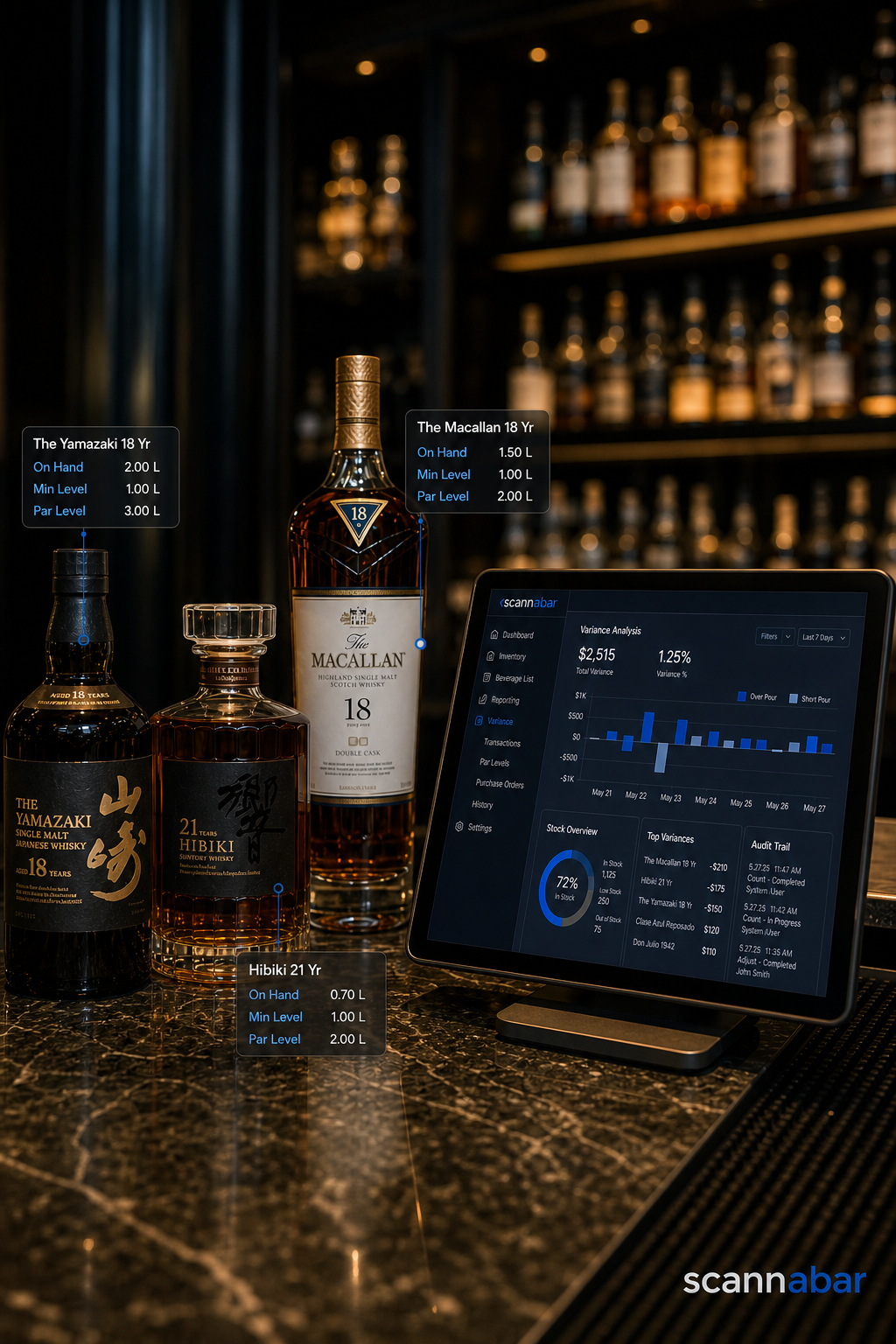
What sets Scannabar apart is its intelligent analytics engine. The platform doesn't just record numbers—it identifies patterns, predicts problems, and recommends actions. You'll receive alerts when inventory levels fall below optimal thresholds, when variance between usage and sales exceeds acceptable ranges, or when products are approaching expiration dates. These proactive notifications enable you to address issues before they become costly problems.

Integration capabilities make Scannabar even more powerful. The system connects with your existing POS system, accounting software, and supplier ordering platforms, creating a unified ecosystem that eliminates data entry redundancy and ensures accuracy across all systems. Recipe management features automatically calculate theoretical usage based on sales, providing the baseline against which actual usage is measured to identify discrepancies instantly.

From Chaos to Control: Implementing Smart Inventory Systems

Transitioning from manual inventory processes to a smart system like Scannabar requires planning, but the implementation is far simpler than most owners anticipate. The key to success lies in approaching the change systematically, starting with a complete baseline inventory count. This initial audit establishes your starting point and often reveals surprising insights about slow-moving stock, duplicate products, and organizational inefficiencies.

Staff training is critical but straightforward. Most team members become proficient with Scannabar within a single shift because the interface mirrors familiar smartphone apps they use daily. The scanning process is intuitive: point, scan, confirm. Start by training managers and lead bartenders who can champion the system and assist other staff members during the transition period. Create a culture where accurate inventory is viewed as a team responsibility rather than management oversight.

Establish clear protocols for when and how inventory is conducted. Many successful bars perform quick spot checks at shift changes, taking just 2-3 minutes to scan high-value items and verify counts match expectations. Comprehensive full inventories might occur weekly or bi-weekly, depending on volume and complexity. The real-time nature of Scannabar means you're always working with current data, not waiting for scheduled count days to understand your inventory position.

Resistance to change is natural, especially from long-tenured staff comfortable with existing processes. Address concerns directly by emphasizing how the system makes their jobs easier—no more manual counting, no more spreadsheet errors, no more guessing about par levels. Share success metrics early and often, celebrating improvements in accuracy, reduced waste, and recovered profits. When staff see tangible results, they become advocates for the system rather than skeptics.

Measuring Success: ROI and Performance Metrics That Matter

The return on investment for Scannabar inventory systems is both rapid and substantial. Most establishments achieve full ROI within 3-6 months through reduced shrinkage, optimized ordering, and labor savings. A mid-sized bar investing $200-300 monthly in Scannabar typically recovers $1,000-2,000 monthly through eliminated waste and theft alone—a 400-600% return that continues month after month, year after year.

Track specific key performance indicators to quantify your success. Your liquor cost percentage should decrease by 2-5 points as accuracy improves and losses decline. Inventory turnover ratios should increase as you optimize par levels and eliminate slow-moving stock. Variance between theoretical and actual usage—the gold standard metric for inventory control—should consistently remain below 3% once the system is fully implemented and staff are trained.

Labor efficiency provides another measurable benefit. Manual inventory counts that previously consumed 4-8 hours weekly now take 30-60 minutes with Scannabar's scanning technology. That's 15-30 hours monthly redirected toward revenue-generating activities like customer service, event planning, or staff development. At an average management labor cost of $25-35 per hour, that represents $375-1,050 in monthly labor savings alone.

Perhaps most importantly during inflationary periods, measure your gross profit per square foot and per labor hour. These efficiency metrics reveal whether you're truly becoming more profitable or simply maintaining margins while costs rise. Establishments using Scannabar typically see gross profit improvements of 15-30% within the first year—not from raising prices, but from eliminating the hidden drains that were silently eroding profitability all along. In an economic environment where every dollar counts, that kind of operational excellence isn't just nice to have—it's essential for survival and growth.

Topics: Bar inventory, Scannabar Inventory system, Best Bar Inventory app, Best Liquor Inventory app, Cruise ship bar inventory, Country Club Liquor Inventory, Scannabar inventory app, Scannabar Inventory Software

Reducing Hotel Bar Waste to Boost Profitability at Tropical Resorts

Unlock hidden profits at your tropical resort by transforming bar waste into sustainable savings and unforgettable guest experiences.

A vibrant hotel bar scene set in a tropical resort with lush green palm trees visible through large open windows The bar is elegantly designed featuriThe Hidden Costs of Bar Waste in Tropical Resorts
Bar waste is often an overlooked expense that can significantly impact a tropical resort’s bottom line. Spoiled mixers, half-used fruit garnishes, over-poured spirits, and unsold cocktails add up quickly, especially in all-inclusive operations where guests expect generous offerings. These hidden costs not only reduce profit margins but can also contribute to higher purchasing and disposal expenses.

With fluctuating occupancy and unpredictable guest preferences, bars in tropical resorts face unique challenges in inventory management. Inefficient practices can lead to unnecessary surplus, spoilage, and ultimately, waste. By identifying and addressing these hidden costs, resorts can take the first step toward more efficient, sustainable operations.

Sustainable Strategies for Reducing Beverage Waste

Implementing smart inventory control systems is essential to monitor and manage beverage usage in real time. Digital inventory solutions can help track popular drinks, predict demand, and automate reordering, reducing both shortages and excess stock. Additionally, adopting standardized pour sizes and training bartenders to follow recipes can eliminate over-pouring and ensure consistency.

Resorts can also consider smaller batch preparation for fresh ingredients and regularly review the bar menu to remove underperforming items. These simple yet effective strategies can help minimize waste, save money, and support a more sustainable operation.

Creative Reuse: Turning Bar Leftovers into Profit

Instead of discarding unsold ingredients or leftover garnishes, innovative resorts are finding creative ways to repurpose bar waste. Citrus peels, for instance, can be transformed into house-made syrups, infusions, or cocktail garnishes. Overripe fruits can be used in smoothies, desserts, or even as natural flavorings for spa treatments.

By giving new life to what would otherwise be waste, resorts not only cut costs but also create signature offerings that set them apart. These creative reuse practices can boost profitability and support a compelling sustainability story for guests.

Empowering Staff to Champion Waste Reduction

Staff engagement is crucial to the success of any waste reduction initiative. Training bartenders and barbacks on efficient ingredient usage, proper storage, and accurate inventory tracking empowers them to take ownership of the process. Recognizing and rewarding staff who contribute innovative waste-reducing ideas helps cultivate a culture of accountability and continuous improvement.

Open communication between management and staff ensures that everyone understands the goals and benefits of reducing bar waste. When team members feel invested in sustainability efforts, they are more likely to identify new opportunities for savings and efficiency.

Enhancing Guest Satisfaction Through Eco-Friendly Practices

Today’s travelers increasingly value eco-friendly practices and are drawn to hotels that demonstrate environmental responsibility. By promoting waste reduction initiatives, tropical resorts can appeal to this growing demographic, enhancing their brand reputation and guest loyalty.

Offering signature cocktails made from reused ingredients or sharing stories about sustainable bar practices can enrich the guest experience. These efforts not only help the environment and reduce costs but also create memorable, feel-good moments that inspire guests to share their positive experiences with others.

Topics: Bar inventory, Hotel Inventory, hotel supplies, inventory control, Hotel Bar Inventory, Best Bar Inventory app, Best Liquor Inventory app, Cruise ship bar inventory, Country Club Liquor Inventory

Cost-Saving Inventory Solutions for Bars in 2026

Discover the innovative inventory solutions set to revolutionize bar management and slash operational costs in 2026.

Emerging Technologies Transforming Bar Inventory Management

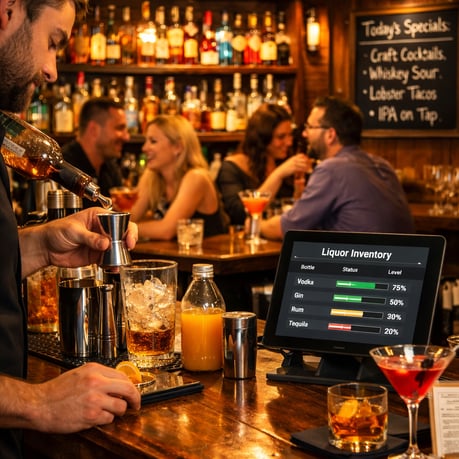
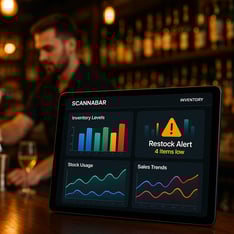
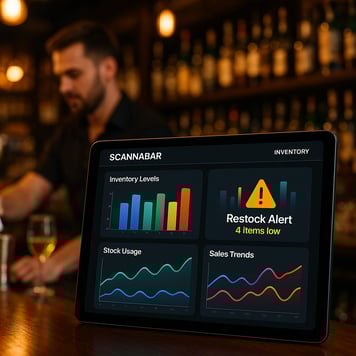
The bar industry is on the verge of a technological revolution, with cutting-edge solutions like liquor inventory apps, bar inventory apps, and specialized platforms such as the Scannabar app leading the way. In 2026, these digital tools will empower bar owners to automate and streamline inventory processes that were once manual and time-consuming.The image features a sleek modern interface of the Scannabar Inventory application displayed on a tablet set against a backdrop of a bustling bar environment The screen shows vibrant graphs and charts illustrating realtime inventory levels stock usag-1

From AI-powered bottle scanners to IoT-enabled smart shelves, emerging technologies are reducing human error and providing real-time data. Bars can now track every pour and bottle in their stock, making it easier to manage inventory levels, prevent over-ordering, and reduce product loss. These innovations are setting the stage for a new era of efficiency and cost savings.

Smart Strategies for Reducing Waste and Shrinkage

One of the top challenges for bars is minimizing waste and shrinkage, which can significantly impact profit margins. In 2026, the integration of liquor inventory apps and bar inventory apps will empower managers to closely monitor usage patterns and identify discrepancies instantly.

Automated alerts for low stock, usage outliers, or suspected theft help staff respond quickly, ensuring that every ounce is accounted for. Advanced inventory systems make it possible to set par levels, run variance reports, and even integrate with point-of-sale systems for seamless reconciliation, all contributing to lower costs and higher profitability.

Leveraging Data Analytics for Smarter Purchasing Decisions

Data-driven decision-making is becoming standard practice in leading bars. Modern inventory management tools, including the Scannabar app, harness advanced analytics to provide actionable insights into sales trends, stock turnover rates, and seasonal fluctuations.

By analyzing this data, bar owners can make smarter purchasing decisions—buying just the right amount of product, capitalizing on discounts for high-volume items, and avoiding costly overstock. This level of precision not only reduces costs but also ensures a consistently well-stocked bar that meets customer demand.

Integrating Sustainable Practices to Cut Costs

Sustainability and cost savings go hand in hand, especially as consumers grow more environmentally conscious. In 2026, more bars are adopting eco-friendly inventory practices, such as reducing single-use packaging, optimizing delivery schedules to minimize carbon footprint, and partnering with local suppliers for fresher, less wasteful inventory.

Liquor inventory apps and bar inventory apps help track sustainability metrics, such as waste reduction and resource use, allowing bars to set goals and measure progress. These green initiatives not only help the planet but also reduce operational costs by streamlining procurement and minimizing waste.

Choosing the Right Inventory Solution for Your Bar's Future

With so many options available, selecting the best inventory management system is crucial. When evaluating liquor inventory apps, bar inventory apps, or specialized solutions like the Scannabar app, consider features like real-time tracking, mobile compatibility, integration with existing POS systems, and robust reporting tools.

The right solution should align with your bar's size, volume, and unique needs, offering scalability as you grow. Investing in innovative inventory technology today will position your bar for success, ensuring you stay ahead of industry trends and consistently reduce costs well into the future.

Topics: liquor inventory, bar inventory system, liquor inventory system, liquor inventory app, Best Bar Inventory app, Best Liquor Inventory app, Cruise ship bar inventory, Country Club Liquor Inventory

Hospitality Inventory Software: Transforming Liquor Tracking in 2026

Discover how next-generation hospitality inventory software is revolutionizing liquor tracking, boosting accuracy, and maximizing profits for hotels, bars, and restaurants in 2026.

The Digital Revolution in Liquor Inventory Management

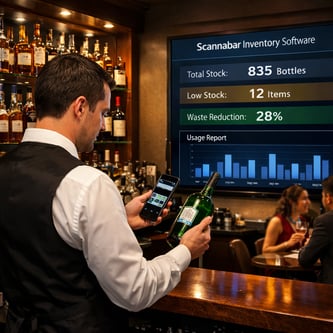
The image showcases a sleek modern bar environment filled with various bottles of liquor neatly arranged on shelves behind the counter A staff member dressed in a crisp white shirt and black apron is seen scanning a bottle with a handheld device high-1The hospitality industry has witnessed a digital transformation over the past decade, and 2026 marks a pivotal year for liquor inventory management. Traditional manual processes, which were often slow and prone to error, are being replaced by automated, data-driven solutions. Modern inventory software harnesses the power of cloud computing, Internet of Things (IoT) devices, and artificial intelligence to streamline every step of the inventory process.
These advancements not only save valuable labor hours but also provide unparalleled visibility into stock levels, consumption patterns, and shrinkage. By digitizing liquor inventory, businesses can respond to real-time data rather than relying on outdated logs or guesswork, leading to smarter purchasing and less waste.

Key Features Setting 2026 Hospitality Inventory Software Apart

Inventory software in 2026, such as Scannabar, now offers a suite of advanced features that go far beyond basic counting. Seamless mobile integration allows managers and staff to conduct inventory checks from any location using smartphones or tablets. Automated bottle scanning and RFID tagging eliminate manual entry errors, ensuring every ounce is accounted for.

Predictive analytics have become a game changer, enabling establishments to forecast demand, optimize order quantities, and prevent overstocking or shortages. Intuitive dashboards and custom reporting tools give decision-makers instant access to actionable insights, driving operational efficiency and strategic planning.

Enhancing Profitability Through Real-Time Liquor Tracking

Real-time liquor tracking is at the heart of maximizing profitability in the hospitality sector. With software like Scannabar, businesses can monitor inventory usage as it happens, instantly flagging variances or discrepancies that could indicate theft, over-pouring, or unrecorded sales. This immediate feedback loop empowers managers to take swift remedial action before small issues escalate into major losses.

By reducing inventory shrinkage and tightening controls, venues can save thousands of dollars annually. Real-time data also supports dynamic pricing and promotions, aligning stock levels with sales trends to boost revenue and minimize dead stock.

Integrating Smart Tech With Staff Workflows

One of the key advantages of modern inventory software is its ability to seamlessly integrate with existing staff workflows. Scannabar, for example, features user-friendly interfaces and step-by-step guidance, making it easy for even non-technical staff to adopt. Automated task reminders and scheduling ensure that inventory counts are completed on time, reducing bottlenecks and improving accountability.

With the burden of manual counts lifted, staff can focus on delivering better guest experiences and increasing productivity elsewhere. Training time is reduced and onboarding new team members becomes more efficient, further lowering operational costs.

Future Trends Shaping Liquor Management in Hospitality

Looking ahead, 2026 is set to see even more innovation in liquor management. AI-powered forecasting, integrated supplier ordering, and blockchain-based traceability are becoming industry standards. Voice-activated inventory controls and augmented reality overlays for training and troubleshooting are also emerging, making inventory management more interactive and intuitive.

As sustainability and regulatory compliance gain importance, inventory software will also play a key role in tracking eco-friendly practices and ensuring businesses meet industry standards. Adopting smart solutions like Scannabar positions hospitality businesses to stay competitive, compliant, and profitable in a rapidly evolving landscape.

Topics: Bar inventory, beer inventory, inventory counting, inventory control, bar inventory system, bar inventory software, Best Bar Inventory app, Best Liquor Inventory app, Cruise ship bar inventory, Country Club Liquor Inventory

Liquor Inventory Automation: Streamline Your Bar Operations

Revolutionize your bar's efficiency and profitability by embracing liquor inventory automation to eliminate manual errors and streamline operations.

Unlocking the Potential of Automated Liquor Inventory SystemsThe image features a sleek modern interface of the Scannabar Inventory application displayed on a tablet set against a backdrop of a bustling bar environment The screen shows vibrant graphs and charts illustrating realtime inventory levels stock usag-1

As a bar operator, one of the most time-consuming and error-prone tasks is managing liquor inventory. Automated liquor inventory systems like Scannabar unlock new levels of control and insight by digitizing the entire process. By eliminating manual counting and spreadsheets, these systems provide a real-time, accurate view of your stock, reducing human error and saving valuable labor hours.

The true potential of these systems lies in their ability to centralize your inventory data, making it accessible from anywhere and at any time. This means you can make informed decisions on-the-fly and avoid costly mistakes such as over-ordering or running out of popular products during peak hours.

How Automation Transforms Bar Efficiency and Staff Productivity

Automation takes the guesswork and tedium out of liquor inventory management. With solutions like Scannabar, scanning bottles and inputting data becomes a quick, streamlined task for bartenders and managers. This frees up staff to focus on delivering exceptional customer service rather than getting bogged down in back-of-house processes.

By reducing the workload and stress associated with inventory checks, staff morale improves, and turnover decreases. Automated reminders and scheduled counts ensure that inventory tasks are completed on time, further boosting productivity and ensuring operational consistency.

Reducing Losses and Boosting Profits with Real-Time Tracking

Shrinkage, spillage, and theft can significantly eat into bar profits, but real-time tracking provided by automated systems helps operators identify discrepancies instantly. With features like instant variance reports and consumption analytics, you can quickly spot trends or issues before they become major losses.

By keeping a closer eye on inventory in real time, bars can better control costs, ensure correct pours, and improve accountability among staff. Ultimately, this translates to higher profit margins and a healthier bottom line.

Integrating Technology Seamlessly into Your Bar Workflow

One of the concerns many operators have is how new technology will fit into their existing workflow. Modern inventory applications like Scannabar are designed for seamless integration, with intuitive interfaces and compatibility with point-of-sale systems. This means minimal disruption and a gentle learning curve for your team.

Proper training and user-friendly design ensure that staff can start using the system effectively from day one. The result is a smooth transition to automated processes that complement your bar’s unique operational style.

Choosing the Right Liquor Inventory Automation Solution for Your Business

Selecting the right inventory automation tool is crucial to realizing all the benefits automation has to offer. Operators should consider factors such as ease of use, integration capabilities, support, and scalability when evaluating options like Scannabar.

Look for a solution that not only fits your current needs but can also grow with your business. Reliable customer support and comprehensive training resources are essential to ensure long-term success with your chosen system.

Topics: Bar inventory, Lineup control, Bar Management, Loss prevention, Hotel Bar Inventory, Best Bar Inventory app, Best Liquor Inventory app, Cruise ship bar inventory, Country Club Liquor Inventory

Simplify End of Month Inventory with Scannabar

Navigating the complexities of end-of-month inventory can be a daunting task in the hospitality industry. With Scannabar, streamline your inventory process for more accurate and efficient results.

Transform Your Inventory Process with Scannabar

The end-of-month inventory process in the hospitality industry can be incredibly time-consuming and prone to errors. Scannabar simplifies this process by offering a comprehensive inventory management solution that caters specifically to your needs. By automating the inventory process, Scannabar helps you save valuable time that can be better spent on other critical tasks.

With Scannabar, the tedious manual counting of inventory is a thing of the past. This app offers an intuitive interface that makes it easy to scan and track your beverage inventory in real-time, providing you with instant access to accurate data whenever you need it.

Eliminate Human Error and Save Time

Manual inventory processes are not only time-consuming but also prone to human error. Scannabar significantly reduces the chances of mistakes by automating the entire inventory process. This ensures that your inventory data is accurate and reliable, helping you make informed decisions based on trustworthy information.

The Scannabar app is designed to be user-friendly and efficient, allowing your staff to complete inventory tasks quickly and accurately. This not only saves time but also increases the overall efficiency and productivity of your team.

Achieve Accurate and Real-Time Data

The image depicts a bustling bar scene with sleek modern refrigeration units lined against the wall showcasing an array of colorful bottled beers and spirits Behind the bar a bartender skillfully maneuvers scanning barcodes on bottles with a sleek ta-1One of the standout features of Scannabar is its ability to provide accurate and real-time data. With just a few clicks, you can access up-to-date information on your inventory levels, helping you keep track of your stock more effectively. This real-time data is invaluable for making timely decisions and ensuring that you always have the right amount of inventory on hand.

Scannabar's advanced reporting capabilities allow you to generate detailed reports that provide insights into your inventory usage patterns. This helps you identify trends and make data-driven decisions to optimize your inventory management process.

Enhance Your Purchasing Decisions

Effective inventory management is crucial for making informed purchasing decisions. Scannabar provides you with the data you need to understand your inventory usage patterns and forecast future demand accurately. This helps you avoid overstocking or understocking, ensuring that you always have the right amount of inventory to meet customer demand.

By using Scannabar, you can streamline your purchasing process and negotiate better deals with suppliers based on accurate inventory data. This not only saves you money but also helps you maintain a well-balanced inventory that meets your business needs.

Improve Beverage Cost Management

Managing beverage costs is a critical aspect of running a successful hospitality business. Scannabar helps you keep track of your beverage inventory and costs with precision, allowing you to identify areas where you can cut costs and improve profitability.

With Scannabar, you can monitor your beverage costs in real-time and make adjustments as needed to stay within budget. This proactive approach to cost management helps you maximize your profits and ensures the financial health of your business.

Topics: Hotel Inventory, Liquor Inventory savings, Hotel Bar Inventory, Best Bar Inventory app, Best Liquor Inventory app, Cruise ship bar inventory, Country Club Liquor Inventory

Revolutionize Your Inventory Management with Scannabar Software

Discover how Scannabar Software can transform your inventory management process and streamline operations for your bar, hotel, nightclub, or restaurant.

The Importance of Efficient Inventory ManagementBar Inventory Control

Efficient inventory management is crucial for the success of any business, especially in the bar, hotel, nightclub, and restaurant industry. Here are 10 reasons why inventory management is important:

1. Cost Control: Proper inventory management allows businesses to keep track of their stock levels and reduce the risk of overstocking or understocking. This helps to minimize costs and optimize profits.

2. Customer Satisfaction: With efficient inventory management, businesses can ensure that they always have the products and ingredients their customers demand. This leads to better customer satisfaction and loyalty.

3. Waste Reduction: By closely monitoring inventory levels, businesses can minimize waste and reduce the amount of expired or spoiled products. This helps to save money and improve sustainability.

4. Accurate Financial Reporting: Effective inventory management provides businesses with accurate data for financial reporting. This ensures that the business's financial statements reflect the true value of their inventory.

5. Improved Cash Flow: By efficiently managing inventory, businesses can avoid tying up excessive capital in stagnant stock. This leads to improved cash flow and allows businesses to invest in other areas of their operations.

6. Supply Chain Optimization: Inventory management helps businesses optimize their supply chain by ensuring timely replenishment of stock and minimizing stockouts. This leads to smoother operations and better relationships with suppliers.

7. Theft Prevention: Proper inventory management includes implementing security measures to prevent theft and shrinkage. This protects the business's assets and reduces losses.

8. Time Savings: By using an efficient inventory management software like Scannabar, businesses can save time on manual inventory counting and tracking. This time can be better utilized for other important tasks.

9. Enhanced Decision Making: Accurate and up-to-date inventory data allows businesses to make informed decisions regarding purchasing, pricing, and promotions. This leads to better profitability and competitiveness.

10. Scalability: As businesses grow, inventory management becomes even more critical. Proper inventory management systems, like Scannabar, can easily scale with the business's needs, ensuring smooth operations at any size.

With these 10 reasons, it's clear that efficient inventory management is vital for the success and profitability of bar, hotel, nightclub, and restaurant businesses.

Challenges Faced in Inventory Management

While inventory management is crucial, it also presents several challenges for businesses. Some common challenges include:

1. Manual Tracking: Many businesses still rely on manual methods of tracking inventory, which can be time-consuming and prone to errors.

2. Stockouts and Overstocking: Balancing inventory levels can be challenging, as businesses need to avoid running out of stock while also preventing excessive stock that ties up capital.

3. Inaccurate Data: Without proper inventory management systems, businesses may struggle with inaccurate or outdated inventory data, leading to inefficiencies and poor decision making.

4. Theft and Shrinkage: Inventory shrinkage due to theft or other reasons can significantly impact a business's profitability.

5. Lack of Automation: Without automated inventory management systems, businesses may spend excessive time and resources on manual inventory counting and tracking.

6. Inefficient Reordering: Businesses need to determine the optimal reorder points and quantities to avoid stockouts or excessive stock.

By addressing these challenges, businesses can improve their inventory management processes and unlock significant benefits.

Introducing Scannabar Software: A Game-Changer for Businesses

Scannabar Software is a cutting-edge inventory management solution specifically designed for bars, hotels, nightclubs, and restaurants. It offers a wide range of features that revolutionize the way businesses manage their inventory.

With Scannabar Software, businesses can:

- Easily track and monitor inventory levels in real-time

- Streamline the ordering process and receive automated alerts for low stock

- Generate comprehensive reports for better financial analysis

- Implement security measures to prevent theft and shrinkage

- Save time and resources with automated inventory counting and tracking

- Integrate with POS systems for seamless operations

Scannabar Software is user-friendly, scalable, and customizable to meet the unique needs of each business. It provides businesses with the tools they need to optimize their inventory management and thrive in a competitive industry.

Key Features of Scannabar Software

Scannabar Software offers a wide range of key features that make it the best inventory management app and software for bars, hotels, nightclubs, and restaurants:

1. Real-time Inventory Tracking: Businesses can track inventory levels and receive instant updates to ensure accurate stock management.

2. Automated Reordering: Scannabar Software automatically generates reorder alerts based on predefined thresholds, ensuring businesses never run out of essential items.

3. Comprehensive Reporting: The software provides detailed reports on inventory valuation, stock movement, and more, enabling businesses to make informed decisions.

4. Security and Access Control: Scannabar Software includes security features such as user access restrictions and inventory tracking to prevent theft and unauthorized access.

5. Integration with POS Systems: The software seamlessly integrates with point-of-sale systems, allowing for efficient order processing and inventory synchronization.

6. Barcode and QR Code Scanning: Scannabar Software supports barcode and QR code scanning, making inventory management fast, accurate, and efficient.

7. Customizability: Businesses can customize the software to fit their specific inventory management needs, ensuring a tailored solution.

With these key features, Scannabar Software empowers businesses to take control of their inventory management and achieve greater efficiency and profitability.

Success Stories: Businesses Thriving with Scannabar

Numerous businesses in the bar, hotel, nightclub, and restaurant industry have experienced remarkable success after implementing Scannabar Software for their inventory management. Here are a few success stories:

1. XYZ Bar: By using Scannabar Software, XYZ Bar was able to reduce their inventory holding costs by 20% and eliminate stockouts, leading to improved customer satisfaction and increased profits.

2. ABC Hotel: ABC Hotel implemented Scannabar Software and saw a significant reduction in inventory shrinkage due to improved security measures. This resulted in substantial cost savings and enhanced profitability.

3. DEF Nightclub: DEF Nightclub streamlined their inventory management process with Scannabar Software, saving valuable time and resources. They were able to focus more on customer service and saw a boost in their overall operations.

These success stories highlight the transformative impact of Scannabar Software on businesses in the industry. By choosing Scannabar, businesses can join the ranks of these successful establishments and unlock their full potential.

Topics: bar inventory app, liquor inventory app, Best Bar Inventory app, Best Liquor Inventory app, Cruise ship bar inventory, wine inventory app