
Discover proven strategies to eliminate costly over-pouring and protect your bar's profit margins while maintaining exceptional guest experiences.
Why Over-Pouring Is Draining Your Bottom Line
Over-pouring represents one of the most significant yet overlooked contributors to bar shrinkage, quietly eroding profit margins with every generous pour. Industry studies reveal that bars typically lose between 20-25% of their liquor inventory to bar shrinkage, with over-pouring accounting for a substantial portion of these losses. When bartenders consistently pour even a quarter-ounce more than the standard serving size, the financial impact compounds rapidly across hundreds of drinks each week.
The mathematics of over-pouring are sobering. A single bartender pouring just one extra ounce per drink across 100 cocktails per shift translates to more than 12 bottles of premium spirits given away each month. For a busy establishment, this can represent thousands of dollars in lost revenue annually. Unlike liquor theft, which is intentional, over-pouring often stems from good intentions—bartenders wanting to impress customers or lacking proper training on standard pour sizes.
Beyond the direct cost of wasted inventory, over-pouring creates pricing inconsistencies that damage your business model. When customers receive varying drink strengths across visits or bartenders, it undermines your brand consistency and makes it impossible to accurately forecast costs. These inventory blind spots prevent managers from identifying true problem areas, as the data becomes unreliable. Understanding the full scope of over-pouring's impact is the essential first step toward implementing effective solutions.
Precision Pour Spouts and Measurement Tools That Work
Precision pour spouts have evolved into sophisticated tools that eliminate guesswork while maintaining the speed bartenders need during peak service. Modern measured pour spouts automatically dispense exact quantities—typically 1 ounce, 1.5 ounces, or custom amounts—with a simple inverted pour motion. Unlike free-pouring, which relies on counting or timing, these devices ensure consistency across every drink regardless of experience level or rush-hour pressure.
Jiggers remain the gold standard for accuracy in craft cocktail programs where precision directly impacts flavor profiles. Double-sided jiggers with clearly marked measurements allow bartenders to portion multiple ingredients quickly while maintaining recipe integrity. For establishments prioritizing both speed and accuracy, ball-bearing measured pourers offer a middle ground, using gravity-controlled mechanisms that dispense precise amounts without electronic components that require maintenance or battery changes.
Smart pour spouts with RFID technology represent the cutting edge of portion control, integrating directly with inventory management systems to track every ounce dispensed. These devices record which bottle was used, how much was poured, and can even be linked to POS systems to verify that pours match sales. While the initial investment is higher, the data generated helps identify patterns of over-pouring and provides accountability that quickly pays for itself through reduced bar shrinkage.
Implementation requires selecting tools that match your establishment's service style and volume. High-volume nightclubs benefit from speed pourers that maintain consistency during rapid-fire service, while upscale cocktail bars may prefer the precision and presentation of quality jiggers. The key is choosing measurement tools your staff will actually use consistently, making portion control a natural part of their workflow rather than an obstacle.
Training Techniques That Create Consistent Bartenders
Comprehensive training programs form the foundation of preventing over-pouring, transforming portion control from a policy into a practiced skill. New bartenders should complete hands-on exercises pouring water into measured containers, repeating the process until they can consistently hit target volumes within a quarter-ounce. This muscle memory training helps staff understand what proper portions look and feel like, creating an internal calibration they can rely on during busy shifts.
Recipe standardization workshops ensure every team member prepares drinks identically, eliminating the personal interpretation that leads to inconsistent pours. Create laminated recipe cards with exact measurements for house cocktails, including the specific glassware, ice, and garnishes required. Conduct regular taste-testing sessions where bartenders sample their own creations alongside properly measured versions, helping them recognize when drinks are over or under-poured by flavor alone.
Ongoing education about the business impact of over-pouring helps bartenders understand that portion control protects jobs and enables competitive wages. Share concrete examples: 'When we reduce bar shrinkage by 5%, we can invest that money in staff bonuses and updated equipment.' This shifts the narrative from management restricting generosity to the team collectively protecting the business that supports them. Bartenders who understand the economics become partners in loss prevention rather than feeling policed.
Positive reinforcement programs reward consistency and accuracy, creating motivation beyond simple compliance. Implement friendly competitions where bartenders test their free-pour accuracy, with prizes for those who come closest to standard measurements. Recognize staff members who maintain excellent pour costs in team meetings, celebrating their skill rather than only addressing problems. This approach builds a culture where precision is a source of professional pride.
Technology Solutions for Real-Time Inventory Tracking
Modern inventory management systems have transformed how bars identify and address bar shrinkage by providing unprecedented visibility into consumption patterns. Cloud-based platforms integrate with smart pour spouts, POS systems, and regular inventory counts to create a complete picture of every ounce flowing through your establishment. These systems automatically flag discrepancies when poured amounts don't match sales data, highlighting potential over-pouring or liquor theft before losses accumulate.
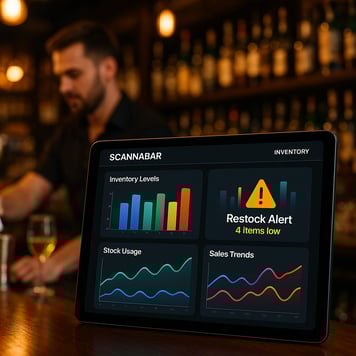
Real-time tracking dashboards give managers instant access to pour cost percentages, variance reports, and trending data across shifts and individual bartenders. Rather than waiting for monthly inventory to reveal problems, operators can identify concerning patterns within days and intervene immediately. The system might reveal that Wednesday night shifts consistently show higher shrinkage, prompting a review of staffing or training needs for that specific time period.
Automated alerts notify management when bottles are opened, when usage exceeds projected amounts based on sales, or when inventory falls below par levels. This eliminates the inventory blind spots that allow consistent over-pouring to go unnoticed for months. Advanced systems use artificial intelligence to establish baseline consumption patterns for each product, then flag anomalies that deserve investigation—such as premium vodka usage spiking without corresponding sales increases.
Integration capabilities connect inventory platforms with accounting software, purchasing systems, and labor management tools to provide holistic operational insights. Managers can analyze the relationship between staffing levels, sales volume, and shrinkage rates to optimize scheduling. The data generated becomes invaluable for forecasting, allowing more accurate ordering that reduces both overstock waste and emergency shortages that disrupt service.
Creating an Accountability Culture Without Sacrificing Hospitality
Building accountability around portion control requires balancing oversight with the trust and autonomy that hospitality professionals need to deliver exceptional service. The goal is creating transparency where bartenders understand they're being evaluated on consistency, not micromanaged on every pour. Clearly communicate that monitoring systems exist to identify training opportunities and systemic issues, not to catch individuals in mistakes that warrant punishment.
Establish clear standards with documented policies that define exact pour sizes for each drink category, explaining the reasoning behind these specifications. When bartenders understand that standard pours are calculated to deliver optimal flavor profiles while maintaining profitability, compliance feels less arbitrary. Include these standards in employee handbooks, training materials, and laminated quick-reference guides at each station so expectations are always accessible.
Regular performance reviews should include pour cost metrics alongside customer service evaluations, normalizing discussions about inventory management as part of professional excellence. Present the data constructively: 'Your customer ratings are excellent, and I notice your pour costs are running slightly high. Let's review a few techniques that might help.' This approach frames consistency as a skill to develop rather than a rule being broken, maintaining dignity while driving improvement.
Empower bartenders with decision-making authority for genuinely exceptional circumstances while maintaining overall accountability. Create clear guidelines for when complimentary drinks are appropriate—such as service recovery situations—with a simple documentation system. This allows staff to exercise hospitality judgment while ensuring that intentional generosity is tracked separately from over-pouring. The result is a culture where bartenders feel trusted to take care of guests while understanding that standard operations require precision that protects everyone's livelihood.

 It’s a warm Saturday night and the town has a certain “buzz” to it. Your bar is getting ready for a big night and then all of a sudden, you leave your office and notice a line forming outside your door.