Liquor Inventory Experts

How Hospitality Inventory Software Transforms Bar Operations

Discover how modern inventory software is revolutionizing bar management by reducing waste, boosting profits, and streamlining operations in today's competitive hospitality landscape.

The Hidden Costs of Manual Inventory Management in Bars

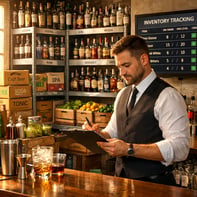
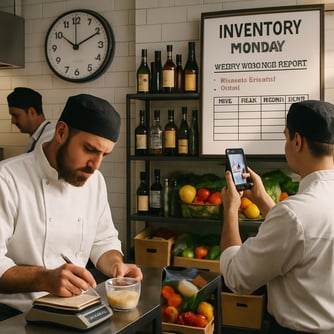
Every bar manager knows the routine: clipboards, spreadsheets, and hours spent counting bottles at the end of each shift. But what many don't realize is just how much this traditional approach is costing their business. Manual inventory management in bars and restaurants leads to significant hidden expenses that eat away at profit margins year after year.Modern Bar with TechIntegrated Inventory System-1

The most obvious cost is time. Staff members spend an average of 4-8 hours per week conducting manual counts, time that could be better spent on customer service or strategic business planning. When you factor in labor costs, this translates to thousands of dollars annually for even a modest-sized establishment. Beyond the hours invested, human error is inevitable—misplaced decimal points, incorrect bottle counts, and overlooked products create discrepancies that compound over time.

Perhaps the most damaging hidden cost is the lack of real-time visibility. Without immediate access to inventory levels, bars face two critical problems: stockouts during peak service times and over-ordering that ties up capital in slow-moving products. A single stockout of a popular spirit during a busy Friday night can result in lost sales, disappointed customers, and damage to your establishment's reputation. Meanwhile, over-ordering leads to product spoilage, especially for fresh ingredients and craft cocktail components, as well as significant capital locked in inventory that could be deployed elsewhere in the business.

Manual systems also make it nearly impossible to track variance and identify shrinkage patterns. Industry studies show that bars lose an average of 20-25% of their inventory to over-pouring, theft, spillage, and unrecorded comps. Without automated tracking, pinpointing where these losses occur becomes a guessing game, allowing problems to persist and profits to evaporate.

Real-Time Tracking: Your Key to Minimizing Pour Loss and Theft

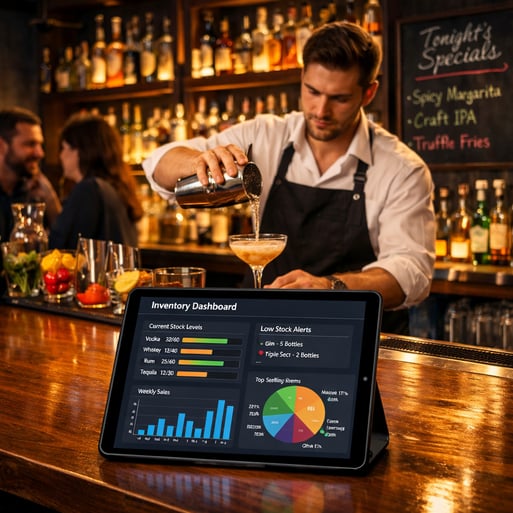
Real-time inventory tracking represents a fundamental shift in how bars manage their most valuable asset: their liquor inventory. Unlike traditional manual counts that provide only periodic snapshots, modern hospitality inventory software delivers continuous, up-to-the-minute visibility into every bottle and ingredient in your establishment. This immediate awareness transforms how operators identify and address shrinkage.

The technology works by creating a closed-loop system that connects expected inventory usage with actual consumption. When integrated with your POS system, the software automatically deducts recipe ingredients as each drink is sold. Any discrepancies between what should be in stock and what physical counts reveal become immediately apparent, allowing managers to investigate variances while the trail is still fresh. This rapid detection capability is crucial—identifying a $50 variance within 24 hours is far more actionable than discovering a $500 discrepancy at month's end.

Real-time tracking also serves as a powerful deterrent to theft and over-pouring. When staff members know that every ounce is being monitored and that discrepancies will be quickly noticed, behavioral patterns shift. The software doesn't just catch problems after they occur; it prevents them from happening in the first place. Establishments that implement real-time tracking typically see shrinkage rates drop from 20-25% down to 5-10% within the first few months of deployment.

Beyond loss prevention, real-time data enables proactive management decisions. Managers can monitor consumption patterns throughout service, identify when popular items are running low before they're completely depleted, and adjust ordering schedules dynamically. This level of operational awareness was simply impossible with manual systems, but modern inventory software makes it standard practice. The result is better customer service, reduced waste, and significantly improved profit margins across your entire beverage program.

Smart Reordering Systems That Keep Your Bar Fully Stocked

One of the most transformative features of modern hospitality inventory software is intelligent reordering automation. These systems analyze historical consumption data, seasonal trends, and current inventory levels to generate precise purchase orders that keep your bar optimally stocked without over-investing in slow-moving products. This eliminates the guesswork that has traditionally plagued bar inventory management.

Smart reordering systems work by establishing par levels for each product based on your actual usage patterns. Rather than relying on static minimum quantities that may have been set years ago, the software continuously learns from your sales data and adjusts recommendations accordingly. If your tequila sales spike every summer or you see increased whiskey consumption during winter months, the system automatically factors these patterns into future orders. This dynamic approach ensures you're always prepared for predictable demand fluctuations.

The financial impact of optimized ordering is substantial. By maintaining lean inventory levels that match actual consumption, bars can reduce the capital tied up in stock by 15-30%. This freed-up cash flow can be reinvested in marketing initiatives, facility improvements, or simply strengthen your operating reserves. Additionally, smart reordering reduces the risk of product expiration and spoilage, particularly important for fresh mixers, vermouths, and craft ingredients with limited shelf life.

Modern systems also streamline the actual ordering process through vendor integrations and automated purchase order generation. Instead of manually creating orders for multiple distributors each week, managers can review and approve system-generated orders with just a few clicks. Some platforms even enable direct electronic transmission to suppliers, eliminating phone calls and reducing order processing time from hours to minutes. This efficiency allows management to focus on hospitality and guest experience rather than administrative tasks, while ensuring your bar never runs out of the products your customers want most.

Data-Driven Insights That Maximize Your Beverage Program Profits

The true power of hospitality inventory software extends far beyond simple tracking and counting. These platforms transform raw inventory data into actionable business intelligence that enables operators to make strategic decisions backed by concrete evidence rather than intuition alone. The insights generated can fundamentally reshape how you approach menu engineering, pricing strategy, and supplier negotiations.

Detailed product-level profitability analysis is perhaps the most valuable insight these systems provide. You can see exactly which cocktails and spirits generate the highest margins, which items move quickly versus those that languish on shelves, and how your theoretical costs compare to actual usage. This visibility often reveals surprising patterns—that signature cocktail you're proud of might actually be losing money on every sale, while a simple classic drink you rarely promote could be your most profitable offering. Armed with this knowledge, you can redesign menus to emphasize high-margin items, adjust pricing on underperforming products, or eliminate selections that don't justify their shelf space.

Inventory software also provides powerful supplier and cost management insights. By tracking price fluctuations over time and analyzing purchase patterns across multiple vendors, you can identify opportunities to negotiate better terms, consolidate orders for volume discounts, or switch suppliers for specific products. The data might reveal that you're paying 15% more for well vodka than comparable alternatives would cost, or that ordering larger format bottles for high-volume spirits could reduce per-ounce costs significantly. These insights directly impact your bottom line, often generating savings that far exceed the cost of the software itself.

Perhaps most importantly, comprehensive reporting enables proactive rather than reactive management. Monthly and weekly reports on key metrics like pour cost percentage, inventory turnover rate, and variance by category allow you to spot trends before they become problems. If pour costs are creeping upward, you can investigate immediately rather than discovering the issue months later during quarterly reviews. This forward-looking approach, powered by real-time data analytics, transforms bar management from a reactive troubleshooting exercise into a strategic, profit-maximizing discipline. The competitive advantage this provides in today's challenging hospitality environment cannot be overstated.

Seamless Integration with POS Systems for Complete Operational Control

The integration between inventory management software and your point-of-sale system represents the cornerstone of modern bar operations technology. This connection creates a unified ecosystem where sales, inventory, and financial data flow seamlessly between platforms, eliminating duplicate data entry and providing unprecedented operational visibility. Without POS integration, inventory software can only tell you what you have; with it, you gain complete understanding of how products move through your entire operation.

When properly integrated, every transaction at the bar automatically updates inventory levels based on standardized recipes. If a bartender sells a margarita, the system instantly deducts the precise amounts of tequila, triple sec, lime juice, and other ingredients specified in that drink's recipe. This automated depletion accounting creates a real-time theoretical inventory that managers can compare against physical counts to identify discrepancies. The result is accurate variance reporting that would be impossible to generate manually, even with unlimited staff time.

Integration also enables sophisticated sales analytics that connect beverage performance to broader business metrics. You can analyze which cocktails sell best during specific dayparts, how drink sales correlate with food orders, and which promotions drive the most profitable beverage revenue. This cross-platform data analysis helps optimize happy hour offerings, design more effective promotions, and make evidence-based decisions about menu changes. The insights generated by combining sales and inventory data are exponentially more valuable than either dataset alone.

Implementation of integrated systems has become increasingly straightforward as most modern POS platforms now offer open APIs and direct partnerships with leading inventory management solutions. Setup typically involves mapping your recipes to ingredients, connecting the systems through secure data protocols, and training staff on any workflow changes. While the initial configuration requires some investment of time, the long-term benefits—reduced administrative burden, improved accuracy, and comprehensive operational control—make integration essential for any bar or restaurant serious about maximizing profitability. In today's competitive hospitality landscape, the question is no longer whether to integrate these systems, but how quickly you can implement them to gain advantage over competitors still relying on disconnected, manual processes.

Topics: Restaurant Inventory, Scannabar Inventory system, bar inventory app, liquor inventory app, Best Bar Inventory app, Best Liquor Inventory app, wine inventory app, Scannabar inventory app, Restaurant Inventory app, Scannabar Inventory Software

Liquor Inventory Methods Compared: Manual Counts Vs. Pour Systems Vs. Barcode Tracking

Discover which liquor inventory method will save your bar thousands in lost revenue while cutting inventory time by up to 75%.

Why Your Liquor Inventory Method Can Make or Break Your Bottom Line

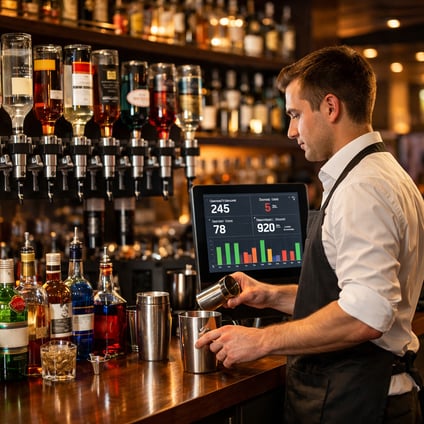
In the hospitality industry, liquor represents one of the highest-margin product categories—but also one of the most vulnerable to shrinkage, theft, and waste. Studies consistently show that bars and restaurants lose between 20-25% of their liquor inventory to over-pouring, spillage, theft, and untracked consumption. For a mid-sized establishment with $500,000 in annual liquor sales, that translates to $100,000 or more in lost revenue every single year.Modern Bar with Automated Pour System and Colorful Liquor Display-1

The inventory method you choose directly impacts your ability to identify and prevent these losses. A robust tracking system provides visibility into consumption patterns, helps you catch discrepancies before they become major problems, and ensures accurate pricing and ordering. On the other hand, an inadequate or inconsistent approach leaves you flying blind, unable to pinpoint where your profits are disappearing.

Beyond loss prevention, your inventory method affects labor costs, operational efficiency, and data accuracy. Manual counting might take your staff 4-6 hours per week, while automated systems can reduce that time to under an hour. The question isn't whether you can afford to invest in better inventory management—it's whether you can afford not to. With margins tightening across the hospitality sector, the right inventory method has become a competitive necessity rather than a luxury.

Manual Counting: The Traditional Approach That Still Has Its Place

Manual inventory counting remains the most common method in small bars and restaurants, and for good reason: it requires minimal upfront investment and works with any existing point-of-sale system. The process involves physically weighing or measuring each bottle, recording the quantities on paper or in a spreadsheet, and calculating usage based on the difference between counts. For establishments with limited budgets or relatively small liquor selections (under 50 SKUs), this approach can be sufficient to maintain basic control.

The advantages of manual counting extend beyond cost savings. It requires no specialized equipment, can be performed by any trained staff member, and provides hands-on familiarity with inventory levels. Many experienced bar managers argue that the physical act of handling each bottle gives them intuitive insights into consumption patterns and potential issues that automated systems might miss. There's also complete flexibility—you can count as frequently or infrequently as your operation demands, without being locked into a particular technology platform.

However, the drawbacks are significant and become more pronounced as your operation scales. Manual counting is time-intensive, typically requiring 3-6 hours for a full inventory depending on selection size. Human error is inevitable—studies show accuracy rates for manual counts rarely exceed 85%, with mistakes occurring in measurement, recording, or calculation. There's no real-time visibility, meaning you only discover shrinkage days or weeks after it occurs, making it nearly impossible to trace problems to specific shifts or employees.

Manual methods also create data management challenges. Spreadsheets become unwieldy with hundreds of entries, historical analysis is difficult, and generating actionable reports requires additional manual work. For bars doing less than $200,000 in annual liquor sales with stable, experienced staff, manual counting may suffice. But as volume increases or turnover rises, the limitations quickly outweigh the cost savings.

Automated Pour Systems: Real-Time Precision for High-Volume Operations

Automated pour systems represent the most technologically advanced inventory solution available to bars and nightclubs. These systems use spouts fitted with sensors that attach to each liquor bottle, automatically measuring and recording every ounce poured in real-time. The data syncs wirelessly to management software, providing instant visibility into consumption, variance, and potential theft. Premium systems can even integrate with POS terminals to verify that every pour corresponds to a sale.

The precision offered by pour systems is unmatched. They eliminate human measurement error entirely, tracking consumption down to the tenth of an ounce. This granular data reveals patterns invisible to other methods: which bartenders consistently over-pour, which drinks have the highest spillage rates, and exactly when discrepancies occur during service. High-volume nightclubs and hotel bars often see ROI within 6-12 months simply from reducing over-pouring, which these systems typically cut by 15-20%.

Real-time alerts are another powerful feature. If a bartender pours three shots without corresponding POS entries, managers receive immediate notifications, allowing them to address issues during the shift rather than discovering problems days later. This accountability dramatically reduces theft—simply having pour spouts visible acts as a deterrent. The systems also streamline inventory processes, automatically calculating quantities and generating orders based on par levels, reducing the time staff spend on inventory from hours to minutes.

Despite these advantages, pour systems come with substantial drawbacks. Initial costs range from $10,000 to $50,000+ depending on the number of bottles and feature set, plus ongoing subscription fees of $200-500 monthly. Installation and training require significant time investment, and some staff resist the technology, viewing it as surveillance rather than a management tool. The spouts can malfunction, require regular cleaning, and occasionally affect pour speed during busy periods, frustrating bartenders.

Perhaps most importantly, pour systems only work for bottles fitted with spouts. Beer, wine, and bottled products remain untracked, requiring a separate inventory method anyway. They're best suited for high-volume nightclubs, hotel bars, or establishments with serious theft problems where the 15-20% reduction in liquor costs justifies the substantial investment. For smaller operations or those with broader product mixes, the cost-benefit equation often doesn't add up.

Barcode Tracking: The Sweet Spot Between Control and Efficiency

Barcode tracking systems have emerged as the preferred inventory solution for many mid-sized bars and restaurants because they balance accuracy, efficiency, and affordability. Using handheld scanners or smartphone apps, staff scan bottle barcodes and enter remaining quantities, with the software automatically calculating usage, costs, and variance. Modern systems integrate seamlessly with POS platforms, comparing actual consumption against sales to identify discrepancies quickly.

The efficiency gains over manual counting are substantial. Scanning a barcode and entering a quantity takes seconds compared to the manual process of finding the item in a spreadsheet, recording the amount, and calculating differences. Most establishments report reducing inventory time by 50-75%, turning a 5-hour process into 90 minutes or less. This time savings becomes increasingly valuable as you scale—adding 50 more SKUs to a barcode system adds minimal time, while manual counting grows proportionally more burdensome.

Accuracy improvements are equally impressive. By eliminating transcription errors and automating calculations, barcode systems typically achieve 95%+ accuracy rates. The software flags unusual variances automatically, drawing attention to potential problems rather than burying them in spreadsheets. Historical data tracking enables trend analysis, helping you identify slow-moving inventory, optimize par levels, and make data-driven purchasing decisions that manual methods simply can't support.

Barcode tracking also offers flexibility that automated pour systems lack. It works for your entire inventory—liquor, beer, wine, mixers, garnishes—providing comprehensive visibility across all product categories. You can conduct partial counts of high-value items between full inventories, and the mobile nature of scanners allows staff to count efficiently throughout the bar rather than transporting bottles to a central scale.

Implementation costs are moderate, typically ranging from $1,000-5,000 for hardware and software, with monthly subscription fees of $50-200. Most systems are cloud-based, requiring no specialized IT infrastructure, and staff can be trained in under an hour. The main limitation is that barcode tracking still requires manual data entry for quantities—you're scanning bottles and inputting levels, not achieving the complete automation of pour systems. There's also a slight delay in identifying problems since you only discover variances during periodic counts rather than in real-time.

For the majority of bars and restaurants—particularly those doing $200,000-$2 million in annual liquor sales—barcode tracking offers the best combination of control, efficiency, and cost-effectiveness. It provides 80% of the benefit of fully automated systems at 20% of the cost, making it the pragmatic choice for operations that have outgrown manual methods but can't justify the investment in pour systems.

Choosing the Right Inventory Method for Your Hospitality Business

Selecting the optimal inventory method requires honest assessment of your operation's specific needs, constraints, and goals. Start by evaluating your annual liquor sales volume. Operations under $200,000 annually can often manage effectively with manual counting, particularly if they have experienced staff and limited SKU counts. Between $200,000 and $2 million, barcode tracking typically delivers the best ROI, providing substantial efficiency and accuracy improvements without breaking the bank. Above $2 million, particularly in high-volume nightclub or hotel settings, automated pour systems warrant serious consideration despite their higher costs.

Consider your existing pain points carefully. If you're experiencing significant theft or your variance consistently exceeds 5%, you need stronger controls than manual counting provides. If inventory is consuming excessive staff time—more than 2 hours weekly per $100,000 in liquor sales—upgrading to barcode or automated systems will pay for itself quickly in labor savings alone. If you lack visibility into which products are moving and which are gathering dust, you need the reporting capabilities that software-based systems deliver.

Operational complexity matters too. A craft cocktail bar with 300+ SKUs including rare spirits, house-made infusions, and extensive wine and beer lists needs the flexibility of barcode tracking to manage that diversity efficiently. A high-volume nightclub pouring primarily from a core selection of 75-100 bottles might benefit more from the precision and real-time monitoring of pour systems. Consider your product mix, service style, and whether you need to track just liquor or your entire inventory.

Staff considerations shouldn't be overlooked. Do you have high turnover, or a stable, experienced team? Automated systems provide tighter controls when staff changes frequently, while experienced teams with manual methods may already have effective informal tracking. What's your staff's comfort level with technology? A barcode system with intuitive smartphone apps typically faces less resistance than installing pour spouts that bartenders may view as surveillance.

Budget realities will ultimately constrain your options, but frame the decision as an investment rather than an expense. Calculate your current shrinkage percentage—if you don't know it, you're probably experiencing 15-25% losses. A $3,000 barcode system that reduces shrinkage by just 5% will pay for itself in months for most operations. Run the numbers specifically for your business: time savings × labor costs + shrinkage reduction × liquor costs = total annual benefit. Compare this against implementation and ongoing costs to determine your breakeven period.

Many successful operators adopt a hybrid approach, combining methods based on product categories. They might use pour systems for their top 30 highest-value spirits, barcode tracking for the broader liquor selection, and manual counts for beer and wine. This tiered strategy focuses technology investment where it delivers maximum impact while keeping costs reasonable. Whatever method you choose, consistency matters more than perfection—even manual counting performed reliably every week will outperform sporadic use of sophisticated systems. Start with your current resources, commit to regular execution, and upgrade as your operation grows and ROI becomes clear.

Topics: liquor inventory, Bar inventory, Restaurant Inventory, Scannabar Inventory system, liquor inventory system, liquor inventory app, Cruise ship bar inventory, Country Club Liquor Inventory, Scannabar inventory app, Resaurant Inventory app, Restaurant Inventory app, Scannabar Inventory Software

Intimate Dinner Spots in Nashville for a Romantic Valentine's Day

Discover Nashville's most enchanting restaurants where candlelit ambiance, exceptional cuisine, and Southern charm create the perfect setting for an unforgettable Valentine's Day celebration with your loved one.

Why Nashville is the Perfect Valentine's Day Destination for Couples

Nashville has evolved far beyond its honky-tonk reputation to become one of the South's most romantic destinations for couples seeking an unforgettable Valentine's Day experience. Music City offers a unique blend of sophisticated dining, live entertainment, and Southern hospitality that creates an atmosphere unlike any other American city. The city's vibrant energy combined with its intimate corners makes it ideal for couples looking to celebrate their love in style.

The culinary scene in Nashville has exploded in recent years, attracting award-winning chefs and innovative restaurateurs who have transformed the city into a food lover's paradise. From farm-to-table establishments showcasing Tennessee's agricultural bounty to internationally-inspired fine dining venues, Nashville's restaurant landscape offers something special for every couple's taste. The city's commitment to quality ingredients, creative presentations, and exceptional service ensures that your Valentine's Day dinner will be nothing short of extraordinary.

Beyond the exceptional food, Nashville's romantic charm lies in its perfect balance of urban sophistication and Southern warmth. The city's historic neighborhoods, scenic riverfront views, and iconic skyline provide stunning backdrops for a romantic evening. Whether you're strolling hand-in-hand down Broadway after dinner or enjoying a quiet moment in one of the city's charming districts, Nashville creates countless opportunities for romance and connection that extend well beyond the dinner table.

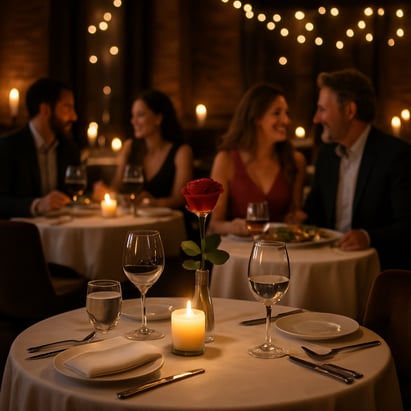
Upscale Fine Dining Experiences That Set the Mood for RomanceThe image captures a romantic table setting in an upscale Nashville restaurant adorned with soft candlelight flickering gently across the polished woo

The Capitol Grille stands as one of Nashville's most prestigious dining establishments, offering an elegant atmosphere perfect for Valentine's Day celebrations. Located in the historic Hermitage Hotel, this AAA Four Diamond restaurant features impeccable service, an extensive wine list, and a menu that showcases the finest steaks, seafood, and seasonal ingredients. The intimate dining room with its sophisticated décor and soft lighting creates an ambiance that whispers romance with every detail, making it ideal for couples seeking a truly special evening.

For those seeking a more contemporary fine dining experience, The Catbird Seat offers an unparalleled culinary adventure. This exclusive 32-seat restaurant features a U-shaped counter where diners can watch talented chefs prepare an ever-changing tasting menu right before their eyes. The interactive nature of the dining experience, combined with innovative dishes that push culinary boundaries, creates shared moments of discovery and delight that couples will remember long after Valentine's Day has passed. Reservations are notoriously difficult to secure, so plan well in advance for this intimate experience.

Kayne Prime delivers a modern steakhouse experience with a romantic twist, featuring dark wood accents, plush seating, and dim lighting that sets the perfect mood for romance. Their dry-aged steaks are legendary, but the menu also includes fresh seafood, creative appetizers, and an impressive raw bar. The restaurant's private dining spaces and attentive service make it particularly appealing for couples who want to feel like they're celebrating in their own exclusive space. Don't miss their signature tableside preparations, which add an element of theater and engagement to your romantic dinner.

Hidden Gem Restaurants with Intimate Atmospheres

Tucked away in the Germantown neighborhood, Rolf and Daughters offers an intimate, industrial-chic setting that feels both cozy and sophisticated. This farm-to-table restaurant specializes in house-made pastas and seasonal dishes that highlight local ingredients. The exposed brick walls, warm lighting, and communal yet intimate seating arrangements create a relaxed atmosphere where couples can enjoy thoughtful conversation over exceptional food. The restaurant's commitment to quality and creativity shines through in every dish, making it a favorite among locals in the know.

Henrietta Red, located in the Germantown Hotel, provides a charming coastal-inspired escape in the heart of Nashville. This oyster bar and seafood-focused restaurant offers a refreshingly different Valentine's Day option for couples who prefer a lighter, more casual fine dining experience. The bright, airy space during the day transforms into a romantically lit haven in the evening, with an impressive raw bar and creative seafood preparations that transport diners to a seaside retreat. Their natural wine selection and craft cocktails complement the menu perfectly.

For couples seeking European elegance, Once Upon a Time in France delivers authentic French cuisine in an intimate, bistro-style setting. This charming restaurant in East Nashville captures the essence of a Parisian neighborhood spot, with classic dishes like coq au vin, escargot, and perfectly executed steak frites. The cozy atmosphere, complete with French music playing softly in the background and candlelit tables, creates an authentic romantic experience that feels like a mini-vacation to France without leaving Nashville.

Culinary Experiences Beyond Traditional Dining

For adventurous couples looking to make Valentine's Day truly memorable, Nashville offers unique culinary experiences that go beyond sitting down at a traditional restaurant. Consider booking a private cooking class at The Cookery, where you and your partner can learn to prepare a gourmet meal together under the guidance of professional chefs. This hands-on experience not only provides delicious food but also creates lasting memories and new skills you can enjoy together long after Valentine's Day. The intimate class settings and collaborative nature of cooking together foster connection and teamwork.

Wine lovers should explore Nashville's growing wine bar scene, where intimate tastings and expert guidance create educational yet romantic evenings. City Winery offers a unique combination of wine production facility, tasting room, and concert venue, allowing couples to enjoy wine flights paired with small plates while potentially catching live music. The industrial-chic atmosphere and knowledgeable staff make it easy to discover new favorites together, and you can even bottle your own wine as a Valentine's Day keepsake.

For a truly unconventional Valentine's Day experience, consider booking a progressive dinner tour through different Nashville neighborhoods. Several local companies offer guided food tours that take couples to multiple restaurants and eateries in a single evening, providing tastes of Nashville's diverse culinary landscape. This option is perfect for couples who can't decide on just one restaurant or who want to explore the city while enjoying great food. The walking between venues also provides opportunities for romantic strolls and conversation under the Nashville night sky.

Planning Your Perfect Romantic Evening in Music City

Successful Valentine's Day planning in Nashville begins with making reservations well in advance, as the city's most romantic restaurants book up quickly for this popular holiday. Aim to secure your table at least four to six weeks before February 14th, especially if you're interested in the most sought-after establishments. When making reservations, don't hesitate to mention that you're celebrating Valentine's Day—many restaurants offer special menus or small touches like complimentary champagne or chocolate-covered strawberries for couples celebrating the occasion.

Consider the entire evening's flow when planning your romantic date, not just the dinner itself. Nashville offers numerous pre-dinner or post-dinner activities that can enhance your celebration. Start with cocktails at a rooftop bar like L.A. Jackson or The Bobby Hotel's rooftop lounge for stunning city views, or take a romantic stroll through Centennial Park before your reservation. After dinner, you might enjoy catching a show at the Grand Ole Opry, taking a moonlit walk along the pedestrian bridge, or ending the night with dessert and coffee at a cozy café.

Don't forget the practical details that can make or break your romantic evening. Check parking options near your chosen restaurant in advance, as Nashville's popular dining districts can have limited street parking. Consider using a ride-share service to avoid parking stress and allow both of you to enjoy wine with dinner. Dress appropriately for your chosen venue—while Nashville tends to be more casual than some cities, upscale restaurants still appreciate guests who dress for the occasion. Finally, build in buffer time between activities to avoid rushing, allowing you to savor each moment of your special evening together in Music City.

Topics: Restaurant Inventory, free pour, Bar trends, red wine, Nightclub trends, restaurant trends, drink recipe, craft cocktails, Resaurant Inventory app, Restaurant Inventory app

How Weekly Inventory Helps Reduce Shrinkage in Your Restaurant

Discover how implementing a weekly inventory system can save your restaurant thousands of dollars by identifying losses, preventing theft, and optimizing your food costs.

Understanding Restaurant Shrinkage and Its Hidden Costs

As a restaurant owner for over a decade, I've learned that shrinkage is one of the most insidious profit killers in our industry. Shrinkage refers to the loss of inventory that occurs between what you purchase and what you actually sell. This can happen through spoilage, over-portioning, theft, waste, or simple accounting errors. The National Restaurant Association estimates that the average restaurant experiences shrinkage rates between 4-10% of total inventory costs, which can translate to tens of thousands of dollars in lost revenue annually.The image depicts a busy restaurant kitchen with chefs intensely focused on their tasks A wall clock shows 10 AM on a Monday indicating its time for t

What makes shrinkage particularly dangerous is that it often goes unnoticed until it becomes a serious problem. Unlike other expenses that appear clearly on your profit and loss statement, shrinkage silently erodes your margins. You might think your food cost percentage is within acceptable ranges, but without accurate tracking, you could be losing money on every dish that leaves your kitchen. I've seen restaurants operate for months believing they were profitable, only to discover through proper inventory management that unaccounted losses were actually putting them in the red.

The hidden costs extend beyond the direct loss of product. When shrinkage goes unchecked, it affects your ability to accurately forecast orders, leading to either overstocking (which increases waste) or understocking (which disappoints customers). It also makes it impossible to identify which menu items are truly profitable and which are costing you money. Without this visibility, you're essentially flying blind when making critical business decisions about pricing, menu engineering, and purchasing.

The Power of Weekly Inventory Tracking

After struggling with inconsistent inventory practices for years, I made the switch to weekly inventory counts, and the impact on my bottom line was immediate and dramatic. Weekly tracking creates a rhythm of accountability that monthly or sporadic counts simply cannot match. When you count inventory every week, discrepancies become apparent quickly, allowing you to address problems before they escalate into major financial losses. This frequent monitoring also keeps your team aware that inventory is being watched closely, which naturally reduces both intentional and unintentional waste.

The psychological impact of weekly counts cannot be overstated. When staff knows that inventory is checked regularly, they become more mindful of portion control, proper storage procedures, and handling practices. I've noticed that spillage decreases, rotation practices improve, and my kitchen team takes more ownership of the products they're working with. This cultural shift toward accountability is worth its weight in gold and creates a more professional, efficient operation.

Weekly inventory also provides you with real-time data that allows for agile decision-making. Instead of waiting until the end of the month to discover a problem, you can identify unusual variances within days and investigate immediately. This is where technology like Scannabar has revolutionized my inventory process. Rather than spending hours with clipboards and spreadsheets, my team can now scan barcodes and quickly record counts on their mobile devices. What used to take 4-5 hours of labor every week now takes less than an hour, making weekly counts not just beneficial but actually practical and sustainable for my operation.

The data you collect through weekly inventory tracking becomes a powerful tool for trend analysis. Over time, you'll notice patterns—perhaps certain items consistently show higher variance on weekends, or specific shifts have better accountability than others. This granular insight allows you to fine-tune your operations in ways that would be impossible with less frequent counting. I've used this data to adjust par levels, renegotiate with suppliers, redesign prep procedures, and even restructure my staffing schedule to ensure better oversight during high-risk periods.

Identifying Problem Areas Through Consistent Monitoring

One of the most valuable aspects of weekly inventory is the ability to quickly identify where losses are occurring. In my restaurant, consistent monitoring revealed that our bar was experiencing significantly higher shrinkage than our kitchen—something that would have taken months to discover with less frequent counts. By tracking inventory weekly and comparing it against sales data, we could pinpoint that certain premium spirits were disappearing at rates that didn't match our POS transactions. This led to a review of our bar procedures and, unfortunately, the discovery of employee theft that was costing us hundreds of dollars weekly.

Weekly counts also help you identify operational inefficiencies that contribute to waste. For example, I discovered that our produce shrinkage was highest on Mondays, which seemed counterintuitive at first. Upon investigation, we realized that our weekend crew was prepping excessive amounts of vegetables on Friday in anticipation of busy weekend service, but much of it was going bad before it could be used. By adjusting our prep schedules and quantities based on this weekly data, we reduced produce waste by nearly 30%. These are the kinds of insights that only emerge when you're consistently monitoring your inventory.

Using Scannabar's inventory application has made identifying these problem areas even easier. The app automatically calculates variance between theoretical and actual usage, immediately flagging items that show discrepancies. Instead of manually comparing spreadsheets and trying to spot anomalies, the software does the heavy lifting and presents the information in easy-to-understand reports. I can see at a glance which categories or specific items need attention, and I can drill down into historical data to see if a problem is a one-time occurrence or part of a troubling trend.

Consistent monitoring also helps you evaluate supplier performance and identify receiving errors. I've caught short deliveries, incorrect pricing, and quality issues much faster because I'm counting inventory weekly. When you receive a delivery and then count inventory just days later, it's easy to verify that you received what you paid for. This has saved me from paying for products I never received and has improved my relationships with suppliers because I can provide specific, timely feedback about any issues.

Best Practices for Implementing Your Weekly Inventory System

Implementing a weekly inventory system requires commitment and consistency, but the payoff is well worth the effort. The first step is to choose a specific day and time for your counts and stick to it religiously. I conduct inventory every Monday morning at 10 AM, after the weekend rush but before the week ramps up. This consistency ensures that you're comparing apples to apples each week and makes it easier to spot unusual patterns. It also trains your team to expect inventory counts as a regular part of operations rather than a surprise disruption.

Invest in the right tools to make the process as efficient as possible. This is where Scannabar has been a game-changer for my operation. The application allows my team to use their smartphones to scan product barcodes, automatically pulling up the item information and recording counts in real-time. The data syncs to the cloud immediately, so I can monitor progress even when I'm not on-site. The app also stores historical data, generates variance reports, and integrates with my POS system to compare actual usage against sales. This level of automation has reduced the time commitment and eliminated the human error that plagued my old paper-based system.

Assign clear responsibilities and ensure proper training. I designate specific team members to count specific areas—one person handles the bar, another the dry storage, and so on. This creates accountability and allows individuals to become experts in their assigned areas, making counts faster and more accurate over time. Make sure everyone understands not just how to count, but why it matters. When your team understands that accurate inventory helps protect their jobs by keeping the restaurant profitable, they're more invested in the process.

Start with your highest-value and highest-risk items if a full weekly inventory seems overwhelming at first. Focus on proteins, alcohol, and other expensive products where shrinkage has the biggest impact. As the process becomes routine and you see the benefits, you can expand to include more categories. Scannabar makes it easy to create custom counting lists, so you can start small and scale up as your team becomes more comfortable with the system. The key is to start somewhere and maintain consistency rather than attempting a perfect system from day one and burning out your team.

Turning Inventory Data Into Actionable Cost Savings

Collecting inventory data is only valuable if you actually use it to make improvements. Every week after completing my inventory count, I review the variance report that Scannabar generates and identify the top three items showing the biggest discrepancies. These become my focus areas for the week—I investigate the causes, implement corrective actions, and monitor those items closely in subsequent counts. This focused approach prevents me from becoming overwhelmed by data and ensures that I'm constantly addressing the biggest opportunities for savings.

Use your inventory data to optimize your purchasing and reduce waste. By tracking usage patterns over several weeks, you can identify your true par levels rather than guessing or relying on outdated assumptions. I've reduced my overall inventory carrying costs by 20% simply by right-sizing my orders based on actual usage data. This frees up cash flow, reduces waste from spoilage, and minimizes the storage space needed. Scannabar's reporting features make it easy to see average weekly usage for each item, taking the guesswork out of ordering decisions.

Inventory data is also invaluable for menu engineering and pricing decisions. By accurately tracking the cost of each dish based on actual usage rather than recipe cards, you can identify which menu items are truly profitable and which are underpriced. I discovered that one of my supposedly high-margin dishes was actually losing money because of inconsistent portioning and prep waste. Armed with this information, I was able to either adjust the price, standardize the portions, or remove it from the menu. These decisions, multiplied across your entire menu, can dramatically improve your overall profitability.

Finally, share your inventory data with your team and celebrate improvements. When my kitchen staff sees that their efforts to reduce waste are reflected in the numbers, it reinforces positive behaviors and creates a culture of continuous improvement. I post weekly variance reports in the kitchen and recognize team members who maintain the best accountability in their areas. This transparency builds trust and helps everyone understand that inventory management isn't about catching people doing wrong—it's about working together to build a more successful, sustainable restaurant. With tools like Scannabar making the process easier and more accurate, there's no reason every restaurant shouldn't be leveraging weekly inventory to reduce shrinkage and protect their profits.

Topics: Restaurant Inventory, bar inventory app, liquor inventory app, Best Bar Inventory app, Best Liquor Inventory app, Scannabar inventory app, Restaurant Inventory app

Romantic Restaurants in Franklin TN for a Memorable Valentine's Date

Discover Franklin's most enchanting dining destinations where intimate ambiance, exceptional cuisine, and Southern charm create the perfect setting for an unforgettable Valentine's Day celebration.

Why Franklin is the Perfect Valentine's Day Destination for Couples

Nestled just south of Nashville, Franklin, Tennessee, offers couples a unique blend of historic charm, Southern hospitality, and contemporary sophistication that makes it an ideal Valentine's Day destination. The city's picturesque downtown features beautifully preserved 19th-century architecture, tree-lined streets, and a romantic small-town atmosphere that feels worlds away from the hustle and bustle of larger cities. Walking hand-in-hand through the historic district creates the perfect prelude to an intimate dinner, with boutique shops, art galleries, and charming storefronts providing endless opportunities for window shopping and discovery.The image captures a charming downtown street in Franklin Tennessee adorned with twinkling fairy lights strung above cobblestone paths Historic 19thce

What truly sets Franklin apart as a Valentine's destination is its thriving culinary scene that rivals any major metropolitan area. The city has become a haven for talented chefs who are passionate about creating memorable dining experiences that celebrate both innovation and tradition. From elegant fine dining establishments housed in historic buildings to intimate bistros with farm-fresh ingredients, Franklin's restaurant landscape offers something special for every couple. The community's commitment to preserving its heritage while embracing modern culinary trends creates a dining environment where romance and exceptional food go hand in hand.

Beyond the restaurants themselves, Franklin's overall ambiance contributes to its appeal as a Valentine's Day destination. The city maintains a slower pace that encourages couples to savor each moment together, whether strolling along the charming streets before dinner or enjoying a nightcap at a cozy wine bar afterward. The genuine warmth of Franklin's hospitality industry ensures that every couple feels welcomed and celebrated, making Valentine's Day in Franklin not just a meal, but a complete romantic experience that creates lasting memories.

Upscale Dining Experiences That Set the Mood for Romance

For couples seeking an elegant and refined Valentine's Day experience, Franklin offers several upscale dining destinations that deliver impeccable service, sophisticated ambiance, and exceptional cuisine. These establishments understand that Valentine's Day is about more than just food—it's about creating an atmosphere where love can flourish. Expect white tablecloths, soft lighting, attentive service, and carefully curated wine lists that complement expertly prepared dishes. Many of these restaurants feature private dining areas or intimate corner tables perfect for couples who want to focus entirely on each other.

The culinary offerings at Franklin's upscale restaurants showcase the talents of classically trained chefs who bring creativity and precision to every plate. You might find yourself savoring perfectly seared filet mignon with truffle butter, delicate seafood preparations featuring the freshest catches, or innovative tasting menus that take you on a culinary journey through multiple courses. These restaurants often create special Valentine's Day menus that elevate the experience even further, incorporating luxurious ingredients like lobster, caviar, and premium cuts of meat alongside seasonal vegetables and house-made desserts that provide a sweet ending to your romantic evening.

What distinguishes these upscale experiences is the attention to detail in every aspect of the dining experience. From the moment you're greeted at the door to the final farewell, the staff at these establishments are trained to anticipate your needs and ensure that your Valentine's celebration is flawless. The wine pairings are thoughtfully selected, the pace of service allows for intimate conversation between courses, and the overall atmosphere is designed to make you feel like the only two people in the room. For couples celebrating a milestone anniversary or looking to create a truly special memory, these upscale Franklin restaurants deliver an unforgettable Valentine's Day experience.

Cozy and Intimate Spots for a Private Valentine's Evening

Not every romantic Valentine's dinner requires white tablecloths and formal attire. Franklin is home to numerous cozy, intimate restaurants that offer equally romantic experiences in more relaxed settings. These hidden gems often feature exposed brick walls, candlelit tables, and a warm, inviting atmosphere that encourages couples to settle in and enjoy each other's company without pretension. The smaller dining rooms and thoughtful layouts ensure that even on a busy Valentine's evening, you'll feel like you have your own private corner of the world.

These intimate spots often specialize in comfort-elevated cuisine that feels both familiar and special. You might discover a charming bistro serving French-inspired dishes with a Southern twist, a rustic Italian trattoria with handmade pasta and an extensive wine selection, or a neighborhood favorite known for its creative small plates perfect for sharing. The beauty of these establishments lies in their ability to create romance through authenticity rather than formality. The chefs often greet diners personally, the servers remember regular customers, and the overall vibe is one of genuine hospitality that makes you feel like honored guests rather than just another reservation.

For couples who value conversation and connection over pomp and circumstance, these cozy Franklin restaurants provide the ideal Valentine's setting. The acoustics are better for intimate conversation, the lighting is soft and flattering, and the overall pace is relaxed enough to allow for lingering over dessert and coffee. Many of these spots also offer excellent craft cocktail programs or carefully selected wine lists that encourage exploration and discovery together. Whether you're celebrating your first Valentine's Day as a couple or your fiftieth, these intimate restaurants remind us that romance is ultimately about being present with the person you love in a space that feels welcoming and authentic.

Farm-to-Table Restaurants Offering Fresh and Seasonal Valentine's Menus

Franklin's proximity to Tennessee's rich agricultural landscape has given rise to a vibrant farm-to-table dining scene that celebrates local ingredients and seasonal flavors. For Valentine's Day, these restaurants offer a unique romantic experience that connects couples not just to each other, but to the land and community around them. The menus change with the seasons, ensuring that your February Valentine's dinner showcases the best of what local farms have to offer during the winter months—think hearty root vegetables, preserved summer fruits, locally raised meats, and artisanal cheeses from nearby producers.

What makes farm-to-table dining particularly special for Valentine's Day is the story behind each dish. Chefs at these establishments often have personal relationships with the farmers and producers who supply their ingredients, and they're passionate about sharing these connections with their guests. Your server might tell you about the family farm where your grass-fed beef was raised, or explain how the chef preserved summer peaches to create the compote accompanying your dessert. This narrative element adds depth and meaning to the meal, transforming dinner from a simple transaction into a celebration of community, sustainability, and the care that goes into every ingredient.

The ambiance at Franklin's farm-to-table restaurants typically reflects their culinary philosophy—natural, unpretentious, and warm. You might dine in a beautifully restored farmhouse, a modern space with reclaimed wood and industrial touches, or a garden-adjacent restaurant where you can see where some of your meal was grown. The wine and beverage programs often emphasize natural wines, local craft beers, and creative cocktails made with house-made syrups and seasonal ingredients. For couples who value sustainability, support local businesses, and appreciate knowing where their food comes from, a farm-to-table Valentine's dinner in Franklin offers romance with purpose and delicious food with a conscience.

Planning Your Perfect Valentine's Date Night in Franklin

Making your Valentine's Day dinner in Franklin truly memorable requires a bit of advance planning, especially given the popularity of the city's restaurants during this romantic holiday. First and foremost, make your reservation as early as possible—ideally several weeks in advance. The most sought-after restaurants and prime dining times (typically between 6:30 and 8:30 PM) book up quickly for Valentine's Day. When making your reservation, don't hesitate to mention that you're celebrating Valentine's Day and request a romantic table. Many restaurants will do their best to accommodate special requests, whether that's a quiet corner table, a spot by the fireplace, or a table with a view.

Consider making your Valentine's evening in Franklin more than just dinner by building a complete date experience around your meal. Arrive in Franklin an hour or two before your reservation to explore the charming downtown area together. Browse the boutiques and antique shops, visit one of the local art galleries, or simply stroll hand-in-hand through the historic streets admiring the architecture. If weather permits, a walk through one of Franklin's beautiful parks can provide a peaceful prelude to dinner. After your meal, extend the evening with dessert and drinks at a different establishment, or catch live music at one of Franklin's intimate venues. This fuller experience allows you to enjoy everything Franklin has to offer while creating multiple moments of connection throughout the evening.

Finally, don't forget the small touches that can elevate your Valentine's celebration. Check if your chosen restaurant offers any special Valentine's Day menus or prix fixe options that might enhance your experience. Consider coordinating with the restaurant in advance if you want to arrange for flowers at the table, a special dessert with a personalized message, or a champagne toast. Dress for the occasion—whether that means formal attire for an upscale restaurant or smart casual for a cozy bistro—to show your partner that you've put thought and effort into the evening. Most importantly, silence your phones, be present with each other, and allow yourself to fully enjoy this special celebration of your relationship in one of Tennessee's most romantic towns.

Topics: Bar inventory, Restaurant Inventory, Scannabar Inventory system, Bar drinks, restaurant trends, Speakeasy, date night, valentines day

Why Year-End Liquor Inventory is Crucial for Success

Unlock hidden profits and streamline operations by mastering your year-end liquor inventory process.

The Hidden Impact of Liquor Inventory on Your Bottom Line

As a food and beverage manager, it’s easy to underestimThe image depicts a bustling bar scene with sleek modern refrigeration units lined against the wall showcasing an array of colorful bottled beers and spirits Behind the bar a bartender skillfully maneuvers scanning barcodes on bottles with a sleek ta-1ate how much liquor inventory affects your profitability. Every bottle sitting on your shelves represents cash tied up—money that could be invested elsewhere in your operation. Left unchecked, inventory imbalances can lead to overstocking, product expiration, and ultimately, profit loss.


Regular, accurate inventory ensures you know exactly what’s on hand and what’s moving. By conducting a year-end liquor and wine inventory, you gain visibility into your actual usage patterns. This awareness can help you identify slow-moving products, eliminate unnecessary spend, and optimize your beverage program for the year ahead.

Avoiding Compliance Headaches and Costly Mistakes

Liquor and wine inventory isn’t just about dollars and cents—it’s also about staying compliant with local and state regulations. Missing or inaccurate records can lead to costly fines, legal trouble, or even suspension of your liquor license. Year-end inventory provides an essential opportunity to ensure your records match your actual stock and that you’re in full compliance with all requirements.

A digital solution like the Scannabar inventory app can simplify the process, reducing human error and providing a reliable digital trail for audits or regulatory checks. This peace of mind is invaluable as you close out your fiscal year.

How Accurate Inventory Drives Smarter Purchasing Decisions

Starting the new year with precise inventory data allows you to make informed purchasing decisions. When you use a tool like Scannabar, you have instant access to real-time reports on what’s selling and what’s not. This means you can tailor your orders to actual demand, preventing both overstock and stockouts.

Smart purchasing isn’t just about saving money—it’s about ensuring your guests always have access to their favorite drinks while keeping your cash flow healthy. With a clean slate and accurate data, your beverage program is set up for success from day one.

Boosting Staff Accountability and Reducing Shrinkage

Shrinkage, whether from spillage, over-pouring, or theft, is one of the biggest threats to a bar’s profitability. Conducting a thorough year-end inventory, especially with the help of Scannabar, highlights any discrepancies between recorded and actual stock, making it easier to pinpoint potential issues.

Regular inventory checks foster a culture of accountability among your staff. When team members know that inventory is being closely monitored and recorded, they’re more likely to follow procedures and handle product responsibly—all of which contributes to a healthier bottom line.

Leveraging Year-End Insights for a Profitable New Year

The insights you gain from a comprehensive year-end liquor and wine inventory go far beyond compliance or cost control. Armed with accurate data, you can analyze trends, forecast future needs, and identify opportunities to introduce new products or phase out underperformers.

With Scannabar’s powerful analytics, you’re empowered to set clear goals, track progress, and make data-driven decisions throughout the year. Starting the new year with a clean slate isn’t just about organization—it’s about setting your bar or restaurant up for sustained success and profitability.

Topics: Restaurant Inventory, Scannabar Inventory system, bar inventory app, liquor inventory app, Best Bar Inventory app, Best Liquor Inventory app, wine inventory app, Scannabar inventory app

Romantic Dinner Spots in Nashville for the Perfect Date

Nashville is known for its vibrant music scene, but it’s also a haven for romantic dining experiences that will make your date night unforgettable.

The Allure of Romantic Dining in NashvilleDate night Nashville

Nashville’s charm extends far beyond its renowned music scene. For couples looking to indulge in a romantic evening, the city offers a plethora of dining options that set the stage for unforgettable moments. From intimate ambiances to exquisite cuisine, Nashville's top romantic restaurants know how to create an atmosphere of love and connection.

Whether you're planning a first date or celebrating an anniversary, these dining spots provide the perfect backdrop for romance. Let's explore some of the most enchanting restaurants that Nashville has to offer.

Intimate Ambiance at The Catbird Seat

For a truly unique and intimate dining experience, The Catbird Seat is a must-visit. This exclusive restaurant offers a one-of-a-kind culinary adventure with its open chef’s kitchen, allowing you to watch the magic unfold as your meal is prepared.

The intimate seating arrangement ensures that you and your date can enjoy a personal and engaging dining experience, making it a perfect spot for a special night out.

Charming Vibe at Rolf and Daughters

Located in a historic building in the Germantown neighborhood, Rolf and Daughters exudes a rustic yet modern charm that sets the mood for a cozy and romantic dinner. The dim lighting and warm ambiance make it an ideal setting for meaningful conversations and shared moments.

The menu, featuring Mediterranean-inspired dishes crafted from locally sourced ingredients, adds to the overall experience, making Rolf and Daughters a favorite among couples.

Southern Elegance at Husk

Husk offers a taste of Southern elegance with its beautifully restored building and sophisticated decor. The restaurant focuses on the rich culinary traditions of the South, presenting dishes that are both innovative and deeply rooted in regional flavors.

Dining at Husk is not just about the food; it's about experiencing the essence of Southern hospitality, making it a perfect choice for a romantic evening.

Modern Romance at Etch

Etch is known for its contemporary and chic atmosphere, providing a stylish setting for a romantic dinner. The restaurant’s sleek design, combined with its impressive wine list and globally inspired menu, offers a modern twist on romance.

Whether you're savoring a delectable entrée or sharing a dessert, Etch ensures that every moment of your dining experience is filled with elegance and romance.

Topics: Hotel Inventory, Restaurant Inventory, Liquor Inventory savings, restaurant trends, Hotel Bar Inventory, craft cocktails, date night

Essential Summer Cocktail Ingredients for 2025

Summer 2025 is all about refreshing, innovative cocktails that captivate the senses and elevate the bar experience.

Trending Spirits for Summer 2025Bar inventory app

Looking to keep your liquor inventory ahead of the curve this summer? Summer 2025 is set to be a season of exciting new trends in the world of spirits and alcohol. Expect to see a surge in the popularity of craft gins, innovative tequilas infused with unique botanicals, and the continued rise of mezcal as a smoky alternative to traditional liquors.

These spirits are not just for sipping; they are the building blocks for the season's most refreshing cocktails. Keeping your bar inventory stocked with these trending spirits will not only satisfy your customers' thirst but also ensure that your bar stays on the cutting edge of cocktail innovation.

Fresh Fruits and Herbs: The Heart of Summer Cocktails

Nothing says summer like the vibrant flavors of fresh fruits and herbs. They are the essential ingredients that bring a burst of freshness to any cocktail. Think strawberries, blueberries, and peaches paired with fragrant herbs like basil, mint, and rosemary.

To keep your bar inventory well-prepared, consider sourcing these ingredients locally to ensure they are as fresh as possible. Not only do fresh fruits and herbs elevate the taste of your cocktails, but they also add a visually appealing element that will delight your customers.

Exotic and Unique Ingredients to Stock Up On

Summer 2025 is the perfect time to experiment with exotic and unique ingredients that will make your cocktails stand out. Ingredients like yuzu, dragon fruit, and passion fruit are set to be big hits. These exotic fruits offer unique flavors that can elevate traditional cocktails to new heights.

Additionally, consider incorporating ingredients like lavender syrup, hibiscus flowers, and edible gold flakes for a touch of luxury and sophistication. Stocking your bar inventory with these unique ingredients will ensure that your cocktails are not only refreshing but also unforgettable.

Sustainable and Locally Sourced Ingredients

Sustainability is more than a trend; it's a necessity. As more consumers become environmentally conscious, the demand for sustainable and locally sourced ingredients in cocktails is on the rise. Using ingredients from local farms not only supports the community but also guarantees the freshest produce for your cocktails.

Incorporating sustainable practices into your bar stocking routine can also include using reusable straws, compostable napkins, and reducing single-use plastics. This approach not only benefits the environment but also appeals to a growing demographic of eco-conscious customers.

Innovative Garnishes to Elevate Your Cocktails

A well-chosen garnish can transform a good cocktail into a great one. The summer of 2025 is all about innovative garnishes that add both flavor and flair. Think dehydrated fruit slices, edible flowers, and intricately carved citrus peels.

These garnishes not only enhance the visual appeal of your cocktails but also provide an additional layer of aroma and taste. Ensuring your bar inventory includes a variety of garnishing options will allow your bartenders to create visually stunning and delicious drinks that will impress your patrons.

Topics: Bar inventory, Restaurant Inventory, Bar trends, Bar drinks, Classic drinks, Hospitality, Best Bar Inventory app, Best Liquor Inventory app