Liquor Inventory Experts

Liquor Inventory Methods Compared: Manual Counts Vs. Pour Systems Vs. Barcode Tracking

Discover which liquor inventory method will save your bar thousands in lost revenue while cutting inventory time by up to 75%.

Why Your Liquor Inventory Method Can Make or Break Your Bottom Line

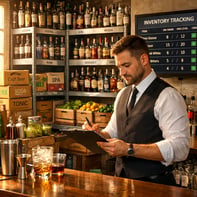
In the hospitality industry, liquor represents one of the highest-margin product categories—but also one of the most vulnerable to shrinkage, theft, and waste. Studies consistently show that bars and restaurants lose between 20-25% of their liquor inventory to over-pouring, spillage, theft, and untracked consumption. For a mid-sized establishment with $500,000 in annual liquor sales, that translates to $100,000 or more in lost revenue every single year.Modern Bar with Automated Pour System and Colorful Liquor Display-1

The inventory method you choose directly impacts your ability to identify and prevent these losses. A robust tracking system provides visibility into consumption patterns, helps you catch discrepancies before they become major problems, and ensures accurate pricing and ordering. On the other hand, an inadequate or inconsistent approach leaves you flying blind, unable to pinpoint where your profits are disappearing.

Beyond loss prevention, your inventory method affects labor costs, operational efficiency, and data accuracy. Manual counting might take your staff 4-6 hours per week, while automated systems can reduce that time to under an hour. The question isn't whether you can afford to invest in better inventory management—it's whether you can afford not to. With margins tightening across the hospitality sector, the right inventory method has become a competitive necessity rather than a luxury.

Manual Counting: The Traditional Approach That Still Has Its Place

Manual inventory counting remains the most common method in small bars and restaurants, and for good reason: it requires minimal upfront investment and works with any existing point-of-sale system. The process involves physically weighing or measuring each bottle, recording the quantities on paper or in a spreadsheet, and calculating usage based on the difference between counts. For establishments with limited budgets or relatively small liquor selections (under 50 SKUs), this approach can be sufficient to maintain basic control.

The advantages of manual counting extend beyond cost savings. It requires no specialized equipment, can be performed by any trained staff member, and provides hands-on familiarity with inventory levels. Many experienced bar managers argue that the physical act of handling each bottle gives them intuitive insights into consumption patterns and potential issues that automated systems might miss. There's also complete flexibility—you can count as frequently or infrequently as your operation demands, without being locked into a particular technology platform.

However, the drawbacks are significant and become more pronounced as your operation scales. Manual counting is time-intensive, typically requiring 3-6 hours for a full inventory depending on selection size. Human error is inevitable—studies show accuracy rates for manual counts rarely exceed 85%, with mistakes occurring in measurement, recording, or calculation. There's no real-time visibility, meaning you only discover shrinkage days or weeks after it occurs, making it nearly impossible to trace problems to specific shifts or employees.

Manual methods also create data management challenges. Spreadsheets become unwieldy with hundreds of entries, historical analysis is difficult, and generating actionable reports requires additional manual work. For bars doing less than $200,000 in annual liquor sales with stable, experienced staff, manual counting may suffice. But as volume increases or turnover rises, the limitations quickly outweigh the cost savings.

Automated Pour Systems: Real-Time Precision for High-Volume Operations

Automated pour systems represent the most technologically advanced inventory solution available to bars and nightclubs. These systems use spouts fitted with sensors that attach to each liquor bottle, automatically measuring and recording every ounce poured in real-time. The data syncs wirelessly to management software, providing instant visibility into consumption, variance, and potential theft. Premium systems can even integrate with POS terminals to verify that every pour corresponds to a sale.

The precision offered by pour systems is unmatched. They eliminate human measurement error entirely, tracking consumption down to the tenth of an ounce. This granular data reveals patterns invisible to other methods: which bartenders consistently over-pour, which drinks have the highest spillage rates, and exactly when discrepancies occur during service. High-volume nightclubs and hotel bars often see ROI within 6-12 months simply from reducing over-pouring, which these systems typically cut by 15-20%.

Real-time alerts are another powerful feature. If a bartender pours three shots without corresponding POS entries, managers receive immediate notifications, allowing them to address issues during the shift rather than discovering problems days later. This accountability dramatically reduces theft—simply having pour spouts visible acts as a deterrent. The systems also streamline inventory processes, automatically calculating quantities and generating orders based on par levels, reducing the time staff spend on inventory from hours to minutes.

Despite these advantages, pour systems come with substantial drawbacks. Initial costs range from $10,000 to $50,000+ depending on the number of bottles and feature set, plus ongoing subscription fees of $200-500 monthly. Installation and training require significant time investment, and some staff resist the technology, viewing it as surveillance rather than a management tool. The spouts can malfunction, require regular cleaning, and occasionally affect pour speed during busy periods, frustrating bartenders.

Perhaps most importantly, pour systems only work for bottles fitted with spouts. Beer, wine, and bottled products remain untracked, requiring a separate inventory method anyway. They're best suited for high-volume nightclubs, hotel bars, or establishments with serious theft problems where the 15-20% reduction in liquor costs justifies the substantial investment. For smaller operations or those with broader product mixes, the cost-benefit equation often doesn't add up.

Barcode Tracking: The Sweet Spot Between Control and Efficiency

Barcode tracking systems have emerged as the preferred inventory solution for many mid-sized bars and restaurants because they balance accuracy, efficiency, and affordability. Using handheld scanners or smartphone apps, staff scan bottle barcodes and enter remaining quantities, with the software automatically calculating usage, costs, and variance. Modern systems integrate seamlessly with POS platforms, comparing actual consumption against sales to identify discrepancies quickly.

The efficiency gains over manual counting are substantial. Scanning a barcode and entering a quantity takes seconds compared to the manual process of finding the item in a spreadsheet, recording the amount, and calculating differences. Most establishments report reducing inventory time by 50-75%, turning a 5-hour process into 90 minutes or less. This time savings becomes increasingly valuable as you scale—adding 50 more SKUs to a barcode system adds minimal time, while manual counting grows proportionally more burdensome.

Accuracy improvements are equally impressive. By eliminating transcription errors and automating calculations, barcode systems typically achieve 95%+ accuracy rates. The software flags unusual variances automatically, drawing attention to potential problems rather than burying them in spreadsheets. Historical data tracking enables trend analysis, helping you identify slow-moving inventory, optimize par levels, and make data-driven purchasing decisions that manual methods simply can't support.

Barcode tracking also offers flexibility that automated pour systems lack. It works for your entire inventory—liquor, beer, wine, mixers, garnishes—providing comprehensive visibility across all product categories. You can conduct partial counts of high-value items between full inventories, and the mobile nature of scanners allows staff to count efficiently throughout the bar rather than transporting bottles to a central scale.

Implementation costs are moderate, typically ranging from $1,000-5,000 for hardware and software, with monthly subscription fees of $50-200. Most systems are cloud-based, requiring no specialized IT infrastructure, and staff can be trained in under an hour. The main limitation is that barcode tracking still requires manual data entry for quantities—you're scanning bottles and inputting levels, not achieving the complete automation of pour systems. There's also a slight delay in identifying problems since you only discover variances during periodic counts rather than in real-time.

For the majority of bars and restaurants—particularly those doing $200,000-$2 million in annual liquor sales—barcode tracking offers the best combination of control, efficiency, and cost-effectiveness. It provides 80% of the benefit of fully automated systems at 20% of the cost, making it the pragmatic choice for operations that have outgrown manual methods but can't justify the investment in pour systems.

Choosing the Right Inventory Method for Your Hospitality Business

Selecting the optimal inventory method requires honest assessment of your operation's specific needs, constraints, and goals. Start by evaluating your annual liquor sales volume. Operations under $200,000 annually can often manage effectively with manual counting, particularly if they have experienced staff and limited SKU counts. Between $200,000 and $2 million, barcode tracking typically delivers the best ROI, providing substantial efficiency and accuracy improvements without breaking the bank. Above $2 million, particularly in high-volume nightclub or hotel settings, automated pour systems warrant serious consideration despite their higher costs.

Consider your existing pain points carefully. If you're experiencing significant theft or your variance consistently exceeds 5%, you need stronger controls than manual counting provides. If inventory is consuming excessive staff time—more than 2 hours weekly per $100,000 in liquor sales—upgrading to barcode or automated systems will pay for itself quickly in labor savings alone. If you lack visibility into which products are moving and which are gathering dust, you need the reporting capabilities that software-based systems deliver.

Operational complexity matters too. A craft cocktail bar with 300+ SKUs including rare spirits, house-made infusions, and extensive wine and beer lists needs the flexibility of barcode tracking to manage that diversity efficiently. A high-volume nightclub pouring primarily from a core selection of 75-100 bottles might benefit more from the precision and real-time monitoring of pour systems. Consider your product mix, service style, and whether you need to track just liquor or your entire inventory.

Staff considerations shouldn't be overlooked. Do you have high turnover, or a stable, experienced team? Automated systems provide tighter controls when staff changes frequently, while experienced teams with manual methods may already have effective informal tracking. What's your staff's comfort level with technology? A barcode system with intuitive smartphone apps typically faces less resistance than installing pour spouts that bartenders may view as surveillance.

Budget realities will ultimately constrain your options, but frame the decision as an investment rather than an expense. Calculate your current shrinkage percentage—if you don't know it, you're probably experiencing 15-25% losses. A $3,000 barcode system that reduces shrinkage by just 5% will pay for itself in months for most operations. Run the numbers specifically for your business: time savings × labor costs + shrinkage reduction × liquor costs = total annual benefit. Compare this against implementation and ongoing costs to determine your breakeven period.

Many successful operators adopt a hybrid approach, combining methods based on product categories. They might use pour systems for their top 30 highest-value spirits, barcode tracking for the broader liquor selection, and manual counts for beer and wine. This tiered strategy focuses technology investment where it delivers maximum impact while keeping costs reasonable. Whatever method you choose, consistency matters more than perfection—even manual counting performed reliably every week will outperform sporadic use of sophisticated systems. Start with your current resources, commit to regular execution, and upgrade as your operation grows and ROI becomes clear.

Topics: liquor inventory, Bar inventory, Restaurant Inventory, Scannabar Inventory system, liquor inventory system, liquor inventory app, Cruise ship bar inventory, Country Club Liquor Inventory, Scannabar inventory app, Resaurant Inventory app, Restaurant Inventory app, Scannabar Inventory Software

How Scannabar Revolutionizes Hospitality Stock Tracking

Discover how cutting-edge barcode scanning technology is transforming inventory management for hotels, restaurants, and bars while reducing waste and maximizing profitability.

The Hidden Costs of Manual Inventory Management in Hospitality

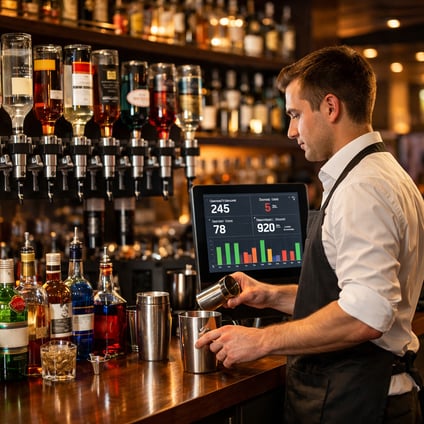
The image depicts a bustling bar environment filled with patrons enjoying their drinks amidst a warm inviting atmosphere Behind the bar a bartender skEvery hospitality business owner knows that inventory management is critical, but few realize just how much manual processes are costing them. From labor hours to human error, traditional counting methods drain resources that could be better invested elsewhere. Studies show that manual inventory tracking in restaurants and bars can consume up to 20 hours per week of staff time—time that could be spent on customer service, menu development, or strategic planning.


The financial impact extends far beyond labor costs. Manual counting leads to inconsistent data, making it nearly impossible to identify theft, over-pouring, or supplier errors until it's too late. Without accurate, real-time stock levels, businesses struggle with over-ordering (tying up precious capital in excess inventory) or under-ordering (leading to stockouts during peak service times). These inefficiencies compound over time, silently eroding profit margins and creating operational headaches that prevent growth.

Perhaps most concerning is the opportunity cost. While your team is buried in spreadsheets and clipboards, competitors using modern inventory solutions like Scannabar are making data-driven decisions in real-time. They're identifying trends, optimizing par levels, and catching discrepancies before they become significant losses. In today's competitive hospitality landscape, manual inventory management isn't just inefficient—it's a strategic disadvantage that no business can afford.

Real-Time Visibility: Taking Control of Your Stock with Smart Scanning

Scannabar transforms inventory management from a dreaded chore into a streamlined, accurate process through intelligent barcode scanning technology. With a simple scan, staff can instantly capture product information, quantities, and locations—eliminating the guesswork and transcription errors that plague manual systems. This real-time data capture means your inventory levels are always current, giving you unprecedented visibility into what's actually on your shelves, in your coolers, and behind your bar.

The power of real-time visibility cannot be overstated. Managers can access up-to-the-minute stock levels from anywhere—whether they're on the floor, at home, or managing multiple locations. This instant access enables proactive decision-making: reorder popular items before they run out, identify slow-moving stock that's tying up capital, and respond immediately to unexpected demand spikes. No more discovering you're out of a key ingredient during the dinner rush or finding expired products weeks after they should have been used.

Scannabar's smart scanning technology also creates an audit trail that manual systems simply cannot match. Every scan is timestamped and linked to a user, providing accountability and making it easy to track inventory movements throughout your operation. Whether you're investigating discrepancies, analyzing usage patterns, or preparing for financial reporting, you have concrete data at your fingertips. This level of transparency doesn't just improve accuracy—it fundamentally changes how you understand and manage your inventory investment.

From Chaos to Clarity: Streamlining Bar and Restaurant Operations

The chaos of traditional inventory management creates ripple effects throughout hospitality operations. Staff dread count days, managers spend hours reconciling data, and decision-makers lack the insights they need to optimize performance. Scannabar cuts through this complexity with an intuitive interface designed specifically for the fast-paced hospitality environment. The learning curve is minimal—most staff can master the basics in under 15 minutes—meaning you can implement the solution without disrupting service or requiring extensive training.

Integration capabilities set Scannabar apart as a true operational hub. The platform seamlessly connects with your existing POS systems, accounting software, and supplier databases, creating a unified ecosystem where data flows automatically between systems. This integration eliminates duplicate data entry, reduces errors, and ensures that every department is working from the same accurate information. When your inventory system talks to your POS, you can automatically track product usage, compare theoretical versus actual consumption, and identify variances that might indicate waste, theft, or over-pouring.

The operational efficiency gains are immediate and measurable. What once took hours can now be completed in minutes, freeing your team to focus on what really matters: delivering exceptional guest experiences. Receiving shipments becomes faster and more accurate with barcode verification, reducing disputes with suppliers. Par level management becomes automatic, with the system alerting you when items fall below thresholds. Recipe costing stays current as ingredient prices fluctuate, ensuring your menu pricing remains profitable. Scannabar doesn't just organize your inventory—it orchestrates your entire back-of-house operation with precision and ease.

Reducing Shrinkage and Maximizing Profit Margins with Data-Driven Insights

Inventory shrinkage is one of the most persistent challenges in hospitality, with the average restaurant losing 2-3% of revenue to theft, waste, and unaccounted losses. For many businesses, this represents tens of thousands of dollars annually that simply vanish without explanation. Scannabar's data-driven approach brings these losses into sharp focus, using variance reporting and analytics to identify exactly where your inventory is going and why actual usage doesn't match expected consumption.

The platform's analytical capabilities transform raw data into actionable intelligence. Detailed reports highlight products with unusual variance patterns, flagging potential issues before they become major losses. You can track performance by shift, bartender, or station—identifying whether discrepancies stem from theft, over-pouring, incorrect recipes, or supplier shortages. This granular visibility enables targeted interventions: additional training for staff who struggle with portion control, recipe standardization to reduce waste, or investigations into suspicious patterns that might indicate internal theft.

Beyond loss prevention, Scannabar's insights drive strategic profitability improvements. By analyzing sales data alongside inventory consumption, you can identify your most and least profitable items, optimize your menu mix, and negotiate better terms with suppliers based on accurate purchasing data. The platform calculates real-time costs of goods sold (COGS), helping you maintain target profit margins even as ingredient prices fluctuate. Many Scannabar users report COGS reductions of 2-5% within the first year—savings that flow directly to the bottom line and can make the difference between merely surviving and truly thriving in the competitive hospitality market.

Future-Proofing Your Hospitality Business with Automated Stock Solutions

The hospitality industry is evolving rapidly, with technology playing an increasingly central role in operational success. Businesses that cling to manual processes are falling behind, unable to compete with the efficiency, accuracy, and insights that modern inventory management provides. Scannabar positions your operation at the forefront of this transformation, providing a scalable platform that grows with your business—whether you're running a single location or expanding to multiple sites across different markets.

Automation is the key to scalability. As labor costs rise and skilled workers become harder to find, automated inventory solutions reduce your dependence on manual processes while improving accuracy. Scannabar's automated reordering capabilities can suggest or even execute purchase orders based on your predefined parameters, ensuring you maintain optimal stock levels without constant manual oversight. Automated alerts notify managers of critical situations—low stock on bestsellers, expiring products, or unusual consumption patterns—enabling proactive management rather than reactive firefighting.

Perhaps most importantly, Scannabar provides the data foundation necessary for advanced analytics and artificial intelligence applications. As the platform learns your business patterns, it can provide increasingly sophisticated forecasting, helping you anticipate demand fluctuations based on historical data, seasonal trends, and even external factors like local events or weather. This predictive capability transforms inventory management from a reactive necessity into a strategic advantage, allowing you to stay ahead of customer demand, minimize waste, and maximize profitability. In an industry where margins are tight and competition is fierce, Scannabar doesn't just help you manage inventory better—it helps you build a more resilient, profitable, and future-ready hospitality business.

Topics: Scannabar Inventory system, bar inventory app, liquor inventory app, Best Bar Inventory app, Best Liquor Inventory app, wine inventory app, Scannabar inventory app, Resaurant Inventory app, Restaurant Inventory app

Intimate Dinner Spots in Nashville for a Romantic Valentine's Day

Discover Nashville's most enchanting restaurants where candlelit ambiance, exceptional cuisine, and Southern charm create the perfect setting for an unforgettable Valentine's Day celebration with your loved one.

Why Nashville is the Perfect Valentine's Day Destination for Couples

Nashville has evolved far beyond its honky-tonk reputation to become one of the South's most romantic destinations for couples seeking an unforgettable Valentine's Day experience. Music City offers a unique blend of sophisticated dining, live entertainment, and Southern hospitality that creates an atmosphere unlike any other American city. The city's vibrant energy combined with its intimate corners makes it ideal for couples looking to celebrate their love in style.

The culinary scene in Nashville has exploded in recent years, attracting award-winning chefs and innovative restaurateurs who have transformed the city into a food lover's paradise. From farm-to-table establishments showcasing Tennessee's agricultural bounty to internationally-inspired fine dining venues, Nashville's restaurant landscape offers something special for every couple's taste. The city's commitment to quality ingredients, creative presentations, and exceptional service ensures that your Valentine's Day dinner will be nothing short of extraordinary.

Beyond the exceptional food, Nashville's romantic charm lies in its perfect balance of urban sophistication and Southern warmth. The city's historic neighborhoods, scenic riverfront views, and iconic skyline provide stunning backdrops for a romantic evening. Whether you're strolling hand-in-hand down Broadway after dinner or enjoying a quiet moment in one of the city's charming districts, Nashville creates countless opportunities for romance and connection that extend well beyond the dinner table.

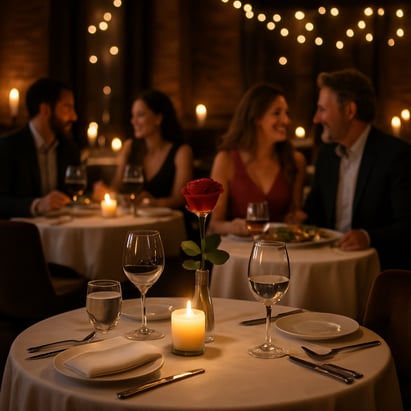
Upscale Fine Dining Experiences That Set the Mood for RomanceThe image captures a romantic table setting in an upscale Nashville restaurant adorned with soft candlelight flickering gently across the polished woo

The Capitol Grille stands as one of Nashville's most prestigious dining establishments, offering an elegant atmosphere perfect for Valentine's Day celebrations. Located in the historic Hermitage Hotel, this AAA Four Diamond restaurant features impeccable service, an extensive wine list, and a menu that showcases the finest steaks, seafood, and seasonal ingredients. The intimate dining room with its sophisticated décor and soft lighting creates an ambiance that whispers romance with every detail, making it ideal for couples seeking a truly special evening.

For those seeking a more contemporary fine dining experience, The Catbird Seat offers an unparalleled culinary adventure. This exclusive 32-seat restaurant features a U-shaped counter where diners can watch talented chefs prepare an ever-changing tasting menu right before their eyes. The interactive nature of the dining experience, combined with innovative dishes that push culinary boundaries, creates shared moments of discovery and delight that couples will remember long after Valentine's Day has passed. Reservations are notoriously difficult to secure, so plan well in advance for this intimate experience.

Kayne Prime delivers a modern steakhouse experience with a romantic twist, featuring dark wood accents, plush seating, and dim lighting that sets the perfect mood for romance. Their dry-aged steaks are legendary, but the menu also includes fresh seafood, creative appetizers, and an impressive raw bar. The restaurant's private dining spaces and attentive service make it particularly appealing for couples who want to feel like they're celebrating in their own exclusive space. Don't miss their signature tableside preparations, which add an element of theater and engagement to your romantic dinner.

Hidden Gem Restaurants with Intimate Atmospheres

Tucked away in the Germantown neighborhood, Rolf and Daughters offers an intimate, industrial-chic setting that feels both cozy and sophisticated. This farm-to-table restaurant specializes in house-made pastas and seasonal dishes that highlight local ingredients. The exposed brick walls, warm lighting, and communal yet intimate seating arrangements create a relaxed atmosphere where couples can enjoy thoughtful conversation over exceptional food. The restaurant's commitment to quality and creativity shines through in every dish, making it a favorite among locals in the know.

Henrietta Red, located in the Germantown Hotel, provides a charming coastal-inspired escape in the heart of Nashville. This oyster bar and seafood-focused restaurant offers a refreshingly different Valentine's Day option for couples who prefer a lighter, more casual fine dining experience. The bright, airy space during the day transforms into a romantically lit haven in the evening, with an impressive raw bar and creative seafood preparations that transport diners to a seaside retreat. Their natural wine selection and craft cocktails complement the menu perfectly.

For couples seeking European elegance, Once Upon a Time in France delivers authentic French cuisine in an intimate, bistro-style setting. This charming restaurant in East Nashville captures the essence of a Parisian neighborhood spot, with classic dishes like coq au vin, escargot, and perfectly executed steak frites. The cozy atmosphere, complete with French music playing softly in the background and candlelit tables, creates an authentic romantic experience that feels like a mini-vacation to France without leaving Nashville.

Culinary Experiences Beyond Traditional Dining

For adventurous couples looking to make Valentine's Day truly memorable, Nashville offers unique culinary experiences that go beyond sitting down at a traditional restaurant. Consider booking a private cooking class at The Cookery, where you and your partner can learn to prepare a gourmet meal together under the guidance of professional chefs. This hands-on experience not only provides delicious food but also creates lasting memories and new skills you can enjoy together long after Valentine's Day. The intimate class settings and collaborative nature of cooking together foster connection and teamwork.

Wine lovers should explore Nashville's growing wine bar scene, where intimate tastings and expert guidance create educational yet romantic evenings. City Winery offers a unique combination of wine production facility, tasting room, and concert venue, allowing couples to enjoy wine flights paired with small plates while potentially catching live music. The industrial-chic atmosphere and knowledgeable staff make it easy to discover new favorites together, and you can even bottle your own wine as a Valentine's Day keepsake.

For a truly unconventional Valentine's Day experience, consider booking a progressive dinner tour through different Nashville neighborhoods. Several local companies offer guided food tours that take couples to multiple restaurants and eateries in a single evening, providing tastes of Nashville's diverse culinary landscape. This option is perfect for couples who can't decide on just one restaurant or who want to explore the city while enjoying great food. The walking between venues also provides opportunities for romantic strolls and conversation under the Nashville night sky.

Planning Your Perfect Romantic Evening in Music City

Successful Valentine's Day planning in Nashville begins with making reservations well in advance, as the city's most romantic restaurants book up quickly for this popular holiday. Aim to secure your table at least four to six weeks before February 14th, especially if you're interested in the most sought-after establishments. When making reservations, don't hesitate to mention that you're celebrating Valentine's Day—many restaurants offer special menus or small touches like complimentary champagne or chocolate-covered strawberries for couples celebrating the occasion.

Consider the entire evening's flow when planning your romantic date, not just the dinner itself. Nashville offers numerous pre-dinner or post-dinner activities that can enhance your celebration. Start with cocktails at a rooftop bar like L.A. Jackson or The Bobby Hotel's rooftop lounge for stunning city views, or take a romantic stroll through Centennial Park before your reservation. After dinner, you might enjoy catching a show at the Grand Ole Opry, taking a moonlit walk along the pedestrian bridge, or ending the night with dessert and coffee at a cozy café.

Don't forget the practical details that can make or break your romantic evening. Check parking options near your chosen restaurant in advance, as Nashville's popular dining districts can have limited street parking. Consider using a ride-share service to avoid parking stress and allow both of you to enjoy wine with dinner. Dress appropriately for your chosen venue—while Nashville tends to be more casual than some cities, upscale restaurants still appreciate guests who dress for the occasion. Finally, build in buffer time between activities to avoid rushing, allowing you to savor each moment of your special evening together in Music City.

Topics: Restaurant Inventory, free pour, Bar trends, red wine, Nightclub trends, restaurant trends, drink recipe, craft cocktails, Resaurant Inventory app, Restaurant Inventory app