Liquor Inventory Experts

How Hospitality Inventory Software Transforms Bar Operations

Discover how modern inventory software is revolutionizing bar management by reducing waste, boosting profits, and streamlining operations in today's competitive hospitality landscape.

The Hidden Costs of Manual Inventory Management in Bars

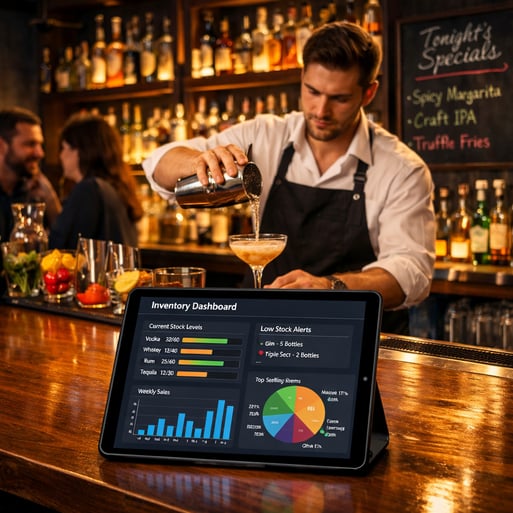
Every bar manager knows the routine: clipboards, spreadsheets, and hours spent counting bottles at the end of each shift. But what many don't realize is just how much this traditional approach is costing their business. Manual inventory management in bars and restaurants leads to significant hidden expenses that eat away at profit margins year after year.Modern Bar with TechIntegrated Inventory System-1
The most obvious cost is time. Staff members spend an average of 4-8 hours per week conducting manual counts, time that could be better spent on customer service or strategic business planning. When you factor in labor costs, this translates to thousands of dollars annually for even a modest-sized establishment. Beyond the hours invested, human error is inevitable—misplaced decimal points, incorrect bottle counts, and overlooked products create discrepancies that compound over time.

Perhaps the most damaging hidden cost is the lack of real-time visibility. Without immediate access to inventory levels, bars face two critical problems: stockouts during peak service times and over-ordering that ties up capital in slow-moving products. A single stockout of a popular spirit during a busy Friday night can result in lost sales, disappointed customers, and damage to your establishment's reputation. Meanwhile, over-ordering leads to product spoilage, especially for fresh ingredients and craft cocktail components, as well as significant capital locked in inventory that could be deployed elsewhere in the business.

Manual systems also make it nearly impossible to track variance and identify shrinkage patterns. Industry studies show that bars lose an average of 20-25% of their inventory to over-pouring, theft, spillage, and unrecorded comps. Without automated tracking, pinpointing where these losses occur becomes a guessing game, allowing problems to persist and profits to evaporate.

Real-Time Tracking: Your Key to Minimizing Pour Loss and Theft

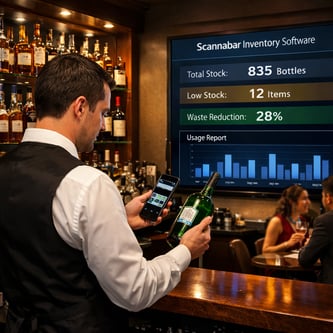
Real-time inventory tracking represents a fundamental shift in how bars manage their most valuable asset: their liquor inventory. Unlike traditional manual counts that provide only periodic snapshots, modern hospitality inventory software delivers continuous, up-to-the-minute visibility into every bottle and ingredient in your establishment. This immediate awareness transforms how operators identify and address shrinkage.

The technology works by creating a closed-loop system that connects expected inventory usage with actual consumption. When integrated with your POS system, the software automatically deducts recipe ingredients as each drink is sold. Any discrepancies between what should be in stock and what physical counts reveal become immediately apparent, allowing managers to investigate variances while the trail is still fresh. This rapid detection capability is crucial—identifying a $50 variance within 24 hours is far more actionable than discovering a $500 discrepancy at month's end.

Real-time tracking also serves as a powerful deterrent to theft and over-pouring. When staff members know that every ounce is being monitored and that discrepancies will be quickly noticed, behavioral patterns shift. The software doesn't just catch problems after they occur; it prevents them from happening in the first place. Establishments that implement real-time tracking typically see shrinkage rates drop from 20-25% down to 5-10% within the first few months of deployment.

Beyond loss prevention, real-time data enables proactive management decisions. Managers can monitor consumption patterns throughout service, identify when popular items are running low before they're completely depleted, and adjust ordering schedules dynamically. This level of operational awareness was simply impossible with manual systems, but modern inventory software makes it standard practice. The result is better customer service, reduced waste, and significantly improved profit margins across your entire beverage program.

Smart Reordering Systems That Keep Your Bar Fully Stocked

One of the most transformative features of modern hospitality inventory software is intelligent reordering automation. These systems analyze historical consumption data, seasonal trends, and current inventory levels to generate precise purchase orders that keep your bar optimally stocked without over-investing in slow-moving products. This eliminates the guesswork that has traditionally plagued bar inventory management.

Smart reordering systems work by establishing par levels for each product based on your actual usage patterns. Rather than relying on static minimum quantities that may have been set years ago, the software continuously learns from your sales data and adjusts recommendations accordingly. If your tequila sales spike every summer or you see increased whiskey consumption during winter months, the system automatically factors these patterns into future orders. This dynamic approach ensures you're always prepared for predictable demand fluctuations.

The financial impact of optimized ordering is substantial. By maintaining lean inventory levels that match actual consumption, bars can reduce the capital tied up in stock by 15-30%. This freed-up cash flow can be reinvested in marketing initiatives, facility improvements, or simply strengthen your operating reserves. Additionally, smart reordering reduces the risk of product expiration and spoilage, particularly important for fresh mixers, vermouths, and craft ingredients with limited shelf life.

Modern systems also streamline the actual ordering process through vendor integrations and automated purchase order generation. Instead of manually creating orders for multiple distributors each week, managers can review and approve system-generated orders with just a few clicks. Some platforms even enable direct electronic transmission to suppliers, eliminating phone calls and reducing order processing time from hours to minutes. This efficiency allows management to focus on hospitality and guest experience rather than administrative tasks, while ensuring your bar never runs out of the products your customers want most.

Data-Driven Insights That Maximize Your Beverage Program Profits

The true power of hospitality inventory software extends far beyond simple tracking and counting. These platforms transform raw inventory data into actionable business intelligence that enables operators to make strategic decisions backed by concrete evidence rather than intuition alone. The insights generated can fundamentally reshape how you approach menu engineering, pricing strategy, and supplier negotiations.

Detailed product-level profitability analysis is perhaps the most valuable insight these systems provide. You can see exactly which cocktails and spirits generate the highest margins, which items move quickly versus those that languish on shelves, and how your theoretical costs compare to actual usage. This visibility often reveals surprising patterns—that signature cocktail you're proud of might actually be losing money on every sale, while a simple classic drink you rarely promote could be your most profitable offering. Armed with this knowledge, you can redesign menus to emphasize high-margin items, adjust pricing on underperforming products, or eliminate selections that don't justify their shelf space.

Inventory software also provides powerful supplier and cost management insights. By tracking price fluctuations over time and analyzing purchase patterns across multiple vendors, you can identify opportunities to negotiate better terms, consolidate orders for volume discounts, or switch suppliers for specific products. The data might reveal that you're paying 15% more for well vodka than comparable alternatives would cost, or that ordering larger format bottles for high-volume spirits could reduce per-ounce costs significantly. These insights directly impact your bottom line, often generating savings that far exceed the cost of the software itself.

Perhaps most importantly, comprehensive reporting enables proactive rather than reactive management. Monthly and weekly reports on key metrics like pour cost percentage, inventory turnover rate, and variance by category allow you to spot trends before they become problems. If pour costs are creeping upward, you can investigate immediately rather than discovering the issue months later during quarterly reviews. This forward-looking approach, powered by real-time data analytics, transforms bar management from a reactive troubleshooting exercise into a strategic, profit-maximizing discipline. The competitive advantage this provides in today's challenging hospitality environment cannot be overstated.

Seamless Integration with POS Systems for Complete Operational Control

The integration between inventory management software and your point-of-sale system represents the cornerstone of modern bar operations technology. This connection creates a unified ecosystem where sales, inventory, and financial data flow seamlessly between platforms, eliminating duplicate data entry and providing unprecedented operational visibility. Without POS integration, inventory software can only tell you what you have; with it, you gain complete understanding of how products move through your entire operation.

When properly integrated, every transaction at the bar automatically updates inventory levels based on standardized recipes. If a bartender sells a margarita, the system instantly deducts the precise amounts of tequila, triple sec, lime juice, and other ingredients specified in that drink's recipe. This automated depletion accounting creates a real-time theoretical inventory that managers can compare against physical counts to identify discrepancies. The result is accurate variance reporting that would be impossible to generate manually, even with unlimited staff time.

Integration also enables sophisticated sales analytics that connect beverage performance to broader business metrics. You can analyze which cocktails sell best during specific dayparts, how drink sales correlate with food orders, and which promotions drive the most profitable beverage revenue. This cross-platform data analysis helps optimize happy hour offerings, design more effective promotions, and make evidence-based decisions about menu changes. The insights generated by combining sales and inventory data are exponentially more valuable than either dataset alone.

Implementation of integrated systems has become increasingly straightforward as most modern POS platforms now offer open APIs and direct partnerships with leading inventory management solutions. Setup typically involves mapping your recipes to ingredients, connecting the systems through secure data protocols, and training staff on any workflow changes. While the initial configuration requires some investment of time, the long-term benefits—reduced administrative burden, improved accuracy, and comprehensive operational control—make integration essential for any bar or restaurant serious about maximizing profitability. In today's competitive hospitality landscape, the question is no longer whether to integrate these systems, but how quickly you can implement them to gain advantage over competitors still relying on disconnected, manual processes.
Topics: Restaurant Inventory, Scannabar Inventory system, bar inventory app, liquor inventory app, Best Bar Inventory app, Best Liquor Inventory app, wine inventory app, Scannabar inventory app, Restaurant Inventory app, Scannabar Inventory Software

Liquor Inventory Methods Compared: Manual Counts Vs. Pour Systems Vs. Barcode Tracking

Discover which liquor inventory method will save your bar thousands in lost revenue while cutting inventory time by up to 75%.

Why Your Liquor Inventory Method Can Make or Break Your Bottom Line

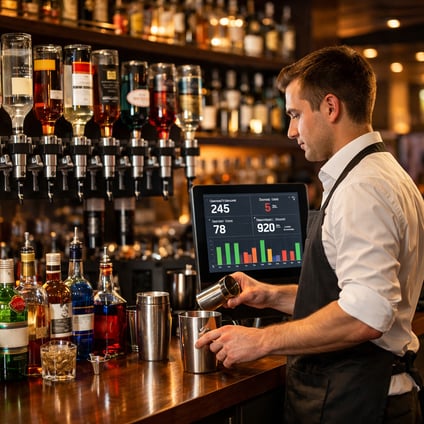
In the hospitality industry, liquor represents one of the highest-margin product categories—but also one of the most vulnerable to shrinkage, theft, and waste. Studies consistently show that bars and restaurants lose between 20-25% of their liquor inventory to over-pouring, spillage, theft, and untracked consumption. For a mid-sized establishment with $500,000 in annual liquor sales, that translates to $100,000 or more in lost revenue every single year.Modern Bar with Automated Pour System and Colorful Liquor Display-1

The inventory method you choose directly impacts your ability to identify and prevent these losses. A robust tracking system provides visibility into consumption patterns, helps you catch discrepancies before they become major problems, and ensures accurate pricing and ordering. On the other hand, an inadequate or inconsistent approach leaves you flying blind, unable to pinpoint where your profits are disappearing.

Beyond loss prevention, your inventory method affects labor costs, operational efficiency, and data accuracy. Manual counting might take your staff 4-6 hours per week, while automated systems can reduce that time to under an hour. The question isn't whether you can afford to invest in better inventory management—it's whether you can afford not to. With margins tightening across the hospitality sector, the right inventory method has become a competitive necessity rather than a luxury.

Manual Counting: The Traditional Approach That Still Has Its Place

Manual inventory counting remains the most common method in small bars and restaurants, and for good reason: it requires minimal upfront investment and works with any existing point-of-sale system. The process involves physically weighing or measuring each bottle, recording the quantities on paper or in a spreadsheet, and calculating usage based on the difference between counts. For establishments with limited budgets or relatively small liquor selections (under 50 SKUs), this approach can be sufficient to maintain basic control.

The advantages of manual counting extend beyond cost savings. It requires no specialized equipment, can be performed by any trained staff member, and provides hands-on familiarity with inventory levels. Many experienced bar managers argue that the physical act of handling each bottle gives them intuitive insights into consumption patterns and potential issues that automated systems might miss. There's also complete flexibility—you can count as frequently or infrequently as your operation demands, without being locked into a particular technology platform.

However, the drawbacks are significant and become more pronounced as your operation scales. Manual counting is time-intensive, typically requiring 3-6 hours for a full inventory depending on selection size. Human error is inevitable—studies show accuracy rates for manual counts rarely exceed 85%, with mistakes occurring in measurement, recording, or calculation. There's no real-time visibility, meaning you only discover shrinkage days or weeks after it occurs, making it nearly impossible to trace problems to specific shifts or employees.

Manual methods also create data management challenges. Spreadsheets become unwieldy with hundreds of entries, historical analysis is difficult, and generating actionable reports requires additional manual work. For bars doing less than $200,000 in annual liquor sales with stable, experienced staff, manual counting may suffice. But as volume increases or turnover rises, the limitations quickly outweigh the cost savings.

Automated Pour Systems: Real-Time Precision for High-Volume Operations

Automated pour systems represent the most technologically advanced inventory solution available to bars and nightclubs. These systems use spouts fitted with sensors that attach to each liquor bottle, automatically measuring and recording every ounce poured in real-time. The data syncs wirelessly to management software, providing instant visibility into consumption, variance, and potential theft. Premium systems can even integrate with POS terminals to verify that every pour corresponds to a sale.

The precision offered by pour systems is unmatched. They eliminate human measurement error entirely, tracking consumption down to the tenth of an ounce. This granular data reveals patterns invisible to other methods: which bartenders consistently over-pour, which drinks have the highest spillage rates, and exactly when discrepancies occur during service. High-volume nightclubs and hotel bars often see ROI within 6-12 months simply from reducing over-pouring, which these systems typically cut by 15-20%.

Real-time alerts are another powerful feature. If a bartender pours three shots without corresponding POS entries, managers receive immediate notifications, allowing them to address issues during the shift rather than discovering problems days later. This accountability dramatically reduces theft—simply having pour spouts visible acts as a deterrent. The systems also streamline inventory processes, automatically calculating quantities and generating orders based on par levels, reducing the time staff spend on inventory from hours to minutes.

Despite these advantages, pour systems come with substantial drawbacks. Initial costs range from $10,000 to $50,000+ depending on the number of bottles and feature set, plus ongoing subscription fees of $200-500 monthly. Installation and training require significant time investment, and some staff resist the technology, viewing it as surveillance rather than a management tool. The spouts can malfunction, require regular cleaning, and occasionally affect pour speed during busy periods, frustrating bartenders.

Perhaps most importantly, pour systems only work for bottles fitted with spouts. Beer, wine, and bottled products remain untracked, requiring a separate inventory method anyway. They're best suited for high-volume nightclubs, hotel bars, or establishments with serious theft problems where the 15-20% reduction in liquor costs justifies the substantial investment. For smaller operations or those with broader product mixes, the cost-benefit equation often doesn't add up.

Barcode Tracking: The Sweet Spot Between Control and Efficiency

Barcode tracking systems have emerged as the preferred inventory solution for many mid-sized bars and restaurants because they balance accuracy, efficiency, and affordability. Using handheld scanners or smartphone apps, staff scan bottle barcodes and enter remaining quantities, with the software automatically calculating usage, costs, and variance. Modern systems integrate seamlessly with POS platforms, comparing actual consumption against sales to identify discrepancies quickly.

The efficiency gains over manual counting are substantial. Scanning a barcode and entering a quantity takes seconds compared to the manual process of finding the item in a spreadsheet, recording the amount, and calculating differences. Most establishments report reducing inventory time by 50-75%, turning a 5-hour process into 90 minutes or less. This time savings becomes increasingly valuable as you scale—adding 50 more SKUs to a barcode system adds minimal time, while manual counting grows proportionally more burdensome.

Accuracy improvements are equally impressive. By eliminating transcription errors and automating calculations, barcode systems typically achieve 95%+ accuracy rates. The software flags unusual variances automatically, drawing attention to potential problems rather than burying them in spreadsheets. Historical data tracking enables trend analysis, helping you identify slow-moving inventory, optimize par levels, and make data-driven purchasing decisions that manual methods simply can't support.

Barcode tracking also offers flexibility that automated pour systems lack. It works for your entire inventory—liquor, beer, wine, mixers, garnishes—providing comprehensive visibility across all product categories. You can conduct partial counts of high-value items between full inventories, and the mobile nature of scanners allows staff to count efficiently throughout the bar rather than transporting bottles to a central scale.

Implementation costs are moderate, typically ranging from $1,000-5,000 for hardware and software, with monthly subscription fees of $50-200. Most systems are cloud-based, requiring no specialized IT infrastructure, and staff can be trained in under an hour. The main limitation is that barcode tracking still requires manual data entry for quantities—you're scanning bottles and inputting levels, not achieving the complete automation of pour systems. There's also a slight delay in identifying problems since you only discover variances during periodic counts rather than in real-time.

For the majority of bars and restaurants—particularly those doing $200,000-$2 million in annual liquor sales—barcode tracking offers the best combination of control, efficiency, and cost-effectiveness. It provides 80% of the benefit of fully automated systems at 20% of the cost, making it the pragmatic choice for operations that have outgrown manual methods but can't justify the investment in pour systems.

Choosing the Right Inventory Method for Your Hospitality Business

Selecting the optimal inventory method requires honest assessment of your operation's specific needs, constraints, and goals. Start by evaluating your annual liquor sales volume. Operations under $200,000 annually can often manage effectively with manual counting, particularly if they have experienced staff and limited SKU counts. Between $200,000 and $2 million, barcode tracking typically delivers the best ROI, providing substantial efficiency and accuracy improvements without breaking the bank. Above $2 million, particularly in high-volume nightclub or hotel settings, automated pour systems warrant serious consideration despite their higher costs.

Consider your existing pain points carefully. If you're experiencing significant theft or your variance consistently exceeds 5%, you need stronger controls than manual counting provides. If inventory is consuming excessive staff time—more than 2 hours weekly per $100,000 in liquor sales—upgrading to barcode or automated systems will pay for itself quickly in labor savings alone. If you lack visibility into which products are moving and which are gathering dust, you need the reporting capabilities that software-based systems deliver.

Operational complexity matters too. A craft cocktail bar with 300+ SKUs including rare spirits, house-made infusions, and extensive wine and beer lists needs the flexibility of barcode tracking to manage that diversity efficiently. A high-volume nightclub pouring primarily from a core selection of 75-100 bottles might benefit more from the precision and real-time monitoring of pour systems. Consider your product mix, service style, and whether you need to track just liquor or your entire inventory.

Staff considerations shouldn't be overlooked. Do you have high turnover, or a stable, experienced team? Automated systems provide tighter controls when staff changes frequently, while experienced teams with manual methods may already have effective informal tracking. What's your staff's comfort level with technology? A barcode system with intuitive smartphone apps typically faces less resistance than installing pour spouts that bartenders may view as surveillance.

Budget realities will ultimately constrain your options, but frame the decision as an investment rather than an expense. Calculate your current shrinkage percentage—if you don't know it, you're probably experiencing 15-25% losses. A $3,000 barcode system that reduces shrinkage by just 5% will pay for itself in months for most operations. Run the numbers specifically for your business: time savings × labor costs + shrinkage reduction × liquor costs = total annual benefit. Compare this against implementation and ongoing costs to determine your breakeven period.

Many successful operators adopt a hybrid approach, combining methods based on product categories. They might use pour systems for their top 30 highest-value spirits, barcode tracking for the broader liquor selection, and manual counts for beer and wine. This tiered strategy focuses technology investment where it delivers maximum impact while keeping costs reasonable. Whatever method you choose, consistency matters more than perfection—even manual counting performed reliably every week will outperform sporadic use of sophisticated systems. Start with your current resources, commit to regular execution, and upgrade as your operation grows and ROI becomes clear.

Topics: liquor inventory, Bar inventory, Restaurant Inventory, Scannabar Inventory system, liquor inventory system, liquor inventory app, Cruise ship bar inventory, Country Club Liquor Inventory, Scannabar inventory app, Resaurant Inventory app, Restaurant Inventory app, Scannabar Inventory Software

Real-Time Stock Monitoring: Cut Costs with Scannabar Inventory

Discover how real-time inventory tracking can slash your bar and restaurant costs by up to 30% while eliminating waste and preventing theft.

The Hidden Money Drains in Your Bar Inventory

Running a bar or restaurant during times of high inflation presents unprecedented challenges. While most owners focus on menu pricing and labor costs, a silent profit killer lurks in plain sight: poor inventory management. Every day, bars lose thousands of dollars through over-pouring, theft, spoilage, and ordering inefficiencies that go unnoticed until they've already devastated your profit margins.The image depicts a sleek modern bar in a luxurious hotel illuminated by soft ambient lighting that highlights a wide array of premium spirits display-1

The typical bar loses between 20-25% of its inventory to various forms of shrinkage. That means for every $100,000 in liquor purchases, up to $25,000 simply vanishes. During inflationary periods when supplier costs are rising 10-15% annually, these losses compound exponentially. A bottle that cost $30 last year now costs $35, making each lost ounce even more painful to your bottom line.

Traditional manual inventory counts, performed weekly or monthly, create massive blind spots in your operations. By the time you discover discrepancies, it's too late to identify the cause or prevent future losses. Staff members may be inadvertently over-pouring during busy shifts, or worse, intentionally giving away free drinks. Products may be expiring on shelves while you continue ordering duplicates. Without real-time visibility, you're essentially operating in the dark while your profits leak away drop by drop.

How Real-Time Monitoring Transforms Your Bottom Line

Real-time inventory monitoring fundamentally changes the economics of bar operations by providing instant visibility into every bottle, keg, and ingredient. Instead of discovering problems weeks after they occur, you can identify and address issues immediately—often within the same shift. This immediacy transforms inventory management from a reactive accounting exercise into a proactive profit protection system.

When you know exactly what's being poured, sold, and remaining at any given moment, you gain unprecedented control over your cost of goods sold (COGS). Smart inventory systems automatically compare pour data against POS sales, instantly flagging discrepancies that might indicate theft, over-pouring, or unrecorded sales. This level of oversight doesn't require micromanaging staff; the system does the monitoring automatically, freeing managers to focus on customer service and business growth.

The financial impact is substantial and measurable. Establishments implementing real-time inventory monitoring typically reduce their liquor costs by 3-5 percentage points within the first few months. For a bar generating $500,000 in annual revenue with 25% liquor costs, that represents $15,000-$25,000 in recovered profit annually. During high inflation, these savings don't just improve profitability—they often mean the difference between staying competitive and going out of business.

Beyond theft prevention, real-time monitoring optimizes purchasing decisions. You'll never over-order slow-moving products or run out of popular items during peak periods. The system tracks consumption patterns and predicts needs based on historical data and upcoming events. This precision eliminates emergency orders at premium prices and reduces capital tied up in excess inventory, improving cash flow when it matters most.

Scannabar Technology: Your Digital Inventory Assistant

Scannabar represents the next generation of inventory management, combining mobile technology, barcode scanning, and cloud-based analytics to create a comprehensive solution specifically designed for bars and restaurants. Unlike generic inventory systems, Scannabar understands the unique challenges of beverage management—from tracking partial bottles to managing complex cocktail recipes with multiple ingredients.

The system works through an intuitive mobile app that turns any smartphone or tablet into a powerful inventory tool. Staff simply scan bottle barcodes to record inventory levels, receiving counts, and usage. The process that once took hours with clipboard and pen now takes minutes with pinpoint accuracy. Scannabar's database includes over 100,000 beverage products, automatically populating product information, pricing, and supplier details with each scan.

What sets Scannabar apart is its intelligent analytics engine. The platform doesn't just record numbers—it identifies patterns, predicts problems, and recommends actions. You'll receive alerts when inventory levels fall below optimal thresholds, when variance between usage and sales exceeds acceptable ranges, or when products are approaching expiration dates. These proactive notifications enable you to address issues before they become costly problems.

Integration capabilities make Scannabar even more powerful. The system connects with your existing POS system, accounting software, and supplier ordering platforms, creating a unified ecosystem that eliminates data entry redundancy and ensures accuracy across all systems. Recipe management features automatically calculate theoretical usage based on sales, providing the baseline against which actual usage is measured to identify discrepancies instantly.

From Chaos to Control: Implementing Smart Inventory Systems

Transitioning from manual inventory processes to a smart system like Scannabar requires planning, but the implementation is far simpler than most owners anticipate. The key to success lies in approaching the change systematically, starting with a complete baseline inventory count. This initial audit establishes your starting point and often reveals surprising insights about slow-moving stock, duplicate products, and organizational inefficiencies.

Staff training is critical but straightforward. Most team members become proficient with Scannabar within a single shift because the interface mirrors familiar smartphone apps they use daily. The scanning process is intuitive: point, scan, confirm. Start by training managers and lead bartenders who can champion the system and assist other staff members during the transition period. Create a culture where accurate inventory is viewed as a team responsibility rather than management oversight.

Establish clear protocols for when and how inventory is conducted. Many successful bars perform quick spot checks at shift changes, taking just 2-3 minutes to scan high-value items and verify counts match expectations. Comprehensive full inventories might occur weekly or bi-weekly, depending on volume and complexity. The real-time nature of Scannabar means you're always working with current data, not waiting for scheduled count days to understand your inventory position.

Resistance to change is natural, especially from long-tenured staff comfortable with existing processes. Address concerns directly by emphasizing how the system makes their jobs easier—no more manual counting, no more spreadsheet errors, no more guessing about par levels. Share success metrics early and often, celebrating improvements in accuracy, reduced waste, and recovered profits. When staff see tangible results, they become advocates for the system rather than skeptics.

Measuring Success: ROI and Performance Metrics That Matter

The return on investment for Scannabar inventory systems is both rapid and substantial. Most establishments achieve full ROI within 3-6 months through reduced shrinkage, optimized ordering, and labor savings. A mid-sized bar investing $200-300 monthly in Scannabar typically recovers $1,000-2,000 monthly through eliminated waste and theft alone—a 400-600% return that continues month after month, year after year.

Track specific key performance indicators to quantify your success. Your liquor cost percentage should decrease by 2-5 points as accuracy improves and losses decline. Inventory turnover ratios should increase as you optimize par levels and eliminate slow-moving stock. Variance between theoretical and actual usage—the gold standard metric for inventory control—should consistently remain below 3% once the system is fully implemented and staff are trained.

Labor efficiency provides another measurable benefit. Manual inventory counts that previously consumed 4-8 hours weekly now take 30-60 minutes with Scannabar's scanning technology. That's 15-30 hours monthly redirected toward revenue-generating activities like customer service, event planning, or staff development. At an average management labor cost of $25-35 per hour, that represents $375-1,050 in monthly labor savings alone.

Perhaps most importantly during inflationary periods, measure your gross profit per square foot and per labor hour. These efficiency metrics reveal whether you're truly becoming more profitable or simply maintaining margins while costs rise. Establishments using Scannabar typically see gross profit improvements of 15-30% within the first year—not from raising prices, but from eliminating the hidden drains that were silently eroding profitability all along. In an economic environment where every dollar counts, that kind of operational excellence isn't just nice to have—it's essential for survival and growth.

Topics: Bar inventory, Scannabar Inventory system, Best Bar Inventory app, Best Liquor Inventory app, Cruise ship bar inventory, Country Club Liquor Inventory, Scannabar inventory app, Scannabar Inventory Software

Reducing Hospitality Waste with Scannabar Inventory Software

Discover how smart inventory management technology can slash waste by up to 30% while boosting your hospitality business's bottom line and sustainability goals.

The Hidden Cost of Inventory Waste in Hospitality Operations

In the competitive world of five-star hospitality, waste represents far more than discarded food or unused products—it's a silent profit killer that can significantly impact your bottom line. Industry studies reveal that hotels lose between 4-10% of their total inventory value to waste annually, translating to tens of thousands of dollars for luxury properties. From expired perishables in kitchen storage to overpouring at the bar, these losses compound daily, affecting not just profitability but also your property's sustainability credentials and brand reputation.

The challenge becomes even more complex when you consider the multiple revenue centers within a five-star hotel. Each restaurant, bar, banquet facility, and room service operation maintains its own inventory, creating silos where waste can hide in plain sight. Without accurate visibility into stock levels, expiration dates, and consumption patterns, even the most experienced managers struggle to identify where losses occur. Traditional manual counting methods are time-consuming, prone to human error, and often conducted too infrequently to catch problems before they become costly.

Beyond the direct financial impact, inventory waste carries hidden costs that affect operational efficiency. Staff hours spent on manual inventory counts, emergency orders placed at premium prices, and the reputational damage from running out of signature items during peak service all stem from inadequate inventory management. For five-star properties where guest expectations are highest, these operational hiccups can lead to negative reviews and lost repeat business—costs that far exceed the value of the wasted inventory itself.

How Real-Time Tracking Transforms Waste Management

Scannabar Inventory Software revolutionizes waste management by providing real-time visibility into every item across your hotel's operations. Using intuitive barcode scanning technology, staff can instantly update inventory levels as products are received, transferred between locations, or consumed. This immediate data capture eliminates the lag time between physical counts and system updates, giving managers an accurate, up-to-the-minute picture of what's in stock, where it's located, and how quickly it's moving. For five-star hotels managing hundreds or thousands of SKUs across multiple outlets, this level of precision is transformative.

The software's mobile capabilities mean that inventory management becomes seamless and integrated into daily workflows rather than a disruptive separate task. Bartenders can scan items as they're used, kitchen staff can update counts during prep work, and receiving teams can log new deliveries instantly—all from smartphones or tablets. This distributed approach to data collection not only improves accuracy but also creates a culture of accountability where every team member contributes to waste reduction. The real-time dashboard alerts managers to unusual variance, potential theft, or accelerating waste trends before they spiral out of control.

Perhaps most powerfully, real-time tracking enables proactive rather than reactive management. Instead of discovering expired products during weekly inventory counts, Scannabar's expiration date tracking flags items that need to be used soon, allowing chefs and bartenders to feature these products in specials or promotional offerings. The system can automatically generate alerts when stock is approaching its use-by date, transforming potential waste into revenue-generating opportunities. This shift from damage control to strategic planning represents a fundamental change in how five-star properties can manage their resources.

Preventing Spoilage and Overpouring with Data-Driven Insights

One of the most significant sources of waste in hotel operations is product spoilage, particularly for perishable items in kitchens and bars. Scannabar's advanced analytics provide detailed insights into product velocity, showing exactly how quickly each item moves through your inventory. This data-driven approach allows managers to identify slow-moving products before they expire and adjust purchasing quantities accordingly. For seasonal items or specialty ingredients, the software can track historical usage patterns, helping you forecast demand more accurately and order quantities that match actual consumption rather than hopeful projections.

The bar represents another critical area where Scannabar delivers measurable waste reduction. Overpouring costs hotels millions of dollars annually, and without precise measurement, even experienced bartenders can be inconsistent. Scannabar's variance reporting compares the amount of product that should have been used based on sales data against actual inventory depletion, immediately highlighting discrepancies. When variance exceeds acceptable thresholds, managers receive alerts and can investigate whether the cause is overpouring, spillage, theft, or incorrect recipes. This accountability mechanism naturally encourages more careful pour practices and standardization across bartending staff.

The software also enables sophisticated recipe costing and portion control that directly impacts waste. By programming standard recipes into Scannabar, hotels can track exactly how much of each ingredient should be used per dish or cocktail. The system then monitors actual usage against these standards, revealing when portions creep larger than intended or when ingredient waste occurs during preparation. For five-star properties where food costs already run higher due to premium ingredients, this level of control can mean the difference between a profitable menu and one that looks impressive but erodes margins. Many hotels report reducing food waste by 20-30% within the first six months of implementation simply by gaining this visibility.

Streamlining Ordering to Match Actual Demand

Traditional ordering processes in hospitality often rely on gut instinct, perpetual inventory systems that drift out of sync with reality, or overordering to ensure you never run out of key items. This approach inevitably leads to waste as inventory ages on shelves or exceeds storage capacity. Scannabar transforms ordering into a data-driven process by analyzing consumption patterns, seasonal trends, and upcoming events to generate intelligent purchase recommendations. The software calculates optimal reorder points and quantities for each product, ensuring you maintain adequate stock levels without excess that leads to spoilage or tied-up capital.

For five-star hotels with complex F&B operations, Scannabar's multi-location ordering capabilities provide unprecedented coordination. The system tracks inventory across all outlets and can suggest inter-location transfers before placing new orders, reducing redundant purchasing. If your lobby bar is overstocked on a particular spirit while your rooftop venue is running low, Scannabar identifies this opportunity to redistribute inventory internally. This coordination not only reduces waste but also minimizes the working capital tied up in inventory across the property, improving overall financial performance.

Integration with your suppliers takes efficiency even further. Scannabar can generate purchase orders directly from its analytics, which can be sent electronically to vendors, reducing administrative time and ordering errors. The software maintains historical pricing data, helping you negotiate better rates and identify unusual price increases. Some hotels use the system's forecasting capabilities to participate in volume purchasing programs or take advantage of supplier promotions only when they genuinely need the products—avoiding the trap of buying excess inventory simply because it's on sale. This disciplined approach to procurement ensures every order aligns with actual demand rather than speculation.

Measuring Success and ROI from Waste Reduction Initiatives

Implementing Scannabar Inventory Software provides five-star hotels with comprehensive metrics to quantify waste reduction and calculate return on investment. The system's reporting dashboard tracks key performance indicators including total waste value, waste as a percentage of purchases, variance by category, and trends over time. These metrics transform waste from an abstract concern into concrete numbers that can be benchmarked, targeted, and improved. Many properties establish baseline measurements during their first month with the software, then set quarterly goals for waste reduction, creating accountability and focus across the management team.

The financial impact typically manifests in multiple ways beyond just reduced spoilage. Hotels report significant cost savings from optimized ordering—purchasing less frequently at better prices, reducing emergency orders that carry premium costs, and negotiating better terms with suppliers based on accurate consumption data. Labor efficiency improves dramatically as well, with inventory counts that once required multiple staff members working for hours now completed by one person in a fraction of the time. These labor savings can be redirected to guest-facing service activities that enhance the five-star experience, creating a positive cycle where operational efficiency enables superior hospitality.

Most five-star properties implementing Scannabar see positive ROI within 6-12 months, with waste reduction percentages typically ranging from 15-35% depending on the baseline level of inventory control. A 200-room luxury hotel with annual F&B revenue of $5 million and a 30% cost of goods sold might waste $150,000 annually without proper controls. Reducing waste by even 20% represents $30,000 in annual savings—easily justifying the software investment while also advancing sustainability goals. Beyond the direct savings, the data-driven insights enable more strategic menu planning, pricing decisions, and operational improvements that compound benefits over time. For hospitality businesses where margins are constantly under pressure, Scannabar transforms inventory management from a necessary evil into a competitive advantage.

Topics: Hotel Inventory, Scannabar Inventory system, hotel supplies, hotel parties, Hotel Bar Inventory, Best Liquor Inventory app, Scannabar inventory app, Restaurant Inventory app, Scannabar Inventory Software

How Scannabar Revolutionizes Hospitality Stock Tracking

Discover how cutting-edge barcode scanning technology is transforming inventory management for hotels, restaurants, and bars while reducing waste and maximizing profitability.

The Hidden Costs of Manual Inventory Management in Hospitality

The image depicts a bustling bar environment filled with patrons enjoying their drinks amidst a warm inviting atmosphere Behind the bar a bartender skEvery hospitality business owner knows that inventory management is critical, but few realize just how much manual processes are costing them. From labor hours to human error, traditional counting methods drain resources that could be better invested elsewhere. Studies show that manual inventory tracking in restaurants and bars can consume up to 20 hours per week of staff time—time that could be spent on customer service, menu development, or strategic planning.

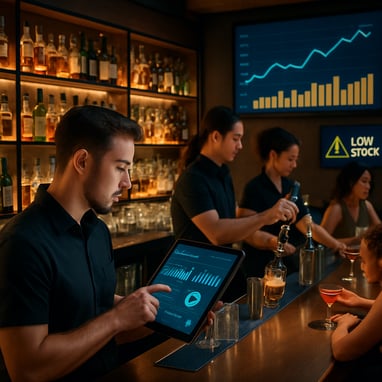
The financial impact extends far beyond labor costs. Manual counting leads to inconsistent data, making it nearly impossible to identify theft, over-pouring, or supplier errors until it's too late. Without accurate, real-time stock levels, businesses struggle with over-ordering (tying up precious capital in excess inventory) or under-ordering (leading to stockouts during peak service times). These inefficiencies compound over time, silently eroding profit margins and creating operational headaches that prevent growth.

Perhaps most concerning is the opportunity cost. While your team is buried in spreadsheets and clipboards, competitors using modern inventory solutions like Scannabar are making data-driven decisions in real-time. They're identifying trends, optimizing par levels, and catching discrepancies before they become significant losses. In today's competitive hospitality landscape, manual inventory management isn't just inefficient—it's a strategic disadvantage that no business can afford.

Real-Time Visibility: Taking Control of Your Stock with Smart Scanning

Scannabar transforms inventory management from a dreaded chore into a streamlined, accurate process through intelligent barcode scanning technology. With a simple scan, staff can instantly capture product information, quantities, and locations—eliminating the guesswork and transcription errors that plague manual systems. This real-time data capture means your inventory levels are always current, giving you unprecedented visibility into what's actually on your shelves, in your coolers, and behind your bar.

The power of real-time visibility cannot be overstated. Managers can access up-to-the-minute stock levels from anywhere—whether they're on the floor, at home, or managing multiple locations. This instant access enables proactive decision-making: reorder popular items before they run out, identify slow-moving stock that's tying up capital, and respond immediately to unexpected demand spikes. No more discovering you're out of a key ingredient during the dinner rush or finding expired products weeks after they should have been used.

Scannabar's smart scanning technology also creates an audit trail that manual systems simply cannot match. Every scan is timestamped and linked to a user, providing accountability and making it easy to track inventory movements throughout your operation. Whether you're investigating discrepancies, analyzing usage patterns, or preparing for financial reporting, you have concrete data at your fingertips. This level of transparency doesn't just improve accuracy—it fundamentally changes how you understand and manage your inventory investment.

From Chaos to Clarity: Streamlining Bar and Restaurant Operations

The chaos of traditional inventory management creates ripple effects throughout hospitality operations. Staff dread count days, managers spend hours reconciling data, and decision-makers lack the insights they need to optimize performance. Scannabar cuts through this complexity with an intuitive interface designed specifically for the fast-paced hospitality environment. The learning curve is minimal—most staff can master the basics in under 15 minutes—meaning you can implement the solution without disrupting service or requiring extensive training.

Integration capabilities set Scannabar apart as a true operational hub. The platform seamlessly connects with your existing POS systems, accounting software, and supplier databases, creating a unified ecosystem where data flows automatically between systems. This integration eliminates duplicate data entry, reduces errors, and ensures that every department is working from the same accurate information. When your inventory system talks to your POS, you can automatically track product usage, compare theoretical versus actual consumption, and identify variances that might indicate waste, theft, or over-pouring.

The operational efficiency gains are immediate and measurable. What once took hours can now be completed in minutes, freeing your team to focus on what really matters: delivering exceptional guest experiences. Receiving shipments becomes faster and more accurate with barcode verification, reducing disputes with suppliers. Par level management becomes automatic, with the system alerting you when items fall below thresholds. Recipe costing stays current as ingredient prices fluctuate, ensuring your menu pricing remains profitable. Scannabar doesn't just organize your inventory—it orchestrates your entire back-of-house operation with precision and ease.

Reducing Shrinkage and Maximizing Profit Margins with Data-Driven Insights

Inventory shrinkage is one of the most persistent challenges in hospitality, with the average restaurant losing 2-3% of revenue to theft, waste, and unaccounted losses. For many businesses, this represents tens of thousands of dollars annually that simply vanish without explanation. Scannabar's data-driven approach brings these losses into sharp focus, using variance reporting and analytics to identify exactly where your inventory is going and why actual usage doesn't match expected consumption.

The platform's analytical capabilities transform raw data into actionable intelligence. Detailed reports highlight products with unusual variance patterns, flagging potential issues before they become major losses. You can track performance by shift, bartender, or station—identifying whether discrepancies stem from theft, over-pouring, incorrect recipes, or supplier shortages. This granular visibility enables targeted interventions: additional training for staff who struggle with portion control, recipe standardization to reduce waste, or investigations into suspicious patterns that might indicate internal theft.

Beyond loss prevention, Scannabar's insights drive strategic profitability improvements. By analyzing sales data alongside inventory consumption, you can identify your most and least profitable items, optimize your menu mix, and negotiate better terms with suppliers based on accurate purchasing data. The platform calculates real-time costs of goods sold (COGS), helping you maintain target profit margins even as ingredient prices fluctuate. Many Scannabar users report COGS reductions of 2-5% within the first year—savings that flow directly to the bottom line and can make the difference between merely surviving and truly thriving in the competitive hospitality market.

Future-Proofing Your Hospitality Business with Automated Stock Solutions

The hospitality industry is evolving rapidly, with technology playing an increasingly central role in operational success. Businesses that cling to manual processes are falling behind, unable to compete with the efficiency, accuracy, and insights that modern inventory management provides. Scannabar positions your operation at the forefront of this transformation, providing a scalable platform that grows with your business—whether you're running a single location or expanding to multiple sites across different markets.

Automation is the key to scalability. As labor costs rise and skilled workers become harder to find, automated inventory solutions reduce your dependence on manual processes while improving accuracy. Scannabar's automated reordering capabilities can suggest or even execute purchase orders based on your predefined parameters, ensuring you maintain optimal stock levels without constant manual oversight. Automated alerts notify managers of critical situations—low stock on bestsellers, expiring products, or unusual consumption patterns—enabling proactive management rather than reactive firefighting.

Perhaps most importantly, Scannabar provides the data foundation necessary for advanced analytics and artificial intelligence applications. As the platform learns your business patterns, it can provide increasingly sophisticated forecasting, helping you anticipate demand fluctuations based on historical data, seasonal trends, and even external factors like local events or weather. This predictive capability transforms inventory management from a reactive necessity into a strategic advantage, allowing you to stay ahead of customer demand, minimize waste, and maximize profitability. In an industry where margins are tight and competition is fierce, Scannabar doesn't just help you manage inventory better—it helps you build a more resilient, profitable, and future-ready hospitality business.

Topics: Scannabar Inventory system, bar inventory app, liquor inventory app, Best Bar Inventory app, Best Liquor Inventory app, wine inventory app, Scannabar inventory app, Resaurant Inventory app, Restaurant Inventory app

Romantic Restaurants in Franklin TN for a Memorable Valentine's Date

Discover Franklin's most enchanting dining destinations where intimate ambiance, exceptional cuisine, and Southern charm create the perfect setting for an unforgettable Valentine's Day celebration.

Why Franklin is the Perfect Valentine's Day Destination for Couples

Nestled just south of Nashville, Franklin, Tennessee, offers couples a unique blend of historic charm, Southern hospitality, and contemporary sophistication that makes it an ideal Valentine's Day destination. The city's picturesque downtown features beautifully preserved 19th-century architecture, tree-lined streets, and a romantic small-town atmosphere that feels worlds away from the hustle and bustle of larger cities. Walking hand-in-hand through the historic district creates the perfect prelude to an intimate dinner, with boutique shops, art galleries, and charming storefronts providing endless opportunities for window shopping and discovery.The image captures a charming downtown street in Franklin Tennessee adorned with twinkling fairy lights strung above cobblestone paths Historic 19thce

What truly sets Franklin apart as a Valentine's destination is its thriving culinary scene that rivals any major metropolitan area. The city has become a haven for talented chefs who are passionate about creating memorable dining experiences that celebrate both innovation and tradition. From elegant fine dining establishments housed in historic buildings to intimate bistros with farm-fresh ingredients, Franklin's restaurant landscape offers something special for every couple. The community's commitment to preserving its heritage while embracing modern culinary trends creates a dining environment where romance and exceptional food go hand in hand.

Beyond the restaurants themselves, Franklin's overall ambiance contributes to its appeal as a Valentine's Day destination. The city maintains a slower pace that encourages couples to savor each moment together, whether strolling along the charming streets before dinner or enjoying a nightcap at a cozy wine bar afterward. The genuine warmth of Franklin's hospitality industry ensures that every couple feels welcomed and celebrated, making Valentine's Day in Franklin not just a meal, but a complete romantic experience that creates lasting memories.

Upscale Dining Experiences That Set the Mood for Romance

For couples seeking an elegant and refined Valentine's Day experience, Franklin offers several upscale dining destinations that deliver impeccable service, sophisticated ambiance, and exceptional cuisine. These establishments understand that Valentine's Day is about more than just food—it's about creating an atmosphere where love can flourish. Expect white tablecloths, soft lighting, attentive service, and carefully curated wine lists that complement expertly prepared dishes. Many of these restaurants feature private dining areas or intimate corner tables perfect for couples who want to focus entirely on each other.

The culinary offerings at Franklin's upscale restaurants showcase the talents of classically trained chefs who bring creativity and precision to every plate. You might find yourself savoring perfectly seared filet mignon with truffle butter, delicate seafood preparations featuring the freshest catches, or innovative tasting menus that take you on a culinary journey through multiple courses. These restaurants often create special Valentine's Day menus that elevate the experience even further, incorporating luxurious ingredients like lobster, caviar, and premium cuts of meat alongside seasonal vegetables and house-made desserts that provide a sweet ending to your romantic evening.

What distinguishes these upscale experiences is the attention to detail in every aspect of the dining experience. From the moment you're greeted at the door to the final farewell, the staff at these establishments are trained to anticipate your needs and ensure that your Valentine's celebration is flawless. The wine pairings are thoughtfully selected, the pace of service allows for intimate conversation between courses, and the overall atmosphere is designed to make you feel like the only two people in the room. For couples celebrating a milestone anniversary or looking to create a truly special memory, these upscale Franklin restaurants deliver an unforgettable Valentine's Day experience.

Cozy and Intimate Spots for a Private Valentine's Evening

Not every romantic Valentine's dinner requires white tablecloths and formal attire. Franklin is home to numerous cozy, intimate restaurants that offer equally romantic experiences in more relaxed settings. These hidden gems often feature exposed brick walls, candlelit tables, and a warm, inviting atmosphere that encourages couples to settle in and enjoy each other's company without pretension. The smaller dining rooms and thoughtful layouts ensure that even on a busy Valentine's evening, you'll feel like you have your own private corner of the world.

These intimate spots often specialize in comfort-elevated cuisine that feels both familiar and special. You might discover a charming bistro serving French-inspired dishes with a Southern twist, a rustic Italian trattoria with handmade pasta and an extensive wine selection, or a neighborhood favorite known for its creative small plates perfect for sharing. The beauty of these establishments lies in their ability to create romance through authenticity rather than formality. The chefs often greet diners personally, the servers remember regular customers, and the overall vibe is one of genuine hospitality that makes you feel like honored guests rather than just another reservation.

For couples who value conversation and connection over pomp and circumstance, these cozy Franklin restaurants provide the ideal Valentine's setting. The acoustics are better for intimate conversation, the lighting is soft and flattering, and the overall pace is relaxed enough to allow for lingering over dessert and coffee. Many of these spots also offer excellent craft cocktail programs or carefully selected wine lists that encourage exploration and discovery together. Whether you're celebrating your first Valentine's Day as a couple or your fiftieth, these intimate restaurants remind us that romance is ultimately about being present with the person you love in a space that feels welcoming and authentic.

Farm-to-Table Restaurants Offering Fresh and Seasonal Valentine's Menus

Franklin's proximity to Tennessee's rich agricultural landscape has given rise to a vibrant farm-to-table dining scene that celebrates local ingredients and seasonal flavors. For Valentine's Day, these restaurants offer a unique romantic experience that connects couples not just to each other, but to the land and community around them. The menus change with the seasons, ensuring that your February Valentine's dinner showcases the best of what local farms have to offer during the winter months—think hearty root vegetables, preserved summer fruits, locally raised meats, and artisanal cheeses from nearby producers.

What makes farm-to-table dining particularly special for Valentine's Day is the story behind each dish. Chefs at these establishments often have personal relationships with the farmers and producers who supply their ingredients, and they're passionate about sharing these connections with their guests. Your server might tell you about the family farm where your grass-fed beef was raised, or explain how the chef preserved summer peaches to create the compote accompanying your dessert. This narrative element adds depth and meaning to the meal, transforming dinner from a simple transaction into a celebration of community, sustainability, and the care that goes into every ingredient.

The ambiance at Franklin's farm-to-table restaurants typically reflects their culinary philosophy—natural, unpretentious, and warm. You might dine in a beautifully restored farmhouse, a modern space with reclaimed wood and industrial touches, or a garden-adjacent restaurant where you can see where some of your meal was grown. The wine and beverage programs often emphasize natural wines, local craft beers, and creative cocktails made with house-made syrups and seasonal ingredients. For couples who value sustainability, support local businesses, and appreciate knowing where their food comes from, a farm-to-table Valentine's dinner in Franklin offers romance with purpose and delicious food with a conscience.

Planning Your Perfect Valentine's Date Night in Franklin

Making your Valentine's Day dinner in Franklin truly memorable requires a bit of advance planning, especially given the popularity of the city's restaurants during this romantic holiday. First and foremost, make your reservation as early as possible—ideally several weeks in advance. The most sought-after restaurants and prime dining times (typically between 6:30 and 8:30 PM) book up quickly for Valentine's Day. When making your reservation, don't hesitate to mention that you're celebrating Valentine's Day and request a romantic table. Many restaurants will do their best to accommodate special requests, whether that's a quiet corner table, a spot by the fireplace, or a table with a view.

Consider making your Valentine's evening in Franklin more than just dinner by building a complete date experience around your meal. Arrive in Franklin an hour or two before your reservation to explore the charming downtown area together. Browse the boutiques and antique shops, visit one of the local art galleries, or simply stroll hand-in-hand through the historic streets admiring the architecture. If weather permits, a walk through one of Franklin's beautiful parks can provide a peaceful prelude to dinner. After your meal, extend the evening with dessert and drinks at a different establishment, or catch live music at one of Franklin's intimate venues. This fuller experience allows you to enjoy everything Franklin has to offer while creating multiple moments of connection throughout the evening.

Finally, don't forget the small touches that can elevate your Valentine's celebration. Check if your chosen restaurant offers any special Valentine's Day menus or prix fixe options that might enhance your experience. Consider coordinating with the restaurant in advance if you want to arrange for flowers at the table, a special dessert with a personalized message, or a champagne toast. Dress for the occasion—whether that means formal attire for an upscale restaurant or smart casual for a cozy bistro—to show your partner that you've put thought and effort into the evening. Most importantly, silence your phones, be present with each other, and allow yourself to fully enjoy this special celebration of your relationship in one of Tennessee's most romantic towns.

Topics: Bar inventory, Restaurant Inventory, Scannabar Inventory system, Bar drinks, restaurant trends, Speakeasy, date night, valentines day

How Real-Time Inventory Analytics Are Transforming Liquor Management

Discover how real-time inventory analytics is revolutionizing liquor management, boosting efficiency, and profitability for hospitality businesses.

Unlocking Operational Excellence With Real-Time InsightsThe image depicts a modern bar environment showcasing sleek illuminated shelves stocked with an array of liquor bottles A bartender stands behind the

Real-time inventory analytics is redefining the way liquor is managed in bars, restaurants, and hospitality venues. By providing up-to-the-minute data on stock levels, usage patterns, and supply trends, these systems empower managers to make proactive decisions that optimize day-to-day operations.

No longer reliant on manual counts and outdated spreadsheets, hospitality professionals can now monitor inventory across multiple locations, spot discrepancies instantly, and streamline ordering processes. The result is unparalleled operational efficiency and the ability to quickly adapt to fluctuating demand.

Reducing Waste and Shrinkage Through Smart Monitoring

Waste and shrinkage have long been persistent issues in liquor management, often leading to significant financial losses. With advanced inventory tracking technologies, such as IoT-enabled pour spouts and automated stock reconciliation, losses due to over-pouring, theft, or spoilage are dramatically reduced.

By continuously monitoring every drop of liquor dispensed and every bottle moved, managers gain unprecedented control over their inventory. This not only curbs unnecessary waste but also establishes a culture of accountability among staff, further safeguarding valuable assets.

Enhancing Guest Experience With Seamless Service

In the fast-paced world of hospitality, guest satisfaction is paramount. Real-time inventory analytics enables venues to maintain optimal stock levels, ensuring that popular beverages are always available and specialty cocktails can be delivered without delay.

Automated alerts and predictive ordering minimize the risk of stockouts, while integrated POS systems allow staff to serve guests more efficiently. Ultimately, these advancements ensure smoother service, shorter wait times, and a consistently high-quality guest experience.

Driving Profits With Data-Driven Decision Making

Access to granular inventory data opens the door to powerful, data-driven decision making. Hospitality managers can analyze sales trends, identify high-margin products, and adjust pricing or promotions in response to real-time demand.

This level of insight transforms inventory management from a cost center to a profit driver. By aligning purchasing and pricing strategies with actual consumption patterns, businesses can maximize their margins and boost overall profitability.

Preparing for the Future: Embracing Tech-Driven Liquor Management

As we look toward 2026 and beyond, the adoption of tech-driven liquor management solutions will become the industry standard. Innovations such as AI-powered forecasting, mobile inventory apps, and integrated supply chain platforms are set to further enhance efficiency, accuracy, and profitability.

Venues that embrace these emerging technologies will be well-positioned to navigate shifting market dynamics, regulatory changes, and evolving consumer preferences. The future of liquor management is digital, and those who invest in real-time analytics today will lead the industry tomorrow.

Topics: Bar inventory, Scannabar Inventory system, liquor inventory system, bar inventory app, liquor inventory app, Best Bar Inventory app, Best Liquor Inventory app, Scannabar inventory app

Why Year-End Liquor Inventory is Crucial for Success

Unlock hidden profits and streamline operations by mastering your year-end liquor inventory process.

The Hidden Impact of Liquor Inventory on Your Bottom Line

As a food and beverage manager, it’s easy to underestimThe image depicts a bustling bar scene with sleek modern refrigeration units lined against the wall showcasing an array of colorful bottled beers and spirits Behind the bar a bartender skillfully maneuvers scanning barcodes on bottles with a sleek ta-1ate how much liquor inventory affects your profitability. Every bottle sitting on your shelves represents cash tied up—money that could be invested elsewhere in your operation. Left unchecked, inventory imbalances can lead to overstocking, product expiration, and ultimately, profit loss.


Regular, accurate inventory ensures you know exactly what’s on hand and what’s moving. By conducting a year-end liquor and wine inventory, you gain visibility into your actual usage patterns. This awareness can help you identify slow-moving products, eliminate unnecessary spend, and optimize your beverage program for the year ahead.

Avoiding Compliance Headaches and Costly Mistakes

Liquor and wine inventory isn’t just about dollars and cents—it’s also about staying compliant with local and state regulations. Missing or inaccurate records can lead to costly fines, legal trouble, or even suspension of your liquor license. Year-end inventory provides an essential opportunity to ensure your records match your actual stock and that you’re in full compliance with all requirements.

A digital solution like the Scannabar inventory app can simplify the process, reducing human error and providing a reliable digital trail for audits or regulatory checks. This peace of mind is invaluable as you close out your fiscal year.

How Accurate Inventory Drives Smarter Purchasing Decisions

Starting the new year with precise inventory data allows you to make informed purchasing decisions. When you use a tool like Scannabar, you have instant access to real-time reports on what’s selling and what’s not. This means you can tailor your orders to actual demand, preventing both overstock and stockouts.

Smart purchasing isn’t just about saving money—it’s about ensuring your guests always have access to their favorite drinks while keeping your cash flow healthy. With a clean slate and accurate data, your beverage program is set up for success from day one.

Boosting Staff Accountability and Reducing Shrinkage

Shrinkage, whether from spillage, over-pouring, or theft, is one of the biggest threats to a bar’s profitability. Conducting a thorough year-end inventory, especially with the help of Scannabar, highlights any discrepancies between recorded and actual stock, making it easier to pinpoint potential issues.

Regular inventory checks foster a culture of accountability among your staff. When team members know that inventory is being closely monitored and recorded, they’re more likely to follow procedures and handle product responsibly—all of which contributes to a healthier bottom line.

Leveraging Year-End Insights for a Profitable New Year

The insights you gain from a comprehensive year-end liquor and wine inventory go far beyond compliance or cost control. Armed with accurate data, you can analyze trends, forecast future needs, and identify opportunities to introduce new products or phase out underperformers.

With Scannabar’s powerful analytics, you’re empowered to set clear goals, track progress, and make data-driven decisions throughout the year. Starting the new year with a clean slate isn’t just about organization—it’s about setting your bar or restaurant up for sustained success and profitability.

Topics: Restaurant Inventory, Scannabar Inventory system, bar inventory app, liquor inventory app, Best Bar Inventory app, Best Liquor Inventory app, wine inventory app, Scannabar inventory app

Lowering Beverage Costs with Scannabar in Hotels

Discover how Scannabar is revolutionizing beverage management in hotels, empowering hospitality leaders to cut costs without sacrificing quality or guest satisfaction.

Unveiling the Beverage Cost Challenge in Hotels

Managing beverage costs is a persistent challenge for hotels, especially those operating high-volume bars, restaurants, and event venues. Shrinkage, over-pouring, and inaccurate inventory records often erode profit margins, making it difficult for Food and Beverage managers to maintain financial targets without impacting guest experience.Hotel Bar Invetory

Traditional inventory methods are time-consuming, prone to human error, and often fail to provide real-time insights. This lack of accurate, actionable data can lead to unnecessary waste, stockouts, and missed opportunities to optimize purchasing and pricing.

How Scannabar Transforms Hotel Beverage Management

Scannabar has completely transformed our approach to beverage management by automating and streamlining the entire inventory process. With its advanced barcode scanning and real-time data capture, we can now track every bottle, keg, and case from delivery to pour, ensuring precise control and accountability at every step.

This level of oversight not only improves accuracy but also frees up our staff to focus on delivering exceptional guest experiences, rather than being bogged down by manual counts and reconciliations.

Key Features of Scannabar That Drive Cost Savings

Scannabar's intuitive interface and mobile compatibility make it easy for our team to conduct inventory quickly and accurately, reducing labor hours and minimizing errors. Automated variance reports highlight discrepancies between actual usage and sales, allowing us to pinpoint losses and address them immediately.

Integration with our POS and procurement systems enables seamless reordering, prevents overstocking, and helps us negotiate better pricing with suppliers. These features collectively drive significant cost savings while maintaining quality and consistency in our beverage service.

Real Success Stories: Hotels Benefiting from Scannabar

Since implementing Scannabar, we have seen a measurable reduction in beverage cost percentages, with some of our properties reporting savings of up to 15%. The application has helped us identify sources of shrinkage and inefficiency that were previously hidden, leading to actionable improvements in operations.

Our team members appreciate the ease of use and the ability to generate instant, detailed reports for management review. This transparency has fostered greater accountability and teamwork across departments, further enhancing our bottom line.

Best Practices for Integrating Scannabar into Your Hotel Operations

To maximize the benefits of Scannabar, we recommend providing comprehensive training for all relevant staff and setting clear protocols for inventory procedures. Regular audits and variance analysis should be scheduled to ensure ongoing accuracy and to quickly address any issues that arise.

Collaborating closely with IT and procurement departments during the integration process ensures smooth data flow and optimal use of Scannabar’s features. By making inventory management a shared responsibility, hotels can maintain tighter control over costs without compromising the guest experience.

Topics: Bar inventory, Hotel Inventory, Scannabar Inventory system, Liquor Inventory savings, Loss prevention, Hotel Bar Inventory, Best Bar Inventory app, Scannabar inventory app

All the Benefits the Scannabar Inventory Application Can Bring to Your Hospitality Business

Unlock unparalleled efficiency and profitability in your hospitality business with the Scannabar Inventory application.

Boost Operational Efficiency with Real-Time Inventory Tracking

In the fast-paced world of hospitality, operational efficiency is paramount. The Scannabar Inventory application offers real-time inventory tracking, allowing you to monitor stock levels instantaneously. This means you can make informed decisions on the fly, reducing downtime and ensuring your business runs smoothly.pexels-brett-sayles-1374552

With Scannabar, you will never have to worry about manual counts and the human errors that can come with them. The application provides an automated solution that saves time and effort, allowing staff to focus on other critical tasks that enhance customer experience.

Minimize Waste and Maximize Profits Through Accurate Data

One of the significant challenges in the hospitality industry is waste management. Scannabar's precise inventory tracking helps you minimize waste by providing accurate data on stock usage and shelf life. By keeping track of what's being used and what isn't, you can make adjustments to your purchasing processes and reduce unnecessary waste.

Maximizing profits becomes easier when you have a clear picture of your inventory. Scannabar enables you to identify high-performing products and those that are underperforming, allowing you to optimize your stock for better profitability.

Streamline Ordering and Restocking Processes

Keeping your shelves stocked without over-ordering can be a delicate balance. Scannabar simplifies this process by providing automated restocking alerts and order recommendations based on real-time data. This ensures you always have the right amount of stock on hand, reducing the risk of shortages or excess inventory.

The application also integrates seamlessly with your existing systems, allowing for a streamlined ordering process that saves time and reduces errors. By automating these tasks, you can free up valuable time for your staff to focus on delivering excellent service.

Enhance Customer Satisfaction with Consistent Stock Availability

Nothing frustrates a customer more than finding their favorite item out of stock. Scannabar helps ensure consistent stock availability, enhancing customer satisfaction and loyalty. By maintaining optimal stock levels, you can offer a reliable and enjoyable experience for your guests.

Consistent stock availability also means you can run promotions and special events without the fear of running out of key items. This reliability can set your business apart in a competitive market, making you the go-to choice for customers.

Gain Valuable Insights with Comprehensive Reporting and Analytics

Data-driven decision-making is crucial in today’s competitive hospitality industry. Scannabar provides comprehensive reporting and analytics, offering valuable insights into your inventory performance. From sales trends to inventory turnover rates, you can access detailed reports that help you make more informed business decisions.

These insights can be used to fine-tune your operations, identify opportunities for improvement, and drive strategic initiatives. By leveraging Scannabar's analytics, you can stay ahead of the competition and ensure your business is always moving in the right direction.

Topics: Scannabar Inventory system, Liquor Inventory savings, Reducing Costs, Loss prevention, Hotel Bar Inventory, Best Bar Inventory app, Best Liquor Inventory app, Scannabar inventory app