 There are many bars that go out of business each year. This is because the market for new bars is a challenging one. If you are in an area that has new bars opening all the time and a clientele who is always seeking the latest thrill, you need to work extra hard to ensure that your establishment stays exciting enough. There are many small details that can mean the difference between a bar that is merely surviving and one that is prospering beautifully. In this chapter, you will learn the small details that can push your success higher than ever. Not all of these tips are expensive. Many take only ingenuity and some effort, but the results can be spectacular!
Distinguishing Your Bar from Others
One of the first steps to ensuring that your bar is a success for a long time to come is to look around and make sure that you are offering value in the local area. Most of your business will be from people who can easily drive, walk, take a cab, or ride a bus to your bar. These same patrons will have the choice of many other bars in the area. There are a few ways to make sure that they select your bar:
Research the competition. Take the time to sit in every competing bar. After you order your drink, take notes: Who frequents these bars? Older patrons? Younger patrons? Yuppies? Tradespeople? What sort of bar is it? How much do they charge? What does the bar look like? What are the drinks and food offered? What are the promotions? What kind of entertainment is offered? How busy are they and on which night are they busiest? What are they doing wrong? What are they doing right?
Consider lower prices. If your competitors' prices are high, consider lowering yours. It will often get people to try your establishment for the first time. Your service and the quality of your bar will decide whether
they return.
Service. If your bar is known as the friendliest bar in town while your competitors tend to slack on service, you will make a profit. If your competition is already offering great service, you have to make your service stellar in order to compete.
Focus on what the competition is doing wrong. If you notice something that the competition is doing wrong, make sure that your bar is doing that same thing right. It will encourage patrons to see your bar as the local establishment that offers more.
Set your hours to take advantage of times when your competition is not available. If the competition stops food service early, think about extending your food service hours. Being able to provide something that the competition cannot or is not willing to provide is a great way to make sure that you lure in new regulars.
Do you know what the local patrons want? If you do not ask them and conduct regular market research, you have little hope of knowing the very things that will draw patrons to your bar.
Look at the bars that are succeeding elsewhere. What works in other cities and towns may work in yours. Pay special attention to the types of bars that are doing well in areas similar to your own (in towns or cities with the same demographics). These bars may have hit on an idea that may work well in your area as well.
Special promotions. Avoid using your best ideas and resources trying to compete on someone else's strongest night. Offer special promotions and discounts on nights when other bars are not offering anything. It will help lure in customers looking for something great on a slower night.
Remember, if you can offer something special, you are more likely to get more customers. It pays to make the extra effort to find out what is needed in your area—and then supply that need. Customers will flock to you.
This article is an excerpt from the The Professional Bar & Beverage Managers Handbook: How to Open and Operate a Financially Successful Bar, Tavern and Nightclub, authored by Douglas Robert Brown, published by Atlantic Publishing Group. This excerpt has been reprinted with permission of the publisher. To purchase this book go to:
 Many of the best bartenders learn most of their useful trade while at work. This is because bartending schools vary widely in quality. Some emphasize the preparation of rarely requested drinks without stressing useful skills such as bar management, customer satisfaction, and customer safety. If you are hiring a bartender, you should consider the school he or she has attended, but testing practical skills will give the best clue of how many useful skills the person has for waiting on your bar. If you are considering attending a bartending school, investigate the school to make sure that you will be taught skills such as organization and techniques of serving. A good bartending school or course will emphasize dealing with customers. Be wary of a bartending school that is more of a "drink mix" school, stressing mixing many types of drinks without teaching anything besides drink preparation. There are many of these sorts of schools out there, which claim that a bartender's greatest asset is knowing how to mix an endless variety of drinks. Learning to mix the latest drink is relatively simple once one looks up the recipe, and most patrons will order the most popular drink of the moment rather than some obscure mix. A bartender with a good grasp of people and basic bartending techniques is usually more useful than the bartender who only knows how to mix hundreds of drinks from memory but has few skills besides. In some cases, an employee with a hospitality degree is better able to handle the bar job than someone who has attended a bartender school.
 Simplicity over pretention. While bars that employ top-notch mixologists offering creative drinks will continue to attract more and more customers, you can also expect a trend towards simplicity. As David Wondrich put it in Nation’s Restaurant News, “The biggest trend I see is bringing mixology down to the fun/dive-bar level.” Expect to find well-made, “sophisticated” drinks in friendlier, “less sophisticated” surroundings.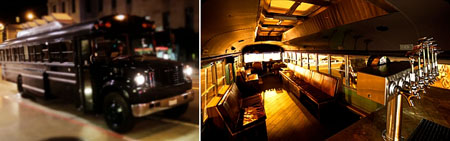
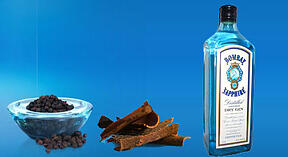 Herb-infused spirits. Whether they be whiskies, vodkas or gins are gaining herb-infused drinks are gaining in popularity. Expect gin, especially, to continue to make a splash as both large producers such as Bombay and a slew of new micro distilleries continue infuse this old stalwart with fresh and interesting botanicals.
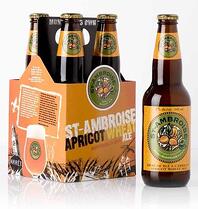 Seasonal and flavored beers. While nothing new, seasonal and/or flavored beers are starting to gain traction.
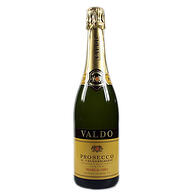 Value. After several years of economic recession, consumers have acquired a taste for value wines. They are seeking bang for the buck—not cheap inferior wines, but good, well-balanced, flavorful wines at an affordable price. With many of these wines coming from Spain and South America, expect Spanish, Chilean and Argentinian wines to continue to grow in popularity.
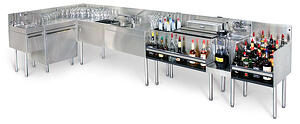 When you design your service area, it's important to realize that every step a bartender takes in the serving of a drink is costing you money and making your customers impatient. Where does your staff need to walk to get a clean glass? How far from there to the ice bins and then to the spirit dispenser? And where are your soda guns in relation to the bottles? Is the cash register yet another trip away from the customer? Even if your bartender has to take only four or five steps between each of these posts, consider how far that means your bartender has to walk in the course of serving 500 drinks a night! This is bad enough for a solo bartender, but when two or three people are working behind the same bar and sharing facilities, it can be an unproductive nightmare.
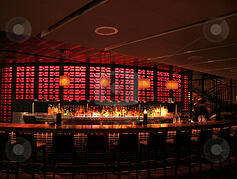 Have you ever sat under a blue neon light for an hour? While neon decor might look great when a bar is packed to capacity and the music is pumping, when business is slow it's like a power drill closing in on the center of your forehead. Certainly your customers should be impressed by your decor, but will the very look that draws them in end up driving them away early? Consider the following: