Expert Advice on Hospitality Topics

Why Manual Inventory Counts Are Holding Your Bar Back

Posted by Nick Kaoukis on Wed, May, 13, 2026 @ 10:05 AM

Discover how outdated manual inventory practices are costing your bar time, money, and competitive advantage in today's fast-paced hospitality environment.

The Hidden Costs of Counting by Hand

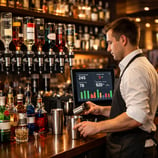
When you think about the cost of manual inventory counts, the first thing that comes to mind is probably labor hours. But the true expense goes far deeper than what you're paying your staff to physically count bottles. Manual inventory counts create a cascade of hidden costs that silently erode your profit margins month after month.Modern Bar with Automated Pour System and Colorful Liquor Display-1
Every hour your bartenders or managers spend counting bottles is an hour they're not engaging with customers, training staff, or focusing on revenue-generating activities. Beyond direct labor costs, manual counts often require you to conduct inventory during off-hours or when the bar is closed, potentially requiring overtime pay or pulling staff away from their primary responsibilities. Additionally, the physical strain of manually counting hundreds of bottles can lead to employee fatigue and burnout, increasing turnover rates in an industry already notorious for staffing challenges.

Perhaps the most insidious hidden cost is the opportunity cost of delayed decision-making. When your inventory data is days or weeks old by the time it's compiled and analyzed, you're essentially flying blind. You might be over-ordering products that aren't selling, missing out on popular items that could drive more revenue, or failing to catch theft and waste until it's too late to intervene. Bar inventory software eliminates these hidden costs by providing accurate, immediate data that empowers better business decisions.

How Human Error Drains Your Bottom Line

No matter how diligent your team is, human error is an inevitable part of manual inventory counts. A bartender counting bottles at the end of a long shift might miscount by a few units here and there, or accidentally skip a shelf entirely. Someone might record a number in the wrong column, transpose digits, or simply misread a label in poor lighting. These small mistakes compound quickly when you're managing hundreds of SKUs across spirits, beer, wine, and mixers.

The financial impact of these errors can be staggering. A study in the hospitality industry found that inventory inaccuracies can cost businesses between 1-3% of their total revenue. For a bar generating $500,000 annually, that's up to $15,000 disappearing due to counting mistakes alone. These errors create false shortages that lead to over-ordering, tying up valuable capital in excess inventory. Conversely, miscounts can result in stockouts of popular items during peak hours, directly impacting customer satisfaction and sales.

Manual inventory counts also make it nearly impossible to identify patterns of theft, over-pouring, or waste. When your baseline data is inaccurate, you can't reliably measure variance or investigate discrepancies. A liquor inventory app eliminates the guesswork by using barcode scanning, weight sensors, or other automated tracking methods that remove human error from the equation. With accurate data, you can finally pinpoint exactly where your inventory is going and take corrective action to protect your profits.

Time is Money: The Productivity Problem

Ask any bar manager how long it takes to complete a full manual inventory count, and you'll likely hear estimates ranging from 3 to 8 hours, depending on the size of the establishment. For many bars, this means dedicating an entire shift to inventory—typically after closing when staff are already exhausted. The process is tedious: walking through storage areas, counting bottles, recording numbers on clipboards or spreadsheets, then manually entering all that data into a computer system for analysis.

This time investment represents a massive drain on productivity and operational efficiency. Consider that most bars should be conducting inventory at least weekly, if not more frequently, to maintain accurate stock levels and quickly identify issues. That's potentially 32 hours per month dedicated solely to counting—time that could be spent improving bar operations efficiency through staff training, menu development, marketing initiatives, or simply providing better customer service during operating hours.

The productivity problem extends beyond the counting process itself. Once the manual count is complete, someone still needs to compile the data, calculate variances, identify reorder points, and generate reports for management review. This additional administrative work can add several more hours to the process. Modern bar inventory software reduces a task that once took hours down to mere minutes. With mobile apps that enable quick scanning and automatic calculations, your team can complete accurate inventory counts in a fraction of the time, freeing them up to focus on what really matters: creating exceptional experiences for your guests and growing your business.

Missing Out on Real-Time Data Insights

In today's data-driven business environment, making decisions based on week-old information is like driving while looking in the rearview mirror. Manual inventory counts are inherently backward-looking, providing a snapshot of what your stock levels were days ago rather than what they are right now. By the time you've completed your count, entered the data, and generated reports, the information is already outdated, and market conditions may have shifted dramatically.

Without real-time data insights, you're unable to respond quickly to emerging trends or sudden changes in demand. You can't immediately identify which cocktails are driving the most profit, which bottles are moving slowly and tying up capital, or which suppliers are consistently delivering quality products on time. You're also missing the ability to track pour costs accurately, compare actual usage against sales data to identify discrepancies, or monitor staff performance metrics that could reveal training opportunities or theft.

Bar inventory software transforms your operation from reactive to proactive by providing instant access to critical business intelligence. Real-time dashboards show you at a glance which items are running low, what your current pour costs are across different categories, and how today's sales compare to previous periods. You can set automatic reorder alerts so you never run out of best-selling items, track trends over time to optimize your menu offerings, and make data-driven purchasing decisions that maximize profitability. This level of insight simply isn't possible with manual inventory counts, putting bars that rely on outdated methods at a significant competitive disadvantage in an increasingly sophisticated market.

Making the Switch to Automated Inventory Management

Transitioning from manual inventory counts to automated systems might seem daunting, but the process is more straightforward than many bar owners imagine. Modern bar inventory software is designed with user-friendliness in mind, offering intuitive interfaces that require minimal training. The first step is selecting a solution that fits your specific needs—whether that's a comprehensive system that integrates with your POS and accounting software, or a streamlined liquor inventory app focused solely on tracking bottles and generating reports.

Implementation typically begins with an initial setup phase where you'll catalog all your products into the system, establish par levels for each item, and configure integrations with existing tools. Many software providers offer onboarding support to help you through this process, ensuring data accuracy from day one. Once configured, your staff can begin using mobile devices to scan barcodes or quickly input inventory levels, with the system automatically calculating variances, suggesting reorder quantities, and flagging potential issues for investigation.

The return on investment for bar inventory software is typically realized within just a few months. The combination of time savings, reduced errors, prevention of theft and waste, and optimized purchasing decisions creates multiple revenue streams that quickly offset the software subscription costs. Beyond the financial benefits, you'll notice improvements in staff morale as employees are freed from the tedium of manual counting, better supplier relationships through more accurate and timely ordering, and enhanced overall bar operations efficiency that positions your establishment for sustainable growth. The question isn't whether you can afford to invest in automated inventory management—it's whether you can afford to keep falling behind competitors who have already made the switch.

Topics: Bar inventory, free pour, Scannabar Inventory system, NightClub Management, Reducing Liquor Costs, Best Bar Inventory app, Best Liquor Inventory app, Cruise ship bar inventory, Country Club Liquor Inventory, Scannabar inventory app, Restaurant Inventory app, Scannabar Inventory Software

Unveiling Employee Theft in Bars

Posted by Nick Kaoukis on Tue, Feb, 27, 2024 @ 13:02 PM

Discover the hidden ways employees may be stealing from your bar and how to prevent it.

Understanding the impact of employee theft in barsBar theft

Employee theft in bars can have a significant impact on the business, both financially and reputationally. The stolen items or money can result in immediate losses for the bar, affecting its profitability. Additionally, employee theft can damage the trust and loyalty of customers, leading to a decline in patronage. It is crucial for bar owners to understand the negative consequences of employee theft in order to take appropriate measures to prevent it.

Another paragraph about understanding the impact of employee theft in bars.

Common methods of employee theft in bars

There are various common methods that employees may use to steal from bars. One method is skimming, where employees take cash directly from the register before it is recorded. Another method is over-pouring, where bartenders pour excessive amounts of alcohol into drinks and pocket the difference. Employees may also engage in undercharging, where they deliberately charge customers less than the actual price of the items. Additionally, theft of inventory such as liquor bottles or food supplies is another common method of employee theft in bars.

Another paragraph about common methods of employee theft in bars.

Signs to look out for in detecting employee theft

There are several signs that bar owners can look out for to detect employee theft. One sign is a discrepancy between the amount of cash recorded in the register and the actual cash on hand. If the numbers don't match up, it could be an indication of theft. Another sign is a sudden increase in inventory shrinkage or missing items. Unexplained changes in employee behavior, such as a reluctance to take time off or a sudden change in personal appearance, can also be red flags. It is important to be vigilant and observant to identify potential signs of employee theft.

Another paragraph about signs to look out for in detecting employee theft.

Preventative measures to combat employee theft

To combat employee theft in bars, there are several preventative measures that can be implemented. First and foremost, it is important to have a strong hiring process in place, including thorough background checks and reference checks. Implementing a system of checks and balances, such as having multiple employees involved in cash handling and inventory management, can help deter theft. Regular inventory audits and surprise cash register counts can also help identify any discrepancies. Proper training and clear communication of expectations can also play a crucial role in preventing employee theft.

Another paragraph about preventative measures to combat employee theft.

Legal implications and consequences of employee theft in bars

Employee theft in bars can have serious legal implications and consequences. Depending on the severity of the theft, employees can face criminal charges and potential jail time. Bar owners may also pursue civil litigation to recover damages caused by the theft. In addition to legal consequences, employee theft can result in termination of employment and damage to the employee's professional reputation. It is important for both bar owners and employees to be aware of the potential legal ramifications of employee theft.

Another paragraph about legal implications and consequences of employee theft in bars.

Topics: bar profitability, managing liquor inventory cost, bar theft, bartenders you can trust, Reducing Liquor Costs, managing liquor costs, liquor inventory system, bar inventory app

Optimizing Liquor Cost: Strategies for Pricing Your Drink Menu

Posted by John Cammalleri on Sat, Feb, 03, 2024 @ 17:02 PM

Discover effective strategies for optimizing your liquor cost and maximizing profits through smart pricing strategies for your drink menu.

Understanding the importance of pricing in the liquor industryDrink menu cost

Pricing plays a crucial role in the success of any business, and the liquor industry is no exception. Setting the right price for your drinks can significantly impact your profitability and overall success. It is essential to understand the importance of pricing and how it can affect your bottom line.

When it comes to pricing your drink menu, there are several factors you need to consider. These include the cost of the liquor, overhead expenses, competition, and customer demand. By carefully analyzing these factors, you can determine the optimal pricing strategy for your drinks.

Additionally, pricing can also influence customer perception and behavior. A well-priced drink menu can attract more customers and encourage them to spend more, ultimately leading to increased revenue. On the other hand, poorly priced drinks can drive customers away and negatively impact your business. Therefore, understanding the importance of pricing in the liquor industry is crucial for your success.

Analyzing your costs to determine optimal pricing

Before you can set the right price for your drinks, it is essential to analyze your costs. This involves calculating the liquor cost, which is the cost of the alcohol used in each drink. By understanding your liquor cost, you can determine how much you need to sell each drink to cover your expenses and make a profit.

To calculate liquor cost, you need to consider the price you pay for each bottle of liquor, the volume of alcohol used in each drink, and any other ingredients or garnishes. By accurately tracking these costs, you can determine the optimal pricing for your drinks.

In addition to liquor cost, you should also consider other expenses such as overhead costs, including rent, utilities, and employee salaries. These costs should be factored into your pricing strategy to ensure you are covering all your expenses and making a profit.

Analyzing your costs is a crucial step in determining the optimal pricing for your drink menu. By understanding your expenses and accurately calculating your liquor cost, you can set the right price that balances profitability and customer value.

Exploring pricing strategies for different types of drinks

Different types of drinks require different pricing strategies. It is important to consider the cost of ingredients, complexity of preparation, and customer demand when pricing each drink category on your menu.

For example, high-end spirits and specialty cocktails often have higher liquor costs and require more time and skill to prepare. These drinks can be priced at a premium to reflect their quality and exclusivity. On the other hand, well drinks, which typically use lower-cost liquors, can be priced more affordably to attract price-conscious customers.

When pricing your drink menu, it is also important to consider the perceived value of each drink. Customers are often willing to pay more for drinks that are presented in an appealing way or have unique features. By strategically pricing drinks with higher perceived value, you can increase your profitability.

Exploring different pricing strategies for different types of drinks can help you optimize your menu and maximize your profits. By understanding the cost and demand for each drink category, you can set prices that attract customers while ensuring profitability.

Leveraging menu design and psychology to influence purchasing decisions

Menu design and psychology play a significant role in influencing customer purchasing decisions. By strategically designing your drink menu, you can guide customers towards certain choices and increase sales.

One effective strategy is to highlight certain drinks or create sections that draw attention. For example, you can feature signature cocktails or seasonal drinks in a prominent section of your menu. By showcasing these drinks, you can increase their perceived value and encourage customers to try them.

Another strategy is to use pricing techniques such as anchoring and decoy pricing. Anchoring involves placing a high-priced item next to a lower-priced item, making the lower-priced item seem more affordable. Decoy pricing involves offering three options, with the middle option being strategically priced to make the highest-priced option seem like a better value. These techniques can influence customers to choose certain drinks and increase your sales.

By leveraging menu design and psychology, you can influence customer purchasing decisions and increase your profitability. Strategic placement, highlighting certain drinks, and using pricing techniques can all contribute to a successful drink menu.

Monitoring and adjusting your pricing strategy for maximum profitability

Setting the right prices for your drink menu is not a one-time task. It is essential to continuously monitor and adjust your pricing strategy to ensure maximum profitability.

Regularly reviewing your costs, competition, and customer demand can help you identify opportunities for price adjustments. For example, if the cost of a particular liquor increases, you may need to adjust the price of drinks that use that liquor to maintain profitability. Similarly, if you notice a high demand for certain drinks, you can consider increasing their prices to maximize profit.

Customer feedback and sales data can also provide valuable insights into the effectiveness of your pricing strategy. If customers consistently complain about prices or if certain drinks are not selling well, it may be a sign that adjustments are needed.

By monitoring and adjusting your pricing strategy, you can ensure that your drink menu remains profitable and competitive. Regularly analyzing your costs, staying updated on market trends, and listening to customer feedback are all essential for maintaining maximum profitability.

Topics: liquor purchasing, liquor theft, managing liquor inventory cost, Reducing Liquor Costs, cost control, managing liquor costs

Monitoring Your Bar's Performance: The Closeout and Audit

Posted by Nick Kaoukis on Mon, Nov, 12, 2012 @ 08:11 AM
By Douglas Robert Brown
Atlantic Publishing


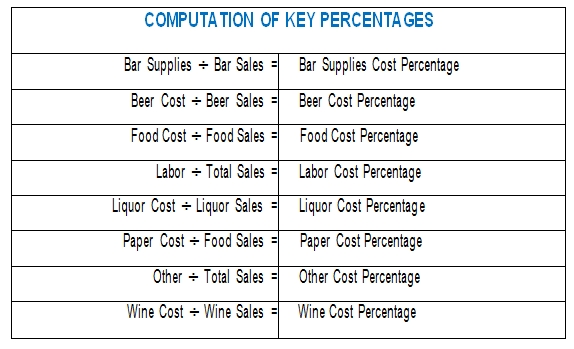
Bar Sales PercentagesAt the end of each month, it is important to close out all expenses and sales and balance all accounts. This process ensures that finances are being monitored and helps prevent financial problems down the line. It also lets you, the bar manager, see whether the bar is making a profit or not and what changes (if any) need to be made to operations.

Closeout actually depends on what goes on financially in your bar all month. It is essential that all expenses are recorded each day. Not having a reliable list of expenses incurred is sure to result in inaccurate bookkeeping and many problems at audit time. You need to record all expenses—including those that are prepaid or those for which you get a bill.

Monthly Audit Procedures

On the last day of the month:

1. Gather the completed inventory forms for food, liquor, wine, and operational supplies.

2. Using current invoices and past inventories, cost out the Inventory Form. The unit cost (or price) entered on the Inventory Form must correspond to the item and unit in the actual inventory. Correct prices are ensured by continual evaluation of invoices and/or contact with the suppliers.

3. Ensure that the employees organize and clean the storage areas and walk-ins so that the ending inventory may easily be taken the following morning. Combine all containers and bottles. Organize and label all shelves.

4. Schedule the bookkeeper and the employees involved in taking the physical inventory—the assistant manager, kitchen director, bar manager, and general manager—to arrive early in the morning prior to the start of business on the first of the month.

5. Schedule the preparation cooks to arrive an hour after the inventory crew so that you may inventory the food areas without disturbing them.

On the following morning, the first of the month:

6. The bookkeeper should arrive as early as possible in order to complete all of his or her work prior to management's completion of the inventory:

A. Reconcile and record all the transactions from the previous day, as
usual.

B. Enter the information on the Daily Sales Report Form. Total,
double-check, and verify all the columns.

C. From the employee time cards complete, total, double-check, and verify the Labor Analysis Form.

D. Ensure that all purchases are recorded in the Purchase Ledger. Complete, total, double-check, and verify the Purchase Ledger for each company. Total the purchases in each expenditure category: food, liquor, wine, and each individual operational category.

Ensure that all paid-outs entered on the Cashier's and Bartender's Reports have been posted into the appropriate Purchase Ledger categories. Total the cash paid-outs. Add this figure into the purchase total for each expense category.

Computation of Key Percentages


This article is an excerpt from the The Professional Bar & Beverage Managers Handbook: How to Open and Operate a Financially Successful Bar, Tavern and Nightclub, authored by Douglas Robert Brown, published by Atlantic Publishing Group. This excerpt has been reprinted with permission of the publisher. To purchase this book go to:

Atlantic Publishing Company
Amazon.com

Topics: Bar inventory, NightClub Management, bar business, Reducing Liquor Costs, bar control

Loss Prevention: The Bar Manager's Key to Quick Profit Growth

Posted by Nick Kaoukis on Thu, Aug, 16, 2012 @ 13:08 PM

How Keeping Close Tabs On Your Liquor Supply Can Both Cut Costs & Generate Revenue

Inventory ControlIndustry studies have consistently shown that a full 25% to 30% of a bar's liquor inventory never converts into registered sales. That is the equivalent of about six to eight 1.25 oz portions per bottle (which should yield at least 25 portions.) This loss of liquor volume--due to unauthorized comps, over-pouring, spillage or theft--should be of great concern to any bar manager. 

While losing 25% of a $25 bottle may not seem like a very serious problem--an unavoidable cost of doing business--the true cost is much greater than that $6 or $7 per bottle. The question you need to ask yourself is: Where is this lost liquor going? And how is it affecting sales? For instance, if your bartender is not pouring 1.25 oz portions, but is instead pouring 2 oz portions (say, perhaps, to curry favor with clients and receive a bigger tip), you're not just losing liquor volume, you're also losing potential sales. Where the customer may have been disposed to buy three drinks (3.75 ounces), he may now be content to buy just two 2-ounce drinks. Your bartender's actions, in this case, haven't merely cost you a dollar's worth of liquor, they may well have cost you $6-$8 in lost sales revenue (depending on how you price your drinks). And that's just for one customer buying two drinks. How often is this occurring? What if your bartender also happens to be giving away free drinks without your knowledge or authorization? The point is: "shrinkage" does not only affect supply costs, it can also affect revenues in a big way. 

That's why loss prevention is so important. The profitability of your business depends on whole bunch of variables--the location of your establishment, the overall economy, ever-changing customer tastes.... Achieving profit growth can be difficult and can rarely be accomplished overnight. Increasing the price of your drinks is risky, and can prove more harmful than helpful as far as your bottom line is concerned. And growing your clientele usually takes time. The best way to increase profits in the short-term, therefore, is not to try to fiddle with pricing or to increase your client base. (Of course, this is something you should always be doing. But it is not easy to do in the short-term.) The quickest way to increase revenue is to make the most of the clients you're already serving. And one way to do this is to improve operations by getting tighter grip on your inventory. Loss of liquor supply at double-digit levels is not an "unavoidable cost of doing business". It is "bad business". And it is entirely avoidable. Put simply, loss prevention can pay big dividends. What's more, it can be achieved quite quickly through the implementation of a quality liquor inventory control system.

Topics: liquor inventory, Bar inventory, bar inventory levels, bar efficiency, bar profitability, Bar Management, Liquor cost, Liquor Inventory savings, alcohol cost, Increasing Profits, Reducing Liquor Costs, bar control, inventory control, managing liquor costs

The Bottom Line: Reducing Costs & Increasing Profits

Posted by Nick Kaoukis on Wed, Jul, 06, 2011 @ 09:07 AM
Cutting liquor costsBy Chris Parry
Atlantic Publishing
 

Part 1 of 2: The Profits

 
What does each drink cost you?
Without profits, you're out of business, but so many managers see profits as what the owners worry about. Your job is as much to grow profits as to sustain them, so consider putting a little elbow grease into the growth of your establishment by learning about the nickel and dime stuff. A good bar operator needs to wear a number of hats, but the four most important are that of promoter, psychologist, host and accountant. This isn't to say that you need to be of professional standard in all four areas, but you do need a working knowledge of each area, so that you can fine-tune those aspects of your business. On the accounting side of things, you need to be able to assess what every piece of your business costs. Also, as your spirits and liqueurs are a very large segment of your inventory, you should learn exactly how much each and every drink you sell actually costs you. Follow these exercises and you'll be able to assess exactly which drinks bring you the highest profit margin and which drinks could use a price increase.
  • Cost per ounce. There is 33.8 ounces in a liter, so if you're paying $15 a liter for a certain spirit, simply dividing that amount by 33.8 will bring you the beverage's ounce cost (in this case, $0.44). If your bottle size is 750ml, then divide the bottle cost by 25.35 to get the ounce cost. Likewise, dividing a 500ml bottle by 16.9 will give you that product's ounce cost.
  • Total beverage cost. When calculating what it costs you to provide a mixed drink to a customer, simply figure out the ounce cost of each item in the drink. A half-shot means adding half the ounce cost of that shot, whereas a double shot would mean doubling the ounce cost. Make sure to include every aspect of the drink, such as mixers, dashes of cordial and garnishes. The total of each of these ounce costs will be your "beverage cost" for that drink.
  • Cost percentage.  When you're investing in inventory, you want to know that you're getting a good return on your money and the best way to figure out your percentage return is to estimate your cost percentage for each drink you sell. Simply divide your ounce cost (or bottle cost) by the sale price you've set for that item and then multiply that number by 100. The total will tell you exactly what percentage of the final drink price you are spending on the purchase of its raw contents. The lower the number, the more profit you're making.
  • Gross profit margin. To figure out each item's gross profit, simply deduct the cost price from the sale price. To figure out your gross profit margin, take the gross profit, divide it by the sales price and multiply it by 100. The figure remaining is your gross profit margin. You may well find it varies greatly from beverage to beverage. This will tell you which items have a high enough profit margin to push on your customers and which items are just making up the numbers.


This article is an excerpt from the Food Service Professional Guide to Bar & Beverage Operation, authored by Chris Parry, published by Atlantic Publishing Company. This excerpt has been reprinted with permission of the publisher. To purchase this book go to:

Atlantic Publishing Company 
Amazon.com

Topics: bar business, alcohol cost, Increasing Profits, Reducing Costs, Reducing Liquor Costs, inventory control