
Proper bar stock rotation can be the difference between pouring profits down the drain and maximizing every dollar invested in your beverage inventory.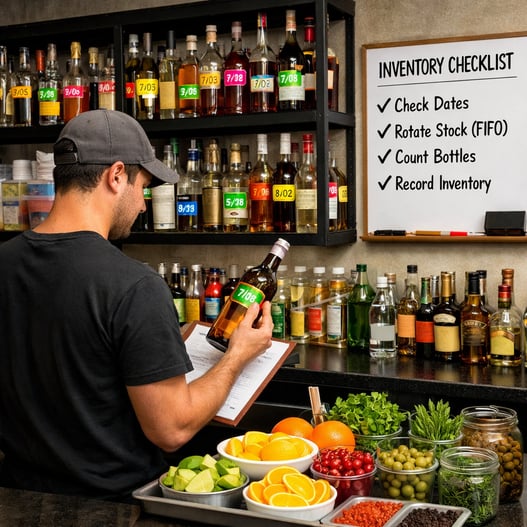
The Hidden Costs of Poor Inventory Management
As a bar owner for over a decade, I've learned that what happens behind the scenes directly impacts what ends up in your customers' glasses—and your bottom line. Poor inventory management isn't just about a few bottles going bad; it's a silent profit killer that can bleed your business dry without you even realizing it. Every expired mixer, oxidized bottle of wine, or stale garnish represents dollars literally thrown in the trash. When you multiply these losses across weeks and months, you're looking at thousands of dollars in wasted inventory annually.
Beyond the direct product loss, there are cascading effects that compound the problem. Staff waste time searching for products in a disorganized stockroom, pulling older items from the back while newer stock sits up front. This inefficiency slows down service during peak hours, leading to longer wait times and frustrated customers. Additionally, inconsistent drink quality from using degraded ingredients damages your reputation—something far more costly than any single bottle. Insurance claims, health code violations from expired products, and the opportunity cost of capital tied up in dead stock all add layers of financial strain that most bar owners don't account for until it's too late.
The real eye-opener came when I conducted my first thorough inventory audit. I discovered nearly 15% of my stock was either expired, oxidized, or so close to its expiration date that it would never sell. That percentage represented a five-figure loss for the year. The worst part? This wasn't due to slow business—it was purely a management failure. Since implementing proper rotation systems, I've reduced waste by over 80%, and those savings have gone straight to our profit margin. The hidden costs of poor inventory management are only hidden until you decide to look for them.
First In, First Out: Mastering the FIFO Method Behind the Bar
The FIFO (First In, First Out) method is the gold standard for inventory management in the bar industry, and for good reason—it's simple, effective, and ensures that your oldest stock gets used before it deteriorates. The concept is straightforward: when new inventory arrives, it goes to the back or bottom of storage, while older stock moves to the front or top where it's most accessible. This ensures that bartenders naturally grab the products that have been sitting longest, preventing items from languishing in the back until they're unusable. While it sounds basic, proper FIFO implementation requires systematic organization and consistent execution from your entire team.
Implementing FIFO behind your bar starts with smart storage solutions. Invest in shelving that allows for front-to-back rotation, and use clear labeling systems that include receive dates on every product. For bottles, I use a simple color-coded sticker system—different colors for different months—so staff can instantly identify which products are oldest at a glance. For perishables like fresh juices, mixers, and garnishes, date everything immediately upon receipt and organization by date is non-negotiable. Create designated zones in your walk-in cooler and dry storage where specific product categories live, and establish a one-way flow pattern so new stock has a clear path to the back.
The key to FIFO success is making it so intuitive that your team follows it automatically, even during a busy Saturday night rush. Train every staff member on the system during onboarding, and build rotation checks into your opening and closing procedures. I've found that weekly rotation audits, where a manager physically checks that stock is properly ordered, catch any lapses before they become problems. When your team understands that FIFO isn't just about following rules—it's about protecting product quality, ensuring customer satisfaction, and ultimately protecting their jobs through better profitability—compliance becomes second nature. The FIFO method isn't complicated, but it does require commitment and consistency to master.
How Fresh Ingredients and Properly Stored Spirits Elevate Guest Experience
Your customers might not be able to articulate why a cocktail tastes better at your bar than your competitor's, but they can definitely sense the difference. Fresh ingredients and properly rotated spirits create a noticeable quality gap that keeps guests coming back and recommending your establishment. Consider the difference between a margarita made with fresh lime juice squeezed that day versus one made with juice that's been oxidizing in the cooler for a week. The fresh version has bright, vibrant citrus notes that dance on the palate, while the old juice tastes flat, slightly bitter, and dull. These subtle distinctions accumulate across every drink you serve, building either a reputation for excellence or mediocrity.
Spirits require proper rotation too, even though many bartenders assume liquor lasts forever. While distilled spirits don't spoil like fresh ingredients, they do oxidize once opened, particularly vermouths, liqueurs, and anything with lower alcohol content. An oxidized bottle of Campari or sweet vermouth can turn your Negroni from balanced and aromatic to harsh and discordant. Similarly, cream liqueurs absolutely require rotation and proper storage, as they can separate or even curdle past their prime. By maintaining fresh, properly stored spirits and rotating stock religiously, every cocktail that leaves your bar represents your establishment at its absolute best.
The guest experience extends beyond taste to visual presentation and aromatics. Fresh garnishes—crisp herbs, vibrant citrus peels, and firm fruit—make drinks visually appealing and release essential oils that enhance the drinking experience. Wilted mint or dried-out orange peels signal neglect and diminish perceived value, even if the liquid itself is perfect. I've watched customers photograph and share drinks made with pristine, fresh garnishes on social media, generating free marketing worth far more than the cost of the ingredients. When you commit to freshness through proper stock rotation, you're not just maintaining quality—you're creating memorable experiences that turn first-time visitors into regulars and regulars into ambassadors for your brand.
Building a Stock Rotation System That Your Team Will Actually Follow
The best inventory system in the world is worthless if your team doesn't follow it, and that's where most bar owners fail. I've learned that successful systems aren't built on complexity or rigid rules—they're built on simplicity, clear communication, and making the right behavior the easiest behavior. Start by involving your team in system design. When bartenders and barbacks have input on how rotation should work, they develop ownership and are far more likely to comply. Hold a team meeting to discuss current pain points, demonstrate the financial impact of waste, and brainstorm practical solutions together. This collaborative approach transforms rotation from a mandate imposed from above into a shared commitment to excellence.
Next, integrate rotation into your existing workflows rather than treating it as separate extra work. Make stock rotation part of the opening checklist: before the bar opens, someone conducts a quick rotation check on key items. Build it into your receiving process: when deliveries arrive, the staff member checking in products also handles immediate rotation and dating. Create visual management tools that make compliance effortless—checklists posted in the stockroom, rotation maps showing where each product category lives, and clear signage indicating 'new stock' versus 'use first' areas. The goal is to eliminate decision-making and ambiguity so that even a new hire or a bartender in the weeds during rush hour knows exactly what to do.
Finally, support your system with accountability and positive reinforcement. Conduct weekly spot checks, but frame them as quality assurance rather than policing. When you find excellent rotation practices, praise that staff member publicly and consider implementing an incentive program tied to waste reduction. Conversely, when you find violations, address them immediately through retraining rather than punishment—often, mistakes stem from misunderstanding rather than negligence. I track waste percentages monthly and share results with the team, celebrating improvements and discussing opportunities. When everyone sees their efforts translating into reduced waste and better profitability, the system sustains itself through collective pride in running a tight, professional operation.
Tracking ROI: Measuring the Impact of Better Inventory Practices
You can't improve what you don't measure, and tracking the return on investment from better inventory practices is essential for justifying the time and effort required. Start by establishing baseline metrics before implementing your new rotation system. Calculate your current waste percentage by dividing the value of discarded or expired inventory by your total inventory purchases over a given period—monthly tracking works well for most bars. Also measure your inventory turnover ratio, which shows how many times you sell through your entire inventory in a period. These baseline numbers give you concrete starting points for comparison and help identify your biggest problem areas.
Once your rotation system is in place, monitor the same metrics monthly to track improvement. In my experience, bars typically see waste reduction of 50-80% within the first three months of implementing proper FIFO practices and staff training. That translates directly to profit—if you were previously wasting $2,000 monthly in spoiled inventory and you reduce that by 70%, you've just added $16,800 annually to your bottom line. But the benefits extend beyond waste reduction. Better inventory practices also improve your pour cost percentage, as you're using products at peak quality rather than compensating for degraded ingredients. Track your overall beverage cost percentage and watch it decrease as efficiency improves.
Don't overlook the intangible ROI that's harder to quantify but equally valuable. Monitor customer feedback and online reviews for comments about drink quality and consistency—you should see improvements as your rotation practices ensure every cocktail meets your standards. Track staff efficiency by measuring how long it takes to locate products and complete opening/closing duties; proper organization cuts this time significantly. Finally, consider the reduced stress and improved morale that comes from running an organized, professional operation. When I review our numbers quarterly with my management team, the data consistently confirms what I see on the floor: better inventory practices create a compound return that touches every aspect of the business, from profit margins to customer satisfaction to staff retention. The ROI of proper stock rotation isn't just measurable—it's transformative.