
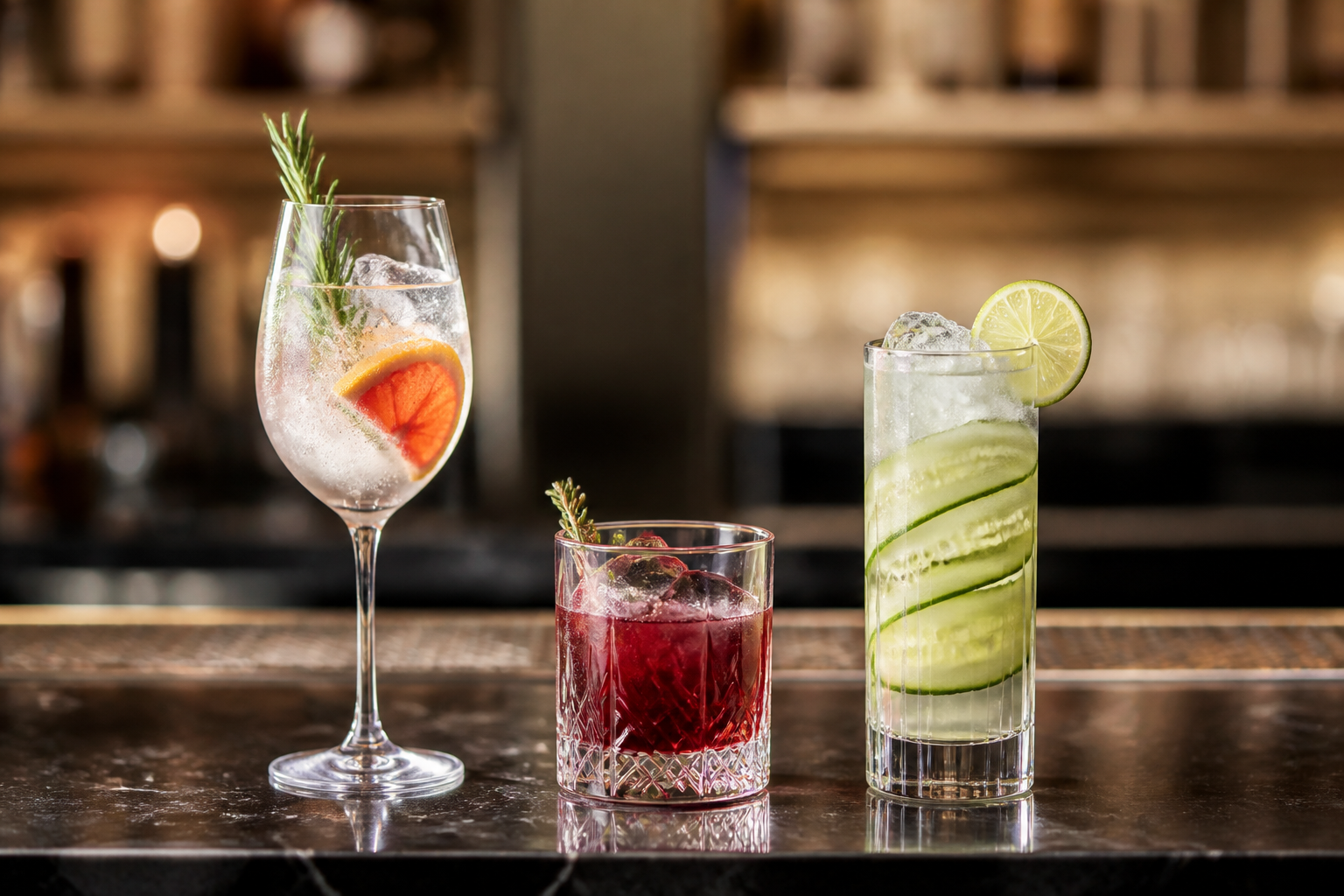
An attractive drink menu can still lose money through wasted ingredients, slow preparation, and prices that ignore the full recipe. A structured non-alcoholic cocktail program needs the same operating discipline as your alcoholic beverage program.
For bar owners, restaurant managers, and hotel beverage directors, the opportunity is to meet changing guest preferences while protecting contribution dollars. Scannabar supports beverage inventory control that helps make the stock side of that review visible.
This guide covers menu construction, recipe costing, ingredient controls, staff recommendations, and performance measurement. The financial example is hypothetical. Use your own supplier invoices and sales records before making pricing or purchasing decisions.
Key Takeaways: Profitable Non-Alcoholic Cocktail Menus
- Cost every non-alcoholic cocktail recipe before setting its price, including mixers, garnishes, preparation yields, and purchased botanical bases.
- Build your first drinks around existing ingredients so the new menu does not create unnecessary purchasing commitments or slow-moving stock.
- Document storage requirements and use-by rules for each perishable ingredient rather than assuming opened products behave like distilled spirits.
- Scannabar supports inventory measurement and usage reporting that help operators investigate ingredient consumption alongside their broader beverage cost-control process.
- Evaluate sales, waste, preparation time, and contribution dollars together before deciding which drinks deserve more menu space or further promotion.
Why Non-Alcoholic Cocktails Deserve an Operating Plan
Non-alcoholic cocktails give you another way to serve guests who want a crafted drink without choosing a conventional alcoholic cocktail. Demand evidence supports testing the category, but it does not establish the likely profit for your particular venue.
The National Restaurant Association's 2026 report, released August 25, found that 49% of surveyed fullservice operators were expanding alcohol-free cocktails. Its findings describe operator plans, not guaranteed sales increases.
The same report found that 72% of surveyed consumers considered restaurants a place to discover unfamiliar beverages. Give those guests specific choices and informed recommendations, then measure whether interest becomes paid orders.
Moderation Creates Opportunities Across Different Guest Occasions
Moderation can change what a guest orders during an existing visit, rather than creating a separate customer segment. A table may include people choosing alcoholic drinks, lower-alcohol drinks, and drinks with no alcohol.
NIQ's January 2026 hospitality outlook, presented in a UK and Ireland context, identifies moderation and low/no-alcohol choices as important drinks trends. Treat that market evidence as directional when planning a venue elsewhere.
Your own reservations, guest feedback, and sales records provide the local test. A trend gives you a reason to investigate; it does not replace the investigation.
Distinguish Added Revenue From Shifted Spending
A non-alcoholic cocktail order can add beverage spending, replace another drink, or shift spending between menu categories. Those outcomes have different financial consequences, even when the new category reports healthy sales.
Compare total beverage revenue per cover before and after introducing the menu, while noting changes in traffic, prices, promotions, and daypart. A busy holiday week is not a clean comparison with an ordinary service week.
Track the costs attached to those sales as well. New revenue accompanied by discarded ingredients and additional preparation hours may contribute less than the sales total suggests.
Build a Non-Alcoholic Menu Around Existing Ingredients
Start your non-alcoholic menu with ingredients already used successfully across your bar and kitchen. Shared ingredients can limit new purchasing commitments and make preparation easier to organize.
List juices, syrups, teas, tonics, sodas, herbs, and garnishes alongside their purchase units, storage needs, and existing uses. That inventory becomes a practical development brief rather than an invitation to purchase every specialty product.
Choose Flavor Coverage Before Expanding the Drink List
A compact menu should offer distinct flavor choices rather than several drinks that serve the same preference. Consider a refreshing citrus option, a drier botanical option, and a richer or spiced option as a starting test.
The exact number is an operating decision. Match it to your station space, preparation capacity, expected demand, and staff knowledge. A hotel lounge and a small neighborhood restaurant do not need identical lists.
Write a reason for each drink's place on the menu. If two drinks require separate ingredients but appeal to the same guest preference, test whether both justify their stock and preparation requirements.
Give Each New Ingredient a Purchasing Case
A new ingredient should have a defined use, an expected rate of consumption, and a workable storage plan before you order it. Supplier pack size matters as much as the cost of an individual serving.
Compare the smallest available order with likely sales during the product's documented usable life. An attractive bottle cost means little if much of its contents will be discarded.
Set initial par levels conservatively and review them after the test. Increase stock because measured demand supports it, not because the shelf looks incomplete.
Verify Alcohol Content Before Naming or Describing Drinks
Do not assume that a product described as non-alcoholic contains no alcohol. Check the supplier's label and specifications for every ingredient, including bitters, extracts, fermented components, and botanical alternatives.
Use local regulatory definitions when choosing menu descriptions such as non-alcoholic, alcohol-free, and zero-proof. Avoid suggesting that a drink is suitable for a medical, religious, or personal restriction unless you can substantiate that description.
Give staff access to the ingredient information and a clear escalation procedure. When a guest needs a precise answer, checking the specification is more useful than offering reassurance from memory.
Cost and Price Non-Alcoholic Cocktails Before Launch
Set prices from complete recipe costs, your operating requirements, and the value of the finished drink. Removing an alcoholic spirit does not automatically make a recipe inexpensive or profitable.
Purchased botanical alternatives, garnishes, preparation losses, and labor can change the economics. Apply the same cost-control discipline you use elsewhere in the beverage program.
Convert Purchase Units Into Usable Recipe Quantities
Ingredient cost per serving depends on the usable quantity obtained from a purchase unit. Divide the purchase cost by usable yield, then multiply by the recipe quantity.
Keep units consistent. A supplier invoice in liters cannot be compared directly with a recipe written in fluid ounces without a conversion. Distinguish fluid volume from weight when handling syrups and concentrates.
For prepared ingredients, retain a batch recipe and measured yield. Record the cost of its components and allocate that cost across the usable batch rather than treating preparation as free product.
Use a Hypothetical Recipe to Check the Calculation
The following botanical spritz example uses invented figures solely to demonstrate costing. These figures are not supplier prices, market benchmarks, or a recommended menu price.
| Ingredient | Recipe quantity | Hypothetical cost |
|---|---|---|
| Botanical alternative | 1.5 fluid ounces | $0.90 |
| Lime juice | 0.75 fluid ounces | $0.15 |
| Rosemary syrup | 0.5 fluid ounces | $0.10 |
| Tonic | 3 fluid ounces | $0.25 |
| Garnish | One specified serving | $0.15 |
| Total recipe cost | $1.55 |
At a hypothetical net selling price of $11, ingredient cost percentage is $1.55 divided by $11, multiplied by 100: approximately 14.1%. The sale leaves $9.45 after the listed ingredients, before other expenses.
That $9.45 is not net profit. Labor, payment fees, consumables, occupancy, and other expenses still require coverage. Keep the definition of any contribution measure explicit.
Compare Contribution Dollars and Preparation Requirements
A lower ingredient-cost percentage does not necessarily produce more contribution dollars per sale. Compare the selling price minus included variable costs, using the same definition across drinks.
Record preparation requirements separately if they are not included in your contribution calculation. A drink that uses little purchased product may still occupy a bartender for a significant part of a busy service.
Time several preparations under realistic conditions. Use that observation to adjust the recipe, station setup, or service method before deciding that a favorable ingredient ratio proves the drink belongs on the menu.
Keep Recipe Costing Separate From Period Beverage Cost
Recipe cost describes expected ingredients in one serving. Period beverage cost describes inventory consumed across a reporting interval, including product that did not become an ordinary paid sale.
Use matched counts, receipts, transfers, returns, and sales boundaries when calculating period beverage cost. Purchases alone cannot show consumption because some stock remains unused.
Maintain the same ingredient scope in both views. Including garnishes in recipe costs but excluding them from actual consumption produces a comparison that cannot reliably explain performance.
Control Ingredient Waste and Stock Levels
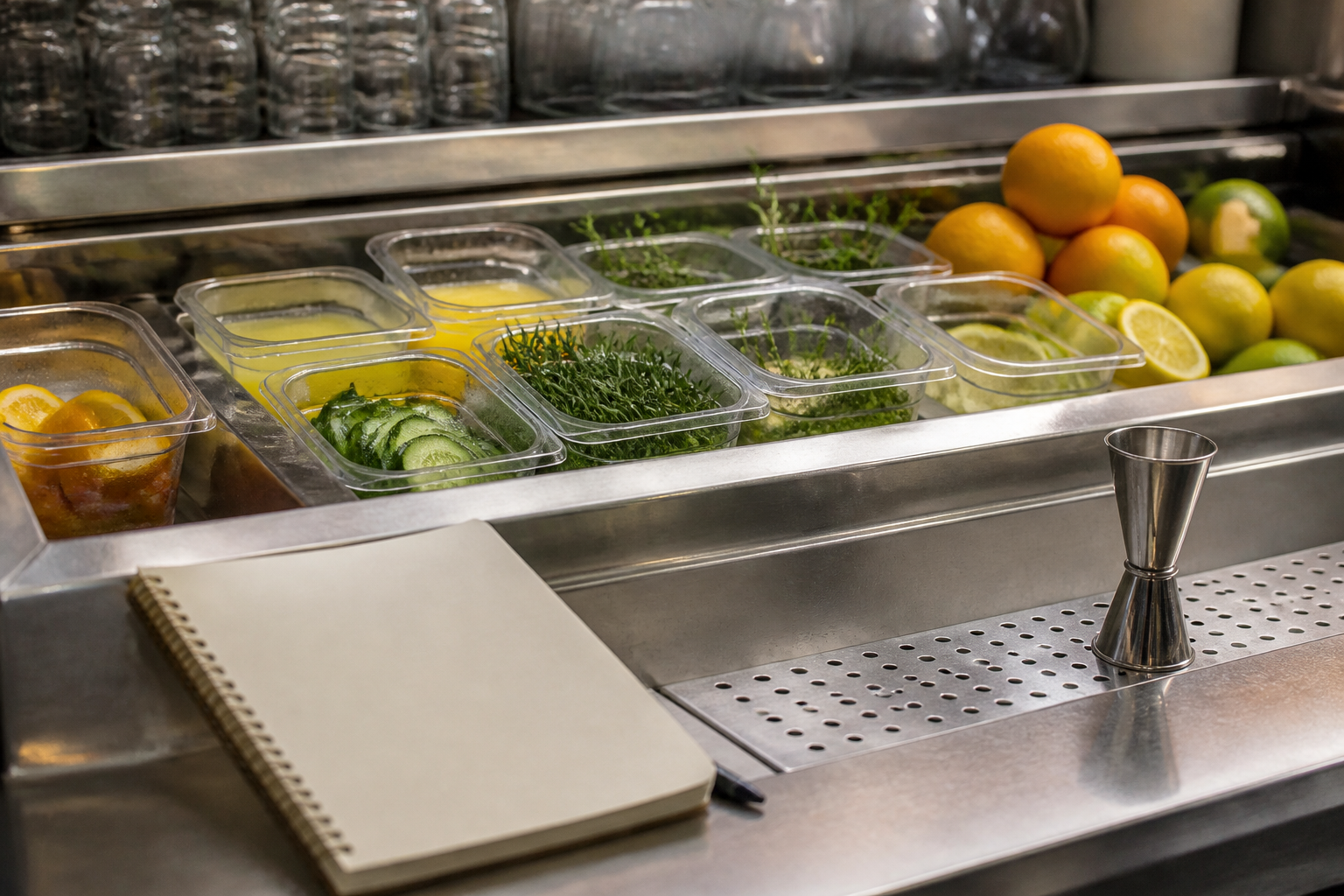
Protect margins by linking purchasing and preparation to demand and documented storage requirements. Excess stock can create a chain of costs: more cash committed, more storage occupied, and more product exposed to disposal.
Assign responsibility for receiving, labeling, rotation, and waste records. A drink program needs clear ownership even when its ingredients are shared between the kitchen and bar.
Use Product-Specific Storage and Disposal Instructions
Document storage conditions and use-by rules for each perishable ingredient using supplier instructions and your approved food-safety procedures. Do not borrow a generic shelf-life estimate for a different recipe or product.
Label prepared batches and opened containers with the information your procedures require. Record preparation or opening dates, storage requirements, and disposal boundaries so another shift can make a defensible decision.
Quality and safety are separate questions. A product can lose its intended flavor before its safety limit, and acceptable appearance does not establish safety. Follow the applicable documented controls.
Match Batch Size to Demand and Usable Life
Prepare quantities that expected sales can consume within the documented usable window. A larger batch can reduce preparation frequency while increasing the amount exposed to waste.
Start from servings sold, recipe quantities, upcoming bookings, and the next preparation opportunity. Adjust for meaningful demand changes rather than repeating last week's batch automatically.
Record what remains and what is discarded. If the same base is repeatedly thrown away, reduce the batch, change its menu applications, or reconsider the drink rather than hiding the loss inside general supplies.
Count Shared Ingredients Within a Defined Scope
Shared ingredients need stock-movement records when they pass between departments or outlets. A syrup moved from the kitchen to the bar can look like unexplained consumption if only one side records the transfer.
Scannabar's dry goods inventory coverage includes mixers, syrups, garnishes, and consumables. Establish appropriate product records and counting units before including those items in your review.
Choose a scope your team can maintain consistently. A complete record for a defined category is more useful than a broad report whose missing locations and movements make the result unreliable.
Train Staff to Recommend Drinks With Confidence
Staff need product knowledge, clear descriptions, and accessible ingredient information to recommend non-alcoholic cocktails accurately. Treat training as part of the launch, not an optional follow-up after disappointing sales.
Give each drink a recipe card, a flavor description, a service specification, and ingredient disclosures. Include the procedure for substitutions so an improvised change does not invalidate the menu description or recipe cost.
Teach Flavor Descriptions Through Structured Tasting
A structured tasting helps staff distinguish drinks and describe them in practical language. Ask participants to identify sweetness, acidity, bitterness, texture, and the occasions each drink suits.
Provide alternatives for staff who cannot or prefer not to taste a product. Ingredient information, preparation demonstrations, and agreed tasting notes can still support informed service.
Finish with a short recommendation for each drink. Specific flavor language gives the guest a useful choice and avoids presenting the non-alcoholic list as an afterthought.
Ask Preferences Without Making Personal Assumptions
Ask what flavor or style a guest wants rather than why they are not drinking alcohol. The reason is personal and does not need to become part of an ordinary recommendation.
Offer a refreshing, dry, botanical, or richer option using the guest's stated preference. If they require complete avoidance of alcohol or another ingredient, confirm the specification rather than assuming a category label answers the question.
Make the menu easy to find and prices clear. Measure whether revised placement or descriptions change orders before treating one presentation format as universally effective.
Measure the Menu Before Expanding It
Review non-alcoholic cocktail sales alongside ingredient consumption, waste, and service requirements. A growing sales category can still conceal a weak contribution or a preparation problem.
Set a review cadence and assign an owner. Retain the opening assumptions so you can compare actual performance with the purchasing, costing, and demand expectations that justified the launch.
Track Sales Mix and Revenue Per Cover
Sales mix shows the share of beverage revenue attributable to non-alcoholic cocktails. Calculate it from matching dates and outlets, then inspect the result by drink and daypart.
Compare revenue per cover alongside the mix. A category gaining share while total beverage revenue falls does not, by itself, demonstrate success or failure; traffic and substitution effects need examination.
Record promotions, events, and price changes. Those notes help explain movements without incorrectly attributing every improvement to a new drink or every decline to staff performance.
Investigate Actual Versus Theoretical Ingredient Usage
Theoretical usage combines recorded sales with standard recipe quantities. Actual usage comes from stock counts and documented movements. Their difference needs reconciliation before you identify a cause.
Use an actual versus theoretical review to check receiving errors, transfers, recipe mapping, recorded waste, complimentary servings, and portion differences. Unexplained variance is not proof of theft.
Scannabar provides product and outlet usage reporting. Its sample reports illustrate the reporting resources available to support a review grounded in evidence rather than accusations.
Keep, Adjust, or Remove Drinks Using the Evidence
Menu decisions should combine popularity, contribution dollars, waste, and execution requirements. Review why an item underperforms before removing it or adding more stock.
A low-selling drink may need clearer description or staff familiarity. A popular drink may need a recipe or preparation change if its contribution is weak. Evaluate changes individually where practical so you can interpret the outcome.
For groups, compare outlets with similar service patterns before standardizing the menu. A successful lobby-lounge drink may not suit a banquet bar's preparation window, guest mix, or available storage.
Build a Beverage Program You Can Explain
A profitable non-alcoholic cocktail program depends on disciplined execution and measurement, not trend participation alone. Start with a defined menu, costed recipes, documented ingredient handling, and trained staff.
Review what sold, what was consumed, what was discarded, and what remained after the costs included in your analysis. Use those records to make the next purchasing and menu decision.
The choice is practical: expand a program because its evidence supports expansion, or keep refining it until the economics are clear. Sales enthusiasm is useful. A traceable operating result is more useful.
FAQs About Non-Alcoholic Cocktail Programs
How should a bar price non-alcoholic cocktails?
Price each drink from its recipe cost, operating requirements, and intended guest experience. Calculate ingredient percentage and contribution dollars, then consider preparation demands separately. There is no universal price or margin target that establishes profitability across every venue.
Can non-alcoholic drinks be more profitable than alcoholic cocktails?
They can produce a higher contribution, but the result depends on selling prices, ingredients, and other included costs. A specialty botanical base is not automatically cheaper than a spirit. Compare your actual recipes and supplier invoices rather than assuming a category guarantees better margins.
How can inventory software support the program?
Scannabar supports inventory measurement and usage reporting across beverage categories and dry goods. Include the relevant ingredients and maintain consistent units and movement records. Software can organize the review, but it does not replace complete recipes, accurate receiving records, or food-safety procedures.
Does a stock discrepancy prove employee misconduct?
No. Errors in counts, receipts, transfers, recipes, and sales mapping can create discrepancies. Scannabar's product-level reporting helps focus the investigation. Reconcile documented use and verify records before attributing an unexplained difference to a person.
What should staff say when guests require no alcohol?
Staff should confirm ingredient specifications and explain what can be verified. A non-alcoholic label does not necessarily establish complete absence of alcohol. Check every component and follow local labeling rules; avoid making medical assurances or relying on an informal category description.
What should managers review after introducing the menu?
Review sales by drink and daypart, revenue per cover, ingredient consumption, recorded waste, and preparation demands. Scannabar's usage reporting supports the inventory side of that assessment. Compare equivalent periods and document promotions or events that may affect the result.