Liquor Inventory Experts

Hotel Beverage Inventory Transfers: A Practical Guide

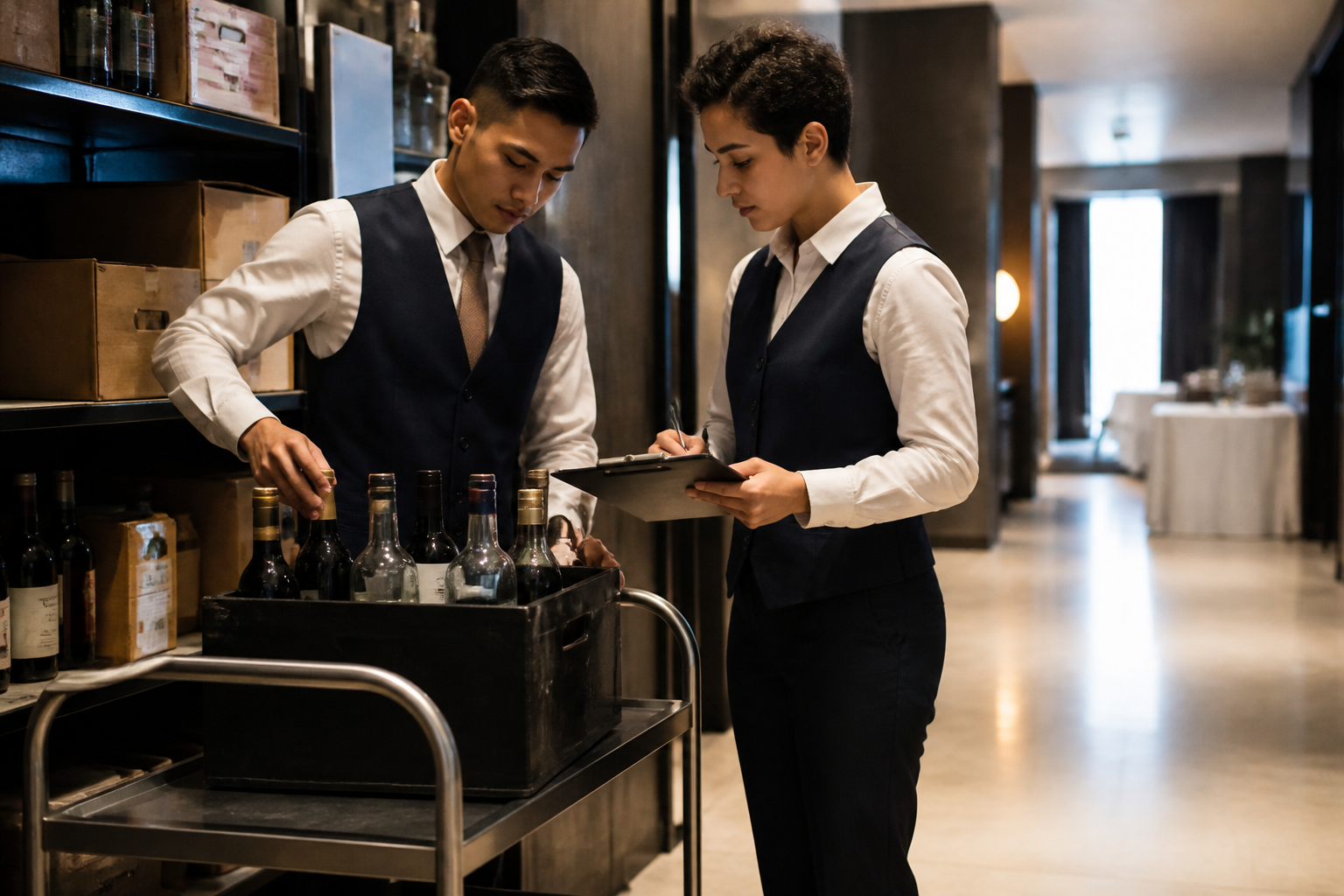
Hotel staff member checking a wine crate in a beverage storeroom

In a hotel with multiple beverage outlets, bottles move constantly. The banquet team pulls vodka from the central storeroom. The pool bar borrows rum from the lobby bar. Room service returns wine that a guest did not open. Every one of those movements changes the inventory at two locations, and if only one side records the transaction, both outlet reports become unreliable.

Untracked transfers are one of the fastest ways to produce phantom variance. A $30 bottle of bourbon that moves from storage to the banquet bar without documentation creates a $30 shortage in storage and a $30 surplus in the banquet bar. Neither number is real. Both waste investigation time. And the staff at the storage location may end up defending a variance they did not cause. FSM.How's guide to beverage control identifies standardized receiving and transfer procedures as foundational to effective hotel beverage management.

This guide covers the transfer types hotel operators manage, the fields your transfer log needs, a worked hotel inventory reconciliation example, and the outlet-level review process that catches exceptions before they compound. The financial examples use hypothetical figures. Apply your own supplier invoices and internal cost records before changing procedures.

Key Takeaways: Hotel Beverage Inventory Transfers

  • Document every bottle that moves between outlets, including storage-to-bar, bar-to-banquet, and returns from any source.
  • A transfer log needs product, quantity, unit cost, sending location, receiving location, authorization, and confirmation fields.
  • Reconcile transfers on both sides to prevent double-counting that inflates one outlet's stock and deflates another's.
  • Scannabar supports multi-outlet inventory tracking that keeps transfer records connected to bottle-level counts and variance analysis.
  • Review outlet-level variance reports weekly and investigate exceptions before they compound across periods.

What Transfer Types Do Hotel Beverage Operations Manage?

Hotel beverage operations handle several distinct transfer types. Each one has different documentation requirements and different risks when it goes unrecorded.

Storage to Service Bars

The most common transfer is stock moving from a central storeroom or receiving area to a service bar. This happens daily in most hotels. The lobby bar needs replenishment. The restaurant bar ran through its gin allocation. The rooftop bar opens for the season and needs an initial stock set.

Every bottle that leaves storage and arrives at a service bar needs a documented transfer record. The sending location records a transfer out. The receiving location records a transfer in. If the storage team sends 12 bottles and the bar team receives 11, that discrepancy must be flagged immediately, not discovered during a month-end count.

Bar to Banquet Transfers

Banquet events create concentrated, high-volume stock movements. A 200-person reception might require 15 bottles of vodka, eight bottles of whiskey, and a case of wine transferred from the central store to the banquet prep area in a single pull.

These transfers are larger than daily bar replenishment and often happen under time pressure. The event is tonight. The banquet manager needs the product now. That urgency is where documentation breaks down. Build the transfer process into your event setup checklist so it happens alongside the physical movement, not as an afterthought.

Returns From Outlets and Events

Not everything that transfers out stays out. A banquet event that pulled 15 bottles of vodka may return four unopened bottles to storage the next morning. The pool bar may send back seasonal products when it closes for the winter. Room service may return wine that a guest declined.

Returns are transfers in reverse, and they require the same documentation rigor. A returned bottle must be logged at both the sending outlet and the receiving location. If the return is not recorded, the receiving location's inventory inflates silently, and the next count shows a surplus that is just as misleading as a shortage.

What Fields Does a Transfer Log Need?

A useful transfer log captures enough detail for variance reconciliation, cost allocation, and audit review. A log that records "6 bottles to banquet" without specifying the product, cost, or authorization is barely better than no log at all.

Required Fields for Every Transfer

FieldWhat It CapturesWhy It Matters
ProductBrand name, bottle size, SKUIdentifies the specific item for cost and inventory matching
QuantityNumber of units transferredDrives the dollar value of the transfer and the adjustment to each location's stock
Unit CostCost per bottle at the time of transferEnsures both locations use the same value, preventing cost discrepancies between outlets
Sending LocationOutlet or storage area originating the transferCreates the transfer-out record that reduces the sending location's inventory
Receiving LocationOutlet or event space accepting the transferCreates the transfer-in record that increases the receiving location's inventory
AuthorizationName or ID of the person approving the transferEstablishes accountability and prevents unauthorized movement of high-value stock
Receiving ConfirmationSignature or acknowledgment by the receiving partyConfirms that the quantity shipped matches the quantity received, catching shortages at the point of transfer
Date and TimeWhen the transfer occurredAligns the movement with the correct reporting period for both locations

Filled Transfer Log Example

The following entries are hypothetical and demonstrate how a completed transfer log looks for a hotel with a central storeroom, lobby bar, and banquet prep area.

DateProductQtyUnit CostFromToAuth.Received
2026-02-10Absolut Vodka 1 L6$22.00Central StoreLobby BarR. PatelD. Kim (6 received)
2026-02-10Maker's Mark 750 mL4$32.00Central StoreBanquet PrepR. PatelS. Hall (4 received)
2026-02-11Maker's Mark 750 mL2$32.00Banquet PrepCentral StoreS. HallR. Patel (2 received)
2026-02-11Pinot Grigio 750 mL3$12.00Room ServiceCentral StoreT. NguyenR. Patel (3 received)

Each row captures the complete movement. The banquet return on February 11 offsets part of the original transfer. The room service return documents wine coming back into the central store. Both adjustments need to appear in the respective outlet reports for the numbers to balance.

How Reconciliation Prevents Double-Counting

The most common error in hotel inventory transfers is recording the movement on one side but not the other. When that happens, property-level inventory may still balance, but outlet-level reports become unreliable. And outlet-level accuracy is where operational accountability lives.

Worked Reconciliation Example

This hypothetical example traces one product, Absolut Vodka 1 L at $22 per bottle, through a two-week period at a hotel with a central storeroom and two service bars. All figures are illustrative.

LocationOpening StockPurchasesTransfers InTransfers OutClosing StockUsage (bottles)
Central Store24123 (returns)14250
Lobby Bar408039
Pool Bar3063 (return)24

At property level, transfers cancel out. The total purchased was 12 bottles. Total closing stock across all three locations is 30 bottles (25 + 3 + 2). Opening stock was 31 (24 + 4 + 3). Property-level usage is 31 + 12 minus 30 = 13 bottles.

At outlet level, the transfers must balance. Central Store transferred out 14 bottles and received 3 returns, a net out of 11. Lobby Bar received 8 transfers in. Pool Bar received 6 and returned 3, a net in of 3. Lobby net in (8) plus Pool net in (3) = 11, matching Central Store's net out. The records balance.

What Happens When One Side Does Not Record

If the Pool Bar's 3-bottle return to Central Store is not recorded on the Central Store side, Central Store's closing stock would appear 3 bottles higher than it should. That surplus might be interpreted as a receiving error, a duplicate invoice entry, or simply ignored. Meanwhile, Pool Bar's records show the return correctly, and its outlet variance looks clean.

The discrepancy only surfaces during a property-wide reconciliation when someone notices that Central Store's numbers do not add up. By then, the period may be closed, and the investigation becomes retrospective rather than preventive.

Record both sides of every transfer at the time it happens. Confirming receipt at the receiving location is what closes the documentation loop.

How to Handle Transfers for Wine and Dry Goods

Wine and dry goods introduce complications that spirit transfers do not. Wine bottle sizes vary. Dry goods are measured in different units than liquor. A case of tonic water from the central store to the pool bar is a transfer, but it may not get the same documentation rigor as a bottle of premium whiskey.

Apply the same transfer log to every product category. If your dry goods program includes mixers, garnish supplies, and packaged beer, those items need transfer records when they move between outlets. A $15 case of tonic water is less dramatic than a $40 bottle of bourbon, but 20 undocumented tonic transfers per month add up to $300 of invisible movement that distorts both outlets' reporting.

For wine, ensure that bottle size is captured in every transfer record. A 750 mL Pinot Noir and a 1.5 L magnum of the same wine are different inventory items. Recording "2 bottles transferred" without specifying the size creates a cost discrepancy that surfaces as false variance at month-end. Include vintage and bin number when your wine program requires that level of tracking.

How to Structure Outlet-Level Reviews

Outlet-level variance review is where transfer accuracy gets tested. If your transfer records are complete, each outlet's variance should reflect only its own operational performance: sales, waste, and any over-pouring that occurred within that outlet.

Weekly Outlet Variance Review

Schedule a weekly review of each outlet's variance report. Compare theoretical consumption (recipes multiplied by POS sales) against actual consumption (opening stock plus transfers in, minus transfers out, minus closing stock). The gap is total variance for that outlet.

If an outlet's variance is unusually high or low, check transfer records first. A missing transfer in can make an outlet look like it used more product than it sold. A missing transfer out can make the sending location look like it has stock it does not actually hold.

Exception Handling for Transfer Discrepancies

When the sending quantity does not match the receiving quantity, flag the exception immediately. Do not wait for period-end reconciliation. Common causes include:

  • A bottle that broke during transport between locations
  • A bottle that was diverted to a different outlet than the one documented
  • A counting error at the point of transfer
  • A bottle size mismatch (750 mL recorded as 1 L or vice versa)

Document the exception, its resolution, and any adjustment to the affected outlet's records. Retain the exception record for audit purposes. Over time, recurring exceptions at the same transfer point reveal a process weakness that needs structural correction rather than repeated investigation.

Quarterly Property-Wide Reconciliation

Run a property-wide reconciliation at least quarterly. Sum all outlet inventories, compare against total purchases, and verify that internal transfers cancel to zero. If they do not cancel, trace the imbalance back to specific products and dates using your inventory records.

A property-wide reconciliation also catches systemic errors: a consistent unit mismatch between two outlets, a receiving location that routinely forgets to confirm transfers, or a category of product (often wine) that moves between outlets without standard documentation because "it's only wine."

How Scannabar Supports Hotel Transfer Management

Hotel beverage operations need inventory tracking that spans multiple outlets without losing the granularity required for outlet-level accountability. A single bar is straightforward. A hotel with a lobby bar, pool bar, restaurant bar, banquet prep area, and central storeroom is a network of stock movements that requires consistent documentation and reconciliation.

Scannabar's multi-outlet inventory system tracks every bottle from receiving through transfer, service, and depletion. Each outlet maintains its own stock record within a single system, so transfers between locations are visible to every stakeholder without requiring separate spreadsheets or manual reconciliation.

Barcode scanning at the point of transfer captures the product, quantity, and movement direction. The receiving outlet confirms the transfer when it scans the bottles in. That confirmation step is what prevents the one-sided recording errors that create phantom variance in outlet-level reports.

For hotel F&B directors reviewing multiple outlets, Scannabar's centralized reporting provides a single view of stock levels, usage reports, and variance across the property. You can compare outlet performance, identify transfer patterns that need attention, and verify that internal movements balance without waiting for a quarterly reconciliation to surface the problems.

In Conclusion: Track Every Bottle That Moves

Hotel beverage inventory transfers are not an administrative afterthought. They are the mechanism that keeps outlet-level accountability intact. Every undocumented transfer creates a discrepancy that wastes investigation time, distorts purchasing decisions, and potentially places blame on staff for a variance they did not cause.

Build transfer documentation into your daily workflow, not your month-end cleanup. Record both sides of every movement. Confirm receipt at the point of delivery. Flag exceptions immediately. And reconcile at the outlet level weekly so that property-wide surprises never accumulate.

The cost of documenting transfers is measured in minutes per day. The cost of not documenting them is measured in thousands of dollars per year of inflated variance, excess purchasing, and investigations that chase the wrong cause. Those minutes pay for themselves before your first weekly variance review is finished.

FAQs About Hotel Beverage Inventory Transfers

What is the biggest risk of untracked beverage transfers in a hotel?

Phantom variance. An unrecorded transfer creates a shortage at the sending location and a surplus at the receiving location, neither of which reflects actual consumption. This distorts outlet-level variance reports, triggers unnecessary investigations, and can lead to unjustified accusations against staff who had nothing to do with the discrepancy.

How should banquet transfers be documented differently from daily replenishment?

Banquet transfers should use a pre-event pull sheet that lists every product, quantity, and authorization before the stock moves. Post-event, count and document returns immediately. Daily replenishment follows the same transfer log format but happens at a regular cadence with smaller quantities. Both require two-sided documentation, but banquet transfers benefit from the pre-event planning step.

Can Scannabar track transfers between specific hotel outlets?

Scannabar's hotel inventory system tracks stock by outlet within a single property-wide account. Transfers between outlets are recorded with barcode scanning at both the sending and receiving locations. Outlet-level variance reports reflect these movements accurately so each bar manager sees only their own operational performance.

How do you prevent double-counting when a bottle is transferred and then returned?

Record the return as a reverse transfer: the outlet that originally received the bottle records a transfer out, and the original sending location records a transfer in. Both movements must appear in the records. At period-end reconciliation, the original transfer and the return offset each other, leaving only the net movement in each outlet's consumption calculation.

What should happen when the receiving count does not match the sending count?

Flag the discrepancy immediately, while the people involved can still recall the circumstances. Investigate common causes: breakage during transport, a bottle diverted to a different outlet, a counting error, or a unit mismatch. Document the resolution and adjust the affected records. Do not wait for month-end to address a difference that can be resolved the same day.

How often should hotel operators reconcile transfers across outlets?

Review outlet-level variance weekly and run a full property-wide transfer reconciliation at least quarterly. Weekly reviews catch most errors before they compound. The quarterly reconciliation verifies that internal transfers cancel to zero across all outlets and surfaces systemic documentation gaps that weekly reviews may miss. Scannabar's centralized reporting supports both cadences.
Topics: Bar inventory, Restaurant Inventory, Bar Management, Liquor Inventory savings, Hotel Bar Inventory, Cruise ship bar inventory, Country Club Liquor Inventory

Boosting Customer Retention at Your Bar with Happy Hour Deals

Transform your bar's happy hour into a powerful customer retention strategy that keeps patrons coming back week after week while boosting your bottom line.

Why Happy Hour Is Your Secret Weapon for Building Loyalty

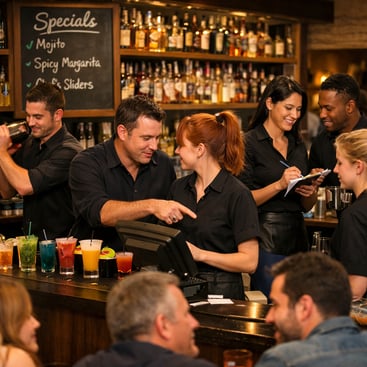
Happy hour isn't just about discounted drinks—it's one of the most powerful tools in your arsenal for building a devoted customer base. When implemented strategically, happy hour creates a consistent touchpoint that transforms casual visitors into regular patrons. By offering value during traditionally slower business hours, you're not only filling seats but also establishing predictable patterns that fit seamlessly into your customers' routines.The image depicts a bustling bar scene with a diverse group of bartenders and servers in action The bar is welllit showcasing a variety of colorful co-1

The psychology behind happy hour's effectiveness is simple yet profound. Customers who discover great deals at your establishment develop positive associations with your brand. They begin to see your bar as their go-to destination for after-work relaxation or midweek socializing. This repetition builds habit formation—the holy grail of customer retention. When patrons visit your bar every Thursday at 5 PM for two months straight, it becomes part of their weekly ritual.

Beyond the individual customer benefits, happy hour creates a vibrant atmosphere that attracts even more business. A packed bar during happy hour signals social proof to passersby, drawing in curious newcomers who want to be part of the energy. These new visitors, initially attracted by the crowd, stay for the deals and experience, creating a virtuous cycle of growth. Your existing happy hour customers essentially become unpaid ambassadors, bringing friends and colleagues who then become regulars themselves.

Crafting Irresistible Happy Hour Deals That Keep Customers Coming Back

The key to a successful happy hour menu lies in striking the perfect balance between profitability and perceived value. Start by analyzing your inventory and identifying which products offer the best margins even at discounted prices. Well drinks, draft beers, and house wines typically provide excellent opportunities for attractive pricing while maintaining healthy profit margins. Consider creating signature happy hour cocktails using spirits you want to move or ingredients you buy in bulk—this allows you to offer something unique while controlling costs.

Variety and rotation are essential elements that prevent happy hour fatigue. While you should maintain a core selection of reliable favorites, introducing weekly or monthly specials keeps your offerings fresh and gives regulars a reason to explore beyond their usual orders. Feature seasonal ingredients, test new recipes, or create themed nights that align with customer interests. A 'Margarita Monday' or 'Wine Down Wednesday' gives customers specific reasons to choose your bar over competitors on particular days.

Don't overlook the power of tiered pricing strategies. Instead of uniform discounts across the board, create different value levels that cater to various customer segments. Offer aggressive discounts on select items to draw price-sensitive customers, moderate discounts on premium options for those seeking quality, and pair deals with food specials to increase average ticket sizes. For example, 'Buy one appetizer, get 50% off another' encourages group sharing and extends visit duration, leading to additional beverage purchases beyond happy hour pricing.

Strategic Timing and Promotion Tactics That Maximize Return Visits

Timing can make or break your happy hour strategy. While the traditional 4-7 PM window captures the after-work crowd, don't be afraid to experiment with unconventional hours if your demographic warrants it. Bars near universities might find late-night happy hours more effective, while neighborhood establishments could benefit from weekend brunch happy hours. Analyze your traffic patterns and identify the periods when you need the most boost—that's where happy hour can have maximum impact.

Promotion requires a multi-channel approach in today's digital landscape. Social media platforms like Instagram and Facebook allow you to showcase your happy hour specials visually, with mouthwatering photos of cocktails and bites that drive immediate desire. Create consistent posting schedules so followers know when to expect updates. Email marketing remains incredibly effective for loyal customers—send weekly reminders with exclusive perks for subscribers, such as extended happy hour times or bonus specials. Don't underestimate traditional methods either; sidewalk chalkboards and window signage capture impulse traffic from people passing by.

Leverage scarcity and exclusivity to drive urgency. Flash happy hour announcements, limited-time specials, and members-only deals create fear of missing out that motivates action. Consider implementing a loyalty program where happy hour visits earn points toward free drinks or VIP benefits. Digital punch cards through apps make tracking easy and provide valuable data on customer frequency. Partner with nearby businesses to cross-promote—offer happy hour discounts to employees of neighboring offices, or create reciprocal arrangements where their customers receive special deals at your bar.

Creating a Memorable Happy Hour Experience Beyond the Discounts

While pricing draws customers in initially, the overall experience determines whether they become regulars. Train your staff to provide exceptional service during happy hour—even when the bar is packed, prompt and friendly service makes customers feel valued. Consider dedicating specific bartenders to happy hour shifts who excel at managing high volume while maintaining quality interactions. Quick service doesn't mean impersonal; a bartender who remembers names and drink preferences creates emotional connections that transcend price points.

The ambiance during happy hour should feel distinct from your regular evening crowd. Curate specific playlists that match the energy you want to create—upbeat but not overwhelming, allowing for conversation. Lighting adjustments can transform the mood; slightly brighter settings during early happy hour encourage socializing and create an inviting atmosphere for solo visitors who might feel uncomfortable in dimly lit evening settings. Arrange seating to facilitate both intimate gatherings and larger groups, with communal tables that encourage mingling.

Entertainment and engagement elevate happy hour from a simple discount period to an event worth attending. Rotate special activities like trivia nights, live acoustic music, or themed tastings that give customers reasons to visit beyond the deals. Interactive elements such as DIY garnish bars for cocktails or voting on next week's featured drink create participation and investment in your establishment. Social media contests encouraging customers to share their happy hour experiences with specific hashtags generate organic marketing while making patrons feel like valued community members.

Measuring Success and Optimizing Your Happy Hour Strategy

Tracking the right metrics is essential for understanding your happy hour's true impact on customer retention. Start with basic measurements like happy hour attendance numbers, average transaction values, and total revenue during promotional periods. However, dig deeper to assess retention specifically—track how many happy hour customers return within the next week, month, and quarter. Use your POS system to identify repeat visitors and analyze their spending patterns. Are happy hour customers making purchases outside promotional hours? This indicates successful conversion from deal-seekers to loyal patrons.

Customer feedback provides qualitative insights that numbers alone cannot capture. Implement simple feedback mechanisms like comment cards, digital surveys sent via email after visits, or casual conversations during service. Ask specific questions about favorite deals, desired additions to the menu, and what would make them visit more frequently. Monitor online reviews and social media mentions to understand how customers perceive your happy hour compared to competitors. Pay attention to both praise and complaints—negative feedback often reveals opportunities for improvement that can significantly boost retention.

Use your data to continuously refine your approach. A/B test different specials, timings, and promotional strategies to identify what resonates most with your target audience. If Mexican-themed nights consistently outperform other specials, consider expanding that concept. If attendance drops on certain days, experiment with different offers or activities. Calculate the lifetime value of customers acquired through happy hour versus other channels—this helps you understand how much you can invest in promotions while maintaining profitability. Set specific retention goals, such as increasing repeat happy hour visits by 20% over six months, and adjust your tactics accordingly. Remember that happy hour strategy isn't static; it should evolve with your customer base, market conditions, and business objectives to remain an effective retention tool.

Topics: Bar inventory, Bar trends, Bar drinks, Classic drinks, Bar Management, Bar products, Bar Promotion, Best Bar Inventory app, Best Liquor Inventory app, happy hour

Top Hospitality Staff Incentives to Boost Morale and Loyalty

Discover proven staff incentive strategies that transform hospitality teams into passionate brand ambassadors while reducing turnover and elevating guest experiences.

Why Employee Recognition Makes All the Difference in Hospitality

The image depicts a vibrant bustling restaurant scene filled with enthusiastic hospitality staff engaged in their duties A diverse group of servers ba-1In the fast-paced world of hospitality, where staff members are the face of your establishment, recognition isn't just a nice-to-have—it's essential for survival. Hospitality workers handle demanding customers, work irregular hours, and maintain energy throughout grueling shifts. When these efforts go unnoticed, even your most dedicated team members begin to lose motivation, and that disengagement shows up in every guest interaction.
Research consistently shows that employees who feel valued are significantly more productive, deliver better customer service, and stay with their employers longer. In an industry plagued by turnover rates exceeding 70% annually, recognition programs can be your secret weapon. A simple acknowledgment of exceptional service during a team meeting or a handwritten thank-you note can create emotional connections that bonuses alone cannot replicate.

The hospitality industry is unique because your team's attitude directly impacts the guest experience. When servers, bartenders, and kitchen staff feel appreciated, they naturally extend that positive energy to customers. This creates a virtuous cycle: recognized employees provide better service, which leads to happier guests, better reviews, and increased revenue—all of which creates more opportunities to recognize and reward your team.

Financial Rewards That Actually Motivate Your Team

While passion for hospitality drives many into the industry, financial stability keeps them there. Smart operators understand that strategic financial incentives go beyond simply paying competitive wages—they create performance-driven cultures where exceptional work translates to tangible rewards. Performance bonuses tied to specific metrics like guest satisfaction scores, upselling achievements, or maintaining low waste percentages give staff clear targets and immediate gratification for their efforts.

Tip pooling structures, when implemented fairly and transparently, can foster teamwork and reduce friction between front- and back-of-house staff. Some progressive establishments have moved to profit-sharing models where employees receive quarterly bonuses based on the restaurant or bar's overall performance, creating a sense of ownership and investment in the business's success. This approach transforms staff from hourly workers into stakeholders who care about every aspect of the operation.

Don't overlook the power of immediate rewards. Spot bonuses of $50-$100 for going above and beyond during a shift, handling a difficult situation gracefully, or receiving specific customer praise can be more motivating than larger annual bonuses. Consider implementing a points-based reward system where staff accumulate points for achievements that can be redeemed for cash, gift cards, or experiences. The key is making the connection between exceptional performance and financial reward as direct and immediate as possible.

Non-Monetary Perks That Build Lasting Loyalty

Some of the most effective incentives don't appear on a paycheck but significantly impact quality of life. Flexible scheduling stands at the top of this list—allowing staff to swap shifts easily, accommodating school schedules, or giving priority scheduling to long-term employees demonstrates respect for their lives outside work. In an industry notorious for demanding nights, weekends, and holidays, managers who work with staff on scheduling build tremendous loyalty.

Meal programs represent another high-value, relatively low-cost benefit. Providing quality staff meals before shifts or allowing employees to enjoy menu items at steep discounts accomplishes multiple goals: it ensures your team is energized for their shift, familiarizes them with menu items they'll be selling, and makes them feel like valued members of the establishment rather than just workers. Some venues extend this to include a monthly allowance for bringing family or friends to dine, turning staff into authentic brand ambassadors.

Recognition-based perks can be equally powerful. Employee-of-the-month programs that come with premium parking spots, reserved lockers, or having a signature drink named after them create social recognition that many value more than cash. VIP experiences like attending industry events, representing your establishment at food and beverage festivals, or getting first access to special tastings make staff feel invested in and connected to the broader hospitality community.

Career Development Opportunities Your Staff Actually Want

One of the biggest reasons talented hospitality workers leave is the perception of limited growth opportunities. Combat this by creating clear career pathways with defined skills, responsibilities, and compensation levels for each position—from entry-level server to shift leader to assistant manager. When staff can visualize their progression and understand exactly what they need to do to advance, they're far more likely to invest in their development rather than job-hop.

Invest in training programs that build genuine skills. Partner with local bartending schools, culinary institutes, or wine education programs to offer certifications in mixology, sommelier training, or food safety. Cross-training is particularly valuable—teaching servers about wine service, training bartenders in inventory management, or having kitchen staff learn front-of-house operations creates versatile team members and demonstrates your commitment to their professional growth. Many employees will stay for opportunities to learn skills that enhance their entire career trajectory.

Mentorship programs pair experienced staff with newer team members, creating knowledge transfer and building relationships that strengthen your entire operation. Consider sponsoring ambitious staff members to attend industry conferences, competitions, or workshops. When a bartender returns from a mixology competition or a server completes advanced wine certification, they bring back knowledge, techniques, and enthusiasm that elevates your entire team. These investments signal that you view hospitality as a profession, not just a job, and your best people will respond accordingly.

Creating a Culture Where Your Best People Stay

All the incentives in the world won't matter if your workplace culture is toxic. The foundation of retention is creating an environment where people actually want to spend their time. This starts with management that leads by example—jumping in to help during rushes, treating all positions with equal respect, and maintaining consistent, fair policies. When staff see managers working alongside them rather than simply directing from afar, it builds camaraderie and mutual respect that no incentive program can replicate.

Communication channels matter enormously. Implement regular team meetings where staff can voice concerns, suggest improvements, and feel heard. Many successful establishments hold pre-shift meetings that go beyond reviewing specials to include shout-outs for recent wins, addressing any issues openly, and reinforcing the team's shared mission. Create anonymous feedback mechanisms so staff can raise concerns without fear, and crucially, demonstrate that you act on feedback received. Nothing kills morale faster than soliciting input and then ignoring it.

Finally, celebrate together. Host staff appreciation events, team outings, or post-service gatherings that allow your team to bond outside the high-pressure service environment. Recognize milestones like work anniversaries, birthdays, and personal achievements. When your team feels like a family—one that supports each other through the chaos of service and celebrates successes together—you create something far more valuable than a workplace. You create a community where people stay not just for the money or benefits, but because they genuinely want to be part of something special. That's when you've truly built a hospitality team that will carry your establishment to long-term success.

Topics: Bar staff, Bar Management, staff retention, bartenders, servers, associates, hire staff, hotel staff

Liquor Inventory Automation: Streamline Your Bar Operations

Revolutionize your bar's efficiency and profitability by embracing liquor inventory automation to eliminate manual errors and streamline operations.

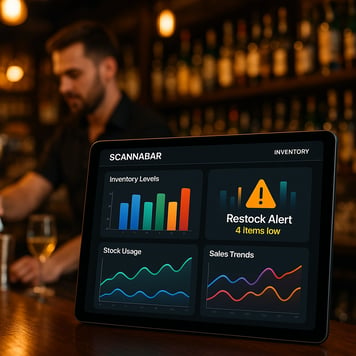
Unlocking the Potential of Automated Liquor Inventory SystemsThe image features a sleek modern interface of the Scannabar Inventory application displayed on a tablet set against a backdrop of a bustling bar environment The screen shows vibrant graphs and charts illustrating realtime inventory levels stock usag-1

As a bar operator, one of the most time-consuming and error-prone tasks is managing liquor inventory. Automated liquor inventory systems like Scannabar unlock new levels of control and insight by digitizing the entire process. By eliminating manual counting and spreadsheets, these systems provide a real-time, accurate view of your stock, reducing human error and saving valuable labor hours.

The true potential of these systems lies in their ability to centralize your inventory data, making it accessible from anywhere and at any time. This means you can make informed decisions on-the-fly and avoid costly mistakes such as over-ordering or running out of popular products during peak hours.

How Automation Transforms Bar Efficiency and Staff Productivity

Automation takes the guesswork and tedium out of liquor inventory management. With solutions like Scannabar, scanning bottles and inputting data becomes a quick, streamlined task for bartenders and managers. This frees up staff to focus on delivering exceptional customer service rather than getting bogged down in back-of-house processes.

By reducing the workload and stress associated with inventory checks, staff morale improves, and turnover decreases. Automated reminders and scheduled counts ensure that inventory tasks are completed on time, further boosting productivity and ensuring operational consistency.

Reducing Losses and Boosting Profits with Real-Time Tracking

Shrinkage, spillage, and theft can significantly eat into bar profits, but real-time tracking provided by automated systems helps operators identify discrepancies instantly. With features like instant variance reports and consumption analytics, you can quickly spot trends or issues before they become major losses.

By keeping a closer eye on inventory in real time, bars can better control costs, ensure correct pours, and improve accountability among staff. Ultimately, this translates to higher profit margins and a healthier bottom line.

Integrating Technology Seamlessly into Your Bar Workflow

One of the concerns many operators have is how new technology will fit into their existing workflow. Modern inventory applications like Scannabar are designed for seamless integration, with intuitive interfaces and compatibility with point-of-sale systems. This means minimal disruption and a gentle learning curve for your team.

Proper training and user-friendly design ensure that staff can start using the system effectively from day one. The result is a smooth transition to automated processes that complement your bar’s unique operational style.

Choosing the Right Liquor Inventory Automation Solution for Your Business

Selecting the right inventory automation tool is crucial to realizing all the benefits automation has to offer. Operators should consider factors such as ease of use, integration capabilities, support, and scalability when evaluating options like Scannabar.

Look for a solution that not only fits your current needs but can also grow with your business. Reliable customer support and comprehensive training resources are essential to ensure long-term success with your chosen system.

Topics: Bar inventory, Lineup control, Bar Management, Loss prevention, Hotel Bar Inventory, Best Bar Inventory app, Best Liquor Inventory app, Cruise ship bar inventory, Country Club Liquor Inventory

Creating the Ideal Ambiance for Your Bar

The ambiance of your bar can make or break its success. Learn how to create a captivating atmosphere that keeps customers coming back for more.

Trendy Lounge BarUnderstanding Your Target Audience

Before diving into decor and theme choices, it's crucial to understand who your target audience is. Are you aiming to attract young professionals, college students, or an older, more mature crowd? Knowing your audience will help you make informed decisions that resonate with them.

Conduct market research to gather data on your potential customers' preferences and spending habits. This information will be invaluable in creating a bar that not only attracts but also retains loyal patrons.

Choosing the Right Theme and Decor

Once you have a clear understanding of your target audience, the next step is to choose a theme and decor that will appeal to them. Whether it's a chic, modern lounge or a rustic, countryside pub, the theme should be consistent and well-executed.

Consider the colors, furniture, and overall layout when planning your decor. The goal is to create a cohesive look that enhances the overall experience for your customers.

Lighting and Music: Setting the Mood

Lighting and music play a significant role in setting the mood of your bar. Soft, warm lighting can create a relaxed and intimate atmosphere, while brighter lights may be more suitable for a lively, energetic environment.

The choice of music should also align with your theme and target audience. Curate playlists that complement the ambiance you wish to create, whether it's smooth jazz for a sophisticated lounge or upbeat tunes for a vibrant bar.

Crafting a Menu that Complements the Atmosphere

Your menu should be an extension of your bar's theme and atmosphere. Offer a selection of drinks and snacks that not only taste great but also fit the overall vibe of your establishment.

Consider themed cocktails, specialty drinks, and unique appetizers that will make your menu stand out. Pairing the right food and drinks with your bar's ambiance will enhance the overall customer experience.

Training Staff to Enhance the Ambiance

Your staff plays a crucial role in creating and maintaining the desired ambiance of your bar. Ensure that they are well-trained not only in their specific duties but also in customer service and hospitality.

Encourage your staff to embody the theme and spirit of your bar. Their demeanor, dress code, and interaction with customers should all contribute to the overall atmosphere you aim to create.

Topics: Bar staff, Bar trends, bar business, Bar Management, Nightclub trends, Nightclub Consulting, Hospitality, Best Bar Inventory app, Best Liquor Inventory app

Sip in Style: 10 Unique Cocktails Recipes to Try This April

Discover 10 creative and delicious cocktail recipes to elevate your drinking experience this April.

Crafting the Perfect Spring Cocktailpexels-evgeni-lazarev-8971790

Are you ready to welcome the arrival of spring with a refreshing and perfectly crafted cocktail? Look no further! In this section, we will guide you through the art of crafting the perfect spring cocktail. Whether you prefer something light and fruity or bold and complex, we have the recipes that will satisfy your taste buds.

When it comes to crafting the perfect spring cocktail, it's all about balancing flavors and using fresh, seasonal ingredients. From classic favorites with a twist to innovative creations, we have curated a collection of recipes that will impress both your friendsand your own palate.

So, grab your shaker, gather your ingredients, and let's dive into the world of spring cocktails!

Refreshing Citrus Infusions

There's nothing quite like the refreshing taste of citrus in a cocktail. In this section, we will explore the world of citrus infusions and how they can take your drink to the next level.

From tangy lemon to zesty lime and juicy orange, citrus fruits bring a burst of flavor and brightness to any cocktail. Whether you prefer a classic margarita or a unique citrus twist on a traditional cocktail, we have the recipes that will quench your thirst and awaken your taste buds.

So, get ready to squeeze some citrus and add a refreshing twist to your cocktail repertoire!

Innovative Herb and Spice Combinations

Looking to add some depth and complexity to your cocktails? Look no further than the world of herb and spice combinations. In this section, we will explore how herbs and spices can elevate your drink and create a truly unique flavor profile.

From aromatic herbs like rosemary and basil to warming spices like cinnamon and cardamom, the possibilities are endless. Whether you want to add a hint of herbs to a classic cocktail or experiment with bold spice combinations, we have the recipes that will take your taste buds on a flavorful journey.

So, get ready to unleash your inner mixologist and discover the art of herb and spice combinations!

Unique Floral and Fruit Fusions

Looking for a drink that is as beautiful as it is delicious? In this section, we will explore the world of unique floral and fruit fusions that will delight both your eyes and your taste buds.

From floral-infused syrups to fresh fruit purees, these recipes will add a touch of elegance and sophistication to your cocktails. Whether you want to create a refreshing floral spritz or a vibrant fruit-forward concoction, we have the recipes that will make your drink stand out from the crowd.

So, get ready to sip on a cocktail that is as pretty as a picture and bursting with flavor!

Elevating Your Home Bartending Game

Ready to take your home bartending game to the next level? In this section, we will share tips and tricks to help you elevate your skills and impress your guests with professional-quality cocktails.

From mastering the art of mixology to creating your own signature cocktail, we will guide you through the steps to become a confident and skilled home bartender. Whether you're a beginner or a seasoned enthusiast, there's always something new to learn and explore in the world of cocktails.

So, let's raise the bar and elevate your home bartending game!

Topics: Classic drinks, Bar Management, Bar products, Hospitality, Drink Recipes, Hotel Bar Inventory, Best Bar Inventory app

The Future of the Hospitality Industry in 2024

Discover the exciting advancements and trends that await the hospitality industry in 2024.

Hotel BarEmerging technologies shaping the guest experience

The hospitality industry is constantly evolving, and one of the key trends in 2024 will be the use of emerging technologies to enhance the guest experience. From virtual reality tours of hotels and resorts to smart room controls that allow guests to customize their environment, technology will play a crucial role in creating a more immersive and personalized stay. Guests can expect to see self-check-in kiosks, mobile apps for seamless communication with hotel staff, and AI-powered chatbots for instant assistance. These advancements will not only streamline operations but also provide a unique and memorable experience for guests.

Sustainable practices and eco-friendly initiatives

In 2024, sustainability will be a top priority for the hospitality industry. With increasing awareness about climate change and environmental conservation, hotels and resorts will adopt eco-friendly practices to reduce their carbon footprint. This includes implementing energy-efficient systems, using renewable energy sources, reducing waste through recycling and composting programs, and promoting responsible water usage. Guests will also see a rise in sustainable amenities, such as toiletries made from natural and biodegradable materials, and organic and locally sourced food options. By embracing sustainable practices, the hospitality industry can contribute to a greener future.

The rise of personalized and experiential travel

Travelers in 2024 will seek more personalized and experiential travel experiences. They want to feel like they are a part of the destination and not just tourists. Hotels and resorts will cater to this demand by offering unique activities and immersive cultural experiences. From cooking classes with local chefs to guided tours led by experts, guests will have the opportunity to engage with the local community and learn about their traditions and customs. Personalization will extend beyond activities, with hotels using data analytics to understand guest preferences and tailor their services accordingly. Whether it's customized room amenities or curated itineraries, travelers can expect a more personalized approach to hospitality.

The evolving role of artificial intelligence in hospitality

Artificial intelligence (AI) will continue to revolutionize the hospitality industry in 2024. AI-powered technology will be used to automate various tasks, such as guest service requests, room service deliveries, and even concierge services. Chatbots will become more sophisticated, providing instant responses to guest inquiries and offering personalized recommendations. AI will also play a crucial role in enhancing security measures, with facial recognition systems and biometric authentication becoming more prevalent. By leveraging AI, hotels and resorts can improve efficiency, enhance guest experiences, and ensure a seamless and secure stay for their guests.

Changing consumer preferences and demands

Consumer preferences and demands are constantly evolving, and the hospitality industry must adapt to these changes. In 2024, guests will prioritize experiences over material possessions, seeking authentic and meaningful interactions. They will also expect seamless technology integration, from mobile check-ins to contactless payments. Personalization will be key, with guests expecting tailored recommendations and services based on their preferences. Additionally, health and wellness will continue to be a priority, with hotels offering fitness facilities, wellness programs, and healthy dining options. The hospitality industry must stay agile and responsive to these changing demands to stay competitive in the future.

Topics: Bar trends, Bar Management, Nightclub trends, restaurant trends, Best Bar Inventory app, Best Liquor Inventory app

Streamline Your Liquor Inventory with the Perfect App

Discover how a liquor inventory app can revolutionize your bar's operations, simplify inventory management, and boost profitability.

Bar Inventory-3

Why Efficient Liquor Inventory Management Is Crucial

Efficient liquor inventory management is crucial for the success of any bar or restaurant. Accurate tracking of liquor inventory allows you to have better control over your stock levels, reduce waste, and prevent theft. By knowing exactly how much liquor you have on hand, you can avoid running out of popular drinks and ensure that you always have the right amount of ingredients to serve your customers.

In addition, efficient liquor inventory management helps you optimize your purchasing decisions. With a clear understanding of what is selling and what is not, you can adjust your ordering patterns accordingly. This can result in significant cost savings and prevent unnecessary overstocking of slow-moving products. By implementing a liquor inventory app, you can streamline this process and make it easier to track and analyze your inventory data.

Benefits of Using a Liquor Inventory App

Using a liquor inventory app offers numerous benefits for bar owners and managers. Firstly, it simplifies the inventory management process by providing a centralized platform to track and monitor your liquor stock. Instead of relying on manual methods or spreadsheets, a liquor inventory app automates the process, saving you time and reducing human error.

Additionally, a liquor inventory app can generate detailed reports and analytics, giving you valuable insights into your bar's performance. You can easily identify your top-selling drinks, monitor trends, and make data-driven decisions to optimize your menu and pricing strategy. This can lead to increased profitability and customer satisfaction.

Furthermore, a liquor inventory app can help with regulatory compliance. It can assist in calculating liquor costs, tracking sales, and ensuring accurate tax reporting. This eliminates the risk of fines or penalties due to inaccuracies in your inventory records.

Overall, using a liquor inventory app can streamline your operations, improve efficiency, and ultimately contribute to the success of your bar.

Key Features to Look for in a Liquor Inventory App

When choosing a liquor inventory app, there are several key features to consider. Firstly, it should offer real-time tracking capabilities, allowing you to see your liquor stock levels at any given moment. This ensures accurate inventory management and helps prevent stockouts or overstocking.

Secondly, the app should have barcode scanning functionality. This makes it easy to scan and record liquor bottles, saving you time and reducing errors. It should also support manual entry options for cases where barcodes are not available.

Another important feature is integration with your POS system. This enables seamless data synchronization between your sales and inventory records, providing you with accurate and up-to-date information. Additionally, the app should have reporting and analytics capabilities, allowing you to generate customized reports and gain insights into your bar's performance.

Lastly, user-friendliness and ease of navigation are crucial. The app should have an intuitive interface that is easy to learn and use, even for staff members with limited technical knowledge.

By considering these key features, you can choose the perfect liquor inventory app that meets your specific needs and helps you streamline your operations.

How to Choose the Perfect Liquor Inventory App

Choosing the perfect liquor inventory app for your bar can seem overwhelming, but with the right approach, you can make an informed decision. Start by assessing your specific needs and requirements. Consider factors such as the size of your bar, the volume of liquor sales, and any unique features or integrations you may require.

Next, research and compare different liquor inventory apps available in the market. Look for user reviews and ratings to get a sense of their reliability and functionality. Pay attention to the app's reputation and track record in the industry.

Additionally, reach out to other bar owners or industry professionals for recommendations. They can provide valuable insights and recommendations based on their own experiences.

Once you have narrowed down your options, take advantage of free trials or demos offered by the app providers. This allows you to test the app's features and usability before committing to a purchase. During the trial period, pay attention to factors such as ease of use, customer support, and overall satisfaction.

Finally, consider the cost and value of the app. Compare pricing plans and features to ensure that you are getting the best value for your investment. Keep in mind that the cheapest option may not always be the most suitable, so prioritize functionality and reliability over cost.

By following these steps and conducting thorough research, you can choose the perfect liquor inventory app that will streamline your operations and contribute to your bar's success.

Streamline Your Bar's Operations with a Liquor Inventory App

Integrating a liquor inventory app into your bar's operations can have a transformative impact. By automating the inventory management process, you can save time, reduce errors, and improve accuracy. This allows you to focus on providing exceptional service to your customers and growing your business.

With a liquor inventory app, you can easily track your liquor stock levels in real-time, ensuring that you always have the right amount of inventory on hand. This eliminates the risk of running out of popular drinks or wasting money on excessive stock. It also helps you identify slow-moving products and adjust your ordering patterns accordingly.

The app's reporting and analytics capabilities provide valuable insights into your bar's performance. You can easily identify top-selling drinks, monitor trends, and make data-driven decisions to optimize your menu and pricing strategy. This can lead to increased profitability and customer satisfaction.

Furthermore, a liquor inventory app can help enhance regulatory compliance. By accurately tracking sales, calculating liquor costs, and ensuring accurate tax reporting, you can avoid fines or penalties due to inaccuracies in your inventory records.

In conclusion, a liquor inventory app is a powerful tool that can streamline your bar's operations, simplify inventory management, and boost profitability. Embrace the technology and take your bar to new heights in the New Year.

Topics: Bar inventory, Bar Management, bar inventory app, liquor inventory app, Best Bar Inventory app, Best Liquor Inventory app

Mixing Business and Pleasure: How the Best Liquor Inventory App Redefines Bar Management
Bar Inventory-2Mixing Business and Pleasure: How the Best Liquor Inventory App Redefines Bar Management

In the dynamic world of bars and nightclubs, efficient liquor and bar control are paramount for success. The advent of technology has ushered in a new era of management tools, and the search for the Best Liquor Inventory App and Best Bar Inventory App is a strategic move toward achieving excellence. This article delves into the transformative impact of the Best Liquor Inventory App on bar management, redefining how establishments approach liquor control and overall efficiency.

The Essence of the Best Liquor Inventory App

Precision in Liquor Control is the linchpin of effective bar management, and the Best Liquor Inventory App stands as a beacon of innovation in achieving this goal. Traditional manual tracking methods often fall short in the face of rapidly changing demands and the need for real-time insights.

The Best Liquor Inventory App elevates the game by offering meticulous real-time tracking of every drop of alcohol. This not only minimizes the risks associated with over-pouring and potential theft but also provides invaluable data for strategic decision-making. Bar managers can now identify top-performing products, adjust pricing strategies, and optimize purchasing decisions to enhance overall profitability.

Revolutionizing Operations with the Best Bar Inventory App

Efficiency is the heartbeat of any successful bar or nightclub, and the quest for the Best Bar Inventory App is a significant step toward achieving streamlined operations. Traditional inventory management methods often lead to time-consuming processes and potential errors that hinder the seamless operation of a bustling establishment.

The Best Bar Inventory App revolutionizes day-to-day operations by eliminating manual stock counts and data entry. With real-time updates on inventory levels, staff can quickly identify available drinks, reducing the risk of stockouts during peak hours. Automated alerts for low stock levels further streamline the reordering process, saving time and ensuring a constant flow of inventory.

Best Liquor Inventory App, Best Bar Inventory App, Liquor Control, Bar Control

For establishments seeking to excel in the competitive nightlife landscape, the adoption of the Best Liquor Inventory App is not just an upgrade—it's a strategic move toward achieving excellence in liquor control. By leveraging this advanced technology, bars and nightclubs can streamline operations, minimize losses, and foster an environment of accountability.

The data-driven insights provided by the Best Liquor Inventory App empower managers to make informed decisions, from product offerings to pricing strategies, ultimately leading to enhanced profitability. In the vibrant and competitive world of bars and nightclubs, embracing the potential of the Best Liquor Inventory App is the key to not just staying ahead but thriving at the forefront of success.

In conclusion, the Best Liquor Inventory App is a game-changer for bar management. By redefining how liquor control is approached, it enables establishments to mix business and pleasure seamlessly. For bars and nightclubs aspiring to elevate their operations, this technology is not just an investment—it's a recipe for sustained excellence in the dynamic and evolving landscape of the nightlife industry.

Topics: Bar inventory, Bar Management, Bar Promotion, bar inventory app, liquor inventory app, Best Bar Inventory app, Best Liquor Inventory app

Cheers to Efficiency: Streamlining Nightclub Operations with a Liquor Inventory App

Cheers to Efficiency: Streamlining Nightclub Operations with a Liquor Inventory App

Efficiency and precision in liquor and bar management are paramount in the bustling world of nightclubs. To succeed in this high-energy environment, nightclub owners are turning to advanced tools like Liquor Inventory Apps and Bar Inventory Apps. These innovative digital solutions are reshaping the way nightclubs are run, enhancing liquor control, and optimizing bar management. In this article, we'll explore how these apps are contributing to a more efficient nightclub operation.

Elevating Liquor Inventory-1

The foundation of any nightclub's success lies in its ability to control liquor inventory with precision. Traditional manual methods of tracking bottles and kegs often fall short in this fast-paced setting. Liquor Inventory Apps offer an alternative that's revolutionizing the industry.

With a Liquor Inventory App, nightclub owners and managers can enjoy real-time tracking of every drop of alcohol in their establishment. This real-time data isn't just for show; it ensures the accuracy of liquor control. Every ounce is accounted for, minimizing the risk of over-pouring, spillage, and potential theft. It's this level of precision that forms the basis of efficient liquor management.

Streamlining Bar Control with a Bar Inventory App

Efficiency is a nightclub's best friend, and a Bar Inventory App plays a pivotal role in achieving that efficiency. In a fast-paced nightclub, every moment counts. The app eliminates the need for labor-intensive manual stock counts and data entry.

One of the primary advantages of a Bar Inventory App is that it provides real-time updates on inventory levels. Nightclub staff can easily and quickly determine which drinks are available, eliminating the risk of running out of popular spirits during peak hours. This enhanced efficiency is not only vital for customer satisfaction but also reduces stress associated with traditional inventory management.

The app also streamlines the reordering process. Automated alerts for low stock levels ensure that orders are placed promptly, reducing the chances of stockouts. This level of automation not only saves time but also prevents lost revenue due to understocking.

The Synergy of Liquor and Bar Control

When a nightclub integrates both a Liquor Inventory App and a Bar Inventory App, the results are transformative. Imagine having precise insights into which drinks are your top sellers and being able to adjust pricing or promotions accordingly. With real-time data at your disposal, nightclub managers can optimize their offerings, ultimately maximizing revenue while keeping customers satisfied.

These apps also promote a culture of accountability. By digitally tracking every transaction, from orders to sales, they deter employee theft and unauthorized consumption. This not only creates a more secure environment but also fosters trust among staff members, contributing to smoother operations.

In conclusion, the implementation of Liquor Inventory Apps and Bar Inventory Apps is a game-changer for the nightclub industry. These digital tools empower nightclub owners to take precise control of their liquor inventory, streamline operations, make informed purchasing decisions, and ultimately enhance profitability. The result is a well-organized, efficient, and secure establishment that caters to the dynamic needs of nightclub-goers while staying competitive in a tough market. If you're looking to streamline your nightclub operations and boost efficiency, these innovative apps are the way to go. Cheers to a more efficient and profitable nightclub operation!

Topics: Bar inventory, Hotel Inventory, NightClub Management, Bar Management, Liquor Inventory savings, bar inventory app, liquor inventory app