Expert Advice on Hospitality Topics

Bar Inventory Spreadsheet: Fields, Formulas, and Examples

Posted by Nick Kaoukis on Thu, Oct, 15, 2026 @ 15:10 PM
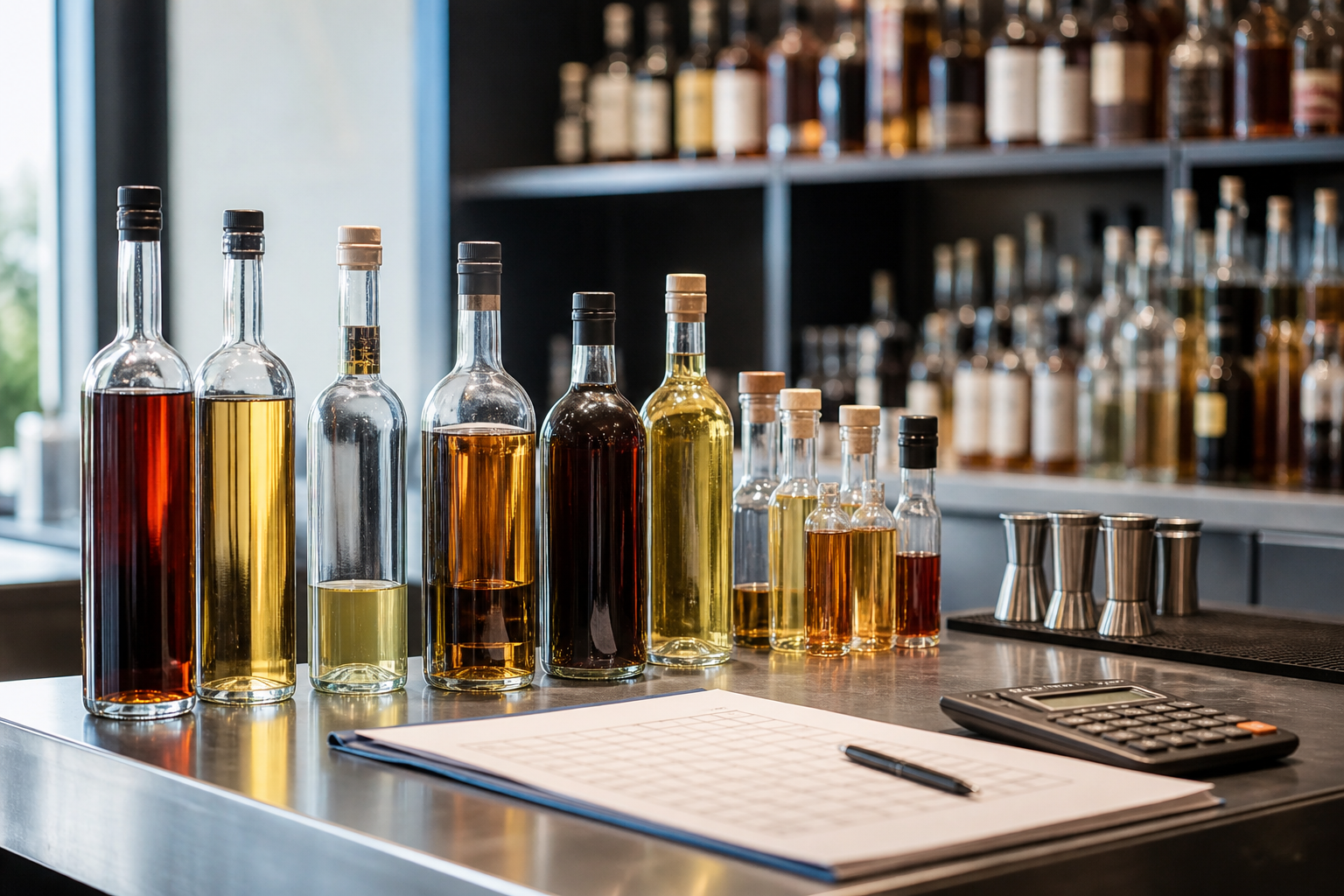
Spirit bottles, inventory clipboard, calculator, and pen arranged on a tidy bar counter
Illustrative AI-generated image of a bar inventory workspace.

A bar inventory spreadsheet records products, quantities, units, locations, and costs so you can calculate stock value and usage. Separate receiving, transfer, and waste logs explain movements that a closing count alone cannot.

A missing transfer can make one outlet look short while another looks overstocked. That error can trigger unnecessary purchasing or an unjustified accusation against staff. Your spreadsheet should expose the difference between documented movement and unexplained depletion.

Scannabar supports bar inventory control when you need bottle-level tracking and reporting beyond a spreadsheet. The worksheet below explains the data discipline either approach requires.

For the receiving, counting, and cost-review process this worksheet supports, see our liquor inventory and cost-control guide.

Key Takeaways: Build a Reliable Inventory Worksheet

  • Record product identity, bottle size, counting unit, location, quantity, and cost so every calculation uses a consistent basis.
  • Separate inventory snapshots from receiving, transfer, return, and waste records to keep stock movements visible and auditable.
  • Calculate usage from opening stock, receipts, transfers, returns, and closing stock; do not treat purchases alone as consumption.
  • Scannabar provides bottle-level counting and usage reporting when multi-location tracking or spreadsheet reconciliation requires more structured inventory workflows.
  • Protect formulas, standardize partial-bottle measurements, and reconcile discrepancies before interpreting a worksheet shortage as evidence of theft or waste.

What Should a Bar Inventory Spreadsheet Track?

Your count sheet should identify each product and its cost basis without relying on memory. Use one row per product and location, with consistent units throughout the period.

Include SKU, product name, bottle size, location, counting unit, beginning quantity, ending quantity, unit cost, and count date. Keep 750 mL and 1 L bottles separate even when the brand is identical.

For partial bottles, document the measurement method and train counters to apply it consistently. Compare inventory methods before choosing your procedure.

Keep Receiving and Stock Movement Records Separate

Separate movement logs explain how stock entered or left each reporting location. They also make duplicate invoices, missing transfers, and supplier returns easier to reconcile.

Your receiving tab should include date, supplier, invoice, product, quantity, unit, and cost. A transfer tab should include origin, destination, quantity, and approval. Returns need their own documented adjustment so they are deducted once.

Your waste and complimentary-use log should capture date, item, quantity, reason, and approval. Documenting these events supports variance reviews without treating every non-sale pour as misconduct.

Calculate Stock Value and Usage Consistently

Stock value equals quantity on hand multiplied by unit cost. Usage includes all stock available during the period, less stock returned, transferred out, or still on hand.

Usage units = Beginning quantity + Receipts + Transfers in − Transfers out − Supplier returns − Ending quantity.

Closing value = Ending quantity × Unit cost. For a constant-cost example, usage cost equals usage units times unit cost. If costs change, follow a consistent valuation policy agreed with your accountant rather than silently replacing historical values.

Usage reports organize these outputs. Keep documented waste inside total physical usage; subtract it only when calculating the remaining unexplained variance, or you will hide actual consumption.

Illustrative Spreadsheet Example

This hypothetical table uses bottle-equivalent units and constant unit costs. It assumes no transfers or returns. The receipt and count values below are illustrative, not supplier pricing or performance claims.

Sample inventory worksheet using bottle equivalents
ProductSizeOpeningReceiptsClosingUsageUnit costUsage costClosing value
House vodka1 L8.06.05.38.7$20$174$106
House gin1 L4.03.03.63.4$22$74.80$79.20
Total$248.80$185.20

If matching net sales for these products were $1,000, the cost ratio would be 24.88%. In a spreadsheet, enter usage cost divided by matching sales and format the cell as a percentage. Do not multiply by 100 and then apply percentage formatting again.

Prevent Unit and Partial-Bottle Errors

Consistent units prevent quantity errors from flowing into every cost calculation. Record whether an entry means bottles, cases, ounces, or milliliters, and reject incompatible entries.

A three-case receipt is not three bottles. Convert receipts to the counting unit before calculating usage. Keep packaged beer and keg units explicit rather than treating every item as a spirit bottle.

For wine inventory, separate unopened bottles from open-bottle quantities. Record each location so a cellar-to-service transfer does not appear to be a sale.

Protect the Worksheet and Reconcile It Regularly

Protect formula cells, keep dated count snapshots, and limit changes to approved inputs. Freeze headers and use validation rules for units, locations, and product names.

Save each period's counts before starting another. Reconcile receiving against invoices, transfers between both locations, and portion standards against recipe expectations.

Cheryl Stanley, Senior Lecturer at Cornell's Nolan School of Hotel Administration, includes rigorous controls in her beverage program course. A worksheet supports that discipline; it cannot replace it.

When Should You Move Beyond a Spreadsheet?

Consider a more structured system when counts are delayed, multiple editors overwrite records, or location reconciliation absorbs too much staff time. There is no universal SKU count or revenue threshold that determines the switch.

Scannabar's liquor inventory software supports bottle-level counts, usage analysis, and outlet reporting. Review how those workflows fit your receiving and transfer procedures rather than assuming software will correct missing records automatically.

A repeatable beverage audit helps identify the step that is failing. Use inventory accountability to make the process easier for staff and protect them from unsupported accusations.

Conclusion: Make Every Inventory Number Traceable

A useful spreadsheet connects quantities with units, costs, locations, and documented movements. Build that foundation first. When version control or reconciliation becomes unreliable, evaluate a system that keeps those records connected rather than adding more disconnected tabs.

FAQs About Bar Inventory Spreadsheets

Can a spreadsheet calculate theoretical usage?

Yes, if you maintain recipe quantities and matching POS item counts. Multiply each ingredient quantity by the number of drinks sold. Scannabar's usage reports support comparison with physical depletion, but the recipe mapping and documented non-sale usage still need to be accurate.

Should documented waste be removed from usage cost?

No. Waste is product consumed without a sale, so it remains in actual usage cost. Deduct documented waste when reconciling unexplained usage, not when measuring total consumption. Scannabar's reports support the review when your waste and movement records are kept consistently.

Can inventory software replace the need for stock counts?

No. Your inventory records need reliable physical observations and movement entries. Scannabar supports bottle-level measurement and reporting, but the team still needs a documented counting routine. Software organizes the workflow; it does not make missing or inconsistent inputs trustworthy.
Topics: Bar inventory, Hotel Inventory, Food Costs, Bar Management, Liquor cost, Liquor Inventory savings, Cruise ship bar inventory, Country Club Liquor Inventory, Scannabar inventory app

How to Count Liquor Inventory Faster in 7 Easy Steps (2026)

Posted by Nick Kaoukis on Thu, Oct, 01, 2026 @ 17:10 PM

Your liquor inventory count takes three or four hours every week. During that time, your staff is off the floor, your managers are buried in clipboards, and your bar is burning labor dollars on a task that generates zero revenue.

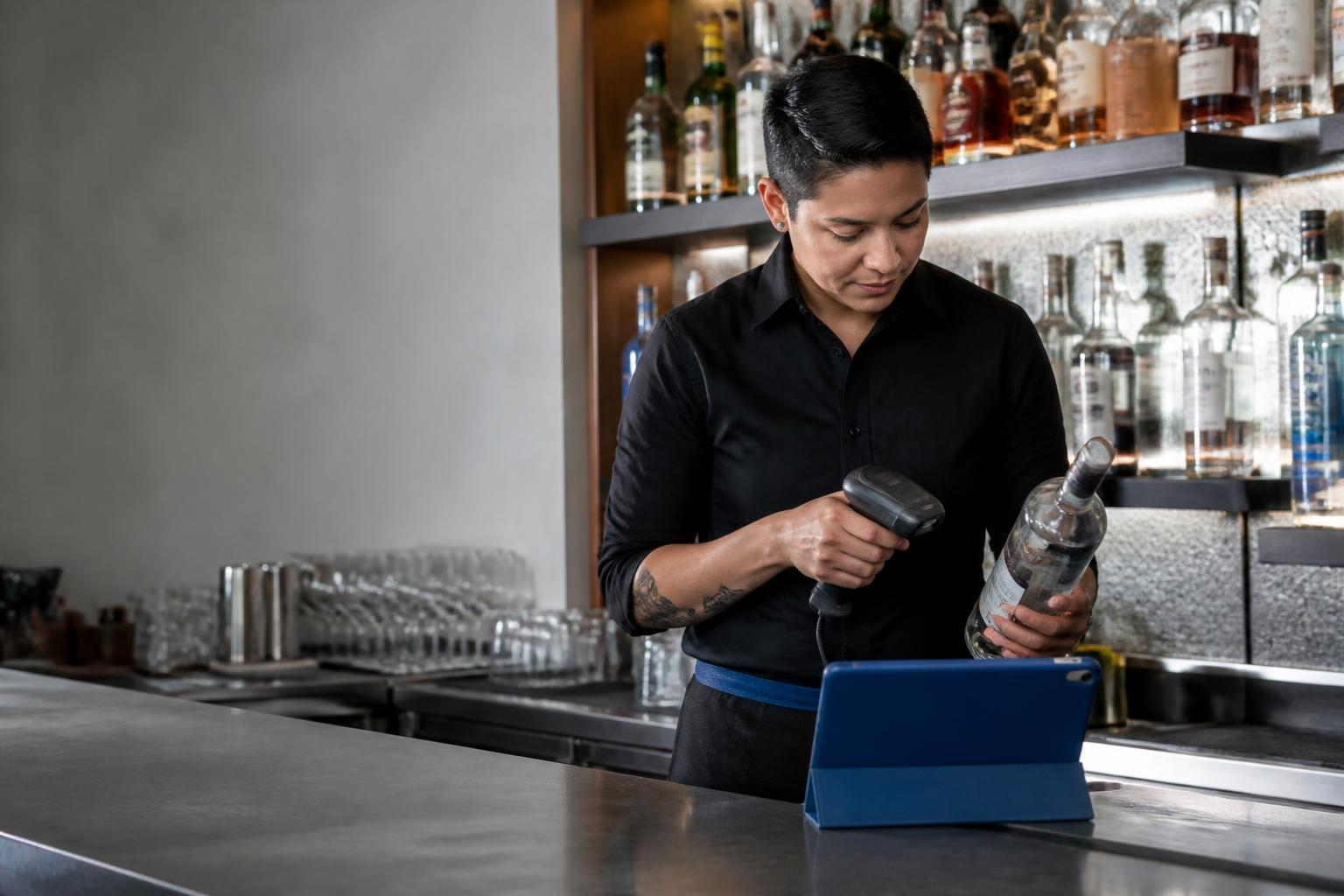
Bar manager scanning liquor bottles during an inventory count

Scannabar gives you a faster path: bar inventory software built around barcode scanning and bottle weighing that cuts counting time by up to 75%. This guide walks you through seven steps for finishing your liquor counts in a fraction of the time.

Below you will find seven clear steps, from setting up your product list to reviewing variance data the morning after. Each step is built for bar managers, restaurant operators, and hotel F&B directors who already know what pour cost means and want to stop losing money to slow, inaccurate counts.

Quick Guide: How to Count Liquor Inventory Faster in 7 Easy Steps

  1. Build and organize your master product list - Sort every SKU by physical shelf location so your team counts in one straight pass.
  2. Tag every bottle at receiving - Apply a unique barcode label to each bottle the moment it arrives at your establishment.
  3. Set up your barcode scanner hardware - Configure a rugged handheld device paired with your inventory software for fast, reliable scanning.
  4. Use bottle weighing for open bottles - Place partial bottles on a calibrated scale to capture exact fluid levels instead of guessing.
  5. Count shelf by shelf in a single pass - Move left to right, top to bottom, scanning and weighing without backtracking.
  6. Reconcile counts against POS sales data - Import your register sales and compare what you poured against what you rang in.
  7. Review variance reports and act on outliers - Flag any product with more than 5% variance and investigate before the trail goes cold.

How to Speed Up Your Liquor Inventory Count

1. Build and organize your master product list

A fast count starts before you touch a single bottle. Walk every area of your operation: the main bar, back bar, service wells, walk-in cooler, dry storage, and any satellite or banquet bars. Record every product by brand name, bottle size, and category.

Here is the critical part: sort that list by physical shelf location, not by spirit category. When your team counts, they move in one straight line across each shelf. Jumping from vodka to tequila and back wastes minutes that add up across hundreds of bottles.

A typical bar carries 150 to 400 products. Larger hotel bars and nightclubs can hit 500 or more. Build the list once, load it into your inventory software, and reuse it for every count cycle.

The Scannabar Inventory System lets you organize products by location and pull the same shelf-ordered list on your handheld scanner each time.

2. Tag every bottle at receiving

Every bottle that enters your establishment needs a unique barcode identity. When a delivery arrives, pull a numbered barcode label from the roll, scan the existing UPC on the bottle to capture its brand, size, and volume profile, then scan the Scannabar label to bind that tag to that specific bottle.

From this point forward, the system tracks that bottle through storage, transfer to the bar, measurement during counts, and final disposal. This is how Scannabar identifies a missing bottle at any location within your establishment. No other step in the process matters if the bottle never got tagged at the door.

Tagging a full case takes seconds. For high-volume venues receiving dozens of cases per week, assign one staff member to handle receiving and labeling as a dedicated task rather than an afterthought.

3. Set up your barcode scanner hardware

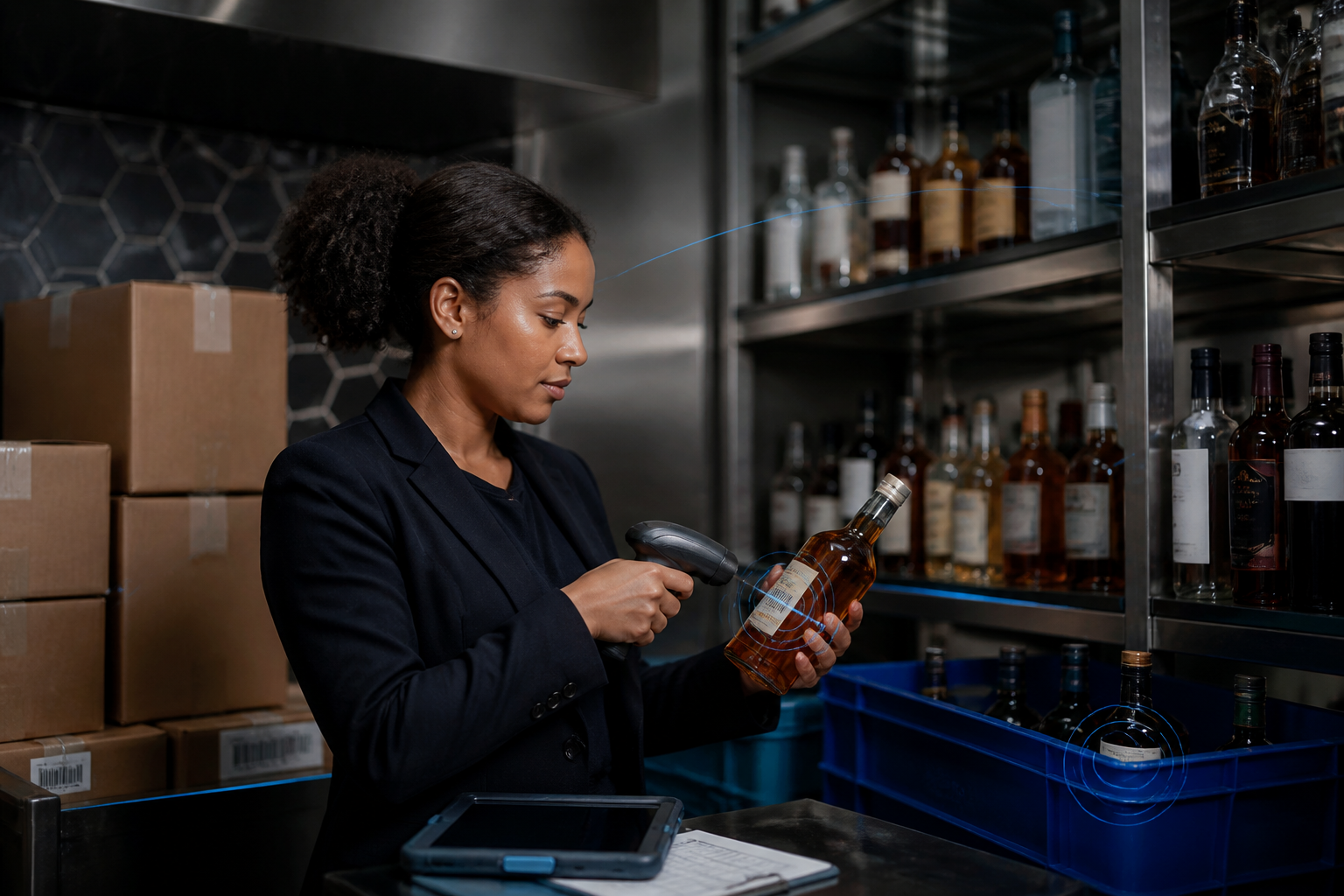
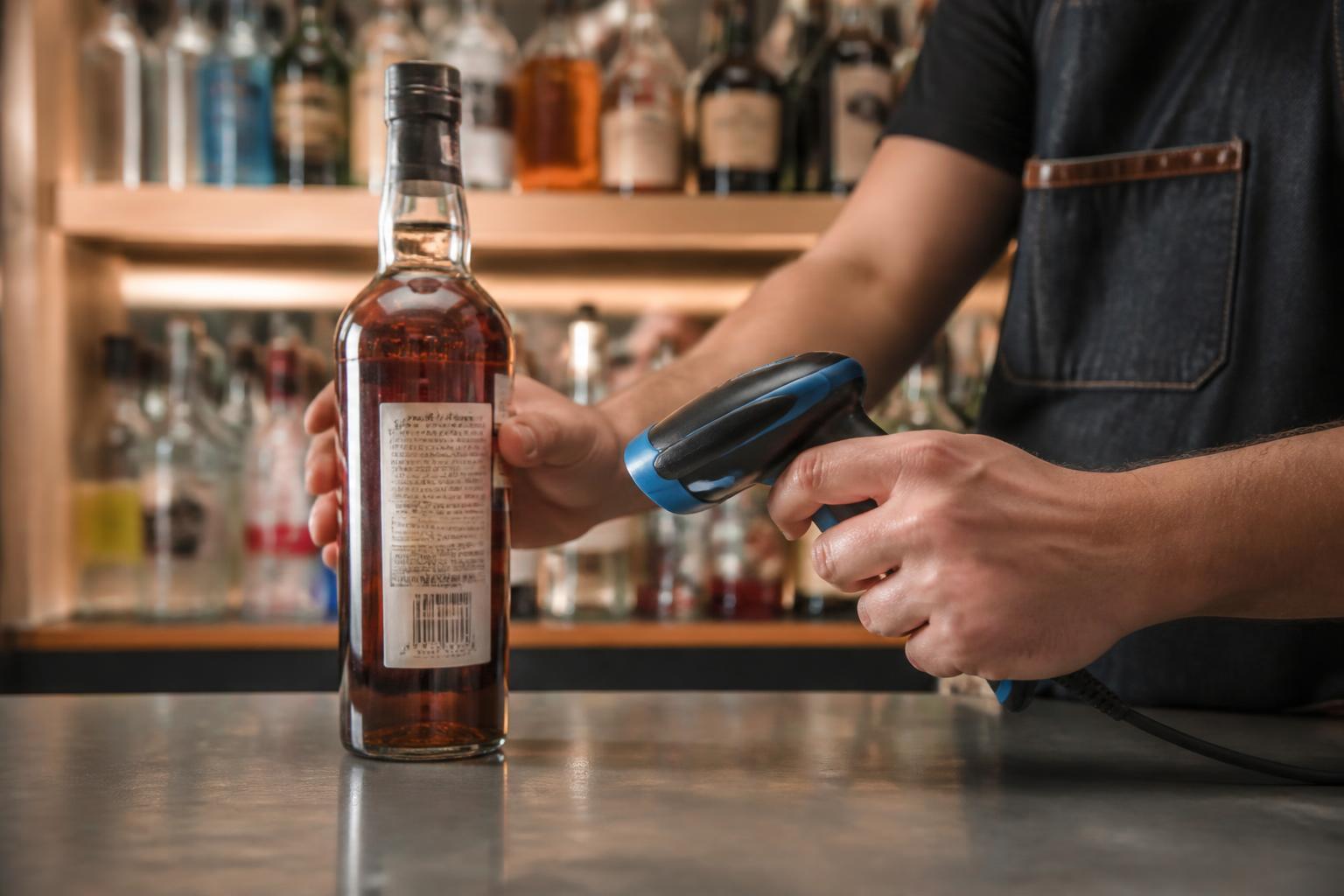
Bar employee scanning the barcode on a liquor bottle

Scannabar runs on purpose-built handheld scanners from manufacturers like Zebra and Motorola. These devices are designed for wet, fast-paced bar environments. They survive spills, hold a charge through a full multi-bar count, and stay on the premises because they are not your bartender's personal phone.

Pair the scanner with your Scannabar software, confirm the product list is loaded, and test a few scans before count night. A scanner that reads labels in under a second eliminates the fumbling and re-scanning that slows down smartphone-based apps.

For multi-location operations, each venue gets its own handheld. Scannabar supports multiple fixed, portable, seasonal, and banquet bars under a single account, so your corporate office can pull consolidated reports without merging spreadsheets.

4. Use bottle weighing for open bottles

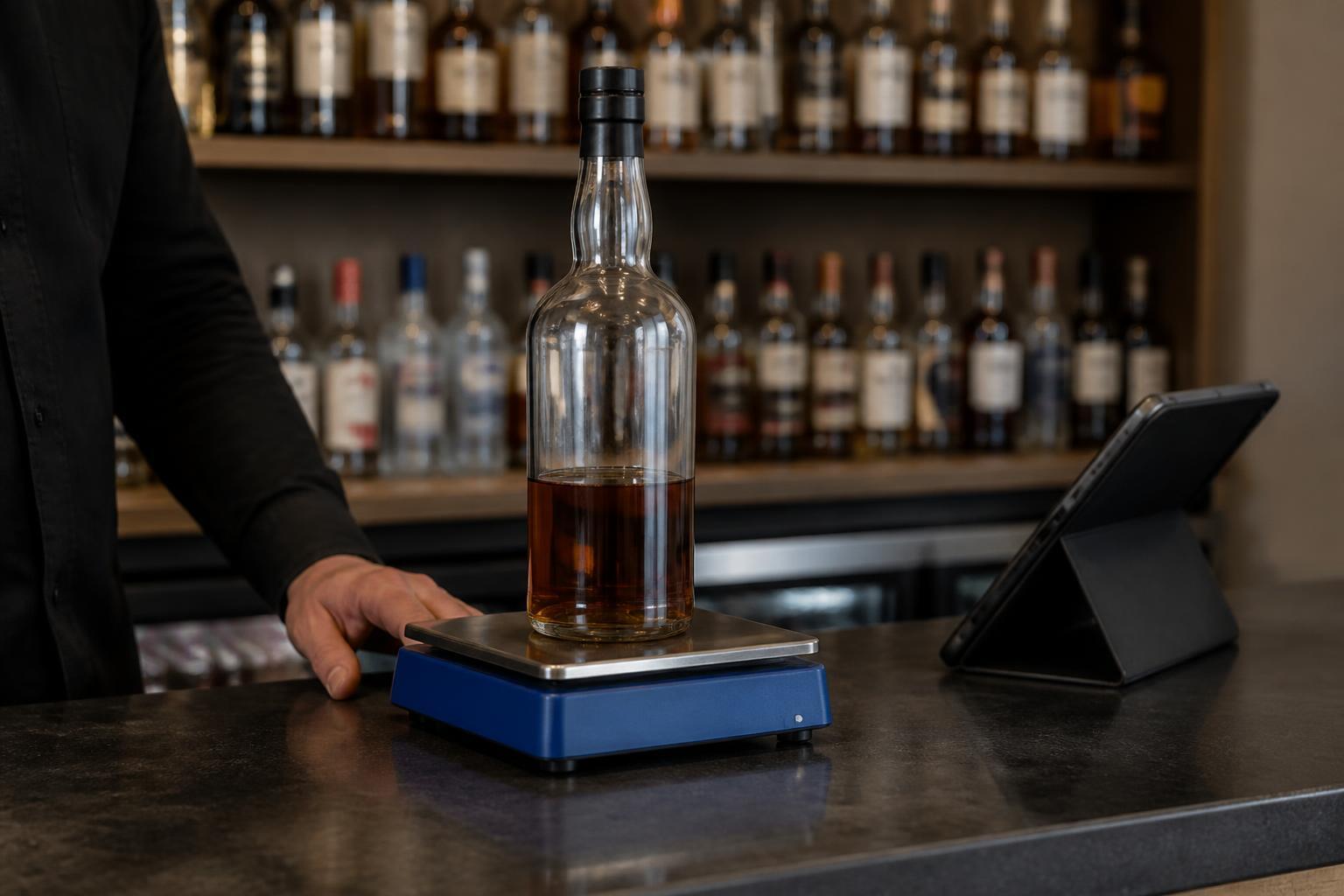
Partially filled whiskey bottle on a digital inventory scale

Open bottles are where most counting accuracy falls apart. Visual estimation, sometimes called “tenthing,” is subjective. Two managers will give you two different numbers for the same bottle, and across 300 open bottles, that inconsistency makes your variance data unreliable.

A calibrated scale converts weight to remaining fluid ounces in seconds. Place the bottle on the scale, let the system record the exact level, and move on. No debating whether a bottle is one-third or one-half full.

Scannabar takes this a step further with per-bottle calibration and a patented measuring strip that runs along the height of the bottle. The scanner reads the level directly, so you get measurement accuracy without weighing every bottle individually.

For your premium spirits, where a few ounces of variance can represent significant dollars, this precision pays for itself quickly.

5. Count shelf by shelf in a single pass

Start at the same spot every time: top shelf, far left. Move right across the shelf, then drop to the next row. Scan full bottles, weigh or measure open ones, and let the software record everything in real time. Do not skip back to recount something you passed.

This one-pass method works because your product list is already sorted by shelf position. The scanner knows what should be next. If something is out of place, flag it and keep moving rather than stopping to reorganize mid-count.

A 120-bottle bar using Scannabar's barcode scanning finishes in about 15 minutes. Multiple staff members can count different zones simultaneously. One person takes the main bar, another handles storage, and the system merges their counts automatically. That parallel workflow is how large hotels and multi-outlet properties finish full-property inventories before the next shift clocks in.

6. Reconcile counts against POS sales data

A count by itself is just a list of numbers. The count becomes useful when you compare it against what your POS system says you sold.

Scannabar pulls sales data via CSV, XML, or a direct API connection to your POS vendor's published specification. Systems like Aloha, Micros, MaitreD, POSitouch, Digital Dining, Pixel Point, and InfoGenesis all connect.

The formula is straightforward: previous inventory plus purchases minus current inventory equals usage. Compare that usage to what the POS recorded as sold. The gap between those two numbers is your variance, the unaccounted product that represents shrinkage.

Automate this reconciliation instead of building formulas in a spreadsheet. When the math runs inside your inventory system, you get results the morning after the count instead of three days later when nobody remembers what happened on Saturday night.

7. Review variance reports and act on outliers

The report is only valuable if someone reads it within 24 hours. Look first at the highest-dollar variances, not the highest-percentage ones. A 30% variance on a slow-moving bottle of amaro costs you less than a 6% variance on your top-selling vodka.

Investigate before the trail goes cold. A variance discovered this week still belongs to a shift that is on the schedule. A variance discovered next month belongs to nobody. Weekly counting frequency, made possible by a fast scanning process, gives you the data resolution to connect discrepancies to specific bartenders, shifts, or events.

Scannabar's variance reports break down results by product, outlet, and count period. When you spot a pattern, you have the documentation to have a specific, productive conversation with your team rather than a vague accusation. That is the difference between a culture of accountability and a culture of suspicion.

What causes the biggest time losses during bar inventory counts?

Three process failures eat most of your counting time. The first is an unsorted product list that forces counters to jump between shelves and storage areas. The second is visual estimation of partial bottles, which creates arguments, recounts, and unreliable data.

The third is manual data entry after the count, where someone spends another hour transcribing numbers into a spreadsheet. Each of these failures compounds, and fixing all three is what separates a 15-minute count from a 4-hour one.

A disorganized list adds 30 to 45 minutes. Partial-bottle debates add another 20 minutes across a full bar. Post-count data entry can double the total labor cost of the inventory process.

The fix is process design, not effort. When the product list matches the shelf order, the counting method eliminates subjectivity, and the data flows directly from the scanner to the software, counting stops being a dreaded chore and becomes a quick operational checkpoint.

How often should you count liquor inventory for accurate variance tracking?

Weekly counting is the standard for any bar serious about controlling shrinkage. According to the National Restaurant Association's 2026 State of the Industry report, persistent cost pressures continue to challenge operator margins, making tighter inventory controls more urgent than ever.

When you count every seven days, you catch variance while the staff schedule is still fresh, connect losses to specific shifts, and build a data trail that makes patterns visible within weeks rather than quarters.

Monthly counting is too infrequent for meaningful variance analysis. By the time you discover a problem, four weeks of losses have accumulated. You cannot pinpoint which bartender, shift, or event caused the gap. The data becomes a historical record of money already lost rather than an actionable control mechanism.

The reason most bars default to monthly counts is that their counting method takes too long. When a full count requires three or four hours of labor, weekly counts are impractical.

Barcode scanning and bottle weighing compress that time enough to make weekly counts realistic for venues of any size. Some operators using Scannabar run spot-checks on their highest-value spirits daily because each check takes minutes, not hours.

How Scannabar Helps You Count Liquor Inventory Faster

Scannabar was built inside working bars, not in a software lab. The system uses barcode scanning and per-bottle tracking to turn a multi-hour count into a task that takes minutes.

A bar code strip on each bottle lets the handheld scanner read the exact fluid level. You skip the guessing, the weighing debates, and the post-count data entry entirely.

Venues running Scannabar consistently operate at 1% to 3% shrinkage, compared to the industry average of 20% to 25%. That gap translates directly to your bottom line. For a bar generating $500,000 in annual revenue, reducing shrinkage from 20% to 3% puts tens of thousands of dollars back into your operation every year.

The Scannabar Inventory System integrates with your existing POS, delivers real-time variance analysis, and includes seven-day-a-week customer support. Your team can be operational within a single shift.

The system was designed for hospitality professionals who do not have time for a lengthy software rollout. Visit Scannabar to see how your venue can start counting faster and losing less.

FAQs About Counting Liquor Inventory Faster

How long does a liquor inventory count take with barcode scanning?

A 120-bottle bar using Scannabar's barcode scanning typically finishes a full count in about 15 minutes. Larger venues with 400 or more products complete counts in under an hour when multiple staff members scan different zones simultaneously. That is roughly 75% faster than a clipboard-and-spreadsheet approach.

Do I need to weigh every bottle during inventory?

You only need to weigh or measure open bottles. Full, sealed bottles get a quick barcode scan and a unit count. Scannabar's patented measuring strip provides an alternative to traditional scale weighing by reading the fluid level directly from the bottle, which speeds up the partial-bottle step significantly.

Can barcode scanning help prevent bartender theft?

Barcode scanning creates a documented chain of custody for every bottle from receiving to disposal. Scannabar tracks each bottle individually, so a missing bottle triggers an alert.

When your team knows every bottle is tracked and variance is reviewed weekly, it creates a culture of accountability that reduces the temptation for theft and protects honest staff from false accusations.

What POS systems work with Scannabar for inventory reconciliation?

Scannabar integrates with major hospitality POS platforms including Aloha, Micros, MaitreD, POSitouch, Digital Dining, Pixel Point, Restaurant Manager, and InfoGenesis. Data transfers via CSV, XML, or direct API, depending on your vendor's specifications. The system also connects with property management platforms for hotel operations.

Is barcode scanning accurate enough for high-value spirits?

Barcode scanning combined with Scannabar's per-bottle calibration delivers measurement accuracy to a fraction of an ounce. For premium spirits where a single bottle can cost over $100, that precision matters. The system removes human subjectivity from the count, so your variance data reflects actual usage rather than estimation differences between staff members.

How quickly can my team learn a barcode-based inventory system?

Most teams using the Scannabar Inventory System become operational within a single shift. The handheld scanner interface is straightforward: scan the barcode, confirm the product, record the level, and move to the next bottle. Scannabar includes onboarding support and seven-day-a-week customer service to handle any questions during the transition from your current counting method.

Topics: liquor inventory, Bar inventory, Hotel Inventory, liquor inventory timing, inventory counting, inventory control, liquor inventory system, liquor management, liquor inventory app

How to Build a Hotel Bar Inventory SOP in 7 Steps (2026)

Posted by Nick Kaoukis on Wed, Sep, 23, 2026 @ 13:09 PM

When inventory handling changes from shift to shift, your hotel bar loses control of its margins. One bartender counts by weight, the next estimates by eye, and the third skips the count entirely. The result: shrinkage that nobody can explain. For a hotel doing $800,000 in annual beverage sales, even a 15% loss rate means $120,000 vanishing with no paper trail.

A written bar inventory management SOP removes that ambiguity. It defines who counts, when they count, how they record every bottle, and what happens when the numbers do not match. Scannabar standardizes hotel inventory procedures across every outlet, making the SOP enforceable rather than aspirational.

This guide walks you through seven steps to build a repeatable inventory SOP for your bars, banquet areas, and beverage outlets.

Hospitality manager and bar lead reviewing a hotel bar inventory process beside organized bottles and labels

Quick Guide: How to Build a Hotel Bar Inventory SOP in 7 Easy Steps

  1. Set the scope and count window: Define which outlets, products, and time periods each count covers.
  2. Standardize receiving and delivery checks: Verify every shipment against the purchase order before signing off.
  3. Organize storage and bottle labeling: Assign bin locations and label every bottle for fast, accurate counts.
  4. Define how full and open bottles are counted: Pick one measurement method and apply it to every open container.
  5. Document transfers, breakage, and comps: Log every bottle that moves, breaks, or leaves inventory as a comp.
  6. Reconcile counts against sales and usage: Use Scannabar to compare physical counts with POS data automatically.
  7. Assign ownership, review cadence, and follow-up: Name who runs the process and how often results are reviewed.

How to Build Your Hotel Bar Inventory SOP

1. Set the scope and count window

Your SOP starts by answering three questions: what do you count, where do you count it, and when does each count happen? In a hotel, "what" typically means all liquor, wine, beer, and high-value dry goods across every revenue-producing outlet.

"Where" means naming each location individually: lobby bar, pool bar, restaurant bar, banquet prep area, wine cellar, and any service bar. Lumping outlets together destroys accountability because nobody can trace a variance to a specific room.

Set a fixed count window. Weekly counts for your top 20 highest-value products and monthly counts for everything else is a practical starting point. For a deeper look at weekly inventory benefits, the data is clear. Lock the day and time so the count always happens at the same point in the operating cycle.

2. Standardize receiving and delivery checks

Every SOP needs a receiving protocol that catches errors at the loading dock, not at month-end. When a delivery arrives, one designated person should match every line on the invoice to the actual cases and bottles on the pallet. Short shipments, wrong brands, and damaged goods get flagged before anyone signs off. For more on building a reliable receiving process, the fundamentals apply to every hotel.

Record the receiving data immediately: product name, SKU, quantity received, supplier, and the name of the person who verified the order. If your hotel uses a property management system or an inventory platform, that data should enter the system the same day.

An unverified delivery is an uncontrolled entry point. Shrinkage starts at the loading dock, not behind the bar.

3. Organize storage and bottle labeling

A disorganized storeroom makes every count slower and less accurate. Assign a fixed bin location for each SKU. Group products by category: spirits on one shelf, wines in a designated cooler or cellar, beer and draft supplies in a separate area.

Label every bottle that enters your inventory. Barcode labels are ideal because they remove the need for handwritten tags and eliminate identification errors during counts. Scannabar uses barcode scanning to identify each bottle instantly, so a full count of 120 bottles takes about 15 minutes.

Enforce a first-in, first-out rotation rule. Bottles received first should be pulled first. This prevents dead stock, keeps product fresh, and makes it easier to spot when something goes missing.

Hotel staff member scanning labeled beverage inventory in an organized bar storage area

4. Define how full and open bottles are counted

Sealed bottles are simple: count each unit. Open bottles are where most SOP breakdowns happen. If one person estimates by eye and another uses a ruler, your data will never be consistent enough to detect real variance.

Pick one method and document it in the SOP. Bottle-level measurement using a barcode-enabled scale or ruler provides the most precise data and removes human estimation from the process. Scannabar measures the exact contents of every open bottle, so your variance analysis starts from verified figures rather than rounded guesses.

Whatever method you choose, train every person who touches a count on the same technique. A consistent method with a small margin of error beats an inconsistent one with no margin at all.

5. Document transfers, breakage, and comps

In a hotel, bottles move between outlets constantly. The banquet team borrows vodka from the lobby bar. The pool bar sends leftover wine back to the cellar. Without documentation, those movements create phantom variances that make your data useless.

Build a transfer log into the SOP. Every inter-outlet movement needs a record: the product, the quantity, the origin, the destination, and the name of the person who authorized it. The same log should capture breakage, spoilage, and complimentary pours with a reason code attached.

Unrecorded comps are invisible shrinkage. A simple daily log signed by a manager keeps these losses visible and accountable.

6. Reconcile counts against sales and usage

Counting inventory is only half the process. The SOP must also define how your team compares what you counted against what the POS system says you sold. The difference between the two is your variance, and it tells you where profit is disappearing.

Scannabar automates this reconciliation by pulling sales data directly from your POS and comparing it against physical counts. The resulting variance report breaks down discrepancies by product, outlet, and time period, so your food and beverage director can identify exactly where losses originate.

Without reconciliation, a count is just a number. With it, a count becomes a diagnostic tool.

7. Assign ownership, review cadence, and follow-up

Every SOP needs a named owner. In most hotels, that is the bar manager or the F&B controller. This person is responsible for ensuring the count happens on schedule, the data gets recorded, and variances get investigated.

Set a review cadence. Weekly variance meetings for high-risk items and monthly reviews for the full inventory keep the SOP alive. A process that generates reports nobody reads is a recipe for failure within a quarter.

Define follow-up actions for variance thresholds. If any product exceeds a 3% variance, the SOP should trigger a specific response: re-count, investigate transfers, review POS data, and document findings. That follow-up loop is what turns a written SOP into an operational control system.

What Should a Hotel Bar Inventory SOP Include?

A complete hotel bar inventory SOP should cover six core elements: scope and frequency of counts, receiving and verification procedures, storage and labeling standards, counting methods for both sealed and open containers, transfer and write-off documentation, and a reconciliation and review process.

Each element needs named responsibilities. The SOP should specify who performs each task, who reviews the results, and who has authority to approve write-offs or investigate variances.

Include a training section that defines how new hires learn the process. If the SOP lives only in one manager's head, it breaks the moment that manager calls in sick or transfers to another property.

How Often Should a Hotel Update Its Inventory SOP?

Review your inventory SOP at least twice a year, and update it immediately whenever your operation changes. New outlets, new POS integrations, staff restructuring, and seasonal menu swaps all create gaps in an outdated SOP. According to FSM.How's guide to beverage control, consistent standardization of recipes, measurement, and storage is the foundation of any effective beverage control system.

The review should include a performance check: are variances trending down since the last revision? If not, the SOP itself may need tighter controls on the specific step where losses concentrate.

Assign the SOP review to the same person who owns the weekly count. That person sees the data most frequently and is in the strongest position to identify where the document no longer matches reality.

How Scannabar Helps You Enforce a Hotel Bar Inventory SOP

Hotel food and beverage director reviewing inventory reports and SOP performance near the back bar

Scannabar turns a written SOP into a system your team can execute in minutes rather than hours. The Scannabar Inventory Control System uses barcode scanning to measure the exact contents of every bottle, removing the estimation errors that undermine consistency across shifts and outlets.

Because Scannabar integrates with your POS and property management systems, it automatically reconciles physical counts against sales. Variance reports break down discrepancies by product, outlet, and time period, giving your F&B director the data to act on findings the same week they appear.

Hotels running Scannabar routinely operate at 1% to 3% shrinkage, down from the 20% to 25% industry average. You can read more about lowering beverage costs in hotel environments. The system handles receiving logs, transfer records, and open-bottle measurements inside one platform, so every element of your SOP feeds a single source of truth.

Ready to make your SOP enforceable? Call 1-800-939-8960 to talk to someone who has been building hotel inventory systems since 1998.

FAQs About Hotel Bar Inventory SOPs

What is a hotel bar inventory SOP?

A hotel bar inventory SOP is a written procedure that defines how your team receives, stores, counts, and reconciles beverage inventory across every outlet. It standardizes the process so results are consistent regardless of who runs the count or which shift is on duty.

Who should be responsible for the inventory SOP in a hotel?

The bar manager or F&B controller typically owns the SOP. This person ensures counts happen on schedule, reviews variance data, and initiates follow-up when numbers fall outside acceptable thresholds. Scannabar gives that owner real-time visibility into every count across the property.

How long does it take to implement a bar inventory SOP?

Most hotels can draft and deploy a working SOP within two to four weeks. The timeline depends on the number of outlets, the level of staff training required, and whether you are integrating inventory software. Scannabar reduces counting time by up to 75%, which accelerates adoption.

Can a bar inventory SOP prevent theft?

An SOP creates a culture of accountability that makes theft harder to hide. When every bottle is logged at receiving, tracked through transfers, and measured at each count, unexplained losses surface quickly. Scannabar identifies missing bottles at any location within the property, giving managers the data to investigate gaps before they grow.

How does an inventory SOP differ for hotels with banquet operations?

Hotels with banquets need an SOP that accounts for large-volume transfers between storage and event areas. The SOP should include a pre-event pull sheet, a post-event return count, and a reconciliation step that isolates banquet variance from regular bar operations. This prevents event-driven movement from distorting your day-to-day data.

Topics: Hotel Inventory, liquor purchasing, hotel supplies, purchasing, bar inventory app, Hotel Bar Inventory, Best Liquor Inventory app, Scannabar inventory app, Restaurant Inventory app, hotel staff

Waste Reduction Strategies to Boost Your Bar's Profit Margins

Posted by Nick Kaoukis on Mon, May, 11, 2026 @ 09:05 AM

Discover how cutting waste in your bar operation can transform spillage and spoilage into serious profits while creating a more sustainable business.

The Hidden Costs Draining Your Bar's Bottom Line

Every bar owner knows that profit margins can be razor-thin in the hospitality industry, but many don't realize just how much waste is silently eating away at their bottom line. From over-pouring and spillage to expired inventory and theft, the hidden costs of poor liquor inventory control can cost bars 20-25% of their total beverage revenue annually. These losses often go unnoticed because they happen in small increments throughout each shift, making them difficult to track without proper systems in place.

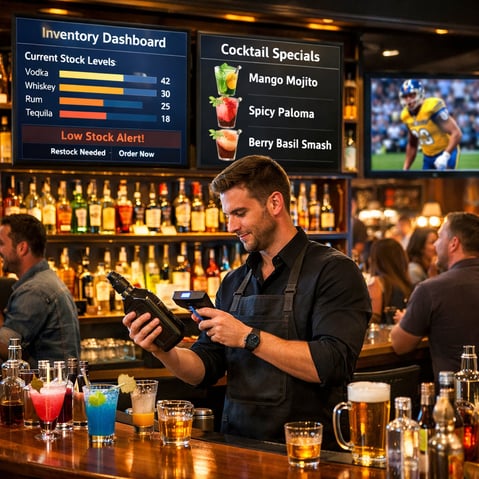
The most significant culprits include over-pouring by bartenders who eyeball measurements, spillage during busy service periods, spoilage from ingredients that expire before use, and unaccounted-for drinks that disappear through theft or unauthorized giveaways. When you consider that the average bar pours hundreds of drinks per week, even a quarter-ounce of excess per cocktail adds up to thousands of dollars in lost revenue over a year. Understanding these hidden costs is the first step toward implementing effective liquor inventory control and improving your bar profit margins.Modern Bar with TechIntegrated Cocktails and Vibrant Atmosphere

Beyond the direct financial impact, waste also affects your cost of goods sold (COGS), making it harder to accurately price your menu items and forecast purchasing needs. Many bar owners operate with beverage cost percentages that are 5-10% higher than they should be simply because they're not accounting for all the waste in their system. By identifying and quantifying these hidden costs, you can establish a baseline for improvement and set realistic targets for beverage cost reduction.

Smart Inventory Management Systems That Stop Money From Pouring Down the Drain

Implementing robust liquor inventory control through modern bar inventory software has become essential for bars serious about protecting their profit margins. These digital solutions replace outdated manual counting methods with streamlined systems that track every bottle from delivery to the last pour. Bar inventory software allows you to conduct regular inventory counts in a fraction of the time, compare actual usage against sales data, and quickly identify discrepancies that signal potential problems like theft, over-pouring, or recording errors.

The key to effective inventory management is consistency and frequency. Leading bars now conduct inventory counts at least weekly, with many high-volume establishments doing spot checks on premium bottles daily. Modern bar inventory software makes this practical by using barcode scanning or bottle weighing technology that reduces counting time by up to 75%. These systems automatically calculate variance reports, showing you exactly where your liquor is going and highlighting products with unusual depletion rates that deserve closer attention.

Beyond tracking, smart inventory systems help optimize your purchasing decisions and reduce over-ordering that leads to spoilage. By analyzing historical sales patterns and current stock levels, bar inventory software can generate suggested order lists that ensure you have enough inventory to meet demand without tying up excessive capital in bottles that sit on shelves. This targeted approach to purchasing is a powerful beverage cost reduction strategy that prevents both stockouts and waste from expired perishables.

Integration capabilities make modern inventory systems even more powerful. When your bar inventory software connects with your point-of-sale system, it creates an automatic feedback loop that tracks theoretical usage based on recipes against actual depletion. This variance analysis quickly reveals whether your staff is following standard recipes, whether theft is occurring, or whether your recipes need adjustment. The data-driven insights these systems provide transform liquor inventory control from guesswork into a precise science that directly improves bar profit margins.

Portion Control Techniques That Maintain Quality While Maximizing Profits

Consistent portion control is one of the most effective beverage cost reduction strategies available to bar owners, yet it's frequently overlooked or inconsistently applied. The difference between a 1.5-ounce pour and a 2-ounce pour might seem negligible on a single drink, but across hundreds of cocktails per week, that extra half-ounce represents significant profit loss. Implementing strict portion control measures ensures that every drink meets your cost targets while maintaining the consistency that keeps customers coming back.

Measured pourers and jiggers are the foundation of effective portion control. Free-pouring might look impressive, but even experienced bartenders can vary by 0.25 to 0.5 ounces per drink, especially during high-volume periods. Installing measured pourers on your liquor bottles guarantees that every shot is exactly the size you've designed your recipes around. For establishments that prefer the aesthetics of free-pouring, training bartenders to use jiggers consistently is essential. Regular pour tests, where managers check bartender accuracy with marked shot glasses, help maintain standards and identify team members who need additional training.

Recipe standardization goes hand-in-hand with portion control. Every cocktail on your menu should have a documented recipe with exact measurements for each ingredient. These standardized recipes become the foundation of your liquor inventory control system, allowing you to calculate theoretical usage and identify variances. When everyone follows the same recipe, you ensure consistent quality, accurate costing, and better inventory tracking. Many successful bars post laminated recipe cards at each station or use tablets with recipe apps to make it easy for bartenders to follow specifications exactly.

Portion control tools extend beyond pourers to include garnishes and mixers, which can also impact your bar profit margins. A heavy hand with expensive garnishes like fresh herbs or specialty bitters adds up quickly. Similarly, over-pouring mixers dilutes your cocktails and increases costs. By establishing clear standards for every element of your drinks and providing your team with the tools to execute consistently, you create a culture of precision that protects your margins while ensuring every guest receives the same high-quality experience.

Turning Food and Beverage Waste Into Creative Menu Opportunities

Progressive bar operators are discovering that effective liquor inventory control isn't just about preventing waste—it's also about creatively repurposing ingredients that might otherwise be discarded. This approach to beverage cost reduction transforms potential losses into profitable menu items while demonstrating environmental responsibility that resonates with modern consumers. By viewing surplus or aging inventory as an opportunity rather than a problem, you can create unique offerings that differentiate your bar from competitors.

Fruit and herb garnishes that are approaching the end of their freshness can be repurposed into house-made syrups, shrubs, and infusions that add complexity to your cocktail program. Citrus peels become oleo saccharum or dehydrated garnishes, while slightly wilted herbs can be muddled into specialty drinks or steeped into simple syrups. These value-added preparations not only reduce waste but also allow you to create signature ingredients that can't be easily replicated elsewhere, giving your bar a unique identity and justifying premium pricing.

Slow-moving spirits present another opportunity for creative menu development. Rather than watching premium bottles gather dust, feature them in limited-time cocktails or create a rotating "bartender's choice" program that highlights underutilized inventory. Many bars successfully use flight programs or tasting menus to introduce customers to slow-moving products, often discovering that certain items just need better promotion rather than being poor performers. This proactive approach to liquor inventory control prevents the write-offs that occur when bottles expire or become unsellable.

Consider implementing a zero-waste cocktail program that makes creative use of every ingredient. Juice pulp becomes ingredients in house-made sodas or is incorporated into food menu items. Coffee grounds from espresso martinis can be repurposed into coffee liqueur infusions. Even egg whites left over from yolk-forward dishes can be used in sours and fizzes. By systematically identifying waste streams and brainstorming creative applications, you engage your team in improving bar profit margins while building a reputation for innovation and sustainability that attracts environmentally conscious customers.

Training Your Team to Become Waste Reduction Champions

Even the most sophisticated bar inventory software and waste reduction systems will fail without buy-in from your team. The bartenders, barbacks, and servers who handle your inventory daily are your frontline defense against waste, and their habits directly impact your bar profit margins. Creating a culture where every team member understands the financial impact of waste and takes ownership of inventory control transforms your entire operation from reactive to proactive.

Start by making the business case transparent. Many bartenders don't realize that over-pouring a half-ounce on each drink in a busy Saturday night shift can cost the bar hundreds of dollars. Share the numbers with your team—show them how waste impacts profitability and, ultimately, their job security and tip potential. When staff understand that better liquor inventory control means a healthier business that can afford competitive wages and stay open long-term, they become invested in the outcome. Consider implementing incentive programs that reward teams for hitting variance targets or reducing beverage costs, creating positive motivation for careful inventory practices.

Comprehensive training programs should cover all aspects of beverage cost reduction, from proper pouring techniques and recipe adherence to inventory handling and storage procedures. Hands-on practice with jiggers and pourers helps bartenders develop muscle memory for accurate measurements. Role-playing scenarios where staff identify potential waste situations and discuss solutions builds problem-solving skills. Regular refresher training ensures that standards don't slip over time and gives you opportunities to introduce new techniques or address emerging issues. Documentation of all procedures creates a training resource for new hires and a reference for experienced staff.

Empowerment is the final piece of effective team training. Encourage staff to identify waste sources and suggest improvements—they often spot inefficiencies that management overlooks. Create a system where team members can easily report problems like leaking bottles, malfunctioning equipment, or recipe issues that lead to waste. Regular team meetings focused on inventory results foster accountability and allow for collaborative problem-solving. When bartenders feel like partners in the business rather than just employees, they naturally take more care with inventory and become genuine champions of waste reduction.

Tracking individual performance through your bar inventory software can also support training efforts. When you can show a bartender that their station has higher variance than others, it creates a concrete learning opportunity. Similarly, recognizing team members who consistently maintain tight inventory control reinforces positive behavior. By combining education, accountability, and recognition, you build a team culture where liquor inventory control becomes second nature, protecting your bar profit margins while elevating the professionalism of your entire operation.

Topics: Bar inventory, Hotel Inventory, wine inventory, managing liquor inventory cost, Liquor cost, Liquor Inventory savings, wine inventory app, wine inventory solution, wine inventory system, warehouse inventory

Mastering Hotel Bar Inventory for Optimal Profitability

Posted by Nick Kaoukis on Wed, Apr, 15, 2026 @ 09:04 AM

Discover how strategic bar inventory management can transform your hotel's bottom line by reducing waste, preventing theft, and maximizing every pour.

Why Hotel Bar Inventory Management Makes or Breaks Your Revenue

In the competitive hospitality industry, hotel bars represent a significant revenue stream that can dramatically impact your property's profitability. However, without proper inventory management, what should be a lucrative operation can quickly become a financial drain. Studies show that bars with poor inventory practices experience profit losses of 20-25% annually due to waste, over-pouring, theft, and inefficient ordering. When you consider that beverage costs typically represent 18-24% of total sales, even small improvements in inventory control can translate to substantial bottom-line gains.

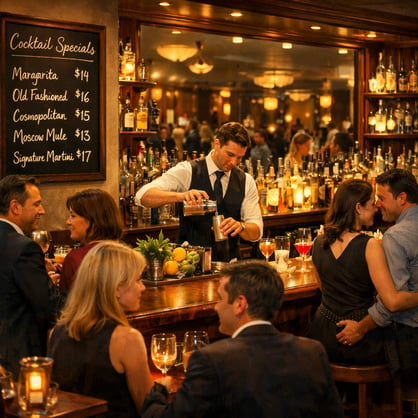
Effective bar inventory management goes beyond simply counting bottles. It provides critical visibility into consumption patterns, identifies your best-selling and slowest-moving products, and reveals discrepancies that may indicate operational issues or theft. Hotel food and beverage managers who implement robust inventory systems gain the data-driven insights needed to make informed purchasing decisions, optimize menu offerings, and set pricing strategies that maximize profitability while maintaining guest satisfaction.Elegant Hotel Bar with Chalkboard Menu and Bartender

The financial impact of poor inventory management extends beyond lost revenue. Overstocking ties up valuable capital in products that may expire or become obsolete, while understocking leads to disappointed guests and missed sales opportunities. Additionally, inconsistent inventory practices create accountability gaps that enable shrinkage and make it nearly impossible to accurately forecast demand or negotiate favorable terms with suppliers. For hotel bars operating on tight margins, mastering inventory management isn't just a best practice—it's an essential survival skill.

Essential Inventory Control Systems Every Hotel Bar Needs

The foundation of effective bar inventory management begins with establishing a perpetual inventory system that tracks every bottle from delivery to final pour. This system should include a detailed receiving process where all incoming shipments are verified against purchase orders, inspected for quality and accuracy, and immediately logged into your inventory records. Implement a standardized storage system that organizes products by category, with clear labeling and designated locations that make physical counts efficient and minimize the risk of items being overlooked or misplaced.

A comprehensive par level system is another critical component that ensures you maintain optimal stock levels without over-investing in inventory. Par levels represent the minimum quantity of each product you should have on hand to meet expected demand until the next order arrives. These benchmarks should be established based on historical sales data, seasonal trends, and lead times from suppliers. By setting appropriate par levels for each spirit, wine, beer, and mixer, you create automatic reorder triggers that prevent stockouts while avoiding the cash flow problems associated with excessive inventory.

Physical inventory counts form the third pillar of an effective control system. While many operations conduct full counts monthly, high-volume hotel bars benefit from more frequent cycle counts of high-value or fast-moving items. Implement a rotation schedule where different sections of your bar are counted weekly, ensuring continuous monitoring without overwhelming your staff. These counts should be conducted by at least two people to maintain accuracy and accountability, with results immediately reconciled against your perpetual inventory records to identify variances that require investigation.

Finally, establish a standardized requisition and transfer system for internal movement of inventory between your main storage areas and the bar itself. Each transfer should be documented with a requisition form that specifies quantities, product names, and the signature of both the person issuing and receiving the items. This creates a clear audit trail that helps you understand exactly where inventory is located at any given time and ensures that products are properly accounted for as they move through your operation.

Calculating Pour Costs and Setting Profitable Pricing Strategies

Understanding and managing your pour cost—the ratio of beverage cost to beverage revenue—is fundamental to bar profitability. To calculate pour cost, divide your total cost of beverages sold by your total beverage sales, then multiply by 100 to get a percentage. For example, if you spent $5,000 on inventory and generated $20,000 in sales, your pour cost is 25%. While ideal pour costs vary by establishment type, most hotel bars target a range of 18-24%. Consistently monitoring this metric allows you to quickly identify when costs are trending unfavorably and take corrective action before profits erode significantly.

To establish profitable pricing, start by determining your target pour cost percentage based on your overall financial goals and operational costs. Then work backwards to set individual drink prices. If your target pour cost is 20% and a cocktail costs $2.50 in ingredients to make, divide $2.50 by 0.20 to arrive at a menu price of $12.50. Don't forget to factor in garnishes, mixers, and the cost of ice in your calculations—these seemingly minor expenses add up quickly and are often overlooked in pricing decisions. Also consider your market position and competitor pricing to ensure your rates align with guest expectations for your property's category.

Beyond basic pour cost calculations, sophisticated hotel bars implement recipe costing that breaks down the exact cost of every ingredient in each cocktail. This granular approach reveals which menu items deliver the best margins and which may need repricing or reformulation. Create standardized recipes with precise measurements for every drink on your menu, and train bartenders to follow these specifications consistently. When everyone pours the same amount every time, you eliminate the variance that makes accurate cost management impossible.

Regular variance analysis between theoretical and actual pour costs provides powerful insights into operational efficiency. Your theoretical pour cost represents what you should have spent based on the drinks you sold, while actual pour cost reflects what you really spent. A significant gap between these figures—typically more than 2-3%—indicates problems such as over-pouring, spillage, incorrect pricing, theft, or failure to ring up sales. By calculating and investigating these variances monthly, you can pinpoint specific issues and implement targeted corrective measures that protect your profitability.

Preventing Shrinkage and Theft Through Smart Tracking Methods

Shrinkage—the loss of inventory through theft, spillage, breakage, or administrative errors—represents one of the most significant threats to bar profitability, with industry estimates suggesting that shrinkage accounts for 20-25% of inventory losses in operations without proper controls. Preventing these losses begins with creating a culture of accountability where every team member understands that inventory management is everyone's responsibility. Implement clear policies regarding proper handling procedures, consequences for policy violations, and the expectation that all discrepancies will be thoroughly investigated.

Bottle tracking systems provide a powerful deterrent against both employee theft and honest mistakes. The most basic approach involves marking bottles with unique identifiers upon receipt and recording these numbers whenever bottles are transferred, opened, or depleted. More sophisticated operations use bottle security tags or pour spouts with built-in measurement devices that precisely track how much is dispensed from each container. When bartenders know that every ounce is being monitored and that any unexplained shortages will be noticed, the temptation to pour unauthorized drinks or give away free beverages diminishes dramatically.

Point-of-sale integration represents another critical defense against shrinkage. By connecting your inventory management system directly to your POS, you create an electronic record of every transaction that should correspond to actual inventory usage. This integration enables you to automatically compare what was sold (according to POS data) against what should have been used (based on standardized recipes) and what actually disappeared from inventory (according to physical counts). Discrepancies that emerge from these comparisons warrant immediate investigation and often reveal patterns that point to specific problems or individuals.

Regular audit procedures, including surprise inventory counts and cash register reconciliations, send a strong message that management is actively monitoring for theft and irregularities. Rotate which staff members conduct counts and avoid predictable patterns that could be exploited. Additionally, implement strict cash handling procedures with multiple checkpoints throughout each shift. Consider installing security cameras with clear views of cash registers, bottle storage areas, and the bar itself—often the presence of cameras alone significantly reduces both theft and careless behavior that leads to shrinkage.

Leveraging Technology to Automate Your Bar Inventory Process

Modern inventory management technology has revolutionized how hotel bars track, analyze, and optimize their beverage programs. Cloud-based inventory management systems eliminate the tedious manual calculations that once consumed hours of management time, replacing spreadsheets with intuitive interfaces that provide real-time visibility into stock levels, usage patterns, and financial performance. These platforms typically feature mobile apps that allow staff to conduct inventory counts using smartphones or tablets, scanning barcodes or QR codes to instantly record quantities and automatically sync data to central databases accessible from anywhere.

Automated reordering capabilities represent one of the most valuable features of modern inventory systems. Once you've established par levels and supplier relationships within the software, the system can automatically generate purchase orders when stock falls below predetermined thresholds. Some advanced platforms even analyze historical sales data and upcoming reservations or events to adjust ordering recommendations based on anticipated demand. This automation not only saves time but also reduces the human error that leads to stockouts or overordering, while ensuring you consistently capture early-pay discounts or volume pricing from suppliers.

Integration capabilities multiply the value of inventory technology by connecting your bar operations with other hotel systems. When your inventory platform communicates with your property management system, you can analyze beverage consumption patterns relative to occupancy rates and guest demographics. Integration with your accounting software streamlines financial reporting and eliminates duplicate data entry, while connections to supplier systems can provide real-time pricing updates and streamline the ordering process. The result is a comprehensive ecosystem where data flows seamlessly between systems, providing a complete picture of your bar's performance.

Advanced analytics and reporting tools transform raw inventory data into actionable insights that drive profitability. Modern platforms generate customizable dashboards that highlight key performance indicators such as pour costs, turnover rates, and profit margins by category or individual product. Predictive analytics can forecast future demand based on historical patterns, seasonal trends, and upcoming events, enabling proactive decision-making rather than reactive firefighting. Some systems even provide benchmarking data that allows you to compare your performance against industry standards or similar properties, identifying opportunities for improvement that might otherwise go unnoticed.

While technology offers tremendous benefits, successful implementation requires proper training and change management. Invest time in thoroughly training all staff members who will interact with the system, and designate a technology champion who can troubleshoot issues and serve as an ongoing resource. Start with core functionality before gradually adopting more advanced features, allowing your team to build confidence and competence. Remember that technology is a tool that enhances human decision-making rather than replacing it—the most successful hotel bars combine sophisticated systems with experienced managers who know how to interpret data and translate insights into effective operational strategies.

Topics: liquor inventory, Hotel Inventory, Lineup control, managing liquor inventory cost, inventory control, liquor inventory system, liquor inventory app, Hotel Bar Inventory

Hotel Lobby Cocktails: Classic Drinks in Nashville's Historic Hotels

Posted by Nick Kaoukis on Fri, Apr, 10, 2026 @ 09:04 AM

Discover the timeless elegance of Nashville's most iconic hotel bars, where legendary cocktails and Southern hospitality create unforgettable experiences in historic lobbies.

Where History Meets Mixology in Music City

Nashville's historic hotel lobby bars represent a fascinating intersection of Southern charm, musical heritage, and sophisticated cocktail culture. These elegant spaces have served as gathering places for country music legends, business titans, and travelers seeking authentic Nashville experiences for generations. The grand lobbies of Music City's most storied hotels offer more than just a place to drink—they provide a portal to the golden age of Southern hospitality, where every cocktail tells a story and every conversation echoes with history.

Walking into these historic establishments feels like stepping back in time. Original architectural details, from ornate crown molding to crystal chandeliers, create an atmosphere of refined elegance that modern establishments struggle to replicate. The bartenders in these spaces aren't just mixologists; they're custodians of Nashville's cocktail heritage, preserving recipes and techniques passed down through decades while honoring the traditions that made these venues legendary.

What sets Nashville's historic hotel bars apart is their authentic connection to the city's past. These aren't theme bars attempting to recreate history—they are history. The same mahogany bars that served drinks to early country music pioneers still stand today, polished by generations of hands and steeped in the stories of countless memorable evenings. This genuine connection to old Nashville creates an atmosphere that simply cannot be manufactured or replicated.

Signature Cocktails That Define Nashville's Golden Age

The cocktail menus at Nashville's historic hotel bars read like a greatest hits collection of American mixology, with Southern twists that pay homage to the region's distinctive flavors. Classic Old Fashioneds are elevated with locally-sourced Tennessee whiskey, while Mint Juleps showcase the state's bourbon heritage with fresh mint from nearby farms. These aren't trendy craft cocktails chasing the latest fad—they're time-tested recipes that have satisfied discerning drinkers for generations.

Many of these establishments feature signature drinks that have become synonymous with Nashville itself. The Hermitage Hotel's famous whiskey cocktails, for instance, have been perfected over decades of service, with each ingredient carefully selected to complement the bold flavors of Tennessee spirits. These signature creations often incorporate regional ingredients like sorghum syrup, local honey, and Tennessee peaches, creating cocktails that taste distinctly of place and time.

What makes these classic cocktails special isn't complexity—it's consistency and quality. The bartenders at these historic venues understand that a perfectly executed Manhattan or a flawlessly balanced Negroni requires exceptional ingredients, precise technique, and unwavering attention to detail. They use premium spirits, fresh juices, and house-made bitters to create drinks that honor traditional recipes while showcasing the finest ingredients available. Each cocktail is a liquid tribute to Nashville's commitment to excellence and hospitality.

The Art of Craft Cocktails in Grand Lobby Settings

The presentation and atmosphere of cocktail service in Nashville's historic hotel lobbies elevates drinking to an art form. These spaces were designed during an era when grandeur mattered, and the soaring ceilings, marble columns, and carefully curated art collections create a sense of occasion that makes every visit feel special. The bartenders work in full view, their movements deliberate and practiced as they muddle, shake, and strain with the confidence that comes from years of experience.

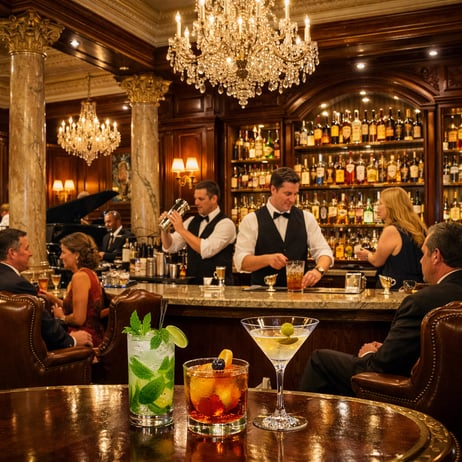
The lobby bar experience is as much about ambiance as it is about alcohol. Leather wingback chairs invite guests to settle in for extended conversations, while soft lighting and live piano music create a soundtrack that enhances rather than overwhelms. The service style reflects old Nashville's commitment to genuine hospitality—attentive without being intrusive, knowledgeable without being pretentious, and always delivered with a warm Southern smile.Nashville Hotel Bar with Crystal Chandeliers and Plush Chairs-1

These grand settings demand a certain level of craftsmanship behind the bar. The bartenders understand they're not just making drinks; they're creating experiences that guests will remember long after they've returned home. From the way a cocktail is garnished to the glassware it's served in, every detail is considered. Ice is hand-cut to the perfect size, garnishes are fresh and artfully arranged, and each drink is presented with pride. This dedication to craft ensures that every cocktail served in these historic spaces lives up to the grandeur of its surroundings.

Hidden Gems and Must-Visit Hotel Bars for Cocktail Enthusiasts

The Hermitage Hotel's lobby bar stands as perhaps the most iconic of Nashville's historic hotel drinking establishments. Operating since 1910, this Beaux-Arts masterpiece has served everyone from early Grand Ole Opry stars to modern music industry executives. The bar itself is a work of art, with its original marble and woodwork preserved to perfection. Their cocktail program honors tradition while incorporating subtle modern touches, making it essential destination for anyone seeking authentic old Nashville elegance.

The Union Station Hotel, housed in a magnificently restored 1900 train station, offers a lobby bar experience unlike any other in the city. The soaring barrel-vaulted ceiling and original stained glass create a cathedral-like atmosphere where cocktails feel almost ceremonial. This former railway hotel served as a gateway to Nashville for countless travelers during the city's golden age, and that sense of arrival and celebration still permeates every drink served beneath its historic arches.

For those seeking a more intimate historic experience, the Capitol Grille at the Hermitage Hotel provides a refined setting where classic cocktails are prepared with museum-quality attention to detail. Meanwhile, the Bobby Hotel, while more recently renovated, occupies a historic building and has thoughtfully incorporated elements of old Nashville into its modern lobby bar, creating a bridge between past and present that appeals to both traditionalists and contemporary cocktail enthusiasts.

Each of these establishments offers something unique, but they all share a commitment to preserving Nashville's cocktail heritage. Whether you're sipping a pre-prohibition era cocktail surrounded by original Art Deco fixtures or enjoying a Tennessee whiskey in a space where country music legends once gathered, these hotel lobby bars provide authentic connections to the Nashville that existed long before the city became today's booming tourist destination.

Planning Your Perfect Evening of Lobby Bar Hopping

Creating an evening itinerary around Nashville's historic hotel lobby bars requires some strategic planning to maximize your experience. Start earlier in the evening, around 5 or 6 PM, when these elegant spaces are less crowded and you can fully appreciate the architecture and ambiance. Many of these hotels are located within walking distance of each other in downtown Nashville, making it entirely feasible to visit two or three in a single evening without needing transportation between stops.

Consider beginning your journey at the Hermitage Hotel for an early evening cocktail, then making your way to Union Station for a drink under the magnificent ceiling before finishing at a third location for dinner and a nightcap. Dress appropriately for these refined establishments—while not all require formal attire, smart casual dress shows respect for the historic setting and ensures you feel comfortable in these elegant surroundings. Making reservations when possible can guarantee you the best seating, especially during peak times and weekends.

Budget accordingly for your evening, as drinks at these prestigious establishments typically reflect their quality and historic significance. However, the experience—the expert service, premium ingredients, historic ambiance, and connection to Nashville's past—justifies the investment for cocktail enthusiasts and history lovers alike. Many of these bars offer small plates or appetizers that pair beautifully with their cocktail menus, allowing you to create a full evening experience.

The best time to experience these historic spaces is during the week, when locals and business travelers outnumber tourists and the atmosphere feels more authentic. However, weekend evenings offer their own appeal, with live music often enhancing the ambiance. Whichever you choose, arrive with curiosity and an appreciation for tradition—these aren't just bars, they're living museums of Nashville's cocktail culture, and approaching them with that mindset will enrich your entire experience. Take your time, engage with the bartenders about the history and their craft, and savor the rare opportunity to drink where Nashville's legends once gathered.

Topics: Hotel Inventory, hotel supplies, drink recipe, hospitality jobs, Hospitality show, hotel parties, Hotel Bar Inventory, warehouse inventory, hotel staff

How Real-Time Stock Monitoring Optimizes Banquet Inventory Management

Posted by Nick Kaoukis on Mon, Feb, 09, 2026 @ 09:02 AM

Discover how real-time stock monitoring transforms banquet operations by eliminating waste, preventing stockouts, and maximizing profitability in your hospitality venue.

The Hidden Costs of Manual Inventory Tracking in Banquet Operations

Manual inventory tracking in banquet operations comes with significant hidden costs that extend far beyond the obvious time investment. Every hour your staff spends counting bottles, tallying supplies, and recording data on clipboards or spreadsheets is an hour taken away from guest service and revenue-generating activities. These labor costs compound quickly, especially in busy banquet facilities where multiple events may occur simultaneously, requiring frequent inventory checks across various storage locations.

Beyond labor inefficiencies, manual tracking introduces substantial margin for human error. Miscounts, missed items, and transcription mistakes lead to inaccurate stock levels that cascade into poor purchasing decisions. You might over-order items that are already adequately stocked, tying up capital in excess inventory, or worse, run out of critical supplies mid-event, forcing last-minute emergency purchases at premium prices. These errors also make it nearly impossible to accurately track pour costs and identify potential theft or over-pouring issues.

The lack of real-time visibility in manual systems means you're always operating with outdated information. By the time you've completed a full inventory count and entered the data, stock levels have already changed. This delay prevents proactive decision-making and leaves you constantly reacting to problems rather than preventing them. For banquet operations where timing and precision are everything, this reactive approach can seriously damage your reputation and bottom line.

What Real-Time Stock Monitoring Means for Your Banquet Business

The image depicts a modern banquet hall bustling with activity during a highprofile event Elegant round tables are adorned with pristine white tableclReal-time stock monitoring revolutionizes how banquet facilities manage their inventory by providing instant, accurate visibility into stock levels at any moment. This technology eliminates the guesswork and delays inherent in traditional inventory methods, allowing managers to access up-to-the-minute data on every item in their inventory from any device, anywhere. Whether you're on the banquet floor, in a planning meeting, or reviewing operations from home, you have complete transparency into what's in stock, what's running low, and what needs to be ordered.
The Scannabar inventory app exemplifies this modern approach to banquet inventory management. Using simple barcode scanning technology, staff can quickly update inventory levels in seconds rather than spending hours with pen and paper. The app automatically calculates stock values, tracks usage patterns, and generates detailed reports that give you actionable insights into your banquet operations. This seamless integration of technology means your inventory data is always current, always accurate, and always accessible.

Real-time monitoring also enables dynamic inventory management that adapts to your banquet schedule. You can track inventory consumption by event type, identify which items are used most frequently during specific seasons or occasions, and adjust your purchasing accordingly. This level of granular insight was simply impossible with manual tracking methods and empowers you to make data-driven decisions that optimize both service quality and profitability.

Preventing Stockouts During High-Volume Events and Peak Seasons

Stockouts during major banquet events represent one of the most damaging failures in hospitality operations. When you run out of a signature cocktail ingredient, premium wine selection, or essential food item during a wedding reception or corporate gala, you're not just losing immediate revenue—you're potentially losing future bookings and damaging your venue's reputation. Real-time stock monitoring provides the early warning system you need to prevent these catastrophic scenarios before they occur.

With live inventory data, you can set customized alerts that notify you when stock levels drop below predetermined thresholds. This proactive approach means you receive notifications well before items run out, giving you adequate time to reorder and restock. The Scannabar app takes this further by analyzing your historical usage patterns and upcoming event schedule to predict when you'll need to reorder specific items, accounting for lead times and ensuring supplies arrive exactly when needed.

Peak seasons like wedding season, holiday parties, and conference periods put extraordinary pressure on banquet inventory systems. Real-time monitoring allows you to scale your inventory management to meet these demands without over-investing in stock during slower periods. You can track consumption rates across multiple simultaneous events, identify which bars or service areas are depleting fastest, and redistribute inventory as needed to ensure no event suffers from shortages. This agility is impossible to achieve with manual systems that only provide periodic snapshots of inventory levels.

The integration of real-time data with your event calendar creates a powerful planning tool. You can review upcoming banquet bookings, assess the menu and beverage requirements for each event, and verify that you have sufficient inventory to fulfill all commitments. This forward-looking capability eliminates the panic and scrambling that often accompanies high-volume periods and allows your team to deliver consistently excellent service regardless of how busy your schedule becomes.

Reducing Food Waste and Controlling Costs with Live Inventory Data

Food and beverage waste represents one of the largest controllable expenses in banquet operations, yet many venues lack the visibility needed to effectively address it. Real-time inventory monitoring shines a spotlight on waste by tracking exactly what's being used, what's expiring, and where losses are occurring. This transparency allows you to identify patterns and implement targeted strategies to reduce waste and protect your profit margins.

Live inventory data reveals critical insights about product shelf life and turnover rates. You can identify slow-moving items before they expire and take corrective action—whether that means featuring them in special promotions, adjusting portion sizes, or simply ordering less in the future. The Scannabar app's reporting features highlight these opportunities by showing you which items have been sitting in inventory longest and calculating the financial impact of potential waste, enabling you to make informed decisions about product mix and ordering quantities.

Accurate, real-time tracking also helps you identify and address theft, over-pouring, and unauthorized consumption—all significant sources of inventory shrinkage in banquet operations. When you can compare actual usage against expected consumption based on event orders and guest counts, discrepancies become immediately apparent. This accountability naturally reduces losses and ensures that your inventory is being used efficiently and appropriately.

Cost control extends beyond waste reduction to encompass smarter purchasing decisions. With comprehensive data on usage patterns, seasonal variations, and price trends, you can optimize your ordering to take advantage of bulk discounts and favorable pricing while avoiding over-investment in slow-moving stock. Real-time monitoring also facilitates better vendor management by providing concrete data about delivery accuracy, product quality issues, and pricing consistency, strengthening your negotiating position and ensuring you're getting the best value for your inventory investment.

Implementing Smart Inventory Systems for Seamless Banquet Management

Implementing a smart inventory system like Scannabar in your banquet operation doesn't require a complete overhaul of your existing processes or extensive technical expertise. The key to successful implementation is starting with a clear understanding of your current inventory challenges and specific goals for improvement. Begin by conducting a comprehensive baseline inventory count to establish accurate starting data, then introduce the system gradually, starting with your highest-value or most frequently used items before expanding to your full inventory.

Training your staff is critical to successful adoption of any new technology. The beauty of modern inventory apps like Scannabar is their intuitive design—most staff members can learn the basic scanning and counting functions in just minutes. Focus your training on consistency and accuracy, emphasizing how the system benefits both the operation and individual employees by reducing tedious manual counting and eliminating the confusion that comes from outdated inventory information. When your team understands that the technology makes their jobs easier rather than more complicated, adoption becomes natural and enthusiastic.

Integration with your existing systems amplifies the value of real-time inventory monitoring. Connect your inventory data with your point-of-sale system, event management software, and purchasing workflows to create a seamless flow of information across your entire operation. This integration eliminates duplicate data entry, reduces errors, and provides a holistic view of your banquet business. The Scannabar app offers integration capabilities that allow it to work harmoniously with other hospitality management tools, creating a unified ecosystem that supports efficient operations.

Continuous improvement should be built into your inventory management approach. Use the detailed analytics and reports generated by your smart inventory system to regularly review performance, identify trends, and refine your processes. Schedule monthly or quarterly reviews to assess key metrics like inventory turnover, waste percentages, stockout incidents, and carrying costs. These reviews provide opportunities to celebrate successes, address persistent challenges, and adjust your inventory strategies to align with evolving business needs. The real-time data you've been collecting becomes the foundation for ongoing optimization that keeps your banquet operation competitive and profitable.

The return on investment from implementing smart inventory systems typically manifests quickly through reduced waste, improved purchasing efficiency, and decreased labor costs. Most banquet operations find that the system pays for itself within months through these tangible savings, while also delivering intangible benefits like improved staff morale, better guest experiences, and greater operational confidence. By embracing real-time stock monitoring technology, you're not just modernizing your inventory management—you're positioning your banquet business for sustained success in an increasingly competitive hospitality landscape.

Topics: Bar inventory, Hotel Inventory, Scannabar Inventory system, Liquor Inventory savings, Hotel Bar Inventory, Best Bar Inventory app, Best Liquor Inventory app, Cruise ship bar inventory, Country Club Liquor Inventory, Scannabar inventory app, Scannabar Inventory Software

How Scannabar Helps Reduce Inventory Shrinkage in Warehouses

Posted by Nick Kaoukis on Mon, Aug, 04, 2025 @ 13:08 PM

Inventory shrinkage is a costly issue for warehouses, but Scannabar offers a cutting-edge solution that helps businesses maintain accurate stock levels and minimize losses.

The Hidden Costs of Inventory Shrinkage

Inventory shrinkage, which includes losses due to theft, damage, misplacement, and administrative errors, can significantly impact a warehouse's bottom line. Often, these losses are not immediately apparent but accumulate over time, eroding profits and affecting operational efficiency.Warehouse Inventory

The financial impact extends beyond just the cost of the lost items. It includes the cost of labor to manage discrepancies, the potential loss of customer trust due to stockouts, and the administrative burden of reconciling inventory records. Addressing shrinkage is crucial for maintaining healthy profit margins and operational integrity.

Why Real-Time Inventory Tracking Matters

In a fast-paced warehouse environment, having real-time visibility into inventory levels is essential. It allows businesses to respond quickly to low stock levels, adjust orders, and avoid overstocking or stockouts. Real-time tracking helps maintain a balance between supply and demand, ensuring that the right products are available when needed.

Moreover, real-time data enables better decision-making. Managers can analyze trends, forecast demand more accurately, and optimize storage space. This proactive approach reduces inefficiencies and enhances overall productivity.

How Scannabar Enhances Stock Accuracy

Scannabar leverages advanced barcoding and scanning technology to ensure precise inventory tracking. Each item in the warehouse is tagged with a unique barcode, which is scanned upon arrival, movement, and dispatch. This process minimizes human errors and provides an accurate, up-to-date record of stock levels.

Additionally, Scannabar integrates seamlessly with existing warehouse management systems, allowing for real-time updates and synchronization across all platforms. This integration ensures that inventory data is consistent and reliable, facilitating efficient stock management and reducing discrepancies.

Minimizing Theft with Scannabar's Advanced Features

Theft, both internal and external, is a significant contributor to inventory shrinkage. Scannabar addresses this issue with robust security features. The app tracks every movement of inventory, from receiving to shipping, creating a detailed audit trail. This transparency acts as a deterrent to potential thieves and helps identify and address suspicious activities promptly.

Furthermore, Scannabar's user access controls ensure that only authorized personnel can access certain areas of the inventory system. This layered security approach reduces the risk of unauthorized access and potential theft.

Case Studies: Success Stories with Scannabar

Many businesses have successfully implemented Scannabar to combat inventory shrinkage. For example, a leading consumer goods warehouse reported a 30% reduction in shrinkage within the first six months of using Scannabar. The real-time tracking and detailed audit trails helped identify problem areas and streamline inventory management processes.

Another case involved a mid-sized distribution center that faced frequent stock discrepancies. After adopting Scannabar, they experienced improved stock accuracy and reduced labor costs associated with manual inventory checks. These success stories highlight the tangible benefits of using Scannabar for inventory management.

Topics: Hotel Inventory, Liquor Inventory savings, Food Storage, Best Bar Inventory app, Best Liquor Inventory app, Cruise ship bar inventory, Country Club Liquor Inventory

Effective Inventory Control Tips Using Scannabar

Posted by Nick Kaoukis on Thu, Jan, 02, 2025 @ 09:01 AM

Unlock the secrets to mastering inventory control in the hospitality industry with Scannabar. Elevate your business efficiency and profitability with these proven tips.

Harnessing Technology for Precision Inventory Management

Opening_a_barIn the fast-paced world of hospitality, precision in inventory management can make or break your business. Scannabar leverages advanced technology to ensure that every bottle, can, or keg is accurately tracked. By automating inventory processes, you reduce the risk of human error and ensure real-time updates.


With Scannabar, you can easily scan items, update stock levels, and generate reports, allowing you to stay on top of your inventory with minimal effort. This not only saves time but also provides you with precise data to make informed decisions.

Streamlining Operations to Reduce Waste and Overhead

Efficient operations are key to reducing waste and overhead costs in your bar. Scannabar helps streamline your inventory management by providing you with the tools to monitor stock levels and usage patterns closely. This enables you to identify slow-moving items and adjust your purchasing strategy accordingly.

By maintaining optimal stock levels, you can minimize waste from expired products and reduce the overhead costs associated with overstocking. Scannabar's intuitive interface makes it easy to keep track of what you have, what you need, and when you need it.

Enhancing Transparency and Accountability Among Staff

Transparency and accountability are crucial in maintaining an efficient bar operation. Scannabar promotes these values by offering features that track who handled inventory and when. This level of transparency helps in identifying discrepancies and holding staff accountable for their actions.

Regular audits and real-time monitoring of inventory levels also discourage theft and misuse of stock. With Scannabar, staff members are more likely to follow best practices, knowing that their actions are being monitored and recorded.

Leveraging Data Analytics for Better Decision Making

Data analytics are a powerful tool in the hospitality industry, providing insights that can drive better decision-making. Scannabar offers robust analytics that help you understand trends, forecast demand, and optimize your inventory accordingly.

By analyzing data on sales, stock levels, and usage patterns, you can make informed decisions that improve efficiency and profitability. Scannabar's analytics tools provide you with the information you need to fine-tune your operations and stay ahead of the competition.

Improving Customer Satisfaction through Efficient Inventory Control

Customer satisfaction is paramount in the hospitality industry, and efficient inventory control plays a significant role in achieving it. With Scannabar, you can ensure that popular items are always in stock, reducing the chances of disappointing your customers.

Efficient inventory management also means faster service, as staff spend less time searching for items and more time attending to customers. By providing a seamless and enjoyable experience, you encourage repeat business and positive word-of-mouth, both of which are essential for long-term success.

Topics: Bar inventory, Hotel Inventory, Bar trends, Bar Management, Hotel Bar Inventory, Best Bar Inventory app, Best Liquor Inventory app

Boost Hotel Inventory Efficiency with Scannabar

Posted by Nick Kaoukis on Thu, Oct, 31, 2024 @ 20:10 PM

Maximize your hotel's operational efficiency and reduce costs with Scannabar's advanced inventory management system.

Revolutionize Liquor Inventory ManagementHotel Bar Invetory

Managing liquor inventory is a critical aspect of hotel operations, and Scannabar offers a revolutionary solution. With its advanced features, Scannabar helps you keep track of every bottle and beverage with precision. This means no more manual counting, reduced errors, and a streamlined process that saves time and effort.

Implementing Scannabar's liquor inventory system ensures that you have a clear view of your stock levels at all times. This not only aids in maintaining optimal inventory but also helps in making informed purchasing decisions, thus avoiding overstocking or stockouts.

Streamline Bar Inventory Processes

A well-managed bar inventory is essential for providing excellent service and maximizing profits. Scannabar simplifies the entire bar inventory process. From tracking sales and usage to monitoring stock levels, this system covers all aspects efficiently.

With Scannabar, you can easily manage your bar inventory by integrating it with your point-of-sale systems. This seamless integration ensures that all inventory data is updated in real-time, making it easier to track and manage your bar supplies accurately.

Enhance Overall Hotel Inventory Efficiency

Scannabar is not just limited to liquor and bar inventory; it enhances overall hotel inventory efficiency. By providing a centralized system to manage all inventory types, Scannabar helps in maintaining consistency and accuracy across the board.

The system's user-friendly interface and robust features allow hotel staff to manage inventory seamlessly, leading to improved productivity and operational efficiency. This comprehensive approach ensures that all inventory-related tasks are handled efficiently, reducing the workload on your staff.

Reduce Operational Costs Significantly

One of the most significant benefits of using Scannabar is the reduction in operational costs. By automating inventory management processes, Scannabar minimizes the need for manual labor, thus cutting down on labor costs.

Additionally, the system's accuracy in tracking inventory levels helps in reducing wastage and pilferage. This ensures that your resources are utilized optimally, leading to significant cost savings in the long run.

Ensure Accurate and Real-Time Inventory Data

Accurate and real-time inventory data is crucial for making informed business decisions. Scannabar provides real-time updates on inventory levels, sales, and usage, ensuring that you always have the most current information at your fingertips.

This real-time data helps in identifying trends, forecasting demand, and managing supply chains more effectively. With Scannabar, you can ensure that your inventory data is always accurate, enabling you to run your hotel operations smoothly and efficiently.

Topics: Bar inventory, Hotel Inventory, Liquor Inventory savings, Hotel Bar Inventory, Best Bar Inventory app, Best Liquor Inventory app